Imagine your customer is spending over a thousand dollars on a technical ski jacket. They expect peak performance, flawless design, and an impeccable brand story. In today’s market, that story must include responsibility—not as an afterthought, but as a core value. For luxury ski brands, the choice of manufacturing partner is a direct reflection of their brand integrity. So why are the most prestigious names increasingly insisting on OEKO-TEX certified factories? The answer goes far beyond a simple compliance checkbox.
Luxury ski brands partner with OEKO-TEX certified factories because certification provides the independent, verifiable proof required to substantiate high-end claims of safety, quality, and sustainability. It mitigates immense reputational risk, ensures compliance with global regulations, and aligns with the values of a discerning clientele who research and demand transparency. In luxury, trust is the most valuable asset, and certification is a cornerstone of building that trust.
I witnessed this shift firsthand. A few seasons ago, an emerging luxury ski brand approached us at Shanghai Fumao. They had a stunning design but were being courted by a cheaper, non-certified factory. Their lead investor, however, mandated proof of responsible manufacturing as a condition for further funding. We provided not just our OEKO-TEX STeP certification for the factory, but also a clear roadmap for achieving MADE IN GREEN traceability for their collection. This didn’t just win the order; it elevated their entire brand proposal, helping them secure shelf space in high-end boutiques that now vet their suppliers.
How Does OEKO-TEX Certification Protect a Luxury Brand’s Reputation?
A luxury brand’s reputation is fragile. A single scandal about harmful chemicals, poor labor conditions, or environmental negligence can cause irreparable damage. OEKO-TEX certification acts as a multifaceted shield, managed not by the brand’s promises, but by independent, global standards.
OEKO-TEX certification protects a luxury brand’s reputation by providing an independent, third-party verification that their products are safe and their manufacturing is responsible. This external validation is critical for defending against accusations of greenwashing and for building durable consumer trust that transcends marketing claims. In an era of instant information, certified proof is your first line of defense.
Consider the worst-case scenario: a viral news story alleges that a premium ski glove contains allergy-triggering residues. If that brand is produced in an uncertified factory, the response is slow, defensive, and reliant on internal reports no one trusts. If produced in a factory certified to OEKO-TEX STANDARD 100, the response is immediate: public linking to the independent certificate in the official database, demonstrating due diligence was performed. The narrative shifts from “brand failure” to “verified safety.” This is not theoretical. We have helped clients manage such concerns preemptively by including certification details in their press kits and retailer training materials.
What Are the Specific Reputational Risks in the Luxury Ski Segment?
Luxury ski consumers are affluent, informed, and often activist-minded. Their expectations create unique risks:
- Health & Safety Concerns: The intimate, prolonged contact of ski base layers and the sensitivity of mountain environments amplify worries about chemical exposure.
- Sustainability Hypocrisy: A brand promoting pristine alpine experiences but polluting waterways in its supply chain is an easy target for criticism.
- Social Equity Issues: The disparity between a $2,000 jacket and the wages of the person sewing it is a glaring reputational vulnerability.
Certifications like STANDARD 100 and STeP directly address these by testing for harmful substances and assessing fair working conditions and environmental management.
How Does Certification Create a Competitive Marketing Advantage?
In a crowded premium market, certification is a powerful differentiator. It allows a brand to move from vague “craftsmanship” narratives to specific, proof-based claims:
- “Every component is tested for over 1,000 harmful substances” (STANDARD 100).
- “Trace this garment’s responsible production journey” (MADE IN GREEN QR code).
- “Manufactured in a facility benchmarked for environmental excellence” (STeP score).
This factual basis for marketing is infinitely more credible and defensible than abstract luxury claims.
Why is Supply Chain Transparency Non-Negotiable for High-End Brands?
For mass-market brands, the supply chain is often a cost center to be optimized. For luxury brands, it is an integral part of the product story and a critical element of risk management. Opacity is a liability; transparency is an asset.
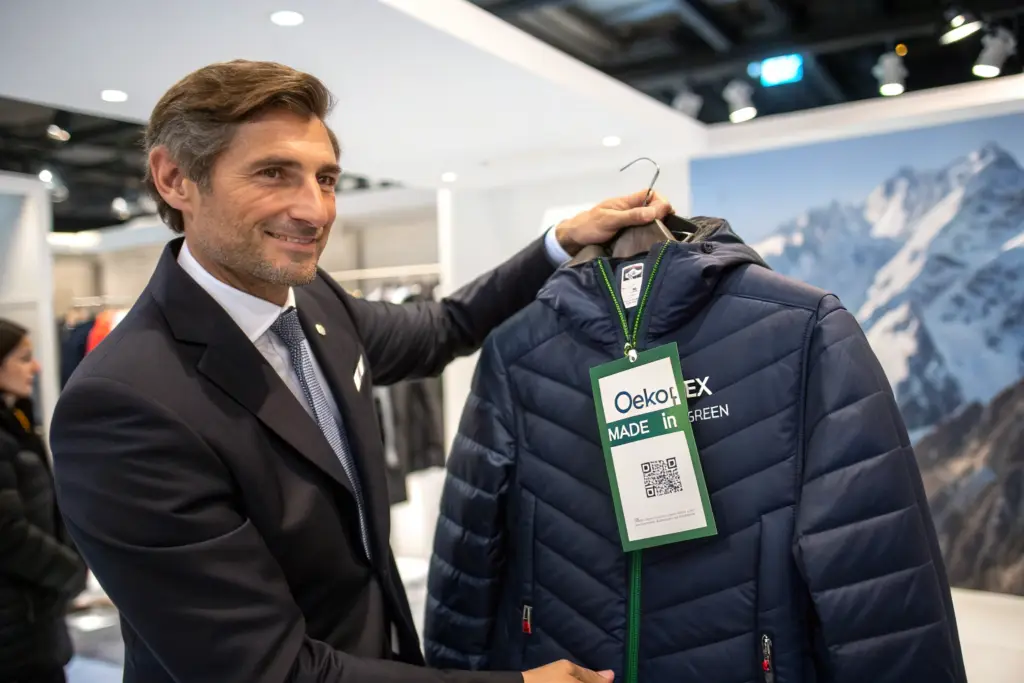
Supply chain transparency is non-negotiable for high-end brands because their customers, investors, and retail partners demand to know the origin and ethics behind the products they buy. OEKO-TEX MADE IN GREEN provides a turn-key system for this transparency, offering traceability without the brand having to build a costly, complex system from scratch. It turns the supply chain from a hidden risk into a marketable virtue.
We worked with a brand that supplied a famous alpine resort’s exclusive gear line. The resort’s management required a full audit trail for their sustainability reporting. Our MADE IN GREEN certification was the perfect solution. Each jacket’s unique QR code showed the resort’s guests that their garment was made in our STeP-certified facility, with a clear map of production stages. This didn’t just satisfy a requirement—it enhanced the guest experience, making the purchase part of a broader, ethical alpine story. The resort featured this technology in their marketing, driving higher sales for the brand.
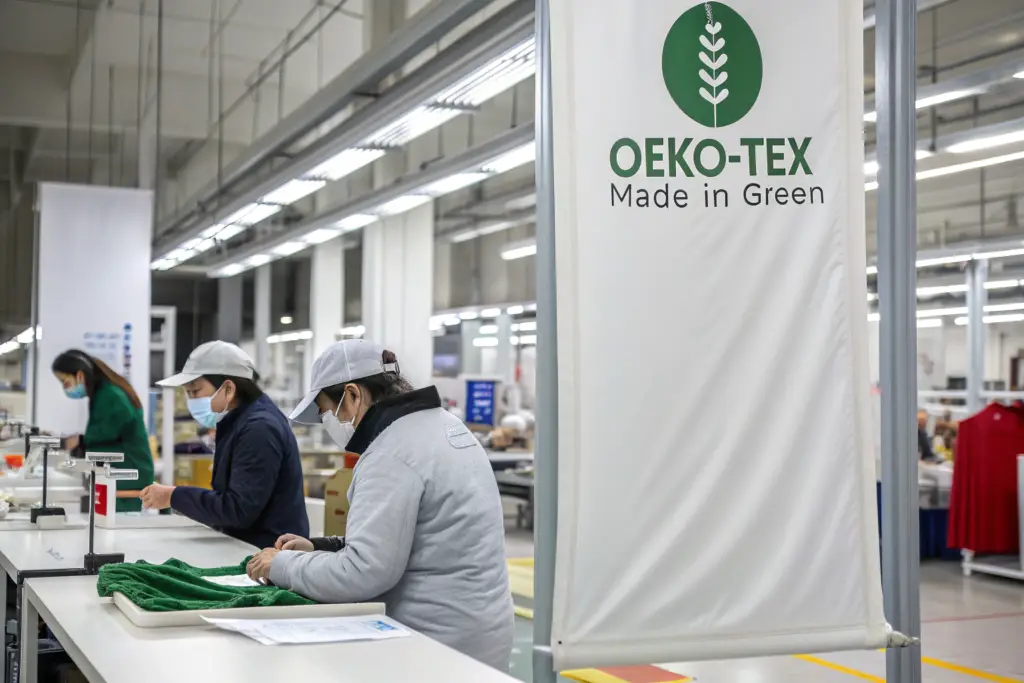
How Does OEKO-TEX MADE IN GREEN Enable This Transparency?
The MADE IN GREEN label works by combining two verifications:
- Product Safety: The item must be certified under STANDARD 100 or LEATHER STANDARD.
- Sustainable Production: It must be manufactured in facilities certified under STeP.
The resulting label includes a unique product ID or QR code. Scanning it provides publicly accessible information on the production facilities and countries. This is a game-changer for luxury brands needing to demonstrate ethical sourcing and supply chain due diligence.
What Questions Does This Transparency Answer for the Luxury Consumer?
It directly addresses the sophisticated buyer’s inquiries:
- “Where was this actually made?” (Not just the “Designed in” statement).
- “Are the working conditions fair?”
- “What is the environmental impact of the factory?”
Providing these answers preemptively builds a deeper, more loyal relationship with the customer.
Does Certification Directly Impact the Quality and Performance of Ski Apparel?
Luxury is synonymous with exceptional quality and performance. A certification focused on chemicals and processes might seem separate from the tactile, functional excellence of a ski garment. However, the connection is profound and causal.
Yes, OEKO-TEX certification directly and positively impacts the quality and performance of ski apparel. The rigorous management systems required for certification (especially STeP) lead to greater production consistency, superior material control, and fewer defects, which directly translates to higher-performing, more reliable end products. Discipline in chemical management is indicative of discipline in every aspect of production.
Here’s a concrete example from our work: A brand was experiencing inconsistent waterproof performance in their premium ski pants. The issue was traced to variations in the DWR (Durable Water Repellent) coating application. Our STeP certification framework forced us to have stringent procedures for chemical storage, handling, and machine calibration. By applying these same rigorous protocols to the DWR application process—precise temperature controls, solution concentration checks, and eveness monitoring—we eliminated the variation. The brand’s product returns for wetting out dropped by over 25%. The systemic quality driven by certification solved a functional performance problem.
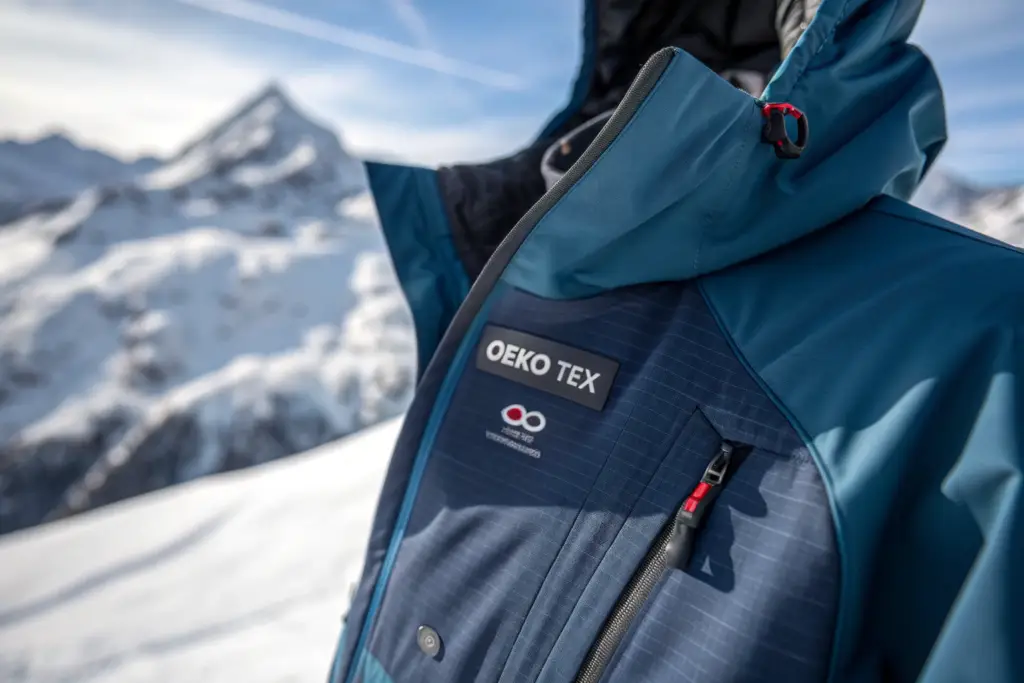
How Do Certified Management Systems Improve Product Outcomes?
The standards enforce procedural excellence that touches every aspect of production:
| Certification Requirement | Impact on Ski Apparel Quality & Performance |
|---|---|
| Controlled Chemical Inventory | Ensures consistency of dyes, coatings, and laminates batch-to-batch. |
| Calibrated & Maintained Equipment | Guarantees precise sewing, seam taping, and cutting accuracy. |
| Environmental Process Controls | Stable temperature/humidity in production prevents material degradation. |
| Comprehensive Staff Training | Skilled operators make fewer errors in complex construction (e.g., waterproof seams). |
Why is This Especially Critical for Technical Ski Apparel?
Ski apparel is a complex assembly of high-tech materials: membranes, insulation, laminated fabrics, and specialized trims. The margin for error is tiny. A factory managing to the disciplined standard of OEKO-TEX is inherently better equipped to handle this complexity reliably, ensuring that every garment meets the extreme performance promises of the luxury brand.
How Can a Certified Factory Become a True Strategic Partner?
For a luxury brand, a factory should be far more than a contract manufacturer. It should be an extension of its atelier—a source of innovation, problem-solving, and strategic value. OEKO-TEX certification, particularly STeP, signals a factory’s maturity and capability to fulfill this elevated role.
A certified factory can become a true strategic partner because the certification process cultivates a mindset of continuous improvement, data-driven management, and transparency. This aligns perfectly with the long-term, collaborative relationship a luxury brand requires for innovation, risk management, and sustainable growth. It’s the difference between a vendor who executes orders and a partner who helps write the brief.
A strategic partnership we have with a European luxury skiwear brand illustrates this. They don’t just send us tech packs; they involve our R&D team early in the material selection process. Because we are STeP certified and track our environmental metrics, we could provide them with data comparing the water and energy footprint of different recycled insulation options. This data directly informed their design decisions, allowing them to make choices that aligned with their sustainability goals without guesswork. We transitioned from being a “maker” to a trusted advisor in their supply chain.
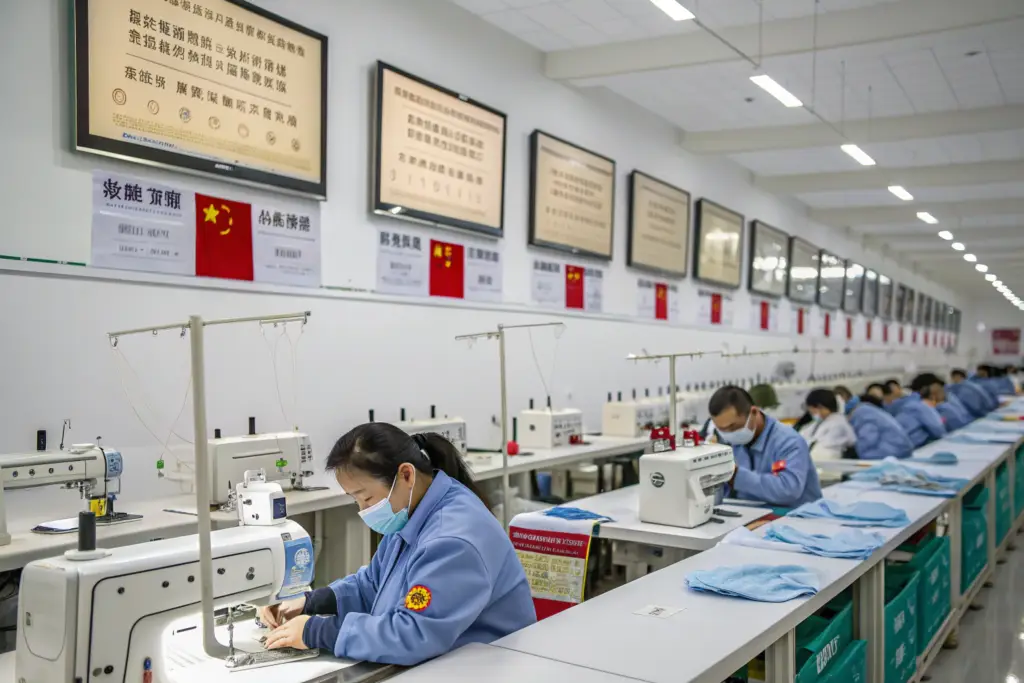
What Capabilities Does a Certified Factory Bring to the Table?
- Innovation in Sustainable Materials: Early access to and testing of new certified recycled fabrics, bio-based membranes, and greener chemistries.
- Risk Mitigation Expertise: Proactive identification of regulatory changes (e.g., new restricted substance lists) and supply chain disruptions.
- Co-Development: Ability to jointly develop exclusive fabric finishes or construction techniques in a controlled, certified environment.
How Does This Partnership Future-Proof a Luxury Brand?
The fashion landscape is shifting under regulatory pressures like the EU’s Strategy for Sustainable and Circular Textiles. Luxury brands will need partners who are already on the path to compliance. A factory deeply versed in OEKO-TEX’s evolving standards is already ahead of these curves, ready to help its brand partners adapt rather than scramble.
Conclusion
For luxury ski brands, partnering with OEKO-TEX certified factories is a strategic imperative, not a cost of doing business. It is the foundation for protecting a priceless reputation, delivering on uncompromising quality promises, and telling an authentic, transparent story to a discerning audience. Certification transforms the factory from a hidden, risky cost center into a visible, value-adding strategic partner.
In the rarefied air of the luxury market, where every detail is scrutinized, the assurance provided by independent, global standards is invaluable. It allows brands to focus on design and marketing, secure in the knowledge that their manufacturing foundation is solid, responsible, and aligned with the expectations of the modern luxury consumer.
If your luxury ski brand is built on integrity and performance, your manufacturing partner must be too. Shanghai Fumao is not just an OEKO-TEX certified factory; we are a strategic partner dedicated to elevating luxury brands through transparency, innovation, and impeccable execution. Let’s discuss how we can help safeguard and enhance your brand’s legacy. Contact our Business Director Elaine to begin the partnership. Email: elaine@fumaoclothing.com.