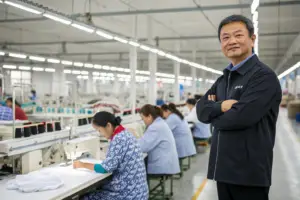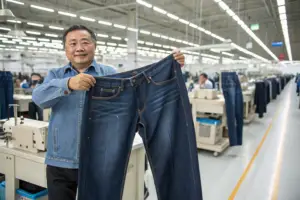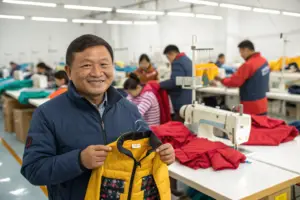
As the owner of Fumao Clothing, I've explained minimum order quantities to thousands of American apparel brands over the past decade. The frustration is understandable—you have a great design and want to produce it, only to discover the factory requires quantities that seem impossibly high. What many brands don't realize is that MOQs aren't arbitrary barriers; they're the mathematical reality of keeping our factories running and our workers paid.
Garment factories have high minimum orders because manufacturing involves significant fixed costs that must be distributed across production runs to maintain business viability and product quality. These minimums reflect the economic realities of operating industrial-scale production facilities with specialized equipment and skilled labor.
Many brands assume we could simply "scale down" our operations for smaller orders, but the economics of clothing manufacturing don't work that way. Let me walk you through the actual cost structure that makes MOQs necessary for factories like ours to survive and thrive.
What fixed costs drive minimum order requirements?
Every production run carries substantial fixed costs that remain largely the same regardless of quantity. Understanding these costs helps explain why producing 50 units often costs nearly as much as producing 200 units, making very small orders economically unfeasible.
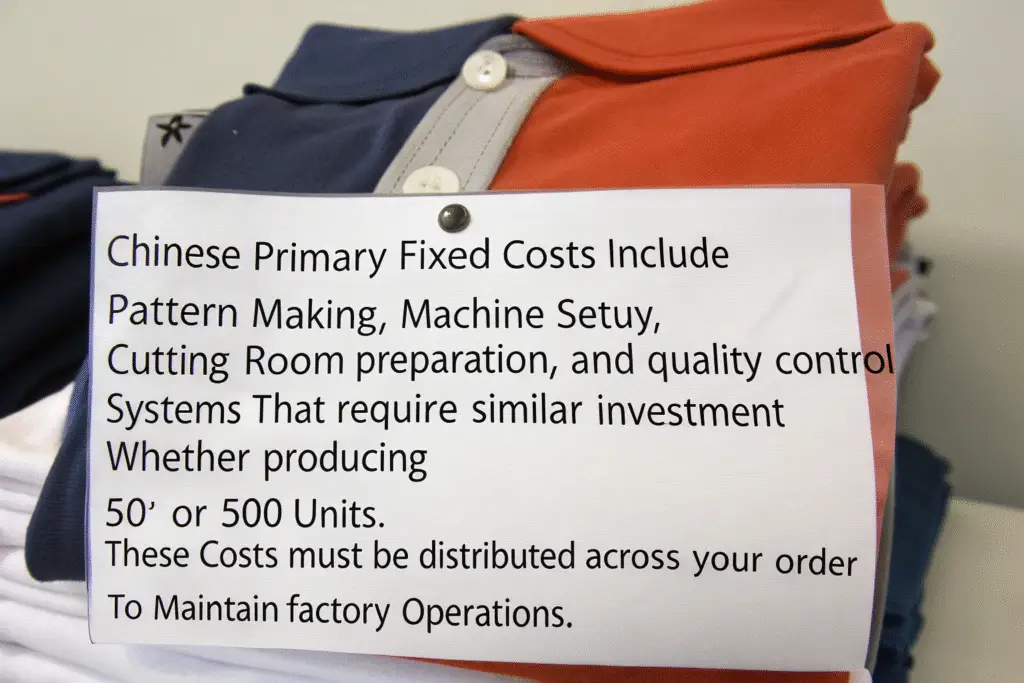
The primary fixed costs include pattern making, machine setup, cutting room preparation, and quality control systems that require similar investment whether producing 50 or 500 units. These costs must be distributed across your order to maintain factory operations.
How do pattern and sample costs impact MOQs?
Creating production-ready patterns and approval samples requires highly skilled technicians spending significant time. This process costs the same whether we're making one sample or preparing for mass production, and these costs must be recovered through your order.
Our pattern-making department costs us $85,000 monthly in salaries and equipment. When a brand orders 50 units, the pattern cost alone might represent $40 per unit. At 500 units, it drops to $4 per unit. This cost structure reality explains why we can't profitably accept tiny orders, no matter how much we'd like to help emerging brands.
Why does machine setup dictate minimum quantities?
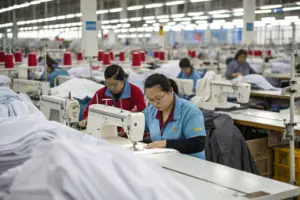
Industrial sewing machines require significant setup time between different products. Changing thread colors, adjusting tensions, and configuring attachments for specific operations can take hours—time during which expensive equipment and skilled operators sit idle.
We recently calculated that setting up our production line for a basic woven shirt takes 3.5 hours and costs approximately $280 in labor and machine downtime. For a 50-unit order requiring 8 hours of sewing time, the setup represents 30% of the total production cost. This efficiency equation makes small orders economically challenging regardless of how simple the garment might seem.
How do material minimums affect factory MOQs?
Factories don't operate in isolation—we're constrained by our own suppliers' minimum order requirements. When you request specific materials, we must purchase them in quantities that often far exceed what's needed for small production runs.
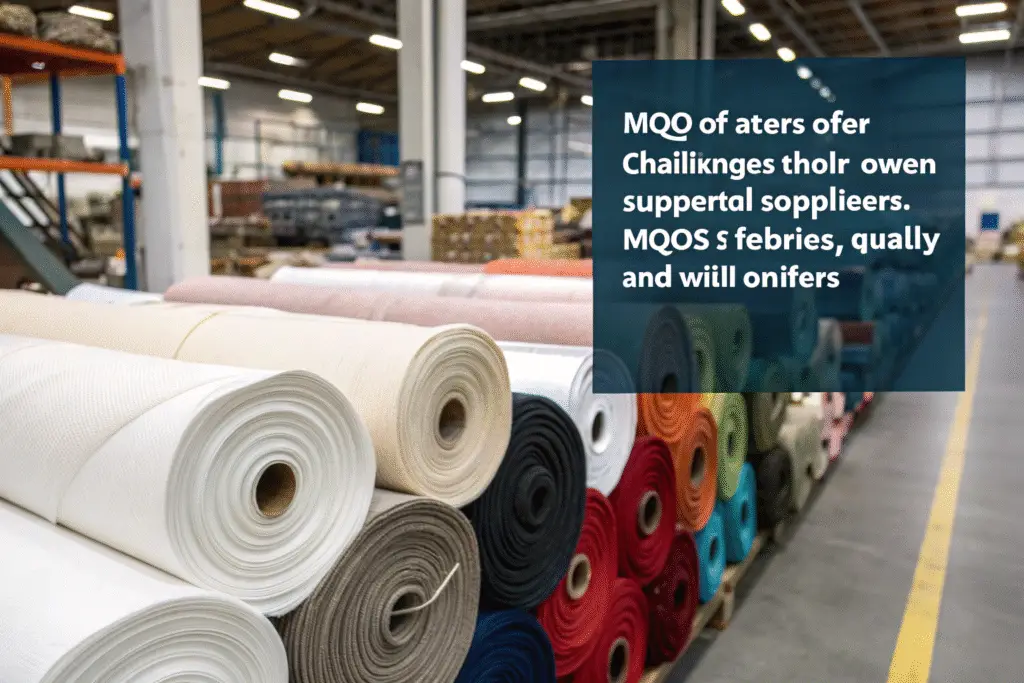
Material suppliers impose their own MOQs for fabrics, trims, dyes, and specialized components, forcing factories to either purchase excess inventory or decline small orders. These upstream minimums directly impact what we can offer our clients.
Why do fabric mills require high minimums?
Textile production involves massive setup costs for weaving, knitting, and finishing equipment. Mills typically require minimum orders of 500-3,000 yards depending on fabric complexity, far exceeding what small apparel orders require.
A brand recently wanted custom-developed technical fabric for their 100-unit order. The mill minimum was 1,200 yards—enough for approximately 600 units. We either had to decline their order, purchase excess fabric we might never use, or significantly mark up their small order to cover the waste. This supply chain reality explains why custom materials dramatically increase MOQ requirements.
How do trim and component minimums impact orders?
Even small components like buttons, zippers, and labels often come with significant minimum order requirements. Factories must either stock these items (tying up capital and storage space) or require clients to meet component MOQs.
We maintain a $35,000 inventory of common trims to accommodate smaller orders, but specialized or custom components typically require minimum purchases. A brand wanting custom metal buttons for their 150-unit order discovered the button manufacturer required a 5,000-piece minimum. These component constraints often surprise brands but significantly impact what quantities are feasible.
How does production efficiency dictate minimum orders?
Garment manufacturing achieves efficiency through specialization and repetition. Workers become faster and more accurate when repeating the same operations, while frequently changing products creates constant relearning and quality variations.
Production efficiency increases dramatically with quantity due to the learning curve effect, optimized workflow, and reduced quality issues that come with repetition. This efficiency directly impacts both cost and quality, making larger orders more desirable for factories.
What is the learning curve effect in garment production?
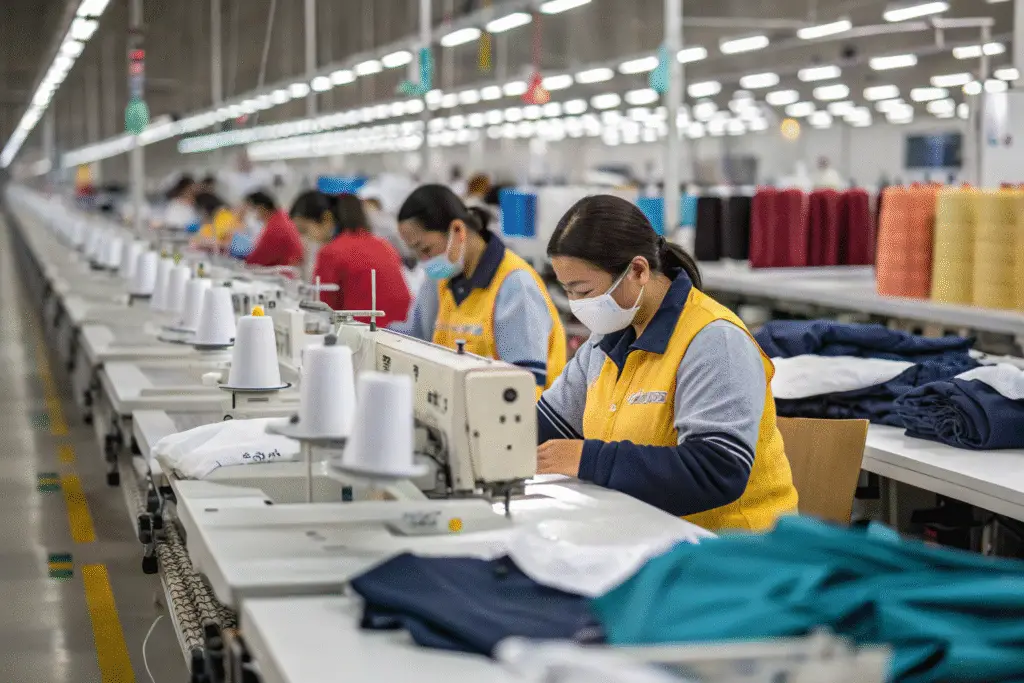
Sewing operators typically need 50-100 units to reach peak efficiency on a new style. During this learning period, production speeds are slower, and error rates are higher—costs that must be absorbed by the overall order.
We track efficiency across all styles and consistently see the same pattern: operators reach maximum speed around unit 80-100. For a 150-unit order, nearly two-thirds of the production occurs at suboptimal efficiency. This learning curve reality means tiny orders never achieve the efficiency needed for competitive pricing.
How does workflow optimization require larger quantities?
Efficient factory workflow involves balancing multiple operations across different stations and workers. Small orders disrupt this balance, creating bottlenecks and idle time that increase costs for all orders in production.
Our factory operates most efficiently with production runs of 3-5 days per style. A 50-unit order might take one day, requiring constant line reconfiguration that reduces overall factory efficiency by 15-20%. These workflow impacts affect not just one order but our entire operation, explaining why we prioritize clients whose orders fit our efficient production windows.
What quality control factors influence MOQs?
Maintaining consistent quality requires significant investment in inspection systems, testing equipment, and skilled personnel. These quality assurance costs remain largely fixed regardless of order size, making them proportionally more expensive for smaller orders.
Quality control involves fabric testing, in-process inspections, and final audits that require similar time and resources whether checking 50 or 500 units. Spreading these fixed quality costs across more units makes larger orders more economically viable.
How do inspection systems affect minimum orders?
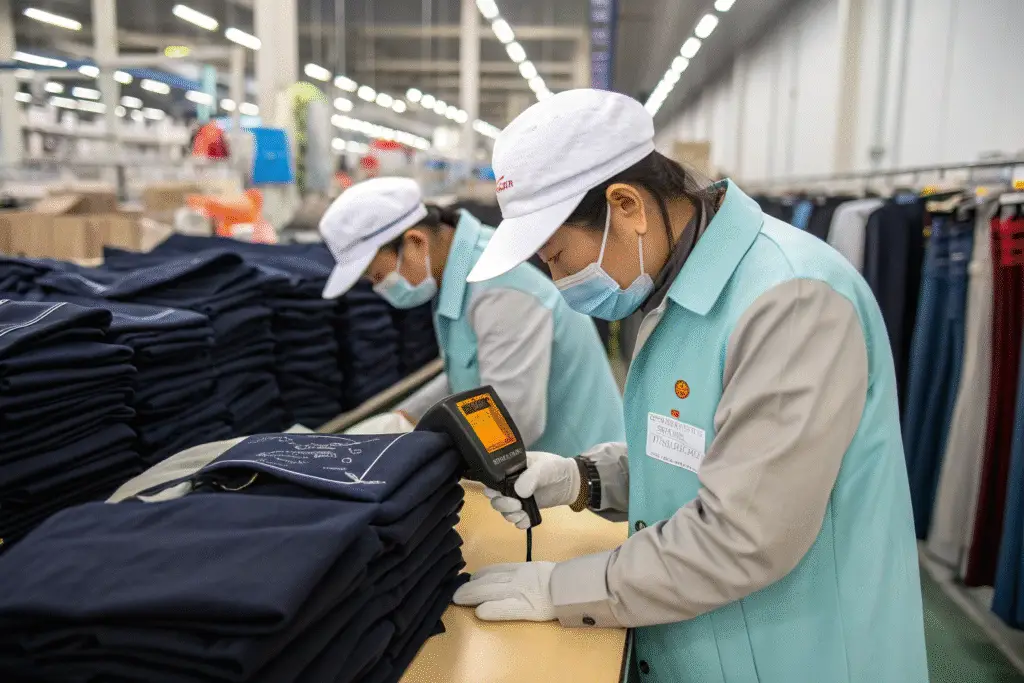
Comprehensive quality control requires inspecting random samples from each production lot. The statistical validity of these inspections requires minimum lot sizes to ensure defects are detected before shipment.
Our quality assurance protocol requires checking 15% of units for orders under 200 pieces and 10% for larger orders. For a 50-unit order, we're inspecting 7-8 pieces—barely enough to identify pattern issues. At 500 units, we inspect 50 pieces, providing much better defect detection. This statistical reality means smaller orders inherently carry higher quality risk.
Why does testing equipment dictate minimums?
Factories invest heavily in specialized testing equipment for fabrics and garments. The cost of operating this equipment must be distributed across production runs, making larger orders more cost-effective.
Our lab contains $120,000 worth of testing equipment for colorfastness, shrinkage, seam strength, and other quality metrics. Running a full battery of tests costs approximately $350 regardless of order size. For a 50-unit order, this represents $7 per unit just for testing. For 500 units, it's $0.70 per unit. These testing economics significantly impact what quantities make business sense.
How do business sustainability concerns affect MOQs?
Factories aren't charities—we need to maintain profitable operations to continue serving our clients and employing our workers. The business reality is that very small orders often don't generate enough margin to justify the management attention and resource allocation they require.
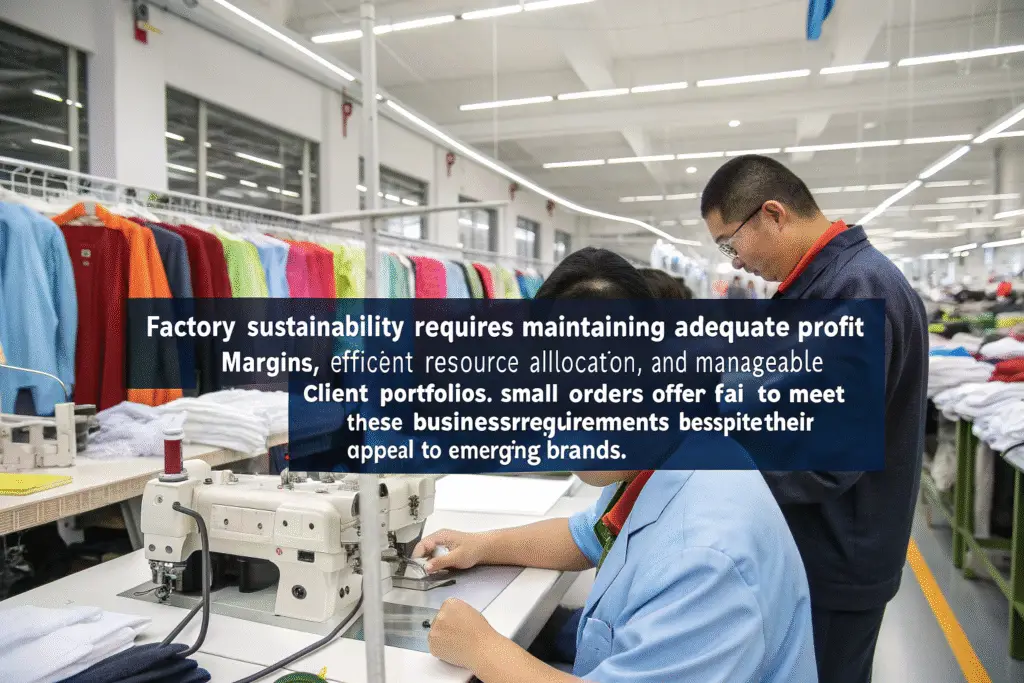
Factory sustainability requires maintaining adequate profit margins, efficient resource allocation, and manageable client portfolios. Small orders often fail to meet these business requirements despite their appeal to emerging brands.
How do profit margins dictate minimum orders?
Small orders typically generate lower absolute profit despite higher per-unit margins because the fixed costs consume most of the revenue. Factories need sufficient total profit per order to justify the management overhead.
We recently analyzed our order profitability and discovered that orders under 100 units generated an average of $240 profit despite requiring similar management attention as 500-unit orders generating $2,100 profit. This profitability reality means accepting too many small orders would jeopardize our ability to maintain our facility and staff.
Why does client management impact MOQ policies?
Managing client relationships requires significant time for communication, problem-solving, and coordination. Factories naturally prefer clients who represent substantial business rather than spreading limited resources across many small accounts.
Our sales and management team spends approximately 5-7 hours per client regardless of order size. For a 50-unit order generating $2,500 revenue, this represents an unsustainable allocation of resources. This client management math explains why factories increasingly implement MOQ policies that ensure we can properly serve the clients we accept.
Conclusion
Minimum order quantities exist because garment manufacturing involves substantial fixed costs, supplier constraints, efficiency requirements, and business realities that make very small orders economically challenging. While frustrating for emerging brands, these minimums reflect the mathematical reality of operating sustainable manufacturing businesses.
The most successful brands understand these constraints and develop strategies to meet minimums through collection planning, phased production, or strategic partnerships. They view MOQs as business parameters to navigate rather than arbitrary barriers.
If you're struggling with MOQ requirements, we'd be happy to discuss strategies that might make your production feasible. Contact our Business Director, Elaine, at elaine@fumaoclothing.com to explore whether your project might fit within our production framework or if alternative approaches might better serve your needs.