If renters don’t know how to handle garments, they’ll return them damaged—and your brand will pay the price.
Educating consumers is the key to better garment care, fewer returns, longer product lifecycles, and stronger environmental and economic outcomes for rental businesses.
Renters aren’t experts in garment handling—and that’s okay. But we can’t blame them for damage if we never taught them how to care. Let’s explore why education is your best investment.
Why is consumer education important?
Most rental users want to help—but don’t know how.
Consumer education empowers renters to handle garments properly, reduces accidental damage, and helps extend product lifespan—all of which protect brand reputation and profitability.
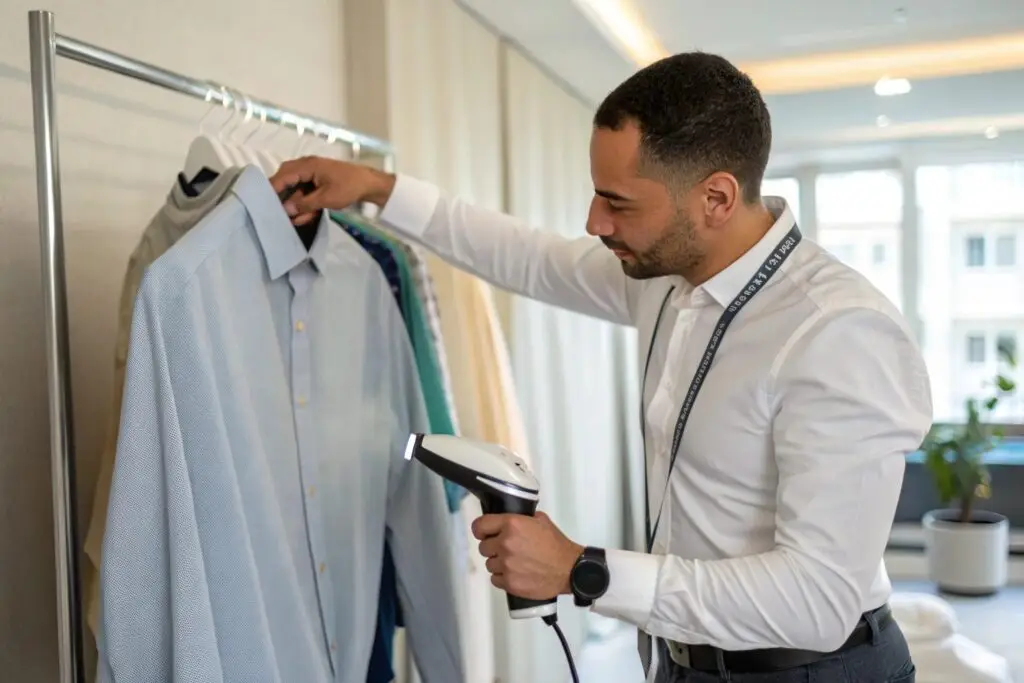
How does a lack of education lead to preventable damage and higher operational costs?
Many rental returns we’ve seen come back with scorch marks from ironing, stretched-out necks from poor hanging, or pilling caused by overuse of home washers. These are unintentional mistakes. But each one shortens a garment’s life.
One of our clients was losing 8% of their dresses every month to misinformed renter behavior. We helped them launch a simple educational insert card1, paired with a QR code for care videos2. Within 2 months, damaged returns dropped by 31%.
Here’s the truth: renters don’t damage garments on purpose. But if you don’t teach them, you’re leaving your products—and your profits—at risk.
Why does proactive renter guidance boost satisfaction and reduce anxiety?
Customers want to get it right. But without guidance, they’re unsure. They ask:
- Should I steam this?
- Can I wear it outside if it’s drizzling?
- Will I be charged for a small stain?
Answer these questions before they’re asked. One rental platform we supply includes “care confidence” badges—little reminders like “wrinkle-safe,” “color-stable,” or “spot clean only.” These increase usage satisfaction and reduce return anxiety.
When renters feel equipped, they feel empowered. And empowered renters become repeat customers.
Why is it necessary to educate the consumer about the need for his or her protection?
Rental isn’t just about protecting the brand—it’s about protecting the renter from mistakes.
Educating the renter protects them from unexpected charges, disappointment, and stress—while protecting your garments from accidental misuse.

How can renter education3 prevent misunderstandings and financial disputes?
Some platforms penalize renters for damage—but renters often aren’t told what counts as damage. That creates conflict. But with education, the tone shifts. Renters know the expectations and feel respected, not policed.
We suggest using transparent, renter-first language4. Instead of “You’ll be charged for damage,” say:
“Help us keep this item in rotation. Here’s how to care for it.”
Clear, kind education reduces angry emails, bad reviews, and refund demands. One of our clients replaced their penalty warning with a “How to Avoid Fees” guide—returns went up, complaints went down.
What emotional role does renter education play in reducing damage?
Renting is intimate. It’s someone else’s dress. That makes people nervous. When renters feel like they’re part of the process—stewards of the garment—they take better care.
We’ve seen renters share tips with each other: “Use a steamer, not an iron!” or “Don’t hang the sweater—it stretches.” That kind of culture only grows when the brand starts the conversation.
Your garment care guide5 isn’t just instructions. It’s a relationship-builder.
What is the principle of consumer education?
Education isn’t one-time—it’s baked into the experience.
The principle of consumer education is to empower decision-making through simple, ongoing, and visual guidance that leads to better outcomes for both users and brands.

Why does passive instruction fail while interactive education6 sticks?
Taglines like “Handle With Care” don’t work. People ignore them. But a 10-second unboxing video? A checklist on the return bag? A QR code that leads to a “Care Tips in 3 Steps”? Those stick.
One brand we support puts a foldout care panel inside every garment bag. It’s visual, touchable, and renter-friendly. Results? 23% fewer damage claims, 2.5x higher repeat rentals in six months.
Here’s a framework we often suggest:
| Education Element | Purpose | Format Example |
|---|---|---|
| Entry reminder | Prepares the renter | Email: “How to get the most out of your rental” |
| On-product guidance | Prevents damage | Tag: “Steam only, no iron” |
| Return-day checklist | Reassures renter & confirms care | Card: “Did you…” with checkboxes |
| Gamified rewards | Reinforces good behavior | Badge: “5 Perfect Returns” |
Education is a UX feature. Bake it into every step.
How can brands scale renter education7 without increasing operational burden?
The answer is automation + content. We’ve helped clients build video libraries by garment type (blouses, suits, etc.) and auto-embed them into order confirmations.
Some even personalize. For VIP renters, they get style-specific care guides. For new users, the basics. This kind of segmentation delivers big impact without manual labor.
Better yet, it reduces customer service strain. When renters know how to handle a silk dress, they don’t ask or panic. Everyone wins.
How does renting clothes help the environment?
When garments last longer, the planet breathes easier.
Rental fashion reduces environmental impact by lowering garment production rates, minimizing waste, and encouraging circular use—but only if renters extend the garment lifespan through proper care.

Why is renter care8 essential to delivering on rental fashion’s sustainability promise?
You can’t be sustainable if your garments die young. One ruined blouse that could’ve lasted 20 uses? That’s a missed environmental opportunity.
We tell our clients: sustainability isn’t just about fabric—it’s about reuse9. And reuse depends on care. We test our rental collections for longevity, but it takes both sides—factory and user—to reach full cycle.
Here’s a typical example:
| Garment Use Cycle | Avg. CO₂ Saved vs. Retail Equivalent |
|---|---|
| 1–2 rentals (damaged early) | Low (5–10%) |
| 5–10 rentals (standard use) | Moderate (30–50%) |
| 15–20 rentals (well-maintained) | High (60–70%) |
The math is simple: every additional use increases ROI—financially and environmentally.
How can renter education10 make sustainability feel personal?
People want to feel like they’re doing good—but not just for the planet. They want to know their action matters.
We encourage clients to add messages like:
“Thanks to your care, this blouse will serve 12 more renters.”
That one line connects user behavior with impact. Some brands even show stats: “You saved 5,000 liters of water by renting.”
When education meets emotion, sustainability becomes real.
Conclusion
Renter education isn’t optional—it’s strategic. It reduces damage, increases satisfaction, and unlocks the full promise of sustainable fashion. Teach well, and your garments—and brand—will thrive.
-
Explore how educational insert cards can enhance renter experience and reduce garment damage, leading to better customer satisfaction. ↩
-
Discover the impact of care videos on educating renters, reducing damage, and increasing garment longevity. ↩
-
Explore how renter education can foster better communication and understanding, reducing conflicts and enhancing the renting experience. ↩
-
Learn about the importance of using clear and respectful language in rental agreements to build trust and reduce disputes. ↩
-
Discover how a well-crafted garment care guide can enhance renter engagement and promote better care of items. ↩
-
Explore this link to understand the benefits of interactive education and how it enhances learning retention. ↩
-
Discover effective strategies for renter education that can improve customer satisfaction and reduce damage claims. ↩
-
Understanding renter care is crucial for maximizing the sustainability of rental fashion. Explore this link to learn more about its impact. ↩
-
Reuse is a key factor in sustainable fashion. Discover how it can transform the industry and reduce waste. ↩
-
Renter education empowers consumers to make informed choices, enhancing sustainability efforts. Find out more about its significance. ↩