
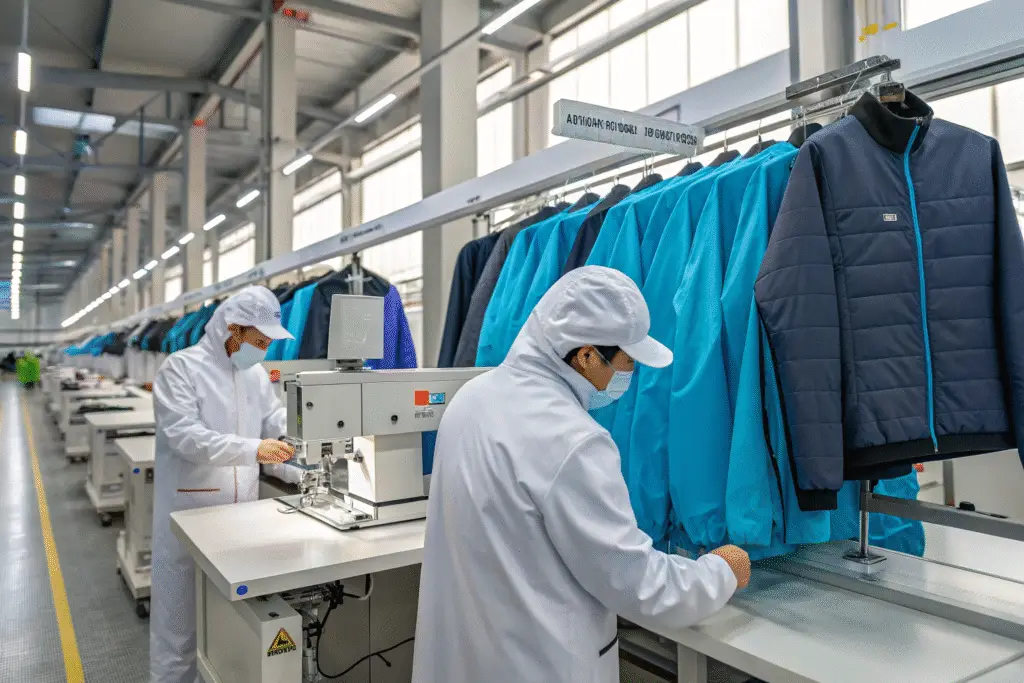
When I first heard U.S. buyers asking about welded seams instead of stitches, I thought, “Really? No thread at all?” It sounded almost like a gimmick. But after working on several activewear and rainwear orders, I realized it’s not just a marketing trick. Traditional stitching is safe, yes, but it pokes holes, frays edges, and sometimes slows production. Welding, by contrast, uses vibrations to melt fibers together—no thread, no needle. And honestly, the results surprised me.
To put it simply, welding delivers smoother seams, stronger joints for synthetics, waterproof protection, and that sleek tech look buyers love. It’s not perfect, and I’ll admit it doesn’t work everywhere. But in the right place, it’s a real upgrade.
From my observation, some buyers in the U.S. now ask if we can mix both methods—stitching where it’s flexible, welding where it adds value. I think that hybrid approach makes sense, and it reflects where the market is heading.
Seamless and Clean Finish
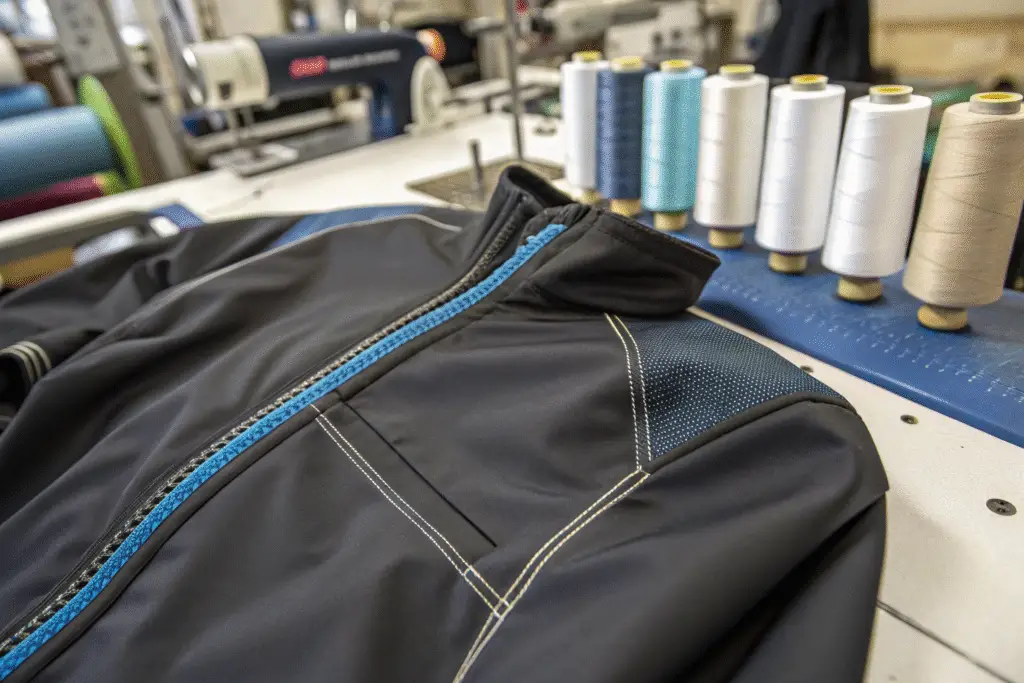
The first thing people notice about welded garments is how neat they look. There’s no messy thread, no holes, no loose ends. The seam sits flat against the fabric. In my experience, when buyers hold a welded legging next to a stitched one, they almost always say, “This just feels more premium.”
And they’re right. It’s a finish that feels modern and technical.
Why do seamless finishes matter?
Well, details matter. A flat, stitch-free seam looks futuristic. Brands in sportswear and even luxury fashion use welding to show innovation. For citywear and techwear, that look speaks louder than a logo.
How do welded seams improve comfort?
Actually, comfort might be the bigger win. Athletes often complain about chafing where thread rubs the skin. Welded seams remove that friction. I’ve seen lingerie samples welded instead of stitched, and the difference is obvious—smooth, invisible under clothing. Think of seamless bras at Victoria’s Secret. Or welded sportswear from Under Armour where long runs feel less irritating. That’s a selling point buyers don’t ignore.
Stronger Bond in Synthetic Fabrics
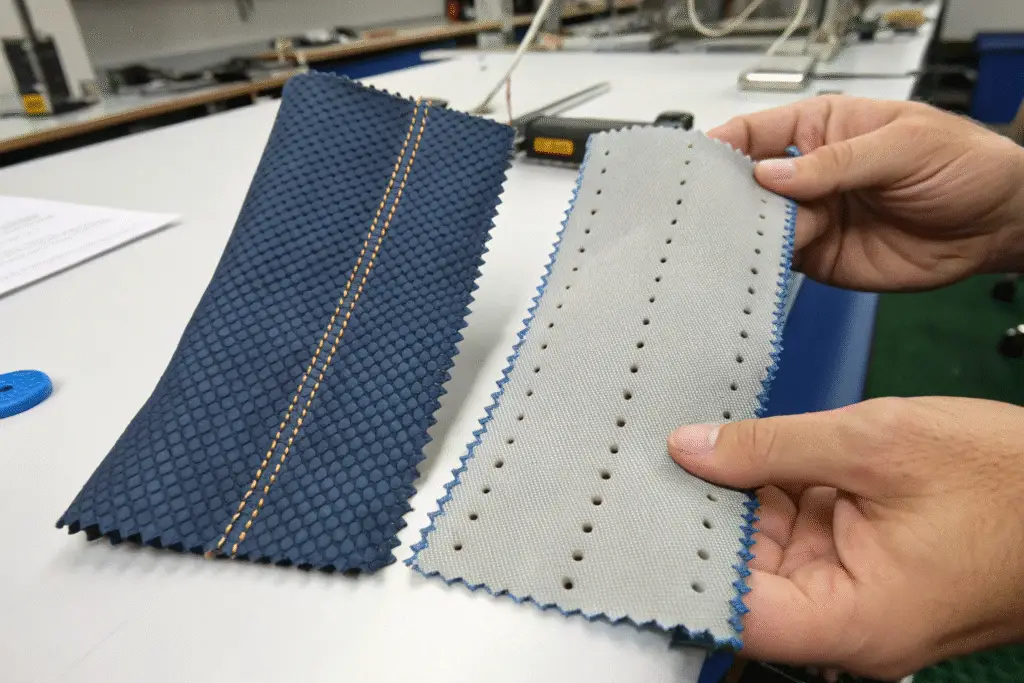
Here’s something many people don’t realize: stitching actually weakens synthetic fabrics. Every needle hole is a stress point. Welding avoids that. It fuses the fibers themselves, creating a continuous bond.
In certain synthetics, welded seams can outlast stitched ones.
Why is bonding stronger in synthetics?
Because fabrics like polyester soften with heat. Welding takes advantage of that. It melts and bonds the fibers into one surface. When tested at labs like Intertek, welded seams often show higher pull strength. In other words, when you tug hard, the stitched seam pops but the welded one holds.
What are the limitations?
Of course, not every fabric works. Cotton doesn’t weld well, and blends can be tricky. That’s why stitching will never disappear. Still, in technical categories like medical textiles, welding has become standard. I once had a buyer frustrated because their stitched protective gear leaked under stress tests. Switching to welding solved the issue instantly. That was a lesson for me too.
Waterproof and Airtight Performance
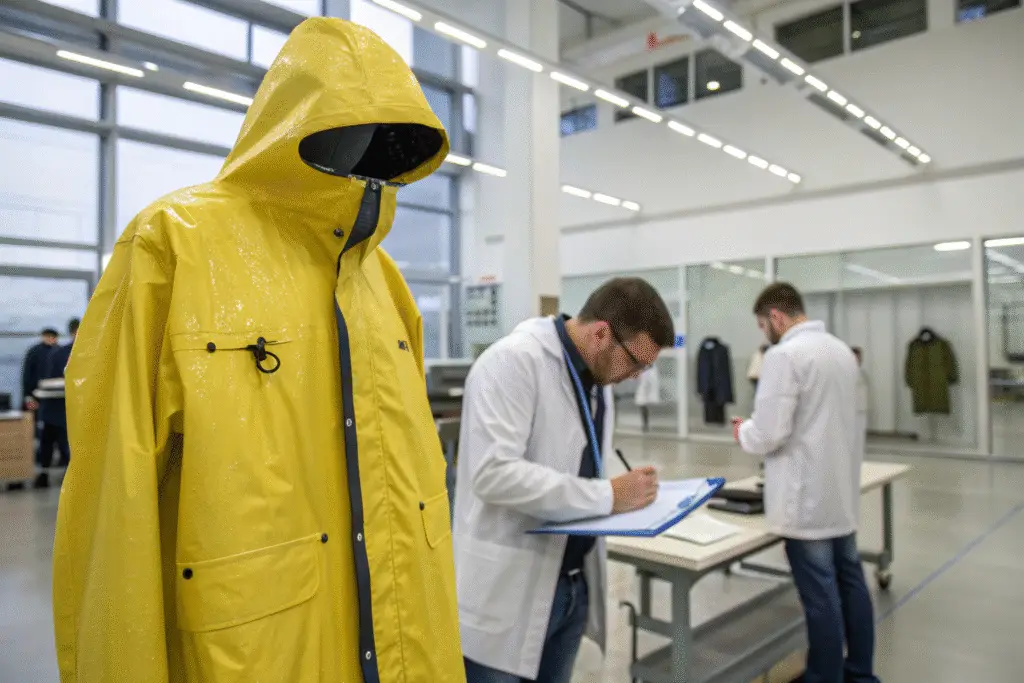
Ask any outdoor brand: seam leaks kill products. Even when you tape stitched seams, water still finds a way. Welded seams are naturally waterproof because there are no holes to begin with.
That’s why rainwear and protective suits benefit most.
Why do welded seams matter in rainwear?
Customers want rain jackets that really keep water out. I’ve seen buyers send back stitched jackets after field tests, complaining about leaks in the seams. Brands like The North Face or Patagonia highlight welded technology in their premium gear, and customers trust that.
What about swimwear and protective gear?
In swimwear, welded seams reduce drag. Competitive suits from Speedo sometimes use welded construction for smoother flow. And in protective suits, it’s about safety. Dupont Tyvek relies on welding to seal out hazardous particles. From my side, I’ve handled orders where buyers insisted on welding—not because of looks, but because regulations demanded it.
Faster Production and Futuristic Design
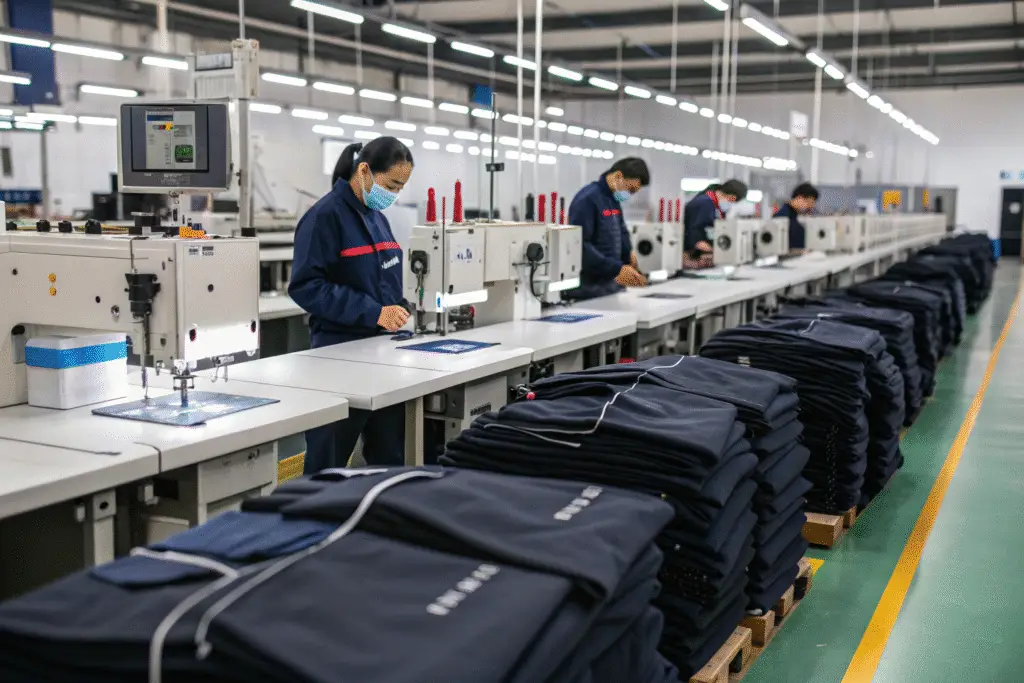
Production speed is something buyers often overlook at first. Stitching means thread breaks, bobbin changes, and trimming. Welding skips all that. Once calibrated, machines can run faster, with fewer stops.
For large orders, that time savings can make or break delivery deadlines.
How does welding speed up production?
Well, imagine sewing thousands of leggings. Every time a needle jams or a bobbin empties, work slows. Welding avoids that. In my factory, I’ve seen output almost double on certain seams. Reports from Textile World back this up—cycle times can drop by half.
Why do buyers like the design look?
Beyond efficiency, it’s the aesthetic. Welded seams look minimal, almost futuristic. I’ve heard buyers call them “Apple-like”—clean, precise, modern. Designers at Acronym use welding as a visual element itself, making seams part of the style. For mainstream brands, it becomes a marketing story: “Look, no stitches.” And honestly, it works.
Conclusion
Sonic welding isn’t magic, and it’s not replacing stitching entirely. But for synthetics, activewear, rainwear, and technical gear, it offers clear advantages: clean finishes, stronger seams, waterproof protection, faster runs, and a high-tech look. It’s one of those tools that, once you see it in action, you realize it opens design and production options you didn’t have before.
As someone who runs a factory in China, I’ve had plenty of buyers frustrated by broken threads or late seam taping. Welding solves some of those headaches. Of course, it takes investment and training. But in my opinion, the payoff is worth it. If you want to explore ultrasonic welding for your next collection, contact our Business Director Elaine at elaine@fumaoclothing.com. I think you’ll see how this technology can make your garments both functional and future-ready.




