
Importing clothing involves navigating a complex web of logistics, customs, and hidden fees. Many brands focus solely on the FOB price, only to be hit with unexpected charges that erode their margins after the goods leave the factory. For business owners seeking simplicity, cost predictability, and reduced operational hassle, the choice of shipping terms is as strategic as the choice of manufacturer.
Choosing a DDP (Delivered Duty Paid) supplier simplifies your clothing import business by having the supplier handle all logistics, customs clearance, and pay all taxes and duties, delivering the goods directly to your warehouse. This provides a single, predictable landed cost and shifts major risks and administrative burdens to the supplier.
This article explores the concrete advantages of DDP, moving beyond theory to show how it impacts your daily operations, bottom line, and ability to scale. We'll compare it with other terms and highlight when it makes the most financial sense.
How Does DDP Simplify Your Logistics and Planning?
Managing international logistics requires expertise in freight forwarding, customs brokerage, and domestic trucking—areas outside most fashion brands' core competencies. DDP consolidates this complex chain under a single point of responsibility: your supplier.
DDP simplifies your logistics and planning by providing one point of contact, one comprehensive invoice, and a single delivery timeline from factory floor to your warehouse door. It eliminates the need for you to coordinate between multiple service providers and manage complex international shipping documents.
The simplification is both operational and mental, freeing you to focus on your business.
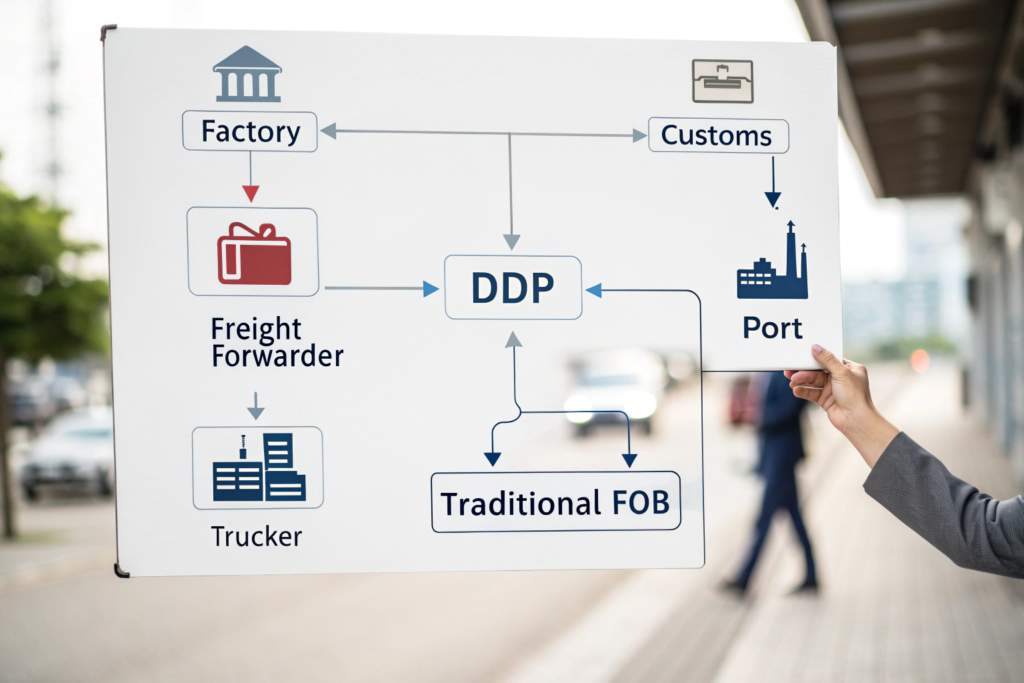
What Tasks Does the DDP Supplier Handle For You?
A full-service DDP supplier manages the entire journey:
- Export Customs Clearance: They handle all documentation in the country of origin (e.g., China's export declarations).
- International Freight: They book and pay for ocean or air freight.
- Import Customs Clearance: Their agent in your destination country (e.g., the USA) files ISF (Importer Security Filing), pays duties and tariffs, and clears goods through customs.
- Port Services & Domestic Delivery: They cover port handling fees, drayage (port trucking), and final delivery to your specified address.
In 2023, a Miami-based client switched to our DDP service at Shanghai Fumao. Previously with FOB, they spent over 15 hours per shipment coordinating their forwarder and US customs broker, dealing with document errors. With DDP, they simply received a schedule and a single invoice, saving them an estimated 60 hours of administrative work in a year.
How Does This Improve Your Supply Chain Visibility?
A professional DDP provider offers integrated tracking. Instead of getting fragmented updates from a forwarder, a customs broker, and a trucking company, you receive a unified tracking report. This report typically covers vessel departure/arrival, customs clearance status, and final delivery estimation. This end-to-end visibility drastically reduces uncertainty and allows for more accurate inventory and sales planning, as you know exactly when goods will land in your warehouse.
What Are the True Cost Advantages of DDP?
While the DDP price per garment is higher than an FOB price, it represents the landed cost. The true advantage lies in cost predictability, avoidance of hidden fees, and often, better overall rates due to the supplier's volume and expertise.
The true cost advantages of DDP are predictability (no surprise fees), potential savings through the supplier's negotiated freight rates, and the elimination of internal administrative costs associated with managing logistics yourself.
Let's break down where the savings and predictability come from.

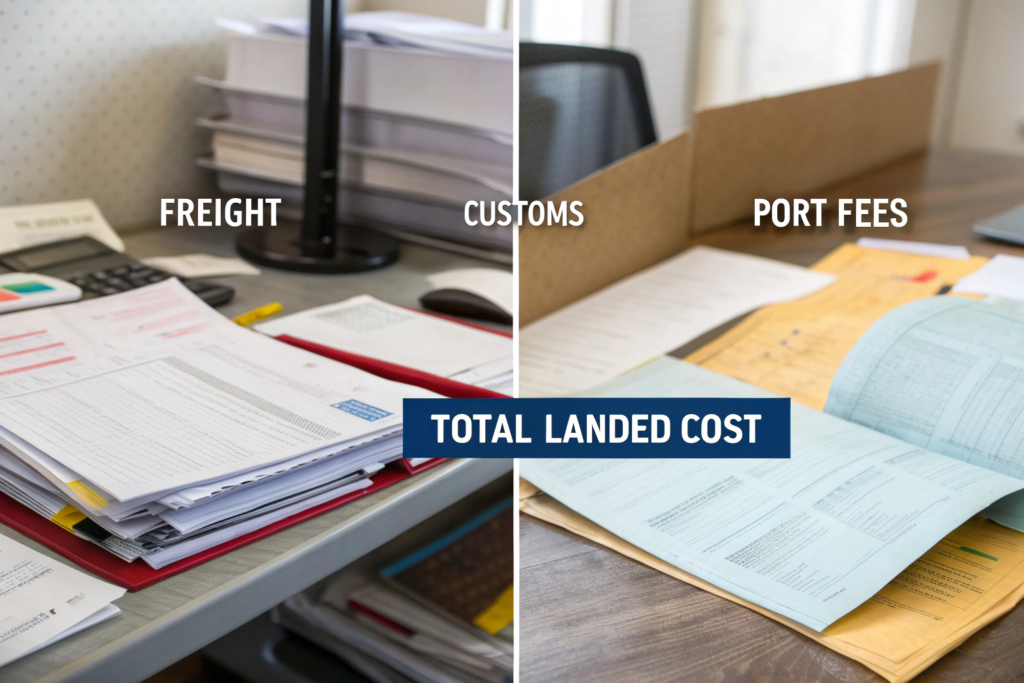
How Does DDP Eliminate Hidden and Unexpected Fees?
With FOB, you are responsible for all costs after the goods are loaded on the vessel. These can include:
- Freight Rate Surcharges: (BAF, CAF) that fluctuate monthly.
- Destination Port Fees: Wharfage, handling.
- Customs Bond and Clearance Fees.
- Demurrage and Detention: If your customs paperwork is delayed, even by a day, hundreds of dollars in daily fees can accrue at the port.
With DDP, the supplier's quoted price includes all these costs. They absorb the risk of delays and fee fluctuations. Your cost is locked in upon order confirmation.
Can DDP Actually Be Cheaper Than Managing It Yourself?
Often, yes, when you consider total cost. Factories like ours at Shanghai Fumao ship hundreds of containers per year. We have negotiated freight rates with carriers that are far better than what a small or mid-sized brand can secure. We also have established, efficient processes that minimize port fees. When you add up the FOB cost + your freight forwarder's fee + customs broker fee + unpredictable port charges, the total frequently meets or exceeds a competitive DDP price. Furthermore, you save the salary hours spent managing the process. For a brand we partnered with last year, our DDP quote was only 8% higher than their FOB cost, but it saved them an estimated 12% in hidden fees and internal labor, making it 4% more cost-effective overall.
How Does DDP Reduce Risk and Liability for Your Business?
Importing goods comes with inherent risks: goods can be held, seized, or destroyed by customs for non-compliance; they can be damaged in transit; and you assume all liability once they leave the factory under FOB terms. DDP fundamentally shifts where these risks lie.
DDP reduces risk and liability for your business by making the supplier responsible for the goods until they are delivered to your designated location. This includes risk of loss, damage, and crucially, the legal and financial liability for correct customs classification and duty payment.
This risk transfer is a major legal and financial benefit.
What Happens if There is a Customs Problem Under DDP?
Under DDP, the supplier (or their appointed agent) is the importer of record on paper for customs purposes until delivery is complete. If there is an issue—incorrect Harmonized System (HS) code, undervaluation, or missing documentation—the supplier's customs broker must resolve it at the supplier's cost and time. Your goods and your cash flow are not held hostage. Last quarter, a shipment of our client's puffer jackets was randomly selected for a material test by US customs. As the DDP provider, our broker handled all communication, provided the necessary documentation, and covered any associated delays without any cost or stress to the client.
Who is Liable for Goods Lost or Damaged in Transit?
With DDP, the supplier has contracted the entire freight journey. Therefore, they carry the insurance risk and must file any claims if goods are lost or damaged at sea or in port. You only accept the goods upon final delivery to your warehouse. If a container falls overboard, it's the supplier's problem to replace the production or refund you, not yours to chase an insurance company overseas. This provides immense peace of mind.
Is DDP Suitable for All Business Sizes and Order Types?
While DDP offers compelling advantages, it is not a one-size-fits-all solution. Its suitability depends on your business volume, internal expertise, and the nature of your orders. Understanding the trade-offs is key.
DDP is highly suitable for small to medium-sized businesses, first-time importers, and brands placing consolidated orders. It may be less optimal for giant corporations with dedicated logistics departments or for test orders where maximum cost flexibility is needed.
Let's examine the ideal and less-than-ideal scenarios.
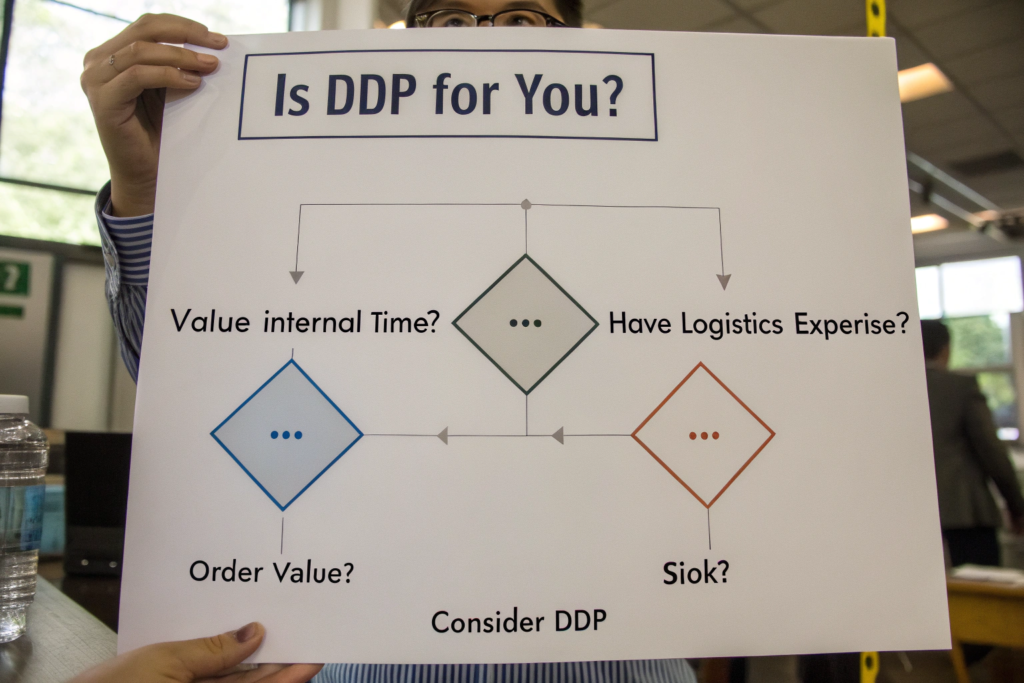
Why is DDP a Game-Changer for Small and New Brands?
For a startup, time and focus are the scarcest resources. DDP allows the founder to concentrate on design, marketing, and sales, not on learning incoterms and customs regulations. It also provides perfect financial predictability, which is essential for cash-strapped new businesses. There are no budgeting surprises. Furthermore, using a DDP supplier like Shanghai Fumao acts as a de-facto guide through the entire import process, providing education and support that would otherwise come from costly mistakes.
When Might FOB or Other Terms Be Preferable?
- For Extremely Large Volume Brands: Corporations shipping hundreds of containers annually may have their own dedicated logistics team that can manage the chain at a lower cost than a supplier's DDP markup.
- For Ultra-Small Test Orders: For a 50-piece sample run via air freight, the DDP formalities and cost structure might be disproportionate. A simple EXW (where you arrange everything) or FOB might be simpler.
- If You Have a Trusted, Incumbent Logistics Partner: If you already have a fantastic freight forwarder and broker you've worked with for years, you might prefer to keep using them (FOB) to maintain that relationship.
The key is to analyze your total cost of ownership, not just the unit price.
Conclusion
Choosing a DDP supplier is a strategic decision that prioritizes simplicity, cost predictability, and risk reduction over managing the granular details of international logistics. It transforms a complex, multi-vendor process into a single, accountable partnership, allowing you to reclaim time and mental bandwidth for growing your brand. While it may not be the absolute cheapest option on paper for every single scenario, its value in preventing catastrophic surprises and enabling smooth scaling is immense for most growing apparel businesses.
For importers who view their supply chain as a competitive advantage rather than a necessary evil, DDP is a powerful tool. It represents a partnership where the manufacturer is invested in a seamless door-to-door experience. At Shanghai Fumao, our integrated DDP service is designed to be an extension of your operations, ensuring your designs move from our production lines to your stockroom with unmatched reliability and transparency. To experience a simpler way to import, contact our Business Director, Elaine, at elaine@fumaoclothing.com.