As the owner of Fumao Clothing who has helped launch hundreds of American fashion brands, I've observed a consistent pattern: brands that start with 150-unit production runs typically navigate their first two years more successfully than those opting for either much smaller or much larger quantities. This specific number represents a strategic sweet spot that balances risk management with production efficiency.
Choosing a 150 unit MOQ provides the ideal balance between inventory risk management and production economics, offering sufficient quantity for meaningful market testing while avoiding catastrophic financial exposure. This quantity enables brands to validate products, manage cash flow, and maintain flexibility during the critical early growth phase.
Having witnessed countless brands struggle with either insufficient inventory or warehouse-full of unsold products, I've come to see 150 units as the Goldilocks zone for fashion startups. Let me explain why this specific quantity delivers such strategic advantages for emerging brands.
How does 150 units optimize inventory risk management?
Inventory risk represents the single greatest threat to new fashion brands, and 150 units creates a natural safety net that prevents business-ending overcommitment while providing enough product for meaningful market learning.
150 units limits financial exposure to survivable levels while generating sufficient sales data to inform future production decisions. This quantity represents approximately 2-4 months of inventory for most emerging brands, creating natural reassessment points.
Why is 150 units the financial safety sweet spot?
The capital tied up in 150 units typically represents a manageable investment that won't bankrupt a startup if products don't perform as expected, while still being substantial enough to justify the manufacturing effort and generate meaningful customer feedback.
We've calculated that for most emerging brands, 150 units represents $3,000-$9,000 in inventory investment—a significant but recoverable amount if things don't go as planned. One brand discovered their $6,500 investment in 150 units of their signature dress was exactly their risk tolerance threshold when the style underperformed expectations, allowing them to learn and adapt without business failure.
How does 150 units provide meaningful market validation?
Selling through 150 units generates sufficient data to distinguish between random fluctuations and genuine product-market fit. This quantity provides enough customer interactions, reviews, and return patterns to make informed decisions about product future.
A contemporary brand used their 150-unit production to test three different dress silhouettes. The sales data clearly showed one style outperforming others by 300%, giving them statistically significant validation to focus their next production on the winning design. This data-driven approach would have been impossible with tiny quantities or dangerously risky with larger commitments.
How does 150-unit production support cash flow management?
Cash flow challenges sink more fashion startups than product problems, and 150-unit production creates a financial rhythm that supports sustainable growth without excessive capital commitment.
150 units typically represents 60-90 days of inventory for emerging brands, creating natural cash conversion cycles that align with seasonal planning and prevent capital from being permanently tied up in slow-moving products. This timing supports healthy business operations.
How does 150 units accelerate cash conversion?
Smaller production quantities naturally turn over faster than large inventories, converting products back into cash more quickly. This accelerated cash conversion cycle means money isn't tied up in warehouse inventory for extended periods.
We tracked brands using 150-unit production and found they achieved 4-6 inventory turns annually compared to 2-3 turns for brands using 500+ unit production. This cash velocity advantage meant they could reinvest their capital more frequently, accelerating their learning and growth cycles significantly.
Why does 150 units minimize storage costs?
Inventory storage represents a significant hidden cost that many startups underestimate. 150 units typically requires minimal storage space, often fitting in a small warehouse corner or even a garage, avoiding substantial storage expenses.
A direct-to-consumer brand calculated they saved approximately $8,400 annually in warehouse costs by using 150-unit production cycles compared to their original plan of 500-unit imports. These savings directly improved their profitability during the crucial first two years when every dollar mattered.
How does 150-unit production enable product iteration?
The ability to learn and improve quickly provides startups with their greatest competitive advantage, and 150-unit production creates natural iteration cycles that allow products to evolve toward market perfection.
150 units creates perfect iteration cadence, allowing brands to sell through inventory, incorporate customer feedback, and launch improved versions within realistic seasonal timelines. This continuous improvement process is impossible with annual production cycles.
How does 150 units facilitate customer feedback integration?
Selling 150 units generates sufficient customer interactions to identify patterns in feedback while still turning over inventory quickly enough to implement improvements in the next production cycle. This creates a virtuous improvement cycle.
We've watched brands transform their products across multiple 150-unit production runs. One activewear company used customer feedback from their initial run to adjust leggings' rise, modify pocket placement, and improve waistband construction. By their third production, they had a customer-perfected product that consistently sold out at premium prices.
How does 150-unit production support design evolution?
Fashion brands naturally evolve their aesthetic as they better understand their customer, and 150-unit quantities allow this evolution without being stuck with large inventories of designs that no longer represent the brand direction.
A minimalist brand used six consecutive 150-unit productions to gradually refine their design language. Each production incorporated subtle improvements while maintaining core aesthetic principles. This evolutionary approach would have been impossible with 500-unit productions that would have left them with outdated designs as their aesthetic matured.
How does 150-unit MOQ align with manufacturing realities?
While 150 units represents a relatively small quantity in manufacturing terms, it sits at the threshold where professional factories can maintain quality standards while achieving reasonable efficiency.
150 units represents the intersection where emerging brand needs meet manufacturing feasibility, providing sufficient quantity for factory efficiency while remaining accessible for startup budgets. This alignment makes sustainable partnerships possible.
Why is 150 units feasible for quality-focused factories?
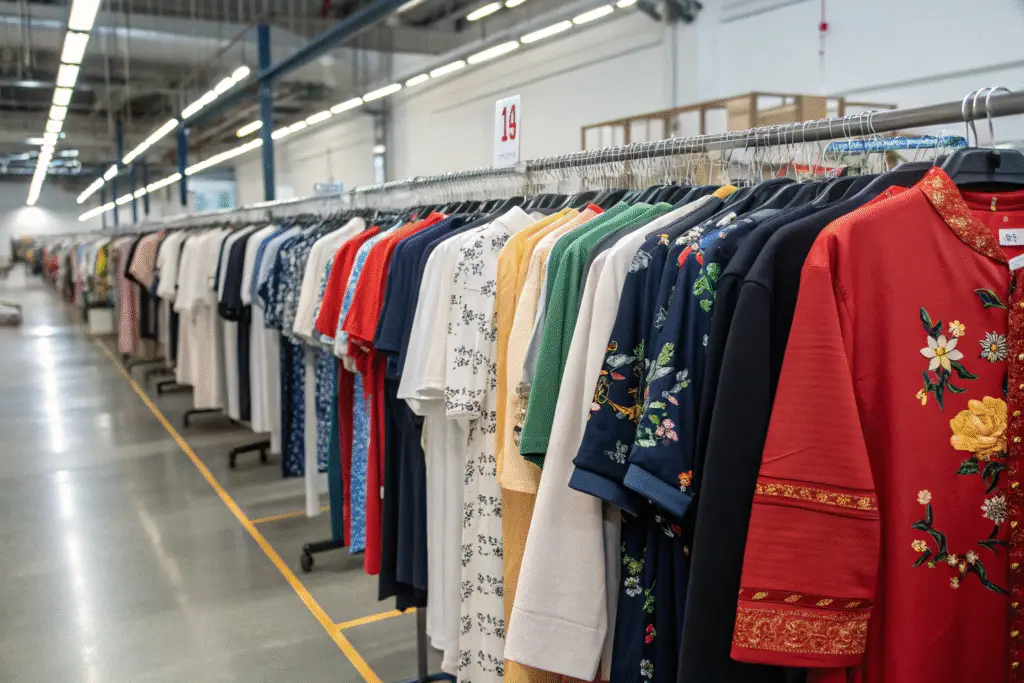
At 150 units, factories can implement proper quality control processes, utilize experienced operators, and maintain standards that would be economically impossible at much lower quantities. This threshold represents the minimum for professional manufacturing.
Our quality systems require a minimum economic threshold to function properly, and 150 units represents that threshold. Below this quantity, our inspection protocols become economically challenging, while at 150+ units we can implement comprehensive quality assurance that delivers consistent results.
How does 150 units support factory relationship building?
Manufacturers view 150-unit clients as potential growth partners rather than one-time projects. This quantity demonstrates serious intent while allowing factories to efficiently schedule production around larger orders.
We've found that brands starting with 150-unit orders typically grow into significant partners. One brand began with 150 units, established their market position, and gradually increased to 300, then 500 units as their business scaled. This growth pattern builds manufacturer confidence and often leads to better terms and priority treatment over time.
How does 150-unit production support marketing strategy?
Marketing advantages emerge from 150-unit production that aren't available with either tiny batches or mass production. These benefits can accelerate brand building and customer engagement.
150 units enables limited edition positioning, creates natural scarcity, facilitates faster trend response, and supports more frequent new product introductions. These marketing benefits drive engagement and loyalty.
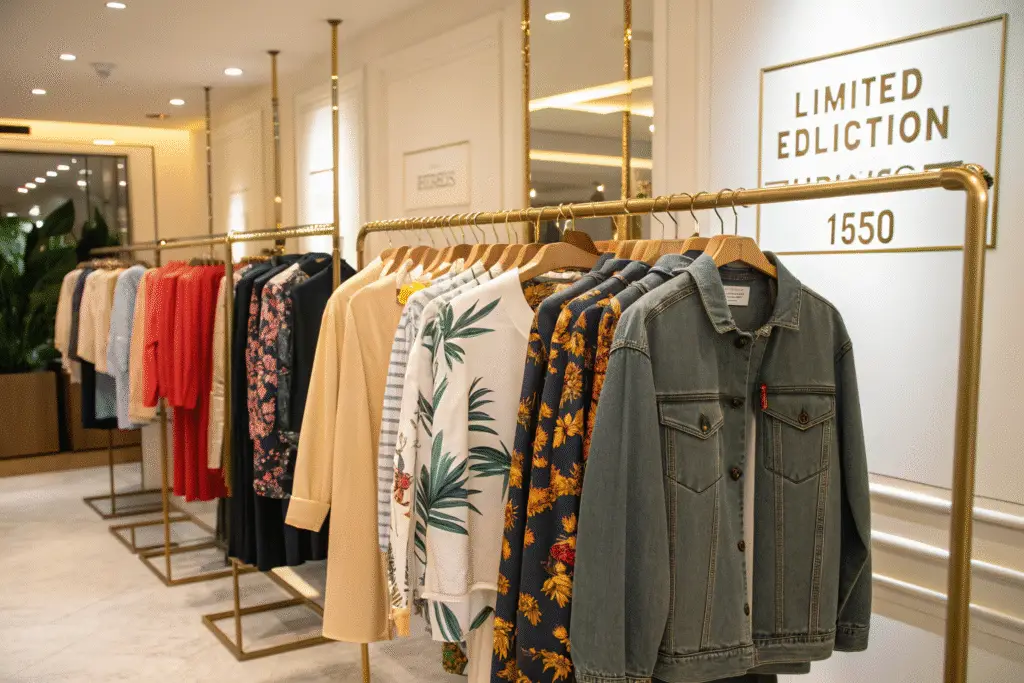
How does 150 units enable effective limited editions?
True limited editions create excitement and urgency, and 150 units provides the perfect quantity—large enough to build meaningful revenue but small enough to maintain scarcity value and sell-through rates.
We've helped numerous brands implement successful limited edition programs using 150-unit productions. One streetwear brand releases monthly 150-unit colorways of their bestselling hoodie, creating consistent customer anticipation and maintaining full-price sell-through rates exceeding 95%.
How does 150-unit production facilitate trend responsiveness?
Fashion trends move quickly, and the ability to respond can separate successful startups from those that miss opportunities. 150-unit production enables faster reaction to emerging trends than traditional manufacturing allows.
A Gen Z-focused brand capitalized on a sudden social media trend by designing, producing, and shipping a relevant style in just seven weeks using 150-unit production. This speed-to-market advantage would have been impossible with manufacturers requiring 500+ units and 16-week lead times, demonstrating how smaller quantities create competitive advantages.
Conclusion
Choosing a 150-unit MOQ for your new fashion line represents a strategic decision that balances risk management with growth potential. This quantity provides sufficient inventory for meaningful market presence while limiting financial exposure to survivable levels.
The most successful emerging brands use 150-unit production as their foundational strategy, creating natural rhythms of production, sales, learning, and improvement that support sustainable growth. This approach transforms manufacturing from a risky capital commitment into an ongoing conversation with your market.
If you're launching a fashion line and want to explore whether 150-unit production aligns with your business strategy, we'd be happy to discuss your specific situation. Contact our Business Director, Elaine, at elaine@fumaoclothing.com to learn how our 150-unit MOQ approach has helped hundreds of brands begin their manufacturing journey successfully.