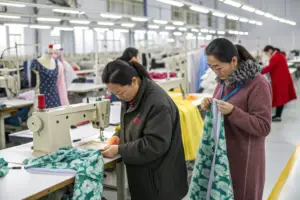
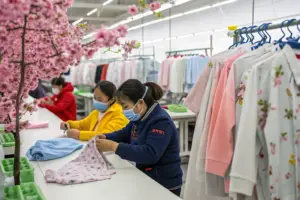
If your clients don’t know how to wash it, they’ll ruin it—and then blame you.
In rental fashion, care labels guide proper laundering, reduce garment damage, and help avoid premature replacements—protecting both your inventory and client satisfaction.
At Fumao, I’ve worked with buyers who lost contracts just because garments came back faded or shrunk—all because care labels weren’t clear enough. Here’s why we take them seriously.
Why are care labels important on clothing?
Most customers don’t ask how to wash—they look for the label. If it’s missing or vague, their guess might ruin your garment.
Care labels provide clear instructions on how to wash, dry, and iron garments—reducing returns, misuse, and costly garment failure.
Why do rental garments need more precise labeling than retail fashion?
Unlike retail garments, rental clothing1 is repeatedly laundered under varying conditions—often in bulk loads, not by individuals. Clear labels help staff follow proper care processes.
For example, one of our hotel clients reported that their new staff accidentally washed all polyester uniforms at 90°C. The result? Melted trims and warped shapes. The care labels only said “Do not bleach,” with no washing temp.
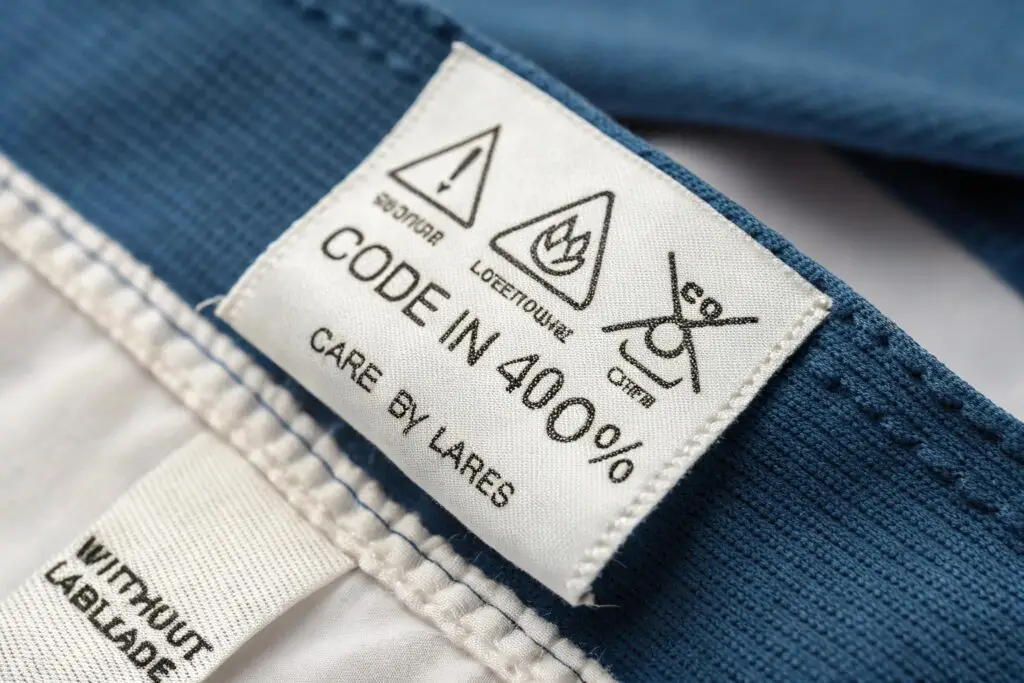
We redesigned the care label to include:
- Clear washing temperature
- Ironing icon with “low heat” warning
- Crossed-out bleach icon
- Bold “No tumble dry” line
After the change, the damage stopped. Labels saved hundreds of dollars in weekly loss.
What care label features2 improve compliance and reduce wash damage?
- Pictograms: Easy to read across languages
- High-contrast print: Especially for older workers
- QR codes: Link to demo videos or care instructions
- Placement: Inner side seam or waistband—not on external branding
At Fumao, we also print labels using heat-resistant ink on woven tape. This prevents the ink from fading after multiple industrial washes.
Why are clothing labels important?
Clothing labels don’t just show care instructions—they hold the entire identity of a garment.
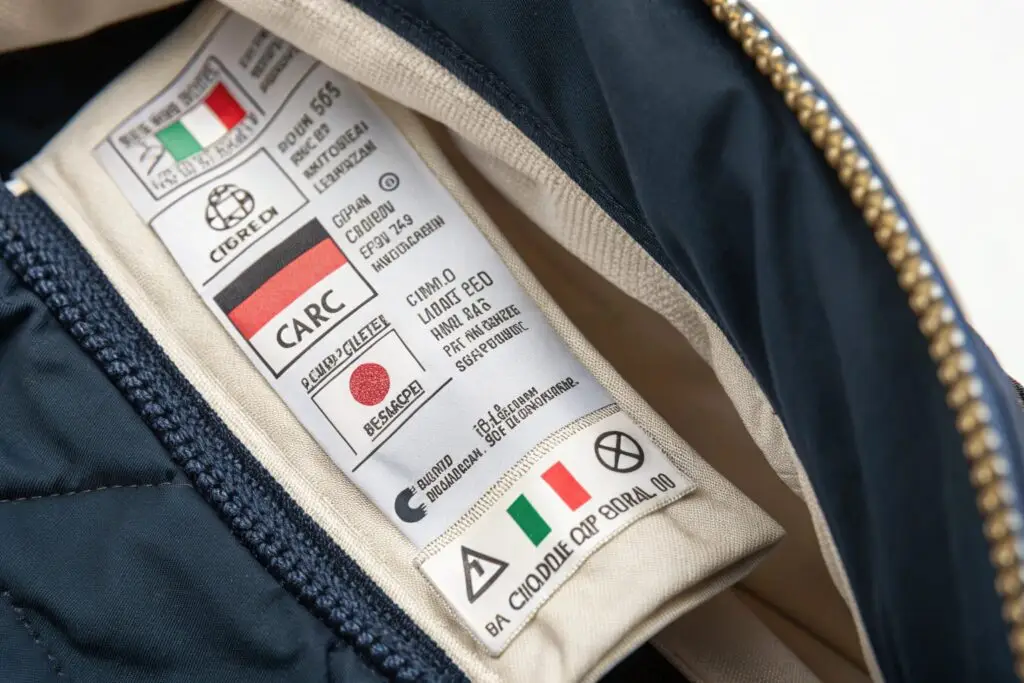
Clothing labels display fabric content, size, country of origin, care method, and compliance information—all critical for traceability and legal safety.
Why are labels considered “compliance items” in commercial fashion manufacturing?
In many countries, garments sold or rented must meet legal labeling requirements3. This includes:
- Fiber content (e.g., 65% polyester / 35% cotton)
- Country of origin (e.g., Made in China)
- Care instructions
- Manufacturer or importer details
Without these, you risk:
- Customs clearance issues
- Legal penalties in the EU or U.S.
- Loss of trust from corporate buyers
We helped a buyer who lost a European contract because their pants didn’t meet local fiber labeling rules4. We reprinted the labels in four languages—English, French, German, and Dutch—problem solved.
How can garment labels enhance branding and improve customer loyalty?
Rental companies can customize care labels to include:
- Logos
- Brand names
- Garment ID numbers
- QR codes for reorder or service support
One of our clients runs a linen rental service. They printed a QR code on each label that linked to a feedback form. Their NPS scores jumped after three months—just from adding a label.
Can you sell clothing without a care label?
Many startups ask this when launching new lines. The answer? Not if you’re serious about longevity—or legal protection.
No, in most regulated markets like the U.S., UK, EU, and Canada, clothing must carry care labels with minimum information by law.
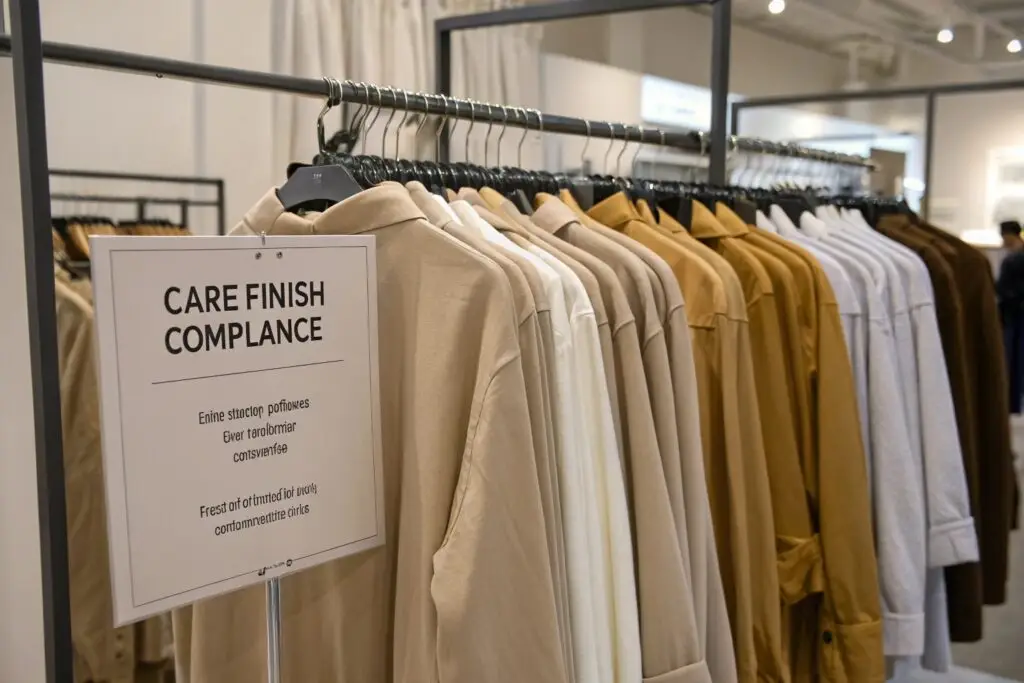
What risks do rental and wholesale buyers face if garments lack proper care labeling?
Without care labels, you risk:
- Customer damage5 – improper washing leads to complaints
- Legal fines6 – especially under FTC, REACH, or CE standards
- Returns7 – clients claim garments “defective” due to color bleed or shrinkage
- Lost tenders – government contracts often require proof of compliance
We once worked with a U.S. distributor who bought generic shirts without labels. Their B2B client in food service returned 80% after two months, claiming “unacceptable fading.” Without care guidance, staff had laundered them at 70°C with bleach.
We now add compliant woven care labels for all their future orders—with no repeat complaints.
Are there exceptions or best practices for unbranded or minimal-label garments?
Yes, but only in informal markets. For professional use or government orders, always follow labeling norms.
If minimal look is needed, do this:
- Use heat-transfer labels inside the neck
- Place detailed care info in the side seam
- Provide hangtags or washable inserts for care instructions
Why is it important to read clothing care labels when laundering clothes?
Even experienced laundry staff can make mistakes if they don’t read or understand labels.
Reading care labels helps avoid shrinkage, color bleeding, pilling, or permanent fabric damage—especially critical in high-usage rental settings.
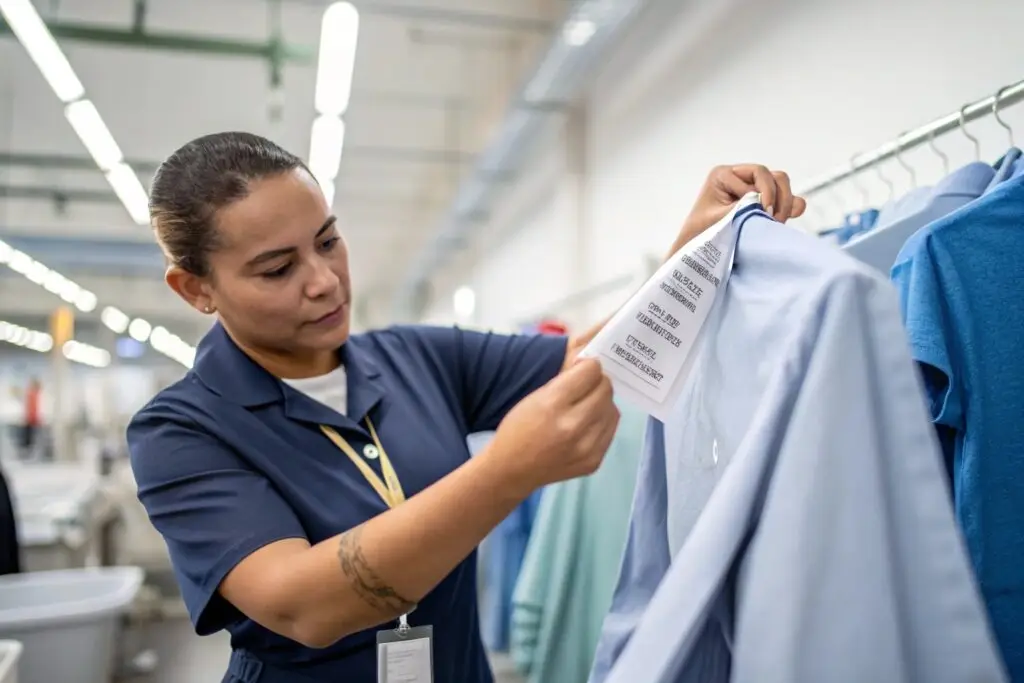
What happens when staff skip label instructions in commercial laundry settings?
We saw one case where hospital scrubs labeled “wash cold8” were thrown into a 75°C tunnel finisher. The result?
- 3% shrinkage in length
- Label ink melted
- Logos cracked
These garments failed after just five washes. The issue wasn’t the fabric—it was the lack of enforcement on label reading.
We now print large, bold instructions like:
- “Max Wash: 60°C9”
- “Low Heat Only”
- “No Bleach or Softener”
Training staff to read care labels adds life to the garment—and profit to the business.
How can businesses enforce label compliance at scale?
Use visuals in staff training, including posters of care symbols. You can also:
- Color-code labels for easy recognition (e.g., red = hot wash only)
- Place multilingual guides in laundry rooms
- Use smart tags (QR, RFID)10 linked to care videos
A client of ours in Germany installed tablet kiosks in their laundry facility. Staff scanned each QR label before washing. Their return rate due to laundering damage dropped 45% in one quarter.
Conclusion
A care label is more than a tag—it’s a safeguard. At Fumao, we treat care labeling as part of the garment’s engineering—because when your clients wash right, they stay longer.
-
Understanding the significance of proper care for rental clothing can help prevent costly damages and ensure longevity. ↩
-
Exploring effective care label features can enhance garment longevity and compliance, reducing wash damage significantly. ↩
-
Understanding legal labeling requirements is crucial for compliance and avoiding penalties in the fashion industry. ↩
-
Exploring fiber labeling rules can help manufacturers ensure compliance and maintain trust with buyers. ↩
-
Understanding customer damage can help businesses mitigate risks and improve garment care practices. ↩
-
Exploring legal implications can help businesses stay compliant and avoid costly penalties. ↩
-
Learning about returns can guide businesses in improving customer satisfaction and reducing losses. ↩
-
Understanding the impact of ignoring wash instructions can help prevent costly mistakes and extend garment life. ↩
-
Exploring the significance of this instruction can enhance your laundry practices and protect your investments. ↩
-
Discover how technology can streamline laundry processes and ensure adherence to care instructions for better results. ↩