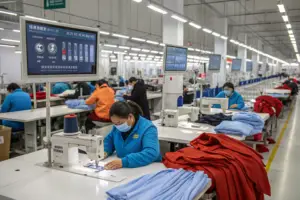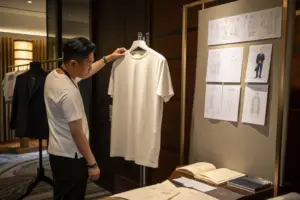
You’re ready to launch a new apparel line. You contact a factory, excited to see your designs come to life. Then you receive the quote: “Prototype Sample: $150. Pre-Production (PP) Sample: $200. Shipping: $80. All sample fees are non-refundable.” Your first reaction might be frustration. Why should you pay for something you haven't even ordered in bulk yet? It feels like a hidden cost, a barrier to getting started. This is a common point of confusion for many new brands.
Sample costs are non-refundable in garment development because they cover real, sunk expenses for specialized labor, material sourcing in small quantities, and dedicated machine time that cannot be recovered or resold. Unlike bulk production which operates on economies of scale, sampling is a custom, service-intensive R&D process, not the sale of a product. The fee compensates the factory for its development work, regardless of whether you place the bulk order.
Understanding this is key to building a healthy, transparent relationship with your manufacturer. Let’s dive into the specific reasons behind this standard industry practice, what you’re actually paying for, and how it protects both you and the factory.
What Are the Real Costs Behind a Single Sample?
When you request a sample, you're not ordering a single unit from an existing production run. You are commissioning a one-off, custom prototype. The factory must engage in a completely different, and often more costly, operational mode.
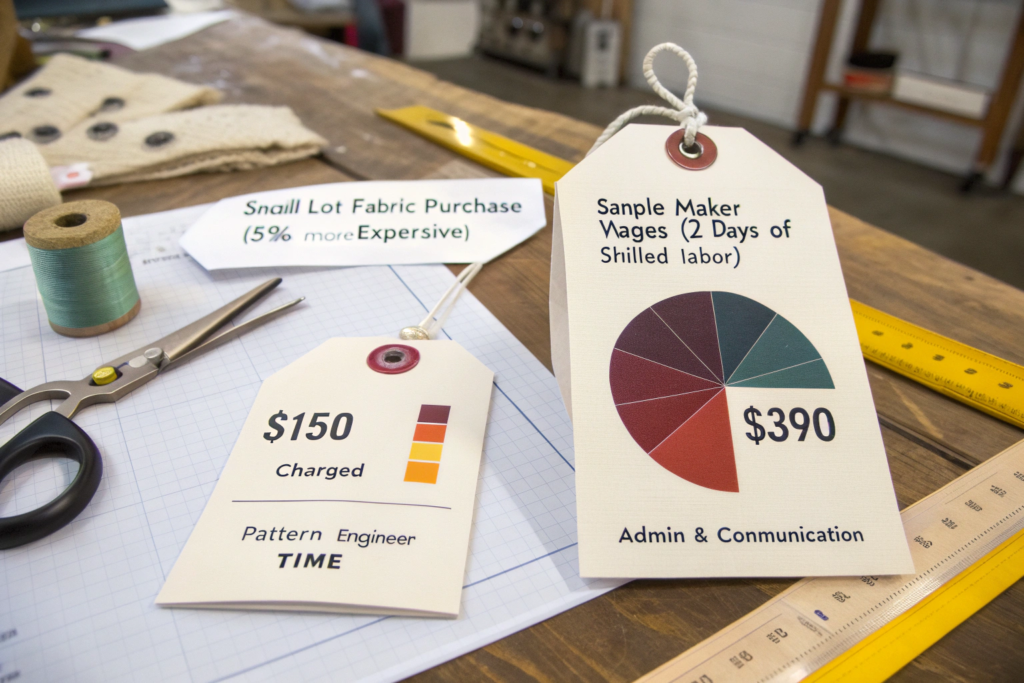
The real costs include high-priced mini-order materials, dedicated skilled labor diverted from revenue-generating production, and extensive administrative and technical time for pattern making, fitting, and revisions. These are fixed costs incurred the moment work begins, with zero salvage value if you don't proceed.
Why Is Sample-Making Labor So Much More Expensive?
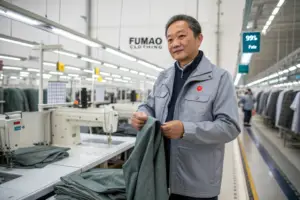
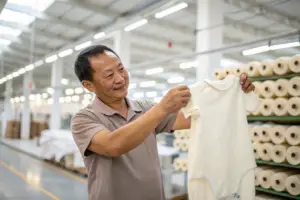
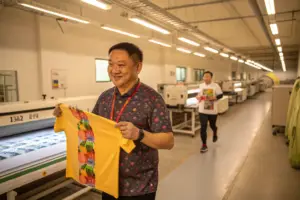
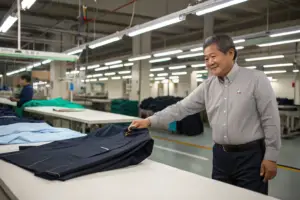
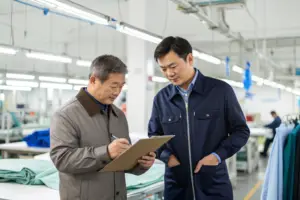
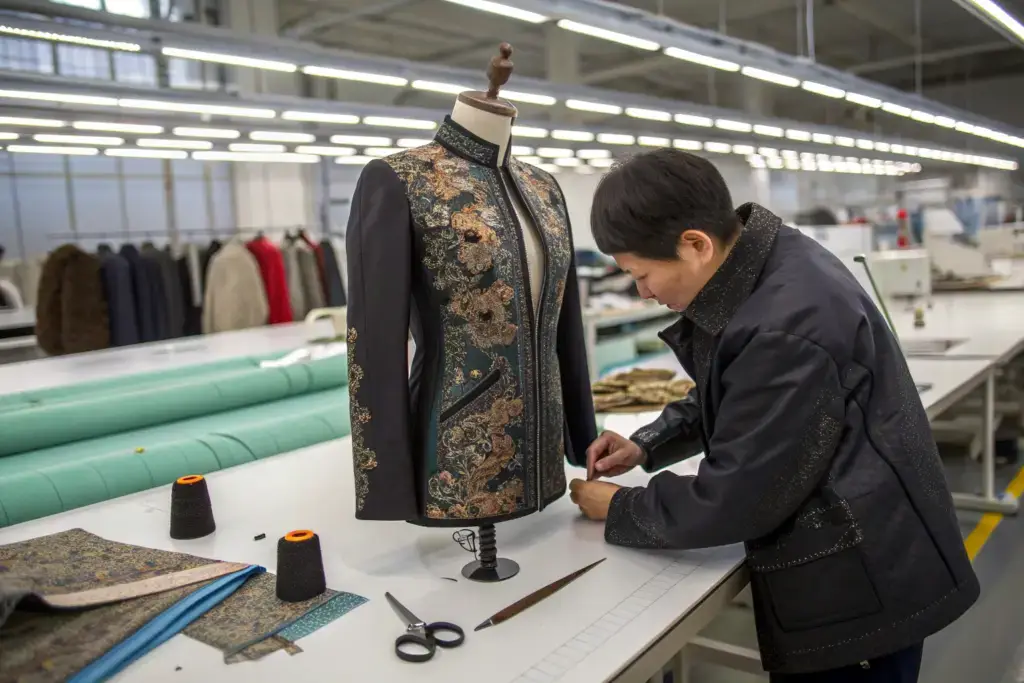
On the main production line, a worker repeats one highly efficient task. A sample maker is a versatile craftsman who must construct an entire garment from scratch, often interpreting incomplete tech packs. They handle cutting, sewing, finishing, and adjustments. This requires higher skill and consumes 10-20 times more labor hours per unit than mass production. At Shanghai Fumao, our senior sample makers earn a premium because their work defines the entire order's feasibility. Last month, a client's complex technical shell jacket required 3 full days of a sample maker's time for just one prototype—labor that could have been used to produce hundreds of simple T-shirts.
How Do Material Sourcing and "MOQs" Drive Up Costs?
Factories buy bulk fabric at volume discounts. For your sample, they must source a tiny amount—sometimes just 2-3 meters. Fabric mills often charge a "small-lot premium" of 30-50% or have high Minimum Order Quantities (MOQs) that force the factory to buy more than needed, leaving deadstock. The same applies to custom buttons, zippers, and trims. We once developed a sample using a specific Italian membrane fabric. The mill's MOQ was 500 meters. To make the one sample jacket, we had to purchase and hold 500 meters of expensive fabric, tying up thousands of dollars in inventory based solely on the client's sample request.
How Does Sampling Function as Research and Development (R&D)?
You should view sample fees not as a product purchase, but as an investment in research and development. The sample is the physical test of your design's integrity, fit, and manufacturability.
Sampling is the R&D phase where theoretical designs are stress-tested in reality. The factory invests technical expertise to identify construction flaws, source suitable materials, and establish a viable production method. This shared development de-risks your much larger bulk order investment.
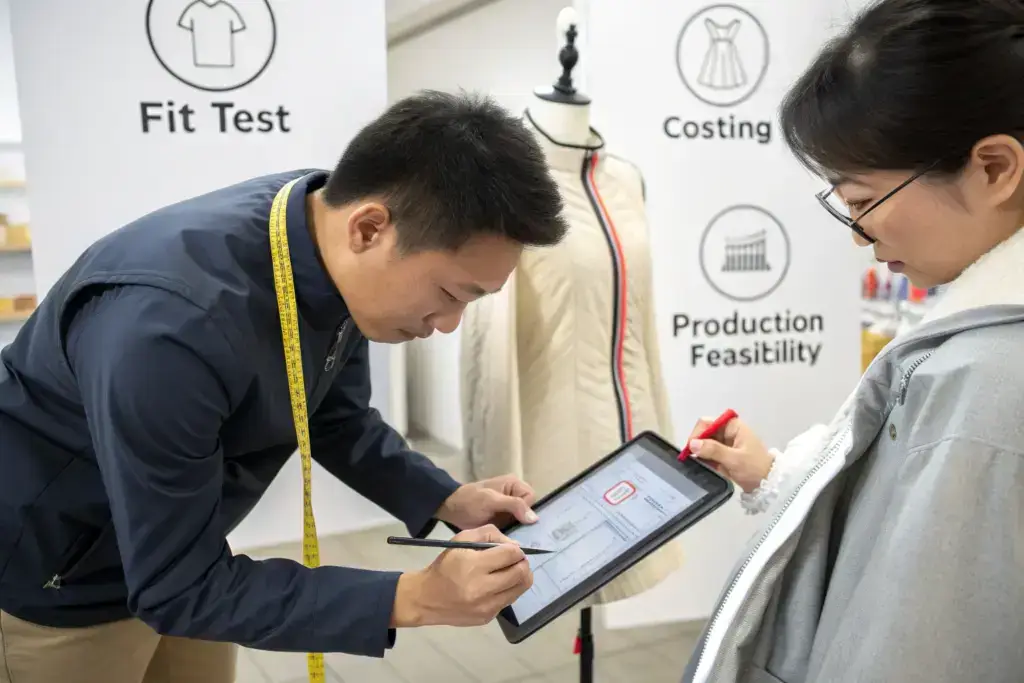
What Technical Work is Included Beyond Sewing?
Before a single stitch, factory technicians engage in critical, billable work:
- Pattern Making & Grading: Creating the base pattern and sizing specs from your tech pack.
- Factory Costing Analysis: Determining the precise time and material needed to produce at scale, which forms the basis of your bulk quote.
- Production Feasibility Study: Identifying potential construction issues that would cause delays or defects in mass production.
A client sent us a design with an elegant but impossibly narrow rolled hem for a heavy linen fabric. Our sample maker built it once, proving it would pucker and fail in production. The $200 sample fee saved them from a $20,000 bulk order of unsellable goods. That's the value of R&D.
Why Can't This R&D Be Free or Rolled into Bulk Costs?
Factories cannot afford to finance R&D for every potential client. Only about 30-40% of sampling projects convert to paid bulk orders. If sample costs were absorbed, factories would have to inflate bulk FOB (Free On Board) prices for all clients to cover these losses, punishing the brands that do proceed. The non-refundable fee ensures that brands are financially committed and serious, filtering out speculative requests and allowing the factory to invest its R&D resources wisely.
How Do Sample Fees Protect Both the Brand and the Factory?
The non-refundable policy isn't just a factory protection measure; it establishes a professional, committed partnership that ultimately benefits the brand.
Sample fees protect the factory from absorbing costs for uncommitted clients and protect the brand by ensuring their project receives dedicated attention and resources. It aligns incentives, fostering a serious collaboration focused on perfecting the product, not just fulfilling a free service request.
How Does Paying a Fee Change the Dynamics of the Relationship?
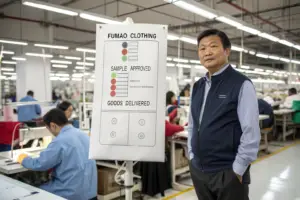
When a brand pays for a sample, they feel ownership and are more likely to provide detailed, timely feedback. They treat the process with the seriousness it deserves. Conversely, the factory prioritizes paying clients. At Shanghai Fumao, our sample schedule is triaged: paid sample requests from committed brands get immediate attention; speculative requests for free samples go to the bottom of the queue. This means paying clients get their samples faster and with higher focus.
What Happens in a "Free Sample" Scenario?
The "free sample" model is often a trap. To keep costs down, a factory might use cheaper substitute fabrics, skip proper pattern grading, or assign the work to a junior sewer. The resulting sample won't accurately reflect the bulk order's cost or quality, leading to shocks and disputes later. One brand came to us after receiving a beautiful free sample from another factory. Their bulk order arrived with different fabric, poor stitching, and a 30% higher cost than quoted. The "free" sample ended up costing them thousands in faulty goods.
What is a Fair Sample Policy and How Can You Manage Costs?
A transparent sample policy is a sign of a professional factory. Understanding its components allows you to budget effectively and negotiate where appropriate.
A fair policy clearly itemizes costs (sample making, materials, shipping), specifies the number of revisions included, and states ownership of the physical sample and IP. You can manage costs by being prepared, consolidating requests, and using digital prototyping tools where possible.
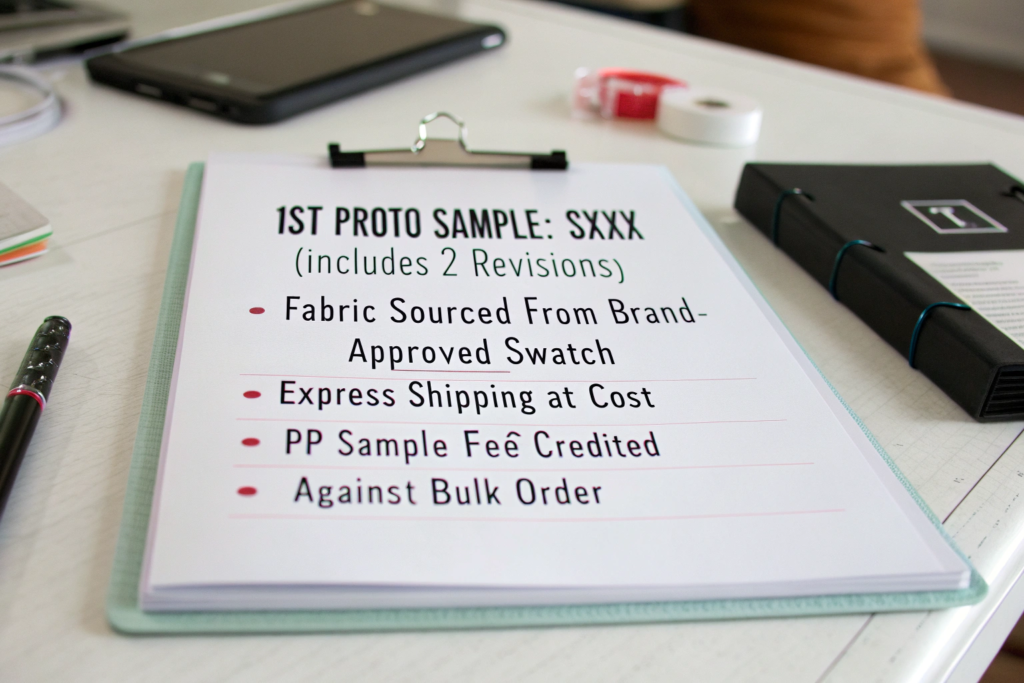
What Should a Transparent Sample Quote Include?
- Sample Making Fee: Labor for sewing and construction.
- Material Cost: Based on actual small-lot prices for your specified fabrics/trims.
- Shipping: Usually charged separately at actual cost.
- Revisions: Clearly state how many rounds of adjustments are included in the initial fee.
- Bulk Order Credit: Many factories, including ours, will credit the sample fee against your first bulk order invoice. This effectively makes the sample "free" if you proceed, further aligning interests.
How Can You Be a Smart Client to Minimize Sample Expenses?
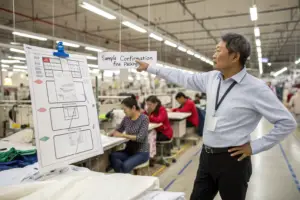
- Be Extremely Prepared: Provide a complete, detailed tech pack with clear diagrams, measurements, and fabric references. Ambiguity causes multiple, costly sample rounds.
- Request a Proto Sample First: Start with a basic "prototype" in similar fabric to perfect fit and construction before moving to an expensive Pre-Production (PP) Sample in exact materials.
- Consolidate Feedback: Give comprehensive feedback after receiving the sample, not in piecemeal emails.
- Use Digital Tools: For simple items, a 3D digital sample can resolve fit and style issues before committing to a physical sample, saving time and money.
We worked with a denim brand that used detailed digital renders to finalize stitch colors and wash effects. They only needed one physical PP sample for final confirmation, cutting their sampling cost and time in half before their large order.
Conclusion
Non-refundable sample fees are not a barrier; they are the entry ticket to a professional, low-risk product development process. They fund the essential R&D that transforms your sketch into a manufacturable, high-quality product. By paying this fee, you invest in a partnership that ensures your vision is executed correctly and your larger bulk capital is protected.
Choosing a factory that is transparent about these costs, like Shanghai Fumao, and understanding the value behind them, is the first step toward a successful collection. It filters out unserious partners and aligns you with a manufacturer committed to your product's success from the very first stitch.
Ready to develop your next collection with a partner who treats your samples with the care and professionalism they deserve? Let's discuss your project and our clear, fair sampling process. Contact our Business Director, Elaine, to begin at elaine@fumaoclothing.com.