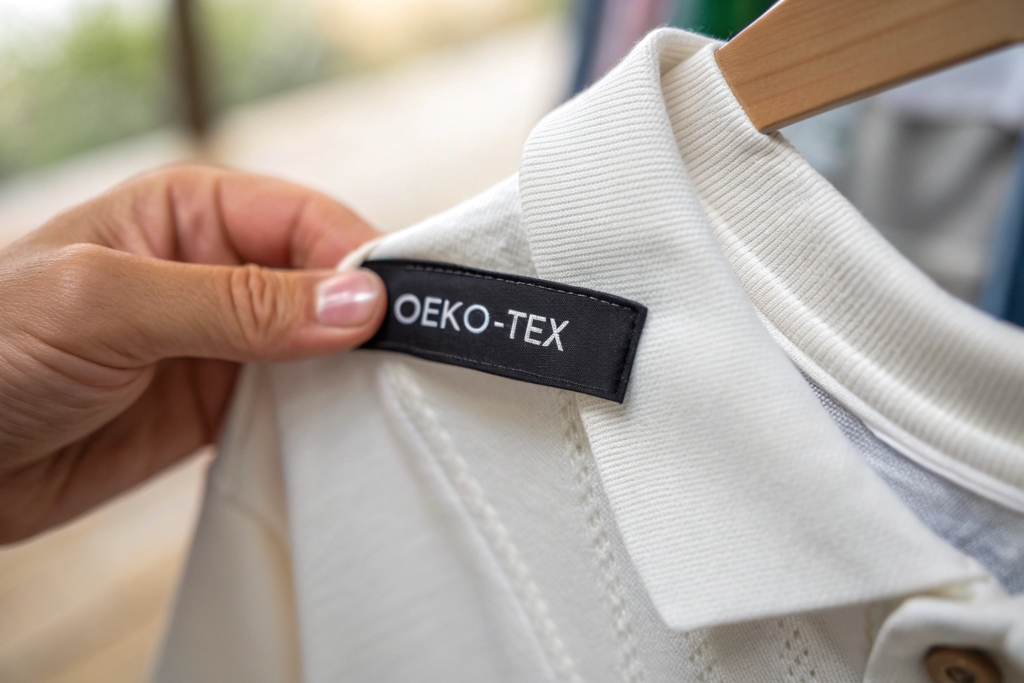
You walk into a high-end golf pro shop. You pick up two similar-looking polos. One has a standard care label. The other has a small, distinct OEKO-TEX or GRS certification label sewn beside it. Which one feels more trustworthy? This simple visual cue is becoming a decisive moment in the buyer's journey. A brand owner told me last season: "Adding the OEKO-TEX label to our hangtag was the single most cost-effective change we made. Our in-store conversion rate for that line went up 15%." This isn't coincidence. It's a calculated response to a fundamental shift in the market.
More golf brands are showcasing certifications on product tags because these labels serve as immediate, credible shorthand for quality, safety, and responsibility in an increasingly crowded and skeptical marketplace. The tag is the final, physical touchpoint before purchase, transforming an intangible brand promise into a verified, third-party claim. This trend is driven by rising consumer demand for transparency, the need for competitive differentiation at retail, and the growing power of certifications as a risk mitigation tool for both brands and retailers.
This move from back-office documentation to front-and-center marketing is a strategic evolution. Let's dissect the reasons behind it.
How Do Certification Labels Drive Instant Consumer Trust?
Leading paragraph: In the seconds a customer spends evaluating a garment, they make subconscious judgments. Technical fabric names and marketing buzzwords can feel like empty claims. A certification logo from a recognized institution like OEKO-TEX cuts through that noise. It's not the brand saying "we're good"; it's an independent body saying "they passed."
Featured paragraph: Certification labels drive instant trust by providing social proof and reducing perceived risk. The consumer recognizes they are not alone in their concern for safety or sustainability; a reputable organization has done the homework for them. This is particularly powerful for DTC (Direct-to-Consumer) brands without established retail history, and for any brand selling online where physical touch is absent. The label on the tag assures the buyer that the product meets a defined, rigorous standard, answering critical questions about skin safety, environmental impact, or ethical production before they even have to ask. At Shanghai Fumao, we advise our partners to treat the certification label as a primary design element of the hangtag, ensuring it is clearly visible and legible.
What is the Psychological "Halo Effect" of a Trust Mark?
A recognized certification creates a "halo effect," where the positive attributes of the certification (safety, quality, responsibility) transfer to the entire brand. The customer subconsciously thinks, "If they care this much about chemical safety, they probably care about stitch quality and fit too." This elevates the perceived value of the entire product, making a higher price point more justifiable. It's a shortcut to building brand equity.
How Does This Counter "Greenwashing" Fatigue?
Consumers are bombarded with vague terms like "eco-friendly" and "natural." This has led to widespread skepticism, or "greenwashing fatigue." A specific certification label with a name (OEKO-TEX, GRS, Fair Trade) provides a concrete, verifiable claim. It shows the brand has invested in actual verification, not just marketing copy. This authenticity cuts through fatigue and builds deeper, more resilient trust.
Why is This a Key Tool for In-Store Retail Competition?
Leading paragraph: The pro shop shelf is a battlefield. Dozens of brands compete for limited space and the customer's attention. Sales staff can't possibly explain the nuances of every brand's ethical practices. The certification label works as a silent salesperson, communicating key differentiators 24/7.
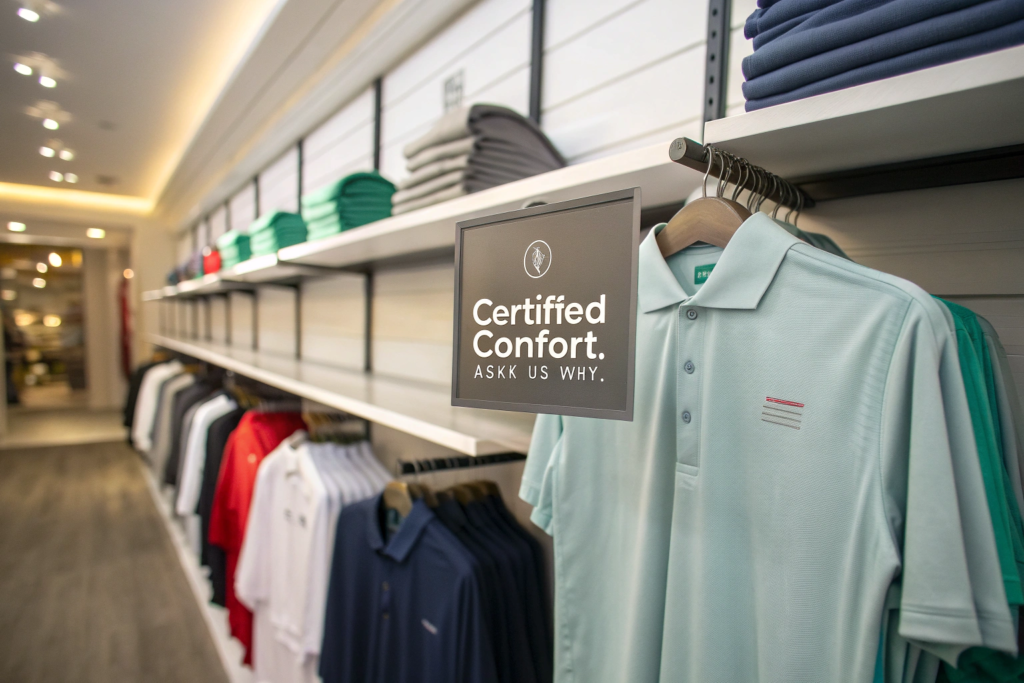
Featured paragraph: On the retail floor, certification labels are a key tool for differentiation and justification. When two shirts are similarly priced and styled, the one with the OEKO-TEX or GRS tag offers a clear, objective reason to choose it. It empowers the retail staff with a simple talking point: "This one is certified free from harmful substances, which is great for comfort during long rounds." Furthermore, many retailers themselves now have corporate sustainability mandates. Brands that showcase certifications make it easier for retailers to meet their own ESG (Environmental, Social, and Governance) goals, potentially influencing buying decisions at the wholesale level. A brand we work with secured a flagship position in a major retailer specifically because their tagging prominently featured multiple certifications, aligning perfectly with the retailer's "Conscious Choice" program.
How Do Tags Influence the Retailer's Own Risk Management?
For the retailer, every product on their shelf carries liability risk. A certification on the tag is a visible signal that the brand has undertaken due diligence regarding product safety (e.g., chemical compliance with REACH). This reduces the retailer's perceived risk of customer complaints, returns, or regulatory issues. It makes the brand a "safer" partner to stock.
Can This Affect Merchandising and Placement?
Absolutely. Retailers are increasingly creating dedicated sections like "Sustainable Sportswear" or "Clean Performance." Products with visible certification tags are natural candidates for these high-traffic, story-driven sections, giving them prime placement away from the commodity racks.
What Does the Shift Say About Modern Supply Chain Transparency?
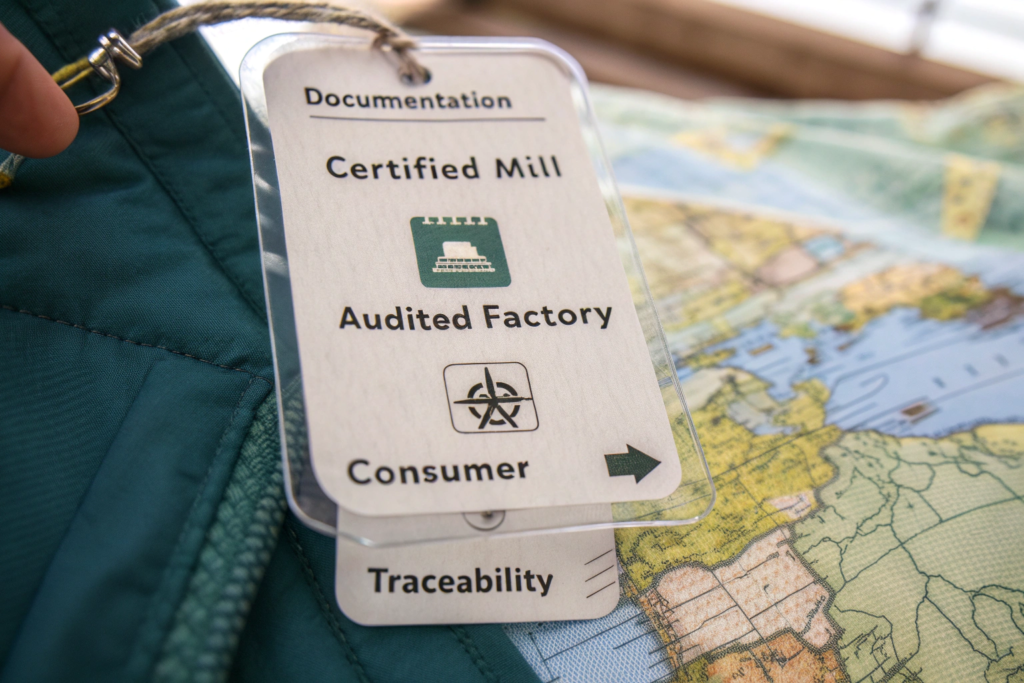
Leading paragraph: The product tag is the endpoint of a long supply chain journey. By showcasing a certification there, a brand is making a bold statement: "We are willing to be transparent about our production, from the chemical composition of our dyes to the origin of our fibers."
Featured paragraph: This trend signifies that supply chain transparency is no longer a back-office function but a core consumer-facing brand attribute. The certification label is the consumer-friendly symbol of a complex backend of audits, test reports, and traceability systems. It answers the growing consumer question: "How is this made?" In an era where stories of pollution and poor labor practices can go viral, the tag becomes a shield, proactively demonstrating responsibility. It turns the opaque supply chain into a selling point. For manufacturers like Shanghai Fumao, this means our role extends beyond making clothes; we must provide the verifiable documentation (certificates, test reports) that brands can confidently reference and symbolize with their tags.
How Are Digital Technologies Augmenting the Physical Tag?
The trend is moving towards smart tags with QR codes. A customer can scan the code on the hangtag and be taken to a page showing the specific product's OEKO-TEX certificate, information about the factory, or the recycled content journey. This merges the immediate trust of the physical logo with the deep transparency of digital storytelling, satisfying both the casual browser and the deeply curious consumer.
Is This a Response to Increased Regulatory Scrutiny?
Yes, especially for brands exporting to regions like the European Union. Showcasing an OEKO-TEX label is a proactive way to demonstrate compliance with regulations like REACH. It signals to both consumers and customs officials that the product has been vetted for restricted substances, potentially smoothing the import process and reducing the risk of border delays.
How Should Brands Integrate This into Their Overall Strategy?
Leading paragraph: Slapping a certification label on a tag without integrating it into your brand story is a missed opportunity. It can even backfire if your other practices don't align. The label must be the tip of an authentic iceberg.
Featured paragraph: Brands should integrate certification tagging into a holistic communication strategy. This means:
- Website & Marketing: Feature the certifications prominently on product pages and in campaign imagery.
- Sales & Training: Educate wholesale buyers and retail staff on what the certifications mean and why they matter.
- Product Development: Design the tags and packaging to highlight the certifications elegantly.
- Storytelling: Use the certification as a springboard to talk about your brand's broader values and commitment to quality.
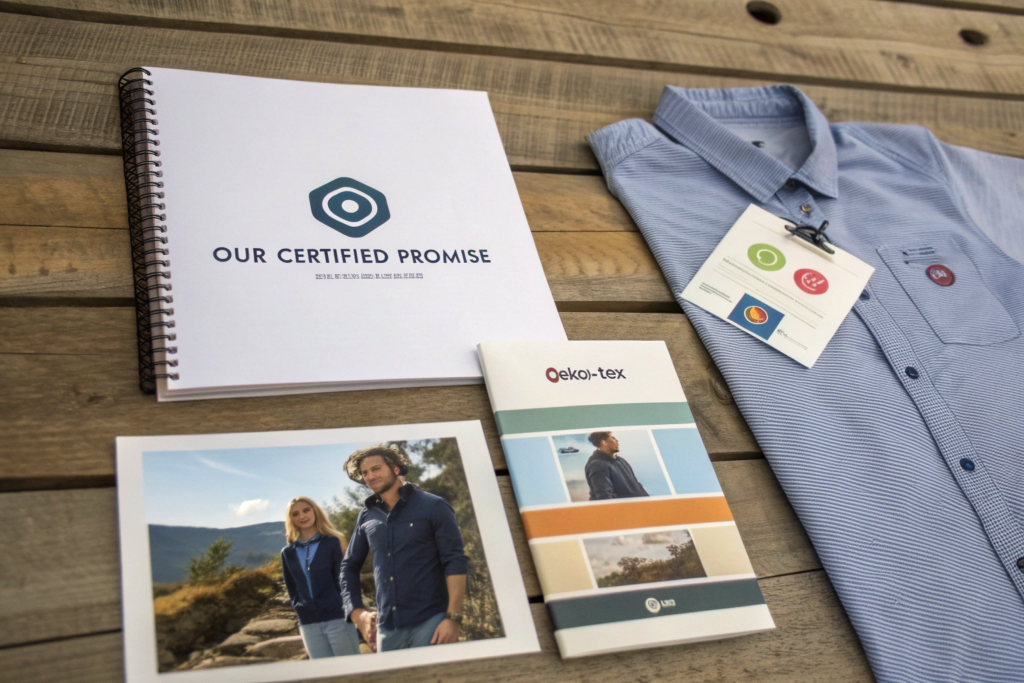
The tag is the proof point for the story you tell everywhere else. A brand that launched a "Certified Collection" with dedicated tagging, supported by a clear explainer video on their site, saw a 40% higher engagement rate on those product pages compared to their standard line.
What Are the Cost and Production Considerations?
Adding a dedicated certification label has minimal cost (a few cents per garment) but requires planning. It must be sourced from an approved supplier if it bears the official logo, and its attachment must be included in the bill of materials (BOM) and manufacturing workflow. Working with a full-package manufacturer like Shanghai Fumao simplifies this, as we can source compliant labels and attach them as part of our standard finishing process.
Can Over-Tagging Become a Problem?
Yes. A tag cluttered with too many logos or excessive text can look cheap and confuse the consumer. The goal is clarity, not clutter. Choose the 1-2 most relevant and recognized certifications for your target market (e.g., OEKO-TEX for safety, GRS for recycled content) and display them cleanly. Authenticity is more important than quantity.
Conclusion
The rising prominence of certification labels on golf apparel tags is a direct reflection of a more informed, conscientious, and discerning market. It represents a strategic pivot from telling consumers what a brand believes to showing them what a brand has proven. This small piece of fabric is a powerful communication tool that builds trust, enables differentiation, and embodies the transparency that modern consumers demand.
For brands, this is no longer an optional detail. It is an essential component of product presentation and brand credibility in a competitive landscape.
If you are ready to transform your supply chain investments into tangible consumer trust, it starts with a product that merits the label and a partner who understands its value. At Shanghai Fumao, we ensure our manufacturing processes meet the highest certification standards, providing you with the authentic quality you need to label with confidence. Contact our Business Director Elaine to develop your certified, tag-ready collection: elaine@fumaoclothing.com. Let's make your label a statement of proof.