Athletes often experience discomfort during exercise. Traditional fabrics like cotton retain moisture. This moisture buildup causes problems. Modern sportswear solves this with moisture-wicking technology.
Moisture-wicking fabrics are essential because they move sweat away from your skin. This process uses capillary action. It keeps athletes dry and comfortable. It regulates body temperature effectively. It prevents skin irritation during activity. These fabrics meet modern performance expectations. They represent a fundamental shift in sportswear design.
We will examine the science behind these fabrics. We will explore their practical benefits. We will discuss selection criteria for brands.
How does moisture-wicking technology work in fabrics?
Moisture-wicking technology relies on basic physical principles. It starts with fabric construction. Cotton fibers absorb and hold moisture. Technical synthetic fibers work differently.
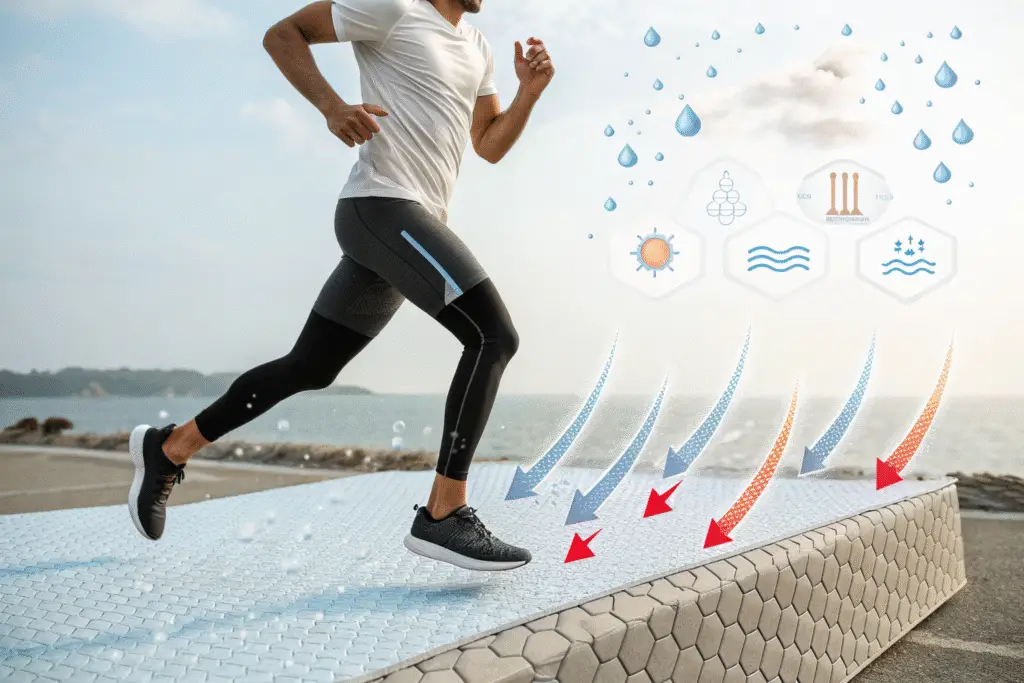
Capillary action drives this process. Think of a paper towel absorbing water. Fabric fibers contain microscopic channels. These channels pull moisture along their length. They move sweat to the fabric's exterior. The moisture then spreads thinly. This spreading increases evaporation speed.
Modern manufacturers use advanced materials. Polyester and nylon are common choices. These materials are naturally water-repelling. Engineers modify their properties. They create hydrophilic characteristics. This balance ensures consistent performance.
What is the core scientific principle behind fabric wicking?
Capillary action represents the core principle. This physical phenomenon moves liquid through narrow spaces. Fabric fibers create numerous tiny capillaries. These capillaries pull moisture molecules. They transport sweat from skin contact areas. They distribute moisture across the fabric surface.
Fiber cross-section design affects performance. Manufacturers use specialized yarn constructions. Micro-denier polyester increases capillary count. This enhancement improves wicking speed. Textile innovation transforms basic garments. It creates high-performance sportswear.
How do synthetic fibers outperform natural ones for activewear?
Synthetic fibers offer distinct advantages. Cotton is naturally absorbent. It holds moisture against the skin. It becomes heavy and slow-drying. This causes discomfort for athletes.
Synthetic fibers repel water naturally. Their engineered structure transports moisture. This keeps the skin drier. The garment remains lightweight. Synthetic fabrics also demonstrate greater durability. They maintain shape after repeated washing. They withstand intense physical activity.
What are the key benefits of using moisture-wicking fabrics?
Moisture-wicking fabrics provide multiple advantages. These benefits extend beyond basic dryness. They impact athletic performance directly. They enhance overall wearing comfort.
Temperature regulation improves significantly. Sweat evaporation cools the body efficiently. This prevents overheating during exercise. It also avoids post-exercise chilling. The body maintains optimal temperature.
Skin irritation reduces dramatically. Damp fabric causes friction. This friction creates chafing. Dry fabric surfaces minimize this problem. Comfort increases during prolonged activity.
Odor control improves indirectly. Bacteria thrive in moist environments. Dry fabrics inhibit bacterial growth. This keeps garments fresher longer.
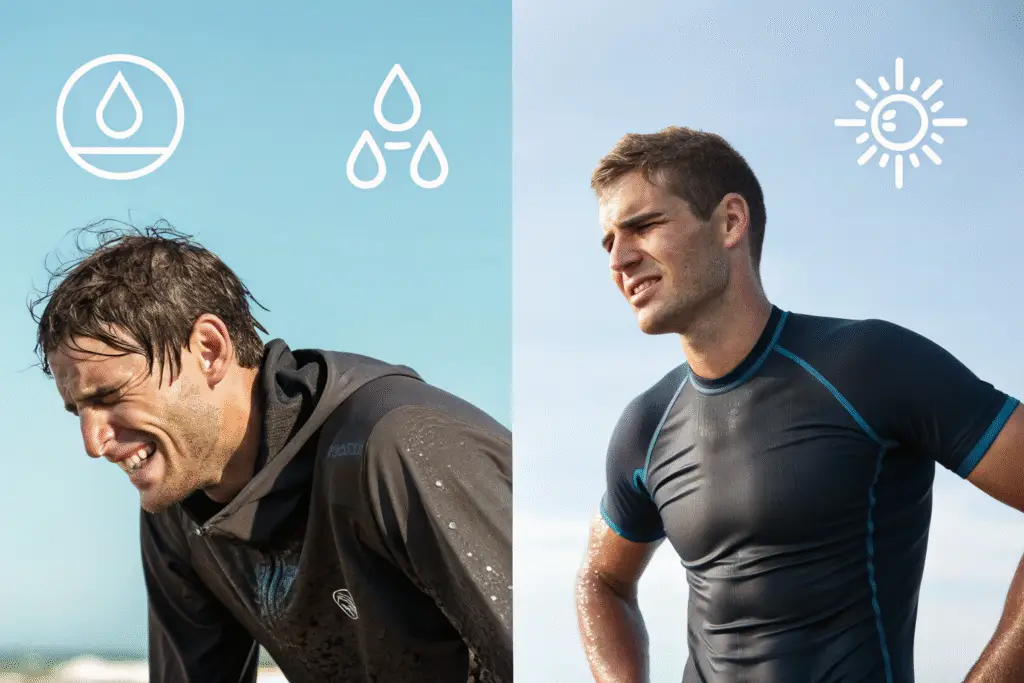
How does moisture-wicking fabric enhance athletic performance?
Moisture-wicking fabric creates an optimal microclimate. Athletes remain dry and comfortable. They focus better on their activity. They avoid distractions from wet clothing.
Thermoregulation improves substantially. The body maintains stable core temperature. Athletes train harder and longer. They achieve better results.
Lightweight dry clothing reduces fatigue. Absorbed sweat adds significant weight. Moisture-wicking fabrics eliminate this burden. This provides competitive advantages.
Why is dryness crucial for comfort and skin health?
Dryness forms the foundation of comfort. Wet skin becomes macerated. This softening increases vulnerability. Blister risk rises significantly.
Moisture-wicking fabrics prevent these issues. They maintain skin integrity. This is vital for sensitive skin. It helps people with skin conditions.
Comfortable garments improve user experience. Customers notice the difference. They associate this comfort with your brand. This builds brand loyalty.
How to choose the right moisture-wicking fabric for your product line?
Fabric selection requires careful consideration. Different activities demand different properties. Understanding these nuances ensures product success.
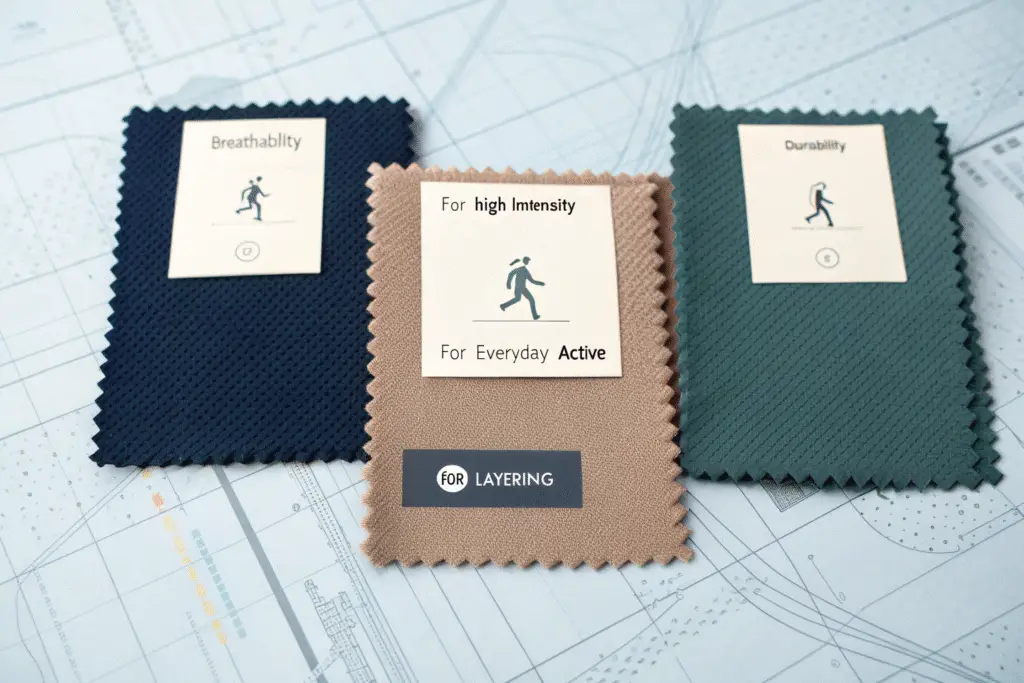
Activity type determines fabric requirements. High-intensity sports need fast wicking. They require high breathability. Mesh panels often provide additional ventilation. Casual activities need standard wicking performance.
Fabric blends offer customized solutions. Polyester provides excellent wicking. Nylon adds durability. Spandex introduces stretch. Blends balance these properties.
Additional finishes enhance functionality. Anti-odor treatments add value. UV protection appeals to outdoor athletes. These features become selling points.
What questions should you ask your clothing manufacturer about fabric?
Ask specific technical questions. Request moisture management test results. The AATCC 195 method provides reliable data. This shows wicking speed and evaporation rates.
Inquire about performance longevity. Ask about wash cycle durability. Fifty washes represents a reasonable benchmark. This ensures customer satisfaction.
Certifications indicate quality. Oeko-Tex Standard 100 guarantees safety. It ensures harmless materials. This builds consumer trust.
What are the differences between common moisture-wicking materials?
Different materials serve different purposes. This table compares key options:
| Material | Key Features | Best For |
|---|---|---|
| Polyester | Highly durable, quick-drying, cost-effective. Can be prone to odor retention. | Most sportswear applications, from t-shirts to jackets. |
| Nylon | Softer feel, very strong and abrasion-resistant, dries quickly. | Activewear requiring a premium feel, like leggings or swimwear. |
| Polypropylene | Excellent hydrophobic properties, wicks moisture very effectively. | Base layers for cold weather where keeping moisture away from the skin is critical. |
| Merino Wool | Natural fiber, wicks well, regulates temperature, naturally odor-resistant. | Outdoor and hiking apparel where temperature fluctuations are common. |
This comparison guides selection decisions. Custom blends often provide optimal solutions.
Can moisture-wicking properties be added to natural fibers?
Brands often seek natural fiber comfort. They also need technical performance. Modern technology addresses this demand.
Pure cotton lacks natural wicking ability. It absorbs moisture readily. However, blending changes this characteristic. Cotton-polyester blends offer compromise. They provide cotton's softness. They add polyester's performance.
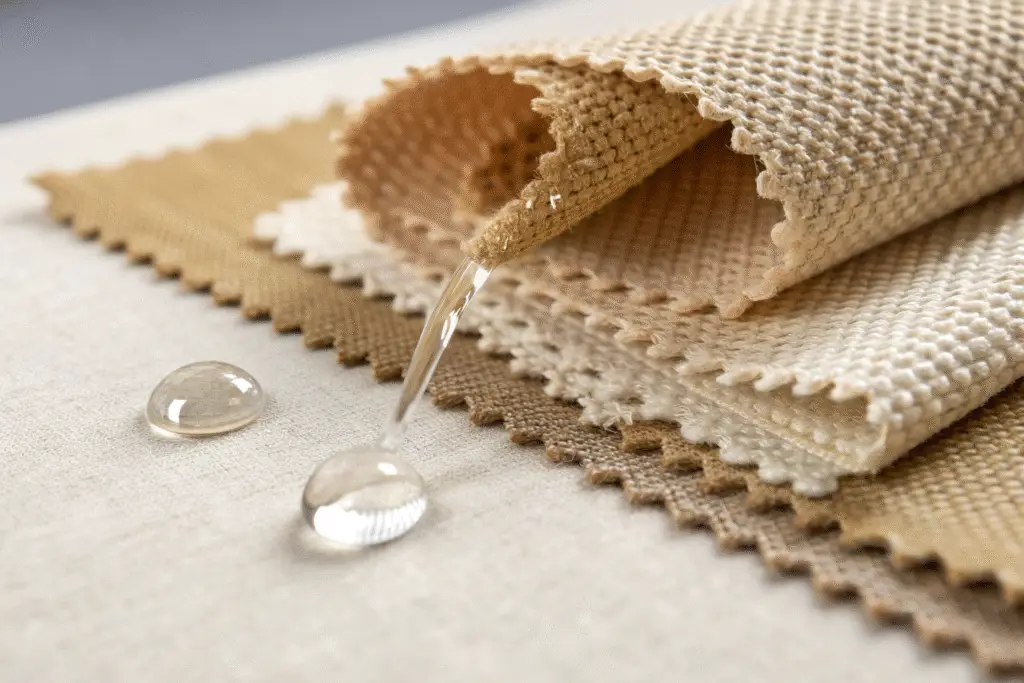
Chemical treatments can enhance natural fibers. These finishes create water-repellent surfaces. They improve drying speed. However, durability varies considerably.
What are the limitations of treated natural fibers?
Chemical finishes have inherent limitations. They degrade with repeated washing. Performance diminishes over time. This disappoints consumers.
Synthetic fibers integrate wicking permanently. Their polymer structure contains this capability. It lasts throughout the garment's life. This ensures consistent performance.
Treated natural fibers suit specific applications. They work for low-impact activities. They meet lifestyle apparel needs. They rarely satisfy professional athletic demands.
How do fabric blends enhance performance and comfort?
Blending combines material advantages. Polyester provides moisture management. Cotton offers softness and comfort. Spandex adds necessary stretch.
This approach enables precise customization. Brands control hand-feel and performance. They manage durability and cost. They create unique product identities.
Manufacturers develop custom blends regularly. These solutions address specific market needs. They create competitive advantages.
Conclusion
Moisture-wicking technology represents essential sportswear innovation. It relies on proven scientific principles. It delivers tangible user benefits. It has revolutionized athletic apparel.
Understanding this technology is crucial for brands. It informs smart fabric selection. It drives product development decisions. It ultimately determines market success.
Manufacturing partnership matters greatly. The right partner provides technical expertise. They ensure quality materials. They maintain reliable production standards.
We specialize in performance sportswear manufacturing. We understand moisture-wicking technology thoroughly. We help brands develop successful products. Contact our Business Director Elaine at elaine@fumaoclothing.com. Let us help you create exceptional sportswear.