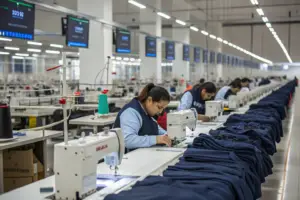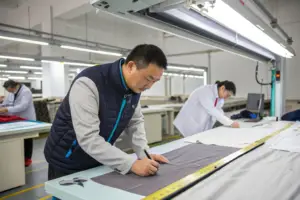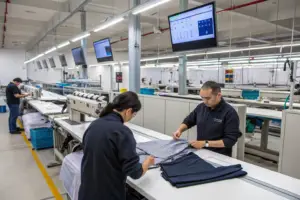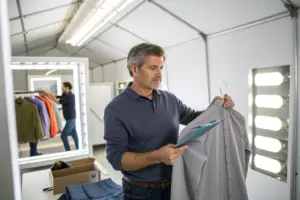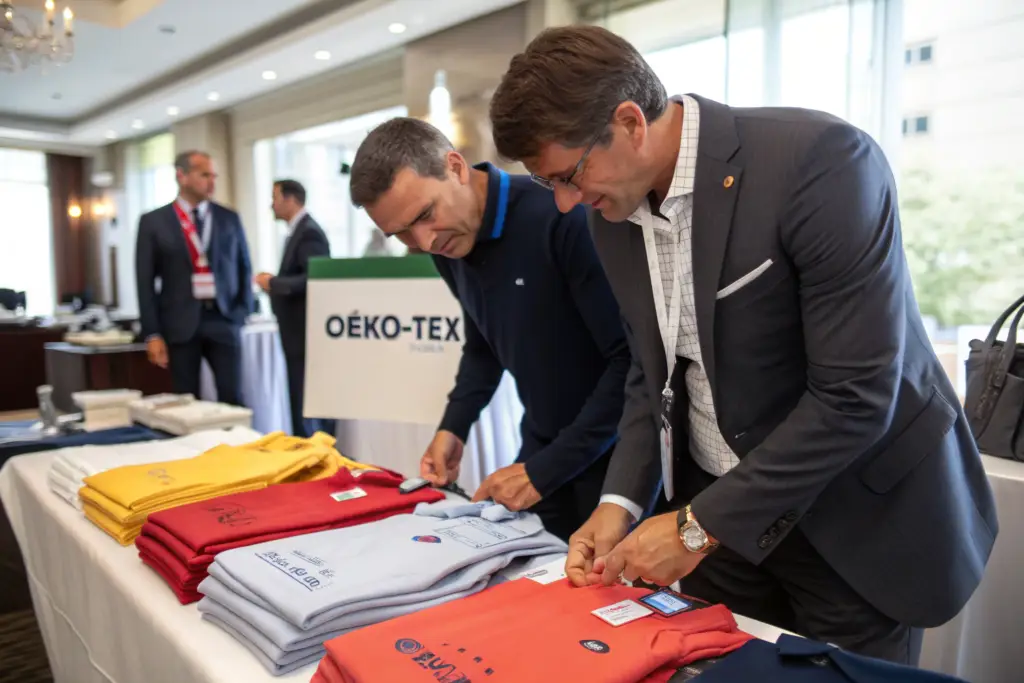
You're planning the corporate golf event. You have everything lined up: the venue, the catering, the guest list. But there's a problem with the apparel. A buyer from a major retail chain once told me, "My last shipment of polo shirts for a company tournament was delayed. When they finally arrived, some had a strong chemical smell. We had to cancel the entire branded merchandise plan. It was a disaster for our client's event." This story is common. Event apparel fails not just on style or delivery, but on unseen standards. Today, smart corporate buyers are bypassing these risks with one key choice: OEKO-TEX certification.
Corporate buyers are choosing OEKO-TEX for golf event apparel because it guarantees the clothing is free from harmful substances, directly addressing critical pain points like supply chain trust, brand reputation protection, and attendee safety. This certification acts as an independent, verifiable shield against the risks of poor quality control and unethical production. For a buyer sourcing hundreds of customized polos, it transforms a subjective quality guess into a scientific, trusted assurance. It answers the core question: "Can I trust this batch of clothing against my client's skin and brand?"
The move to OEKO-TEX is not a passing trend. It's a strategic shift in procurement logic. Let's break down why this specific standard has become the non-negotiable benchmark for corporate events, and how it solves the real-world problems you face every season.
What is OEKO-TEX and Why Does it Matter for Event Wear?
Imagine ordering 500 branded golf shirts. They look perfect. But then, you get reports of skin irritation from attendees. The liability and brand damage are immense. OEKO-TEX certification prevents this. It's not just a logo; it's a system. This global standard tests for over 100 harmful regulated and unregulated substances, like pesticides, heavy metals, and allergenic dyes. For corporate events, where apparel is worn during physical activity (increasing skin absorption), this matters deeply.
OEKO-TEX matters for event wear because it provides a scientific guarantee of human-ecological safety, directly reducing legal and reputational risks for brands and their corporate clients. Unlike a supplier's self-declaration, it's an audit-proof certificate from an independent institute. This is crucial because, as we've seen, some suppliers might falsify documentation. OEKO-TEX shifts the burden of proof from your due diligence to a recognized global authority. In our experience at Shanghai Fumao, brands asking for this certification have seen a near-zero rate of quality complaints related to fabric safety.
How Does OEKO-TEX Certification Differ from Other Textile Standards?
Many buyers confuse different certifications. Let's clarify. OEKO-TEX Standard 100 is a product certification. It tests the final product's safety for humans. In contrast, a standard like Global Organic Textile Standard (GOTS) is broader, covering organic fiber sourcing and environmental and social criteria along the entire production chain. For a corporate buyer focused on event apparel, the priority is often direct user safety. OEKO-TEX is the most targeted and globally recognized solution for that. Think of it this way:
- OEKO-TEX: "Is this shirt safe to wear?"
- GOTS: "Was this shirt made from organic cotton in an environmentally and socially responsible way?"
Both are valuable, but their purposes differ. For a time-sensitive golf event order where you need reliable, high-quality customization, OEKO-TEX often provides the essential safety assurance without the complexity and cost of full organic certification. Our Shanghai Fumao production team is skilled in sourcing certified fabrics that meet both OEKO-TEX and client-specific performance needs, like moisture-wicking for active events.
What Are the Direct Business Benefits for a Corporate Buyer?
The benefits go beyond safety. First, it mitigates supply chain risk. When you source from an OEKO-TEX certified manufacturer like us, you know their raw materials and processes are vetted. This solves the pain point of inefficient communication. You're not asking vague questions about "quality"; you're verifying a specific, non-negotiable certificate. Second, it protects your client's brand value. Distributing premium, safe apparel enhances the event experience and reflects well on the host company. Last year, we produced OEKO-TEX certified jackets for a tech company's executive retreat. The client reported that the apparel became a talking point, positively reinforcing their brand's image of care and responsibility. Third, it simplifies logistics. Many certified factories have stricter quality control protocols, leading to fewer production errors and more reliable on-time delivery, preventing those disastrous misses of the selling season.
How to Verify Authentic OEKO-TEX Certification with Suppliers?
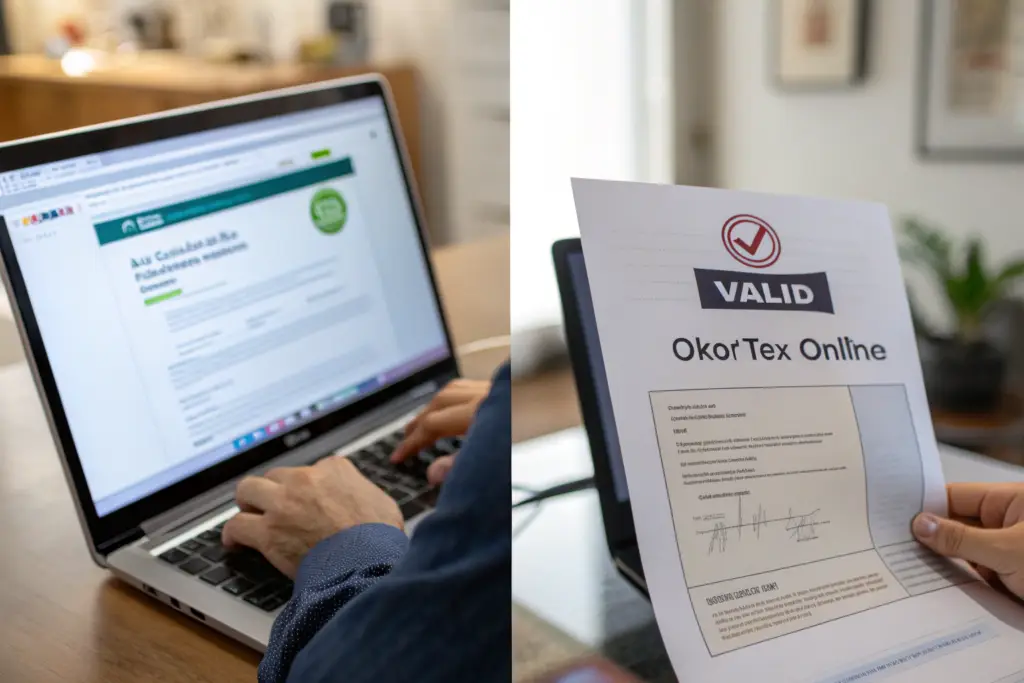
You asked for OEKO-TEX, and the supplier sent a PDF. How do you know it's real? This is where many buyers get burned. Verification is your power. I recall a client who came to us after a bad experience. Their previous supplier provided a fake certificate for babywear. The client only discovered it was invalid after a random spot check. We helped them verify every step. Authentic certification is not a one-time piece of paper; it's a living record tied to a specific product and production facility.
To verify authentic OEKO-TEX certification, you must use the official OEKO-TEX certificate checker database (https://www.oeko-tex.com/en/apply-here/certificate-check) by entering the unique certificate number and supplier name. A valid certificate will show the certified company name, product class (Class I for infant wear, Class II for direct skin contact like event polos), scope, and validity dates. Always match this data against your purchase order. For full-package manufacturers, also ask for certificates from their fabric mills to ensure the entire chain is compliant.
What Key Details Should You Scrutinize on the Certificate?
Don't just check for validity; read the details. Here are the critical fields:
| Certificate Field | Why It Matters to You |
|---|---|
| Applicant/Company Name | Must exactly match your supplier's legal business name. |
| Product Class (I-IV) | For golf polos worn on skin, it should be Class II. Class I is for babies, Class III for outerwear not touching skin. |
| Article Description | Should describe the type of product (e.g., "Knitted Polo Shirts"). |
| Validity Period | Certificates expire yearly. Ensure it's valid for your production period. |
| Standard | Should be "STANDARD 100 by OEKO-TEX". |
A real case from our practice: A European distributor requested OEKO-TEX for shorts. The fabric mill's certificate was valid, but it was for "Class III" fabric intended for linings, not "Class II" for direct skin contact. Our Shanghai Fumao quality team caught this mismatch during pre-production auditing and sourced the correct fabric, preventing a potential compliance failure for our client.
Why is On-Site Audit Support Crucial for Verification?
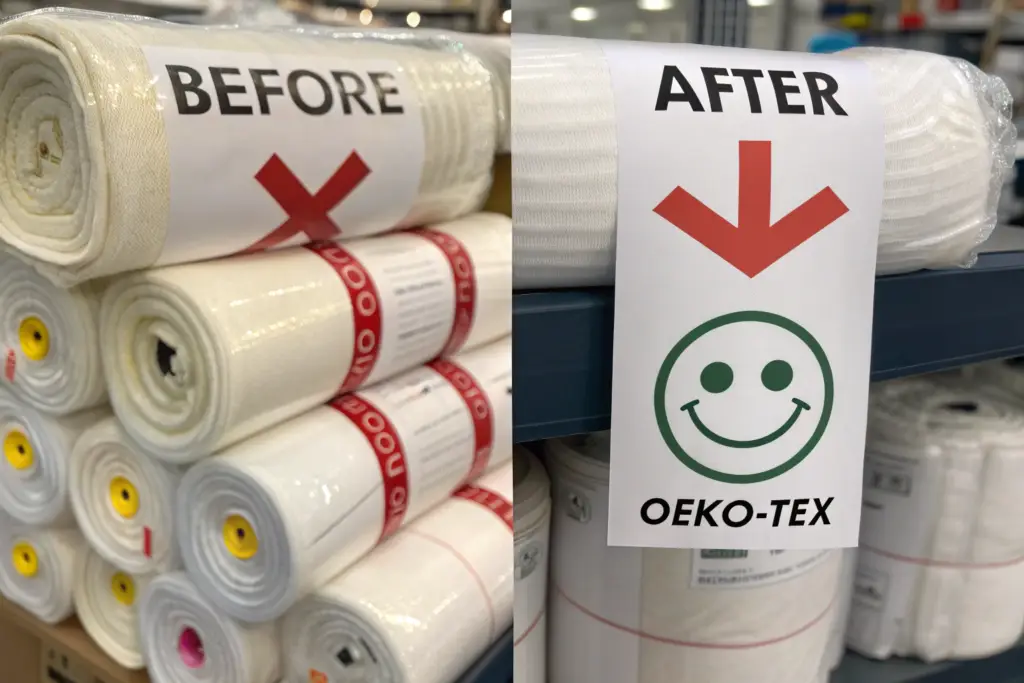
While the database is key, high-value orders warrant deeper checks. You can request your supplier to provide evidence during a virtual or physical factory audit. Ask them to show the labeled, certified fabric rolls in their warehouse. Reputable manufacturers will have this process streamlined. Furthermore, understanding a supplier's internal quality management system is vital. Do they batch-test incoming certified fabrics? How do they segregate certified from non-certified materials? Asking these questions separates true partners from mere order-takers. This level of scrutiny directly addresses the pain point of distrust and ensures your DDP (Delivered Duty Paid) shipments are flawless from origin to destination.
What Are the Cost and Lead Time Implications of OEKO-TEX?
"This sounds expensive and slow." That's the usual first thought. Let's be honest. OEKO-TEX certified fabrics can cost 5-15% more than conventional equivalents. Testing and certification fees add to that. And yes, sourcing these verified materials can add time. But this is a classic case of false economy versus total cost. The real question is: What is the cost of a failed shipment, a lawsuit, or a ruined corporate reputation?
The cost implication of OEKO-TEX is a marginal increase in unit price, while the lead time impact is minimal when working with an experienced manufacturer who maintains an inventory of certified fabrics or has certified mill partners. The key is integration. At our factory, we plan for certified orders by stocking base fabrics that are pre-certified for common items like polo shirt pique. This means your order for 300 custom-embroidered polos doesn't start from zero. Last fall, we secured a large order for a series of bank golf tournaments because we could guarantee OEKO-TEX certification without extending the standard lead time, beating competitors who quoted longer timelines.
How Can You Mitigate the Cost Impact for Your Event Order?
Smart sourcing strategies can manage costs. First, consolidate orders. The per-unit certification and testing cost drops with volume. Plan your annual event apparel needs across divisions if possible. Second, work with a full-package manufacturer like Shanghai Fumao. We leverage our bulk purchasing power with certified mills, passing on better rates than a buyer could get alone. Third, consider limiting certification to the articles in direct skin contact. For a golf set with a polo and an outer jacket, certifying the polo (Class II) may be sufficient if the jacket is Class III. A transparent supplier will guide you on this optimization.
Does OEKO-TEX Affect Customization and Design Flexibility?
A major concern is whether certification limits style, color, or customizable logo options. The answer is generally no. The standard tests for harmful substances in dyes and finishes, not for color palettes or design. However, it does enforce responsible chemistry. For example, using certain azo dyes or formaldehyde-based printing auxiliaries is prohibited. This means your supplier must use higher-quality, compliant inks and processes for logo embroidery or printing. In practice, this often results in better color fastness and durability of the final customized garment. We ensure all our customization processes for embroidered logos and prints meet the same compliant standards as the base fabric.
How Does OEKO-TEX Fit into a Reliable Sourcing Strategy?
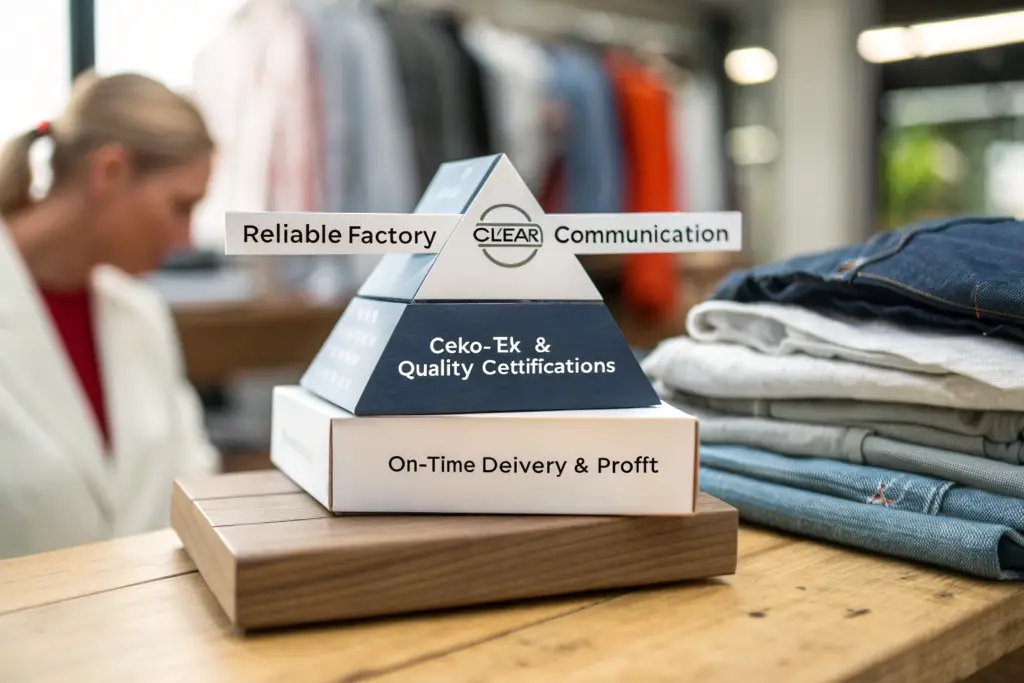
Sourcing is more than finding the lowest price. It's about building a reliable, risk-averse supply chain. OEKO-TEX is a cornerstone of that strategy. It aligns perfectly with the needs of buyers who are sensitive to quality but need competitive prices. It turns an intangible quality promise into a tangible, marketable asset for your own business and your end clients.
OEKO-TEX fits into a reliable sourcing strategy as a key filter for supplier qualification and a foundational element of product integrity, directly supporting competitive pricing through risk reduction and brand enhancement. It complements other critical checkpoints like social compliance audits, on-time delivery records, and payment method security. A supplier invested in OEKO-TEX is often more professional, with better systems, making communication more efficient—solving a core pain point for busy buyers.
What Other Certifications Should You Pair with OEKO-TEX?
For a comprehensive strategy, consider a layered approach. Pair OEKO-TEX Standard 100 (product safety) with:
- GRS (Global Recycled Standard): If your client wants sustainable apparel made from recycled materials (e.g., recycled polyester polos).
- ISO 9001 (Quality Management Systems): Indicates the factory has robust process controls, boosting on-time delivery reliability.
- BSCI or Sedex (Social Compliance): Addresses ethical production concerns.
This combination signals a mature, responsible supplier. We have seen that buyers who prioritize this bundle experience fewer shipment delays and quality disputes, as the factory's overall management is superior.
How to Communicate the Value of OEKO-TEX to Your End Client?
Your sourcing advantage becomes your sales tool. When proposing event apparel to your corporate client, don't just say "high quality." Say: "We source from OEKO-TEX certified manufacturers, meaning every shirt is independently verified free from over 100 harmful substances, ensuring attendee comfort and protecting your company from liability." This shifts the conversation from commodity to value-added service, allowing you to justify a better margin. It turns a procurement detail into a compelling brand story for your client's own event marketing.
Conclusion
The choice for corporate buyers is clear. In a market crowded with uncertainty, OEKO-TEX certification provides a measurable, trustworthy standard for apparel safety and quality. It directly tackles the chronic pain points of supply chain opacity, delivery reliability, and brand risk. It's no longer a "nice-to-have" for high-end events; it's a strategic "must-have" for any buyer who values their reputation and their clients' satisfaction. The marginal upfront cost is an investment in peace of mind, smoother operations, and a superior end product.
Moving from concept to a flawless delivered order requires a partner who understands this from the ground up. If you're looking to source reliably certified, high-quality golf and event apparel with seamless DDP logistics to the U.S., let's talk. We at Shanghai Fumao have built our processes around these standards to be your dependable manufacturing extension. Contact our Business Director Elaine to discuss your next project: elaine@fumaoclothing.com. Let's ensure your next corporate event is remembered for all the right reasons.