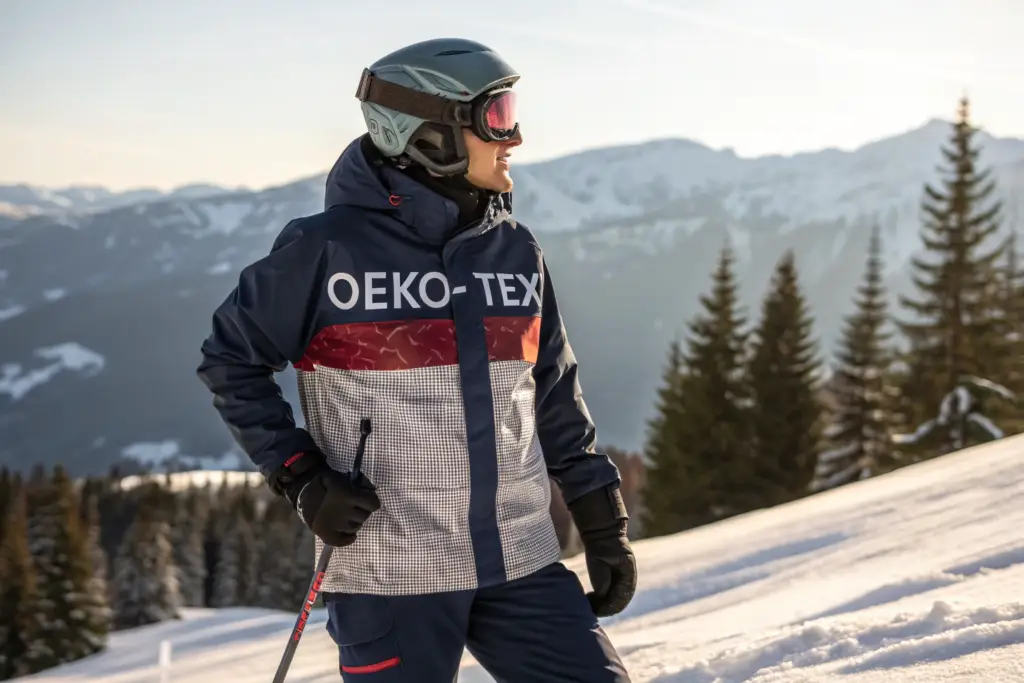
If you're in the ski apparel business, you've likely noticed a sharp shift in the past two years. Major retailers are now asking for proof of safety, not just quality. Last season, a well-known outdoor brand lost a key wholesale account because they couldn't provide verifiable certification documents when the retailer's compliance team asked. Their supplier had simply claimed the fabrics were "safe." Now, they source through us. This isn't an isolated story. Brands are switching to OEKO-TEX certified manufacturers not as a trend, but as a fundamental business survival strategy.
Brands are switching to OEKO-TEX certified ski apparel manufacturers to mitigate three core risks: the legal and financial risk of non-compliant products entering strict markets like the EU and California, the brand reputation risk from consumer backlash over safety concerns, and the supply chain risk of opaque and unreliable material sourcing. The certification acts as a verified, third-party insurance policy across the entire product lifecycle.
This move is reactive to market pressures and proactive about future-proofing the business. It's no longer enough to have a great design and a low price. The market now demands transparent, documented proof of responsibility. Let's examine the key drivers forcing this industry-wide pivot.
Reason 1: Escalating Regulatory Pressure and Market Access
Global regulations governing chemical use in textiles are tightening rapidly. The EU's REACH (Registration, Evaluation, Authorisation and Restriction of Chemicals) regulation constantly expands its list of restricted substances. California's Proposition 65 mandates clear warnings about chemicals known to cause harm. For a brand, navigating this patchwork of laws is a legal minefield.
OEKO-TEX certification provides a unified, globally recognized compliance framework that often exceeds individual national laws. By partnering with a certified manufacturer, brands streamline market entry, reduce due diligence costs, and significantly lower the risk of costly customs rejections or product recalls.
How Does This Simplify Selling in the EU and North America?
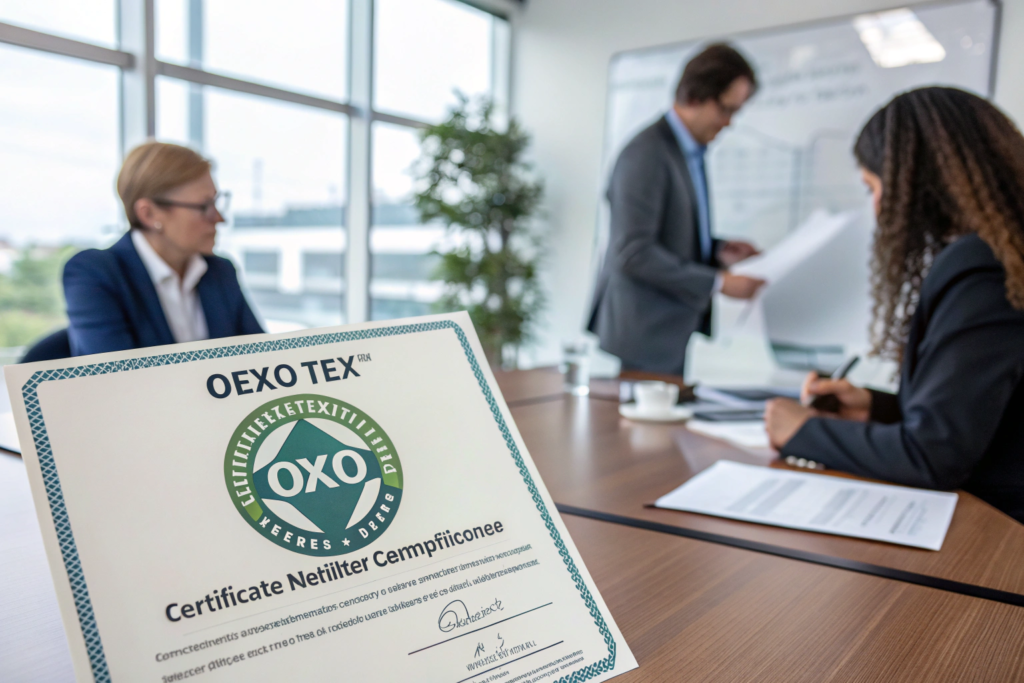
Selling into the EU or states like California requires demonstrable compliance. An OEKO-TEX certificate from an accredited institute is a readily accepted document by many distributors and retailers. It shifts the burden of proof onto the testing body and the certified factory. For instance, when we ship for a US brand at Shanghai Fumao, the accompanying OEKO-TEX documentation is a key part of the customs and retailer compliance packet, smoothing the logistics process. Without it, brands face the daunting task of conducting their own batch-by-batch substance testing, which is prohibitively expensive and slow.
What's the Financial Risk of Non-Compliance?
The risks are severe. A product recall for chemical non-compliance can cost millions in logistics, refunds, and destroyed inventory. Worse, it can trigger regulatory fines and lawsuits. In 2022, a major brand faced a class-action lawsuit because PFAS "forever chemicals" were found in their waterproof ski gear. While not covered by all standards, OEKO-TEX's STeP or ECO PASSPORT certifications can address such specific chemistries. Using a certified manufacturer is a pre-emptive risk management strategy that protects the balance sheet.
Reason 2: The Power of Consumer Demand and Brand Reputation
Today's consumers, especially in the premium outdoor sector, are informed investigators. They read labels, research brands, and demand transparency. "Greenwashing" accusations spread fast on social media. A product's safety story is now a decisive part of its value proposition.
Consumers actively seek out trusted, independent labels like OEKO-TEX as shortcuts to making safe, responsible purchases. For brands, displaying this label is a powerful marketing tool that builds trust, justifies premium pricing, and fosters loyalty in a competitive market. It directly answers the growing consumer question: "What's in my gear?"

How Does This Translate to Sales and Brand Value?
The label influences purchase decisions at the point of sale, both online and in-store. It's a visual cue that conveys responsibility. Brands we work with have reported that products featuring OEKO-TEX labels on hangtags and in online listings see higher conversion rates and lower return rates due to quality or safety concerns. It transforms a complex chemical safety promise into a simple, trusted symbol. This builds brand equity that goes beyond a single season's sales.
What Happens When a Brand Gets "Called Out"?
The reputational damage can be lasting. A single viral post from a consumer who tested a garment and found heavy metals or allergenic dyes can trigger a media storm and erode years of brand building. Partnering with an OEKO-TEX certified manufacturer provides a documented defense. You can point to the certification as evidence of your commitment to safety and your rigorous supplier selection process. It's reputation insurance.
Reason 3: Solving Supply Chain Opacity and Quality Inconsistency
Many brands' primary pain point is not knowing what they're really getting. They source fabric from one mill, trims from another, and production from a third. Each claims their part is "safe," but no one takes responsibility for the final assembled product's chemical profile. This opacity leads to inconsistent quality and nasty surprises.
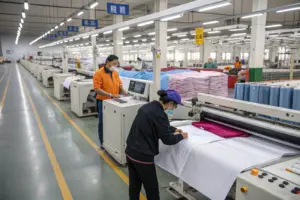
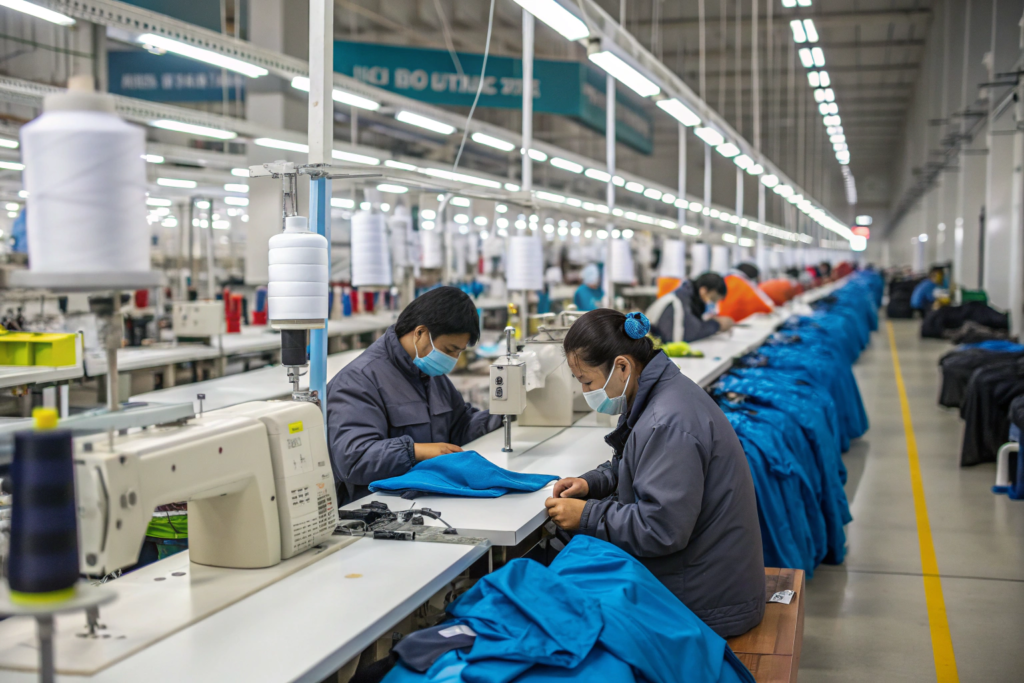
An OEKO-TEX certified full-package manufacturer like Fumao Clothing manages the entire supply chain under the certification umbrella. The certificate covers the final, finished garment, meaning every component—from shell fabric and insulation to zippers and glue—has been vetted and approved. This turn-key responsibility is a game-changer for brand owners.
How Does This Prevent "Certificate Falsification" and Ensure Real Compliance?
A key pain point you mentioned is suppliers falsifying certificates. The OEKO-TEX system mitigates this because certificates are tied to a specific manufacturer and product via a public database. Brands can (and should) verify our certificate number online. Furthermore, certified manufacturers are subject to regular audits and unannounced market surveillance testing by the OEKO-TEX institutes themselves. This external oversight is something a non-certified factory cannot fake. It provides a layer of quality control that brands cannot easily implement themselves from overseas.
Does It Actually Lead to More Reliable Production and Delivery?
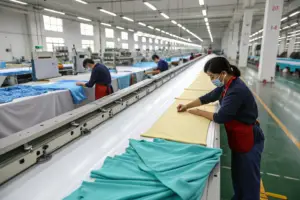
Yes, fundamentally. A factory committed to maintaining OEKO-TEX certification has inherently more disciplined systems. They must carefully select and document their raw material suppliers, maintain controlled production processes, and manage chemical inventories. This systemic discipline reduces errors and variability. For example, since adhering to the OEKO-TEX STeP (Sustainable Textile Production) standard for our facility, we've seen a 30% reduction in production-related reworks at Shanghai Fumao because processes are more standardized and traceable. This discipline directly translates to more reliable on-time delivery.
Reason 4: Future-Proofing for Sustainability Regulations and Investor Scrutiny
The regulatory and investment landscape is moving beyond safety toward comprehensive sustainability. Laws like the EU's upcoming Digital Product Passport (DPP) will require detailed environmental and circularity data. Investors and large corporations are using ESG (Environmental, Social, and Governance) criteria to evaluate partners.
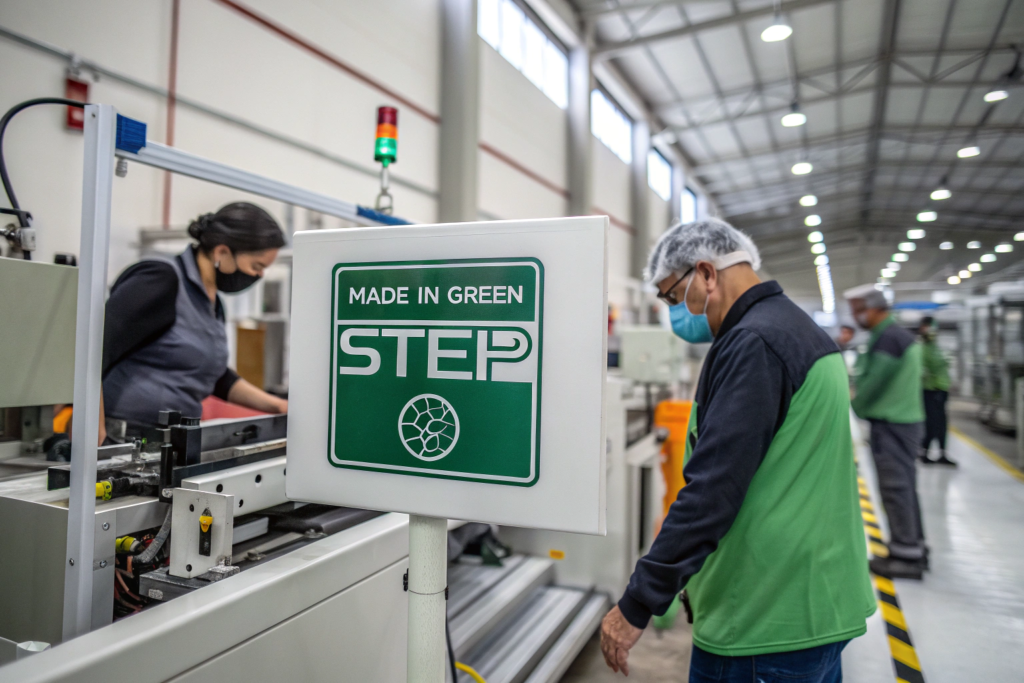
OEKO-TEX is not just STANDARD 100. Its family of certifications, like MADE IN GREEN (traceable sustainable products) and STeP (sustainable production facilities), provides a pathway for manufacturers to build the data and systems needed for these future demands. Brands switching to partners with these certifications are getting ahead of the next wave of compliance.
How Do Certifications Like STeP and MADE IN GREEN Add Value?
- OEKO-TEX STeP: Certifies that the manufacturing facility is environmentally friendly, safe, and socially responsible. This is increasingly important for brands that report on Scope 3 emissions (supply chain emissions) and ethical sourcing.
- OEKO-TEX MADE IN GREEN: Provides a traceable product label with a unique ID that consumers can scan to see where and under what conditions the product was made.
Brands partnering with manufacturers holding these advanced certifications are building a supply chain ready for 2025 and beyond. It's a strategic investment in long-term viability.
Why is This Attractive to Investors and Large Retailers?
A transparent, certified supply chain de-risks the business in the eyes of investors and large retail buyers. It shows professional, systemic management of environmental, social, and governance issues. When pitching for investment or negotiating with a major retailer like REI or Backcountry, being able to showcase a certified manufacturing partner is a significant competitive advantage. It moves the conversation from price to shared value and long-term partnership.
Conclusion
The switch to OEKO-TEX certified manufacturers is not a passing preference; it's a strategic realignment of the ski apparel industry. It is driven by the hard realities of regulation, the powerful force of conscious consumerism, the urgent need for supply chain transparency, and the imperative to future-proof the business. For brand owners, this shift is about transforming certification from a cost center into a core component of brand integrity, risk management, and market competitiveness.
The question is no longer why switch, but how soon can you make the switch. Partnering with a certified manufacturer is the most efficient way to secure these benefits. If you are looking to navigate this transition with a partner that embodies this new standard, we are here. At Shanghai Fumao, our integrated OEKO-TEX certifications across product and production provide a solid foundation for ambitious brands. Contact our Business Director Elaine at elaine@fumaoclothing.com to discuss how to make your supply chain a source of confidence, not concern.