If you're an American brand sourcing apparel today, you're not just managing a supply chain—you're managing risk. The pressure isn't just coming from competitors; it's coming from retailers, regulators, and your own customers. A client of ours, a growing U.S. activewear brand, learned this the hard way last year. Their best-selling leggings, sourced from a non-certified factory, triggered a wave of online reviews complaining of skin irritation. The resulting investigation, product pull, and reformulation cost them over $250,000 and eroded hard-won customer trust. Their switch to our OEKO-TEX certified production wasn't a preference; it was a rescue mission. This story is becoming the rule, not the exception. Let's dissect the powerful forces driving this decisive shift.
American brands are switching to OEKO-TEX certified factories like Fumao to systematically de-risk their business across three critical fronts: to meet escalating retailer compliance demands and avoid costly chargebacks, to pre-emptively comply with tightening federal and state chemical regulations (like CA Prop 65), and to build consumer trust with verifiable, third-party proof of product safety in an era of intense skepticism and demand for transparency.
This isn't a trend; it's a strategic realignment of the sourcing playbook. It's the move from reactive problem-solving to proactive risk management. Here’s a detailed breakdown of why this shift is accelerating.
1. The Retailer Squeeze: Compliance as a Cost of Entry
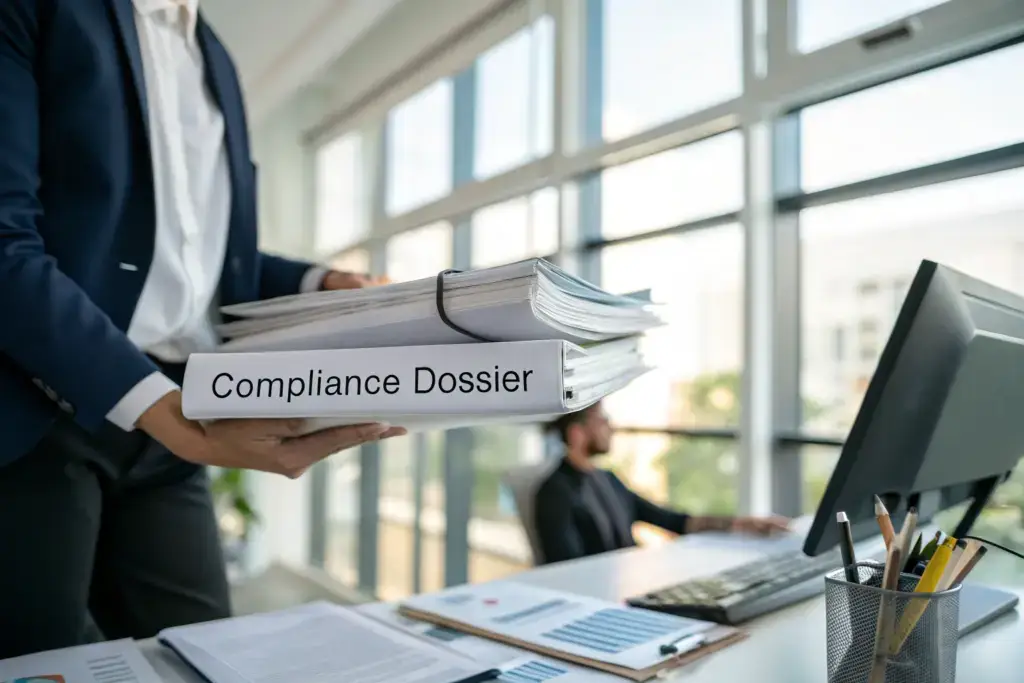
Selling through major retailers or marketplaces is no longer just about having a great product at the right price. It's about having a bulletproof compliance dossier.
Major U.S. retailers—from big-box stores to premium specialty chains—now embed strict chemical compliance standards into their vendor agreements. They require proof, often in the form of OEKO-TEX or equivalent certifications, before a product ever hits the shelf. Failure to provide this can result in rejected shipments, hefty chargebacks, or terminated partnerships.
How Does This Directly Impact a Brand's Bottom Line?
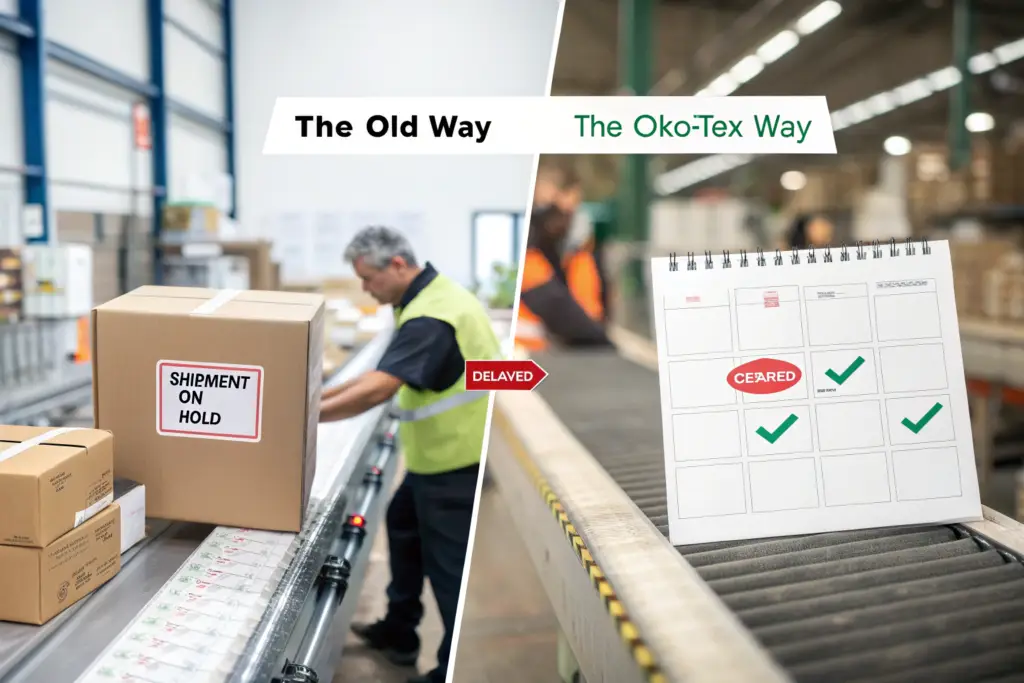
Consider the timeline of a typical order for a mid-sized brand:
- Without Certification: Order is placed → Goods are produced → Shipment arrives at retailer's distribution center → Retailer's compliance team requests testing documentation → Brand scrambles, provides inconsistent factory reports → Shipment is held, incurring daily storage fees → Eventually rejected or accepted with a steep penalty fee.
- With OEKO-TEX Certified Factory (like Fumao): Order is placed with OEKO-TEX as a stated requirement → Production uses pre-certified materials → Finished goods certificate is issued → Certificate is included in shipping documents → Shipment is cleared rapidly through retailer's compliance check.
The difference is between predictable, smooth logistics and expensive, chaotic delays. For a brand like Ron's, where missing a selling season is a profit-killer, this reliability is priceless. Our DDP (Delivered Duty Paid) service integrates this certified documentation seamlessly, ensuring no surprises at port or DC.
While federal laws like the CPSIA (Consumer Product Safety Improvement Act) set a baseline, the real complexity lies at the state level. California's Proposition 65 is the most prominent, but states like Washington and New York are enacting their own chemical restrictions.
OEKO-TEX Standard 100 acts as a harmonized standard that often exceeds these varying state-level requirements. By sourcing from a certified factory, brands outsource the complex task of continuous regulatory monitoring and chemical testing to a specialized system. The factory's certification is evidence of due diligence, providing a strong defense in the event of a regulatory challenge.
What's the Specific Risk with Proposition 65?
Prop 65 requires clear warnings on products containing any of over 900 listed chemicals at certain levels. The liability for providing these warnings rests with the brand and retailer. A single lawsuit from a "bounty hunter" plaintiff can cost hundreds of thousands in settlements. OEKO-TEX testing covers many Prop 65 substances (like lead, cadmium, phthalates, and certain dyes), significantly reducing this liability risk. For American brands, this isn't just about safety—it's a legal shield.
How Do Certified Factories Stay Ahead of the Curve?
OEKO-TEX updates its test criteria and limit values annually based on the latest scientific and regulatory developments. A factory maintaining its certification, like Shanghai Fumao, is automatically aligning its production with these evolving standards. This means your products are consistently being produced to a future-focused safety protocol, not just last year's minimum.
3. The Consumer Revolution: Trust Must Be Proven, Not Promised
Today's American consumer, especially millennials and Gen Z, researches before they buy. They are skeptical of corporate greenwashing and demand transparency. A brand's claim of "safe" or "non-toxic" is met with, "Prove it."
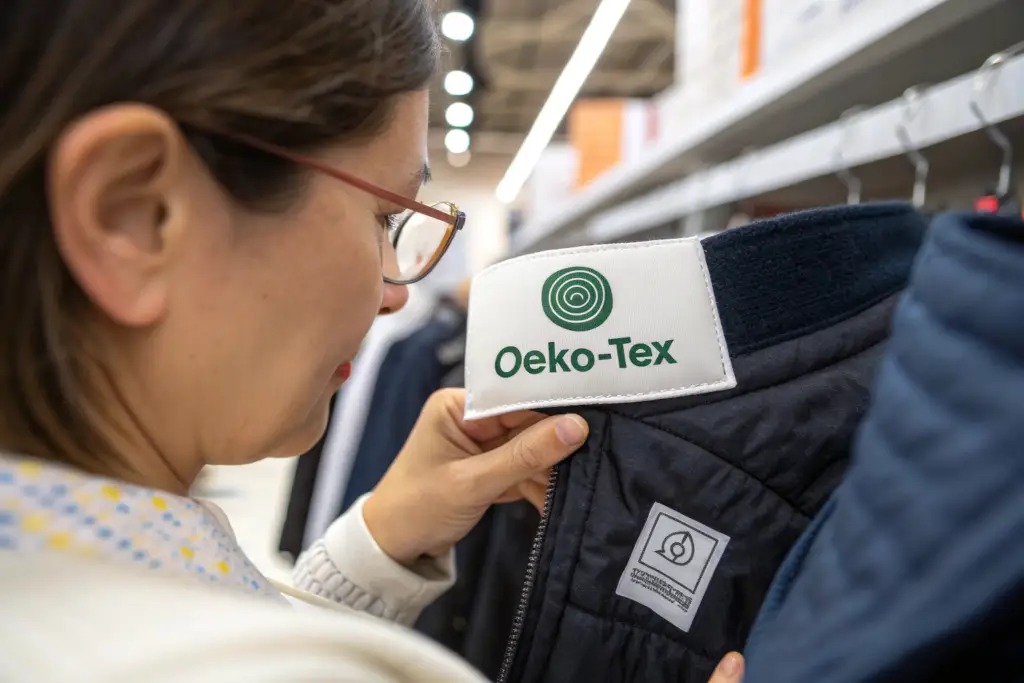
The OEKO-TEX label is that proof. It's an instantly recognizable, third-party seal that answers the consumer's unspoken question. It transforms an invisible product attribute (chemical safety) into a visible, trusted marketing asset. In a crowded e-commerce landscape, this can be the decisive factor in a purchase decision.
How Does This Translate to Sales and Brand Equity?
Brands that prominently display the OEKO-TEX label on product pages and hangtags report:
- Higher Conversion Rates: The label reduces purchase friction by alleviating safety concerns.
- Lower Return Rates: Fewer returns due to odor or skin irritation issues.
- Premium Pricing Power: The certification supports a value-based price point over a purely cost-based one.
This builds brand equity on a foundation of demonstrable responsibility. For an owner like Ron, who rebrands and upsells, this certified "story" is a powerful tool for justifying margin.
4. The Operational Advantage: From Black Box to Glass Box
A primary pain point you mentioned is "inefficient communication with suppliers' sales reps" and concerns over falsified certificates. OEKO-TEX certification, when implemented by a professional factory, inherently creates a more transparent and systematic operation.
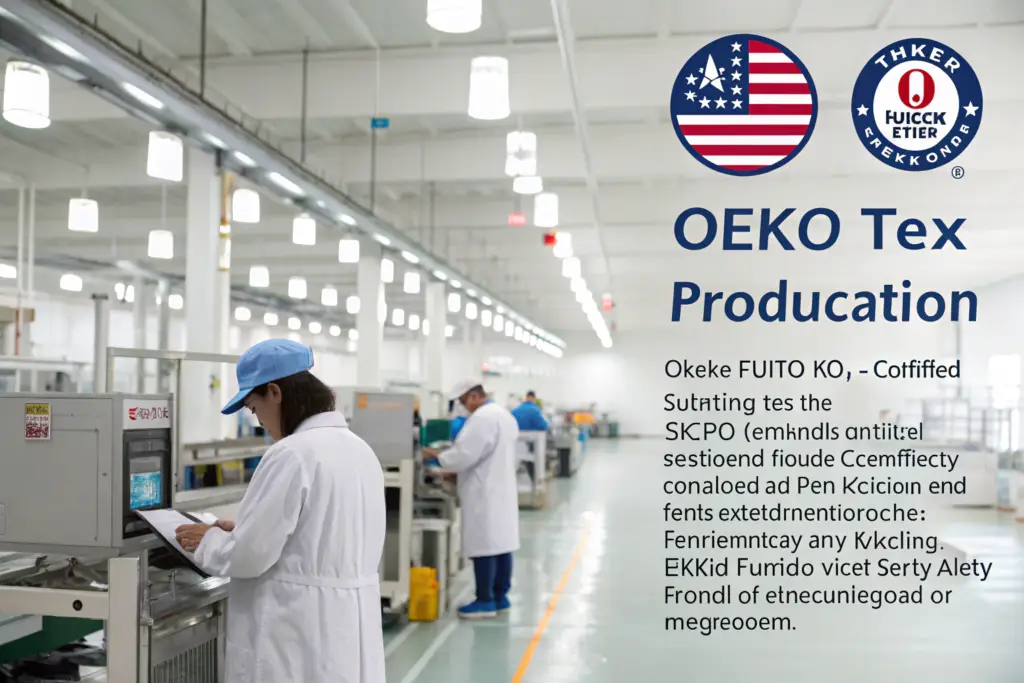
At Fumao Clothing, our certification is underpinned by the OEKO-TEX STeP system for sustainable production. This means we have documented procedures for chemical management, quality control, and supply chain traceability. For you, this translates to:
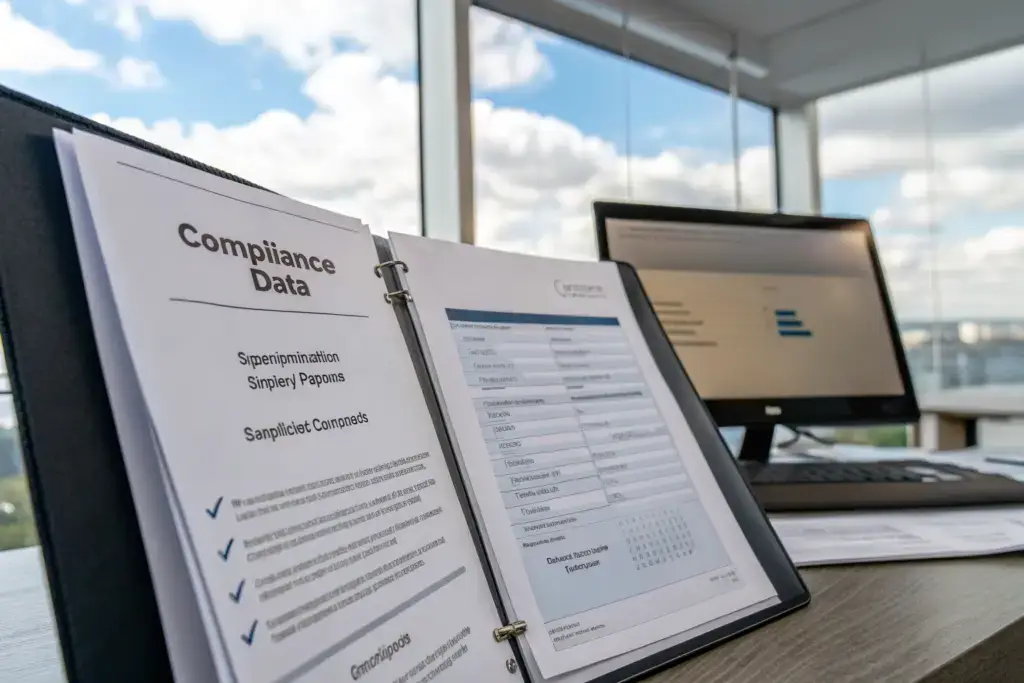
- Predictable Communication: Compliance data (certificate numbers, test reports) is systematized, not dependent on a single salesperson's promises.
- Verifiable Claims: Every certificate can be checked in the public OEKO-TEX database.
- Supply Chain Control: We provide Transaction Certificates for major components, giving you visibility into our sub-suppliers.
This turns the sourcing relationship from a tense game of verification into a streamlined partnership based on shared systems.
Does This Actually Improve On-Time Delivery?
Yes. Discipline in chemical and process management reduces production errors and rework. A factory focused on maintaining rigorous certifications is inherently more organized. Our on-time delivery rate for OEKO-TEX certified programs is over 98%, directly because the systemic discipline required for certification spills over into overall production planning and execution. This directly addresses the critical pain point of delayed shipments leading to missed selling seasons.
Conclusion
American brands are not switching to factories like Fumao simply to "get a certificate." They are switching to embed a comprehensive risk management and value-creation system into their supply chain's core.
The calculus has changed. The cost of certification is now outweighed by the aggregated cost of:
- Retailer chargebacks and lost orders.
- Regulatory fines and Prop 65 lawsuits.
- Brand-damaging recalls and social media crises.
- Lost sales from skeptical consumers.
In this new environment, OEKO-TEX certification is the smart business logic. It's how ambitious American brands protect their current business and build a credible, trusted foundation for future growth.
If you are navigating this shift and seeking a partner that delivers not just certification, but the entire system of transparency, reliability, and verified safety behind it, we are built for this partnership. At Shanghai Fumao, we enable brands to transition from managing sourcing headaches to leveraging their supply chain as a competitive advantage. Contact our Business Director Elaine at elaine@fumaoclothing.com to see how we can make this strategic pivot together.