Looking for the best textile industry company in India? India is known for its rich history in textiles, and with the country’s growing demand for high-quality fabrics, finding the right supplier can be challenging. The best textile companies are those that combine innovation, sustainability, and cost-effectiveness.
The best textile companies in India include Arvind Limited, Vardhman Textiles, and Raymond Limited. These companies lead the industry by offering high-quality fabrics, advanced technology, and large-scale production capabilities. Their commitment to sustainability and product excellence makes them stand out as industry leaders.
In this article, we’ll explore the best textile companies in India, their contribution to the industry, and what makes them the top choice for sourcing textiles.
Which is the best textile company in India?
Which company stands out in India’s textile industry? With numerous players in the market, some textile companies have earned their reputation due to their wide product range, innovative techniques, and strong international presence.
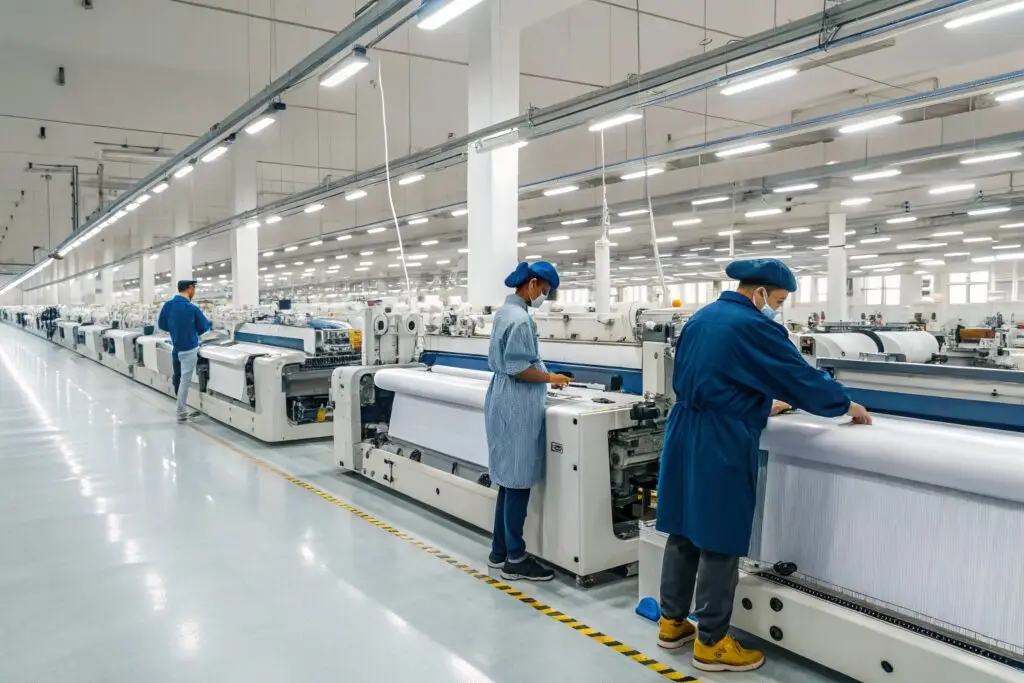
Arvind Limited is considered one of the best textile companies in India. It has been a leader in the industry for over 80 years, known for its high-quality denim, cotton, and synthetic fabrics. The company uses state-of-the-art technology and sustainable manufacturing practices, making it a favorite among global brands.
What makes Arvind Limited a leader in textiles?
Arvind Limited is a leader in the Indian textile industry due to:
- Wide range of fabrics – Arvind produces denim, khakis, and synthetic textiles.
- Global recognition – Supplies to major brands like Levi’s and Wrangler.
- Sustainability efforts – Committed to eco-friendly manufacturing practices.
- Technological innovation – Uses advanced machinery for precision and efficiency.
The company’s reputation for quality and innovation has made it one of the top textile suppliers worldwide.
How does Raymond Limited compare?
Raymond Limited is another major player in India’s textile industry, known for:
- Variety of premium fabrics – Specializes in wool and blended fabrics.
- Brand recognition – Known for its tailoring and apparel retail division.
- Sustainability focus – Invests in eco-friendly production processes.
While Arvind is a dominant force in synthetic and denim fabrics, Raymond excels in premium fabrics for apparel.
Which is the largest industry in India textile industry?
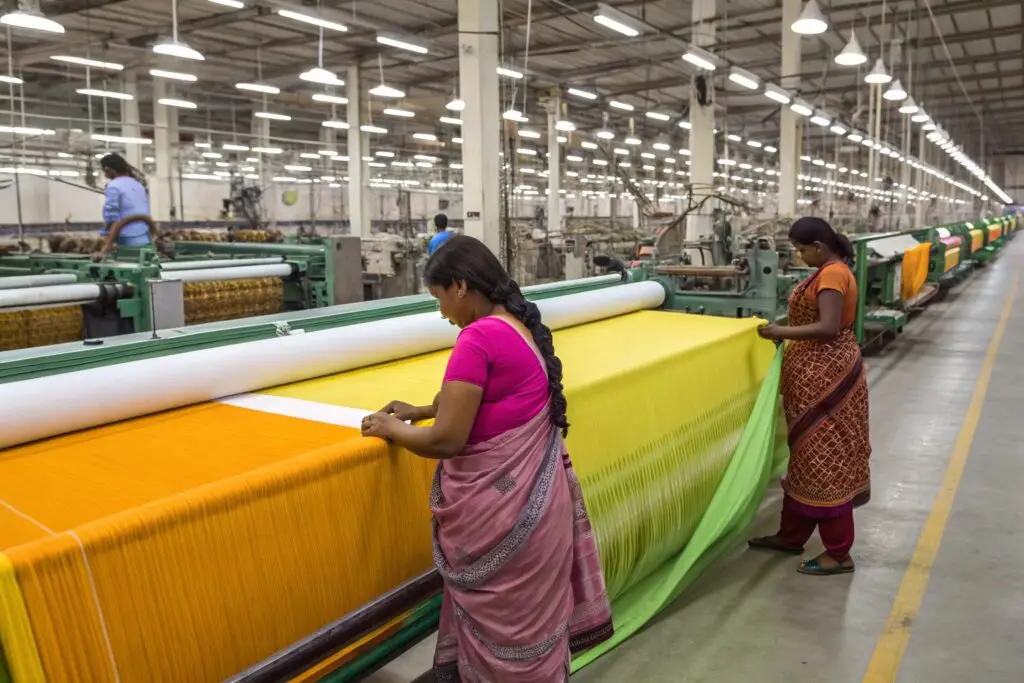
Which sector of the textile industry in India is the largest? The textile industry in India consists of various sectors, including weaving, dyeing, garment manufacturing, and home textiles.
The largest sector in the Indian textile industry is the garment manufacturing sector, which includes both domestic production and exports. India is one of the largest exporters of ready-made garments, contributing significantly to the country’s economy.
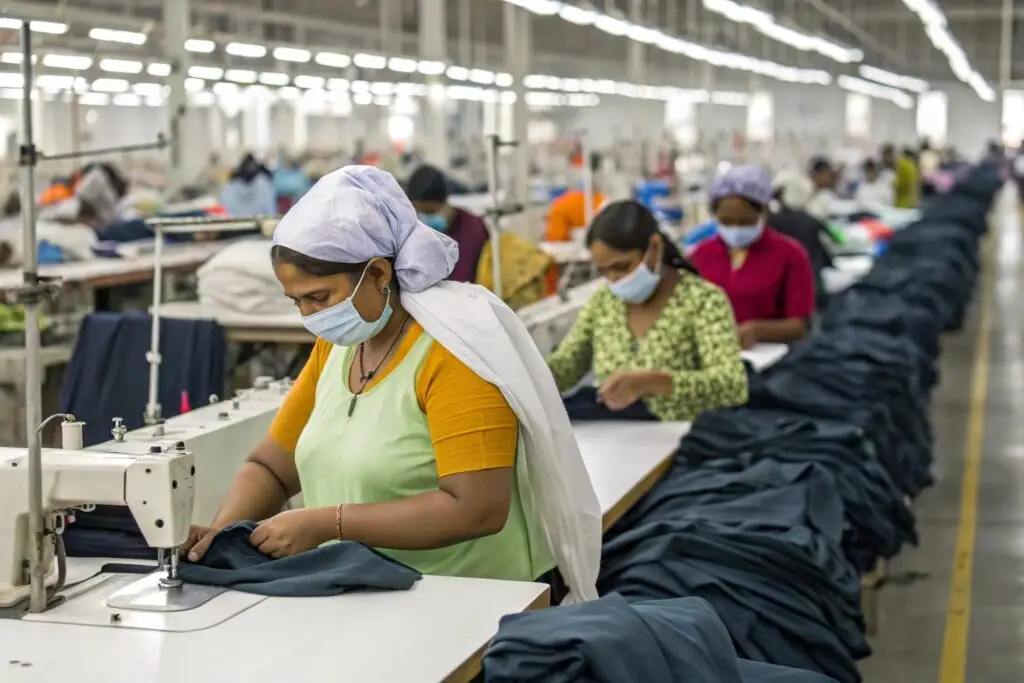
Why is garment manufacturing the largest sector?
Garment manufacturing dominates the Indian textile industry because:
- Huge export market – India exports garments to countries like the US, the UK, and Europe.
- Low labor costs – India’s relatively low labor costs make it competitive in the global textile market.
- Skilled workforce – The country has a large pool of skilled workers for garment production.
- Government support – Incentives like the Production Linked Incentive (PLI) scheme help boost the sector.
This sector’s ability to meet global demands has made it a driving force in India’s textile industry.
What other sectors contribute to India’s textile industry?
While garment manufacturing is the largest, other key sectors include:
- Spinning – India is the second-largest producer of cotton in the world.
- Weaving – Handloom and powerloom weaving are integral to the textile supply chain.
- Home textiles – Products like towels, bedsheets, and curtains are in high demand globally.
Each sector plays an important role in making India one of the world’s largest textile producers.
Who is the textile king of India?
Who is regarded as the "textile king" in India? The term “textile king” is often used to refer to influential figures who have shaped the textile industry in India.
The “textile king of India” is often considered to be Lalbhai Dalpatbhai, the founder of Arvind Limited. His vision and leadership helped transform Arvind Limited into a global leader in textiles. His contributions to the industry continue to resonate, making him a significant figure in India’s textile history.
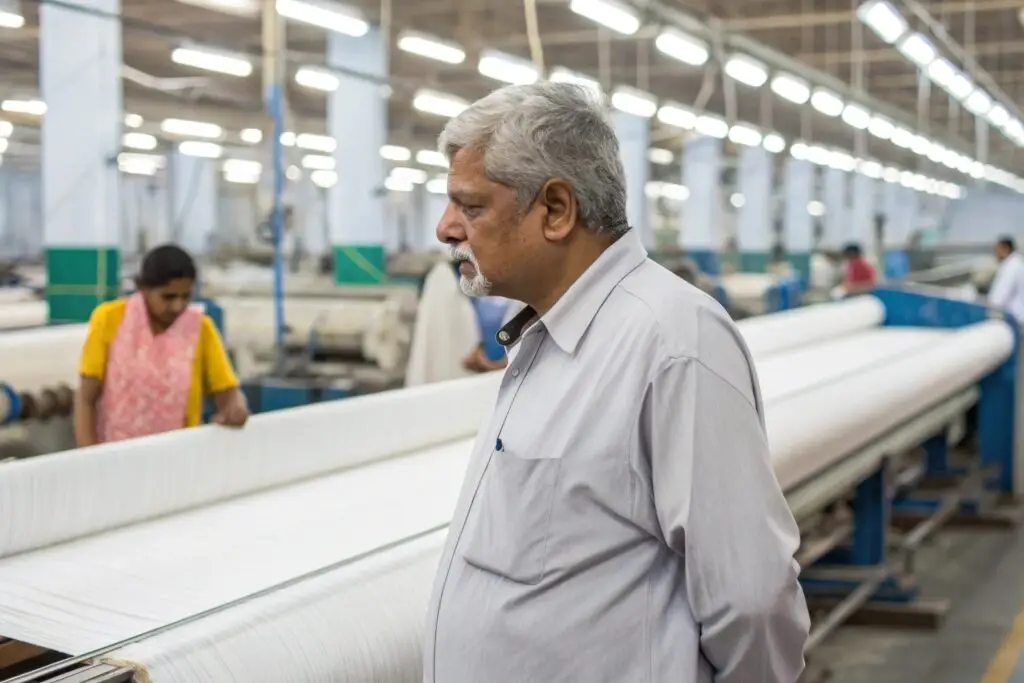
What made Lalbhai Dalpatbhai a key figure in India’s textile industry?
Lalbhai Dalpatbhai’s legacy in the textile industry includes:
- Establishing Arvind Limited – A company that revolutionized India’s textile exports.
- Focus on quality – Invested heavily in research and development for fabric innovations.
- Sustainability focus – His commitment to eco-friendly practices set a standard for the industry.
His leadership set the foundation for Arvind Limited’s continued success and global expansion.
Who are other influential figures in India’s textile industry?
While Lalbhai Dalpatbhai is often considered the "king," other influential figures include:
- S. K. Birla – Founder of Birla Group, a pioneer in synthetic textiles.
- R. S. Agarwal – The founder of Vardhman Textiles, which is now a leading manufacturer of yarns and fabrics.
These figures have played crucial roles in shaping India’s textile industry, particularly in manufacturing and global trade.
Which is the No 1 textile city in India?
Which city in India is known as the hub of the textile industry? India has several cities known for their textile production, each contributing significantly to the national and international markets.
The city of Surat in Gujarat is considered the No. 1 textile city in India. Known as the "Silk City" and the "Diamond City," Surat is one of the largest producers of synthetic textiles and garments in the country. It plays a crucial role in global textile supply chains.
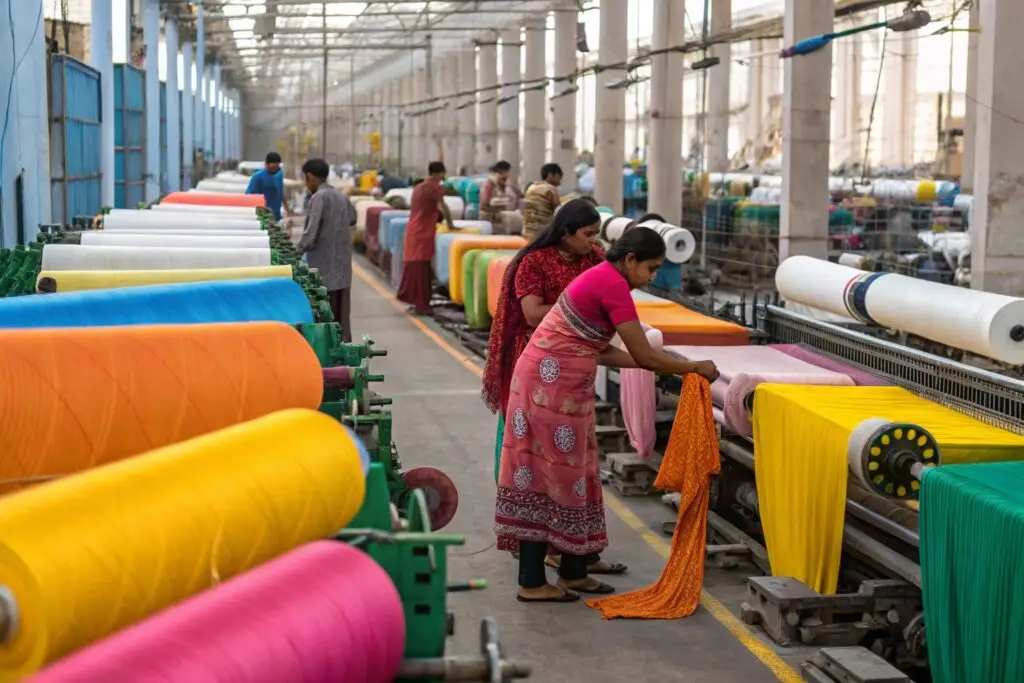
Why is Surat considered the textile capital of India?
Surat stands out for several reasons:
- Large-scale production – Surat produces millions of meters of fabric every year.
- Synthetic fabric hub – The city is known for producing polyester, silk, and other synthetic fabrics.
- Global trade links – Surat is one of India’s largest textile export centers.
- Skilled labor force – Surat has a vast workforce skilled in fabric production and garment manufacturing.
The city’s well-established infrastructure, connectivity, and skilled workforce have made it a dominant player in the global textile market.
What other cities are important in India’s textile industry?
Other key textile cities include:
- Ahmedabad – Known for cotton weaving and dyeing.
- Coimbatore – A major hub for spinning and knitting.
- Mumbai – The center for high-end textile fashion and garment exports.
Each city contributes to India’s diverse textile landscape, but Surat remains the leading textile city due to its large-scale synthetic textile production.
Conclusion
India’s textile industry is vast and diverse, with companies like Arvind Limited, Raymond, and Vardhman Textiles leading the way in both quality and innovation. The garment manufacturing sector is the largest contributor to the country’s textile economy, and Surat stands as the No. 1 textile city due to its massive production capacity. Influential figures like Lalbhai Dalpatbhai have shaped the industry, making India a global textile powerhouse. By understanding the key players and regions, businesses can make informed decisions when sourcing textiles in India.