If you're producing apparel and want it to stand out, a high-quality garment label is not optional—it’s essential.
India is home to many garment label manufacturers that offer custom branding, fast delivery, and eco-friendly options at competitive prices.
The challenge isn't availability—it’s finding the right partner. Let’s dive into how to find reliable Indian label manufacturers and what to expect from working with them.
Top Indian Garment Label Suppliers for Brands?
With so many choices, how do you know which Indian label suppliers actually deliver on quality and service?
Some of the top garment label manufacturers in India include Satin Label, Label India, Krishna Labels, and Super Label. These suppliers are known for their quality, reliability, and competitive pricing.
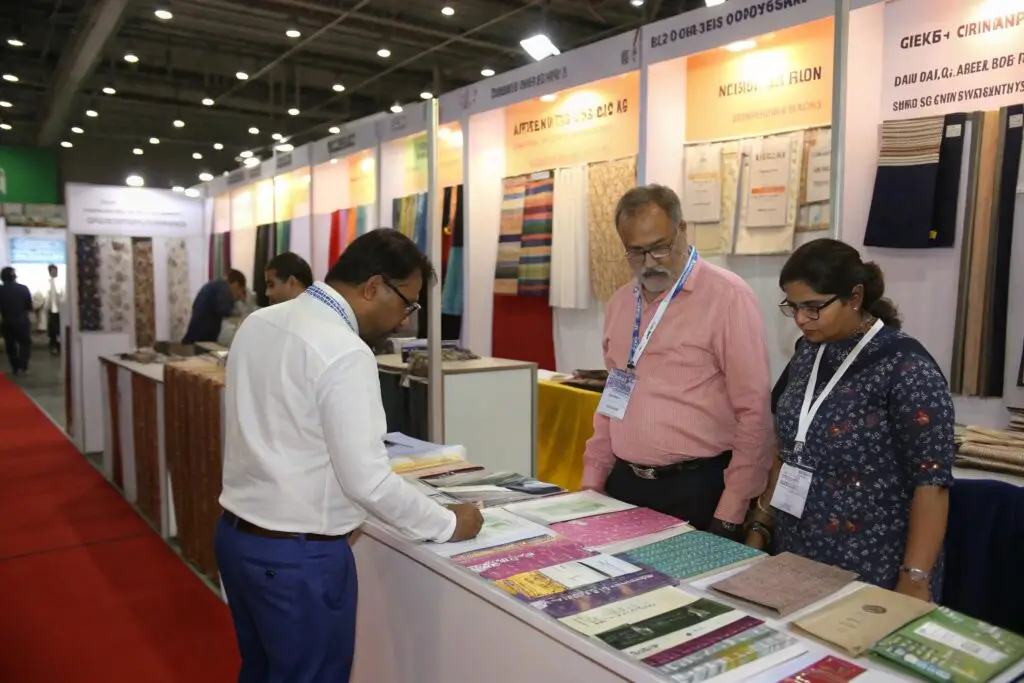
What makes these suppliers reliable?
These top-tier suppliers have decades of experience, modern printing and weaving machines, and strong quality control systems1. They offer services like woven labels, printed labels, heat transfer labels, and RFID tags. Most of them support global shipping2 and are used by fashion brands across Europe and the U.S.
Recommended Suppliers:
| Supplier Name | Specialty | Location |
|---|---|---|
| Satin Label | Woven and printed labels | Mumbai |
| Label India | Hangtags, leather patches | Delhi |
| Krishna Labels | Sustainable woven labels | Ahmedabad |
| Super Label | RFID, heat transfer, QR codes | Tirupur |
Why should foreign brands consider Indian suppliers?
- Cost-effective: Lower prices without compromising quality
- Custom options: Full flexibility in size, color, and material
- Export-ready: English communication and global shipping
- High capacity: Can handle bulk orders with fast turnaround
These suppliers are already working with global brands, and many offer sample services to test product quality before placing a large order.
How to Choose Quality Labels in India?
Labels may seem small, but they carry a big branding message. So how do you make sure you’re choosing the right one?
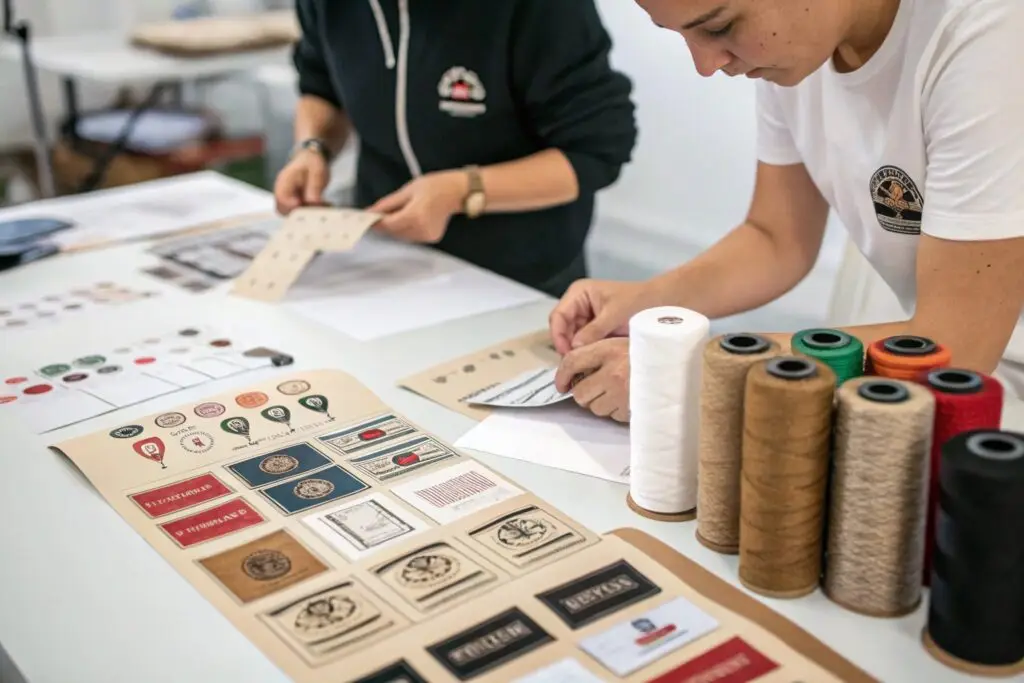
To choose quality garment labels in India, look for high-resolution weaving or printing, soft edges, colorfastness, and material durability.
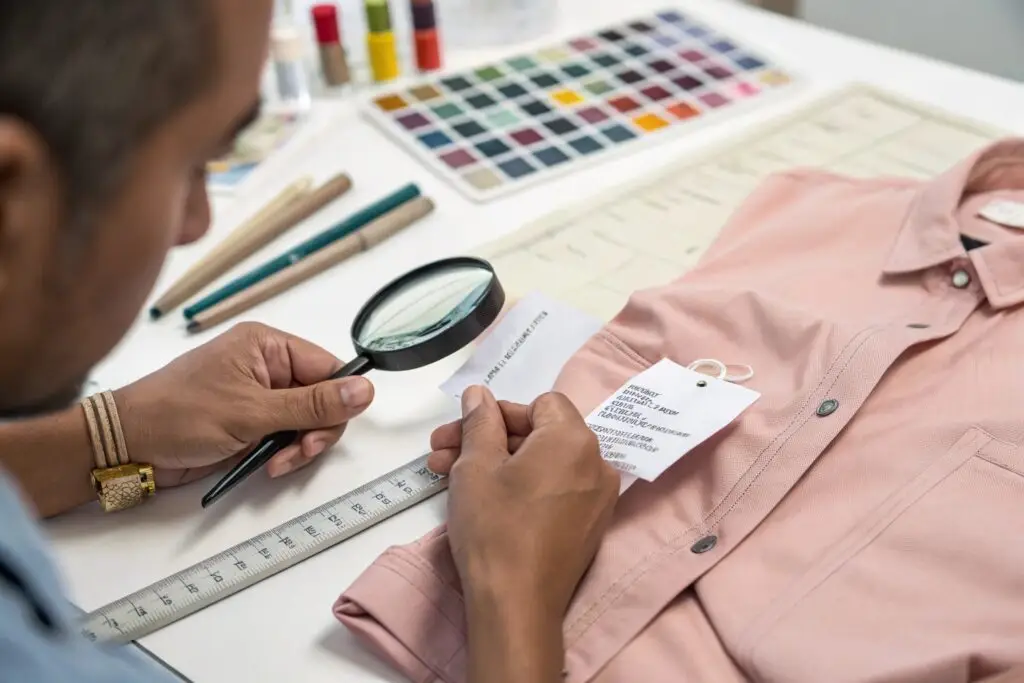
What quality indicators should you watch for?
High-quality labels have smooth edges that don’t irritate the skin, sharp and readable text, and consistent stitching. You also want labels that can survive repeated washes without fading, peeling, or fraying.
- Weaving precision: Logos and letters should be sharp
- Durability4: Survives 20+ machine washes
- Color consistency: No bleeding or fading
- Eco materials5: OEKO-TEX or GRS certified
- Backing strength: Heat transfer or sewing should hold over time
How can you test quality before ordering?
Request samples and do a wash test. Soak the labels in hot and cold water, and wash them a few times. Check if the colors remain consistent and whether the label edges fray.
You can also ask for the supplier’s client list, certifications, and production video to ensure legitimacy.
Sustainable Label Manufacturing in India?
As sustainability becomes more important in fashion, how are Indian suppliers stepping up?
Many Indian garment label factories now offer sustainable materials like recycled polyester yarns, organic cotton, and water-based inks for environmentally friendly label production.
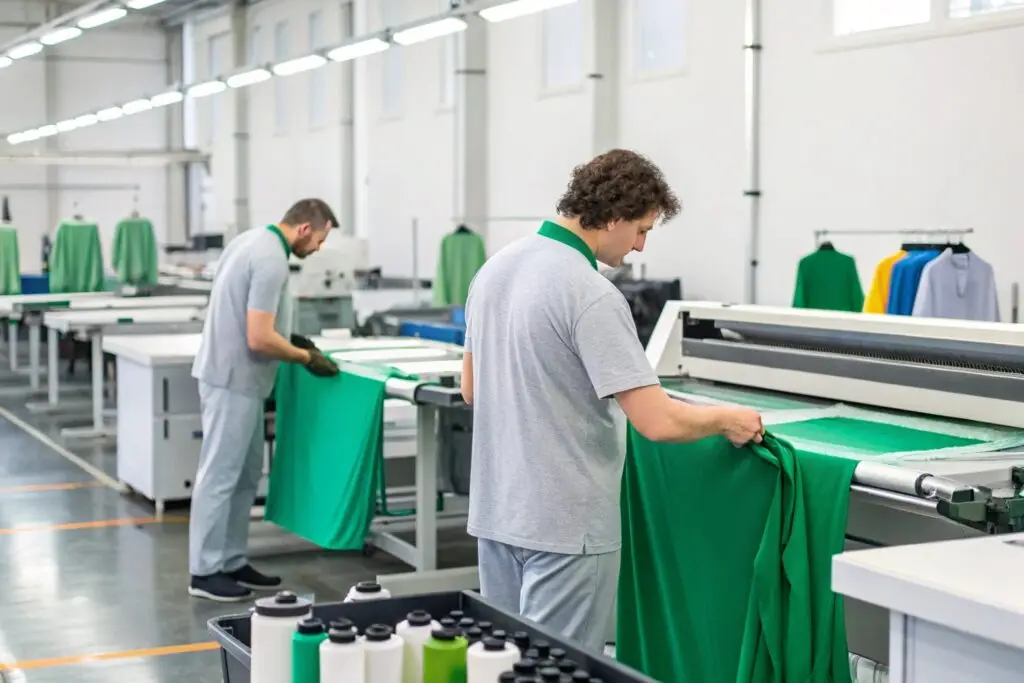
What eco-materials are available for labels?
India’s textile industry has been investing in greener manufacturing, especially as global brands push for traceable and ethical sourcing. Label manufacturers now use:
| Sustainable Material | Benefits |
|---|---|
| Recycled polyester6 | Reduces plastic waste |
| Organic cotton | Grown without harmful pesticides |
| Bamboo fiber | Naturally antibacterial, biodegradable |
| Water-based inks | No chemical runoff |
How to verify sustainability claims?
Ask for certifications like:
- OEKO-TEX Standard 1007: Ensures materials are safe for human use
- GRS (Global Recycled Standard): Confirms use of recycled content
- GOTS (Global Organic Textile Standard)8: For organic fibers
Suppliers like Krishna Labels and Label India are already offering sustainable solutions, especially for buyers in Europe where regulations are strict.
Custom Clothing Label Costs in India?
Price is always a concern—but how much should you expect to pay for custom labels?
In India, the cost of custom clothing labels ranges from $0.02 to $0.10 per piece depending on size, material, design complexity, and order quantity.

What factors affect the final price?
- Label type9: Woven labels cost more than printed ones
- Material: Cotton or organic threads cost more than polyester
- MOQ10: Lower minimums often carry a higher per-unit cost
- Color count: More colors means more production time
- Finishing11: Heat-cut edges, folds, or backing increase cost
Example Pricing Table (per piece):
| Label Type | Quantity 1,000 pcs | Quantity 10,000 pcs |
|---|---|---|
| Woven label (basic) | $0.07 | $0.04 |
| Printed satin label | $0.05 | $0.03 |
| Heat transfer label | $0.08 | $0.05 |
Tips for reducing costs:
- Stick to 1–2 colors
- Use standard sizes
- Choose polyester over cotton for basic collections
- Batch your label orders to meet higher MOQs
Most Indian suppliers also include design setup costs (usually $20–$50), but this is a one-time fee for repeat orders.
Conclusion
India offers a wide selection of garment label manufacturers—from affordable bulk options to sustainable and custom designs. With the right partner, you can elevate your brand’s look, feel, and identity while keeping costs in check.
-
Understanding quality control systems can help you choose reliable suppliers and ensure product excellence. ↩
-
Exploring global shipping processes can enhance your understanding of logistics and supplier reliability. ↩
-
Understanding the components of a Label Quality Checklist can help you ensure you choose the best labels for your needs. ↩
-
Exploring methods to test label durability will help you make informed decisions and avoid poor-quality labels. ↩
-
Learning about OEKO-TEX and GRS certifications can guide you in selecting environmentally friendly labels that meet quality standards. ↩
-
Explore the advantages of recycled polyester, a key eco-material that helps reduce plastic waste in the textile industry. ↩
-
Learn about the OEKO-TEX Standard 100 certification, which ensures materials are safe for human use, a crucial aspect of sustainable textiles. ↩
-
Discover the significance of GOTS certification for organic fibers, ensuring ethical and sustainable practices in the textile industry. ↩
-
Understanding label types can help you choose the most cost-effective option for your needs. ↩
-
Exploring MOQ can help you strategize your orders for better pricing and efficiency. ↩
-
Learning about finishing options can help you make informed decisions that balance quality and cost. ↩