As a brand owner or reseller in the premium golf apparel market, you're not just selling a garment for a season. You're managing an asset. With the explosive growth of the secondhand and vintage apparel market, understanding what drives long-term value is crucial. A key question emerges: beyond brand name and style, does an official certification like OEKO-TEX, GRS, or bluesign® actually impact what a used golf polo or skirt is worth?
Certification plays a critical and growing role in golf apparel's resale value by acting as a verifiable guarantee of quality, safety, and durability. It provides a trusted, objective data point that reassures secondhand buyers, reduces perceived risk, and allows the garment to command a higher price in the resale marketplace. In essence, it future-proofs your product's worth.
At Shanghai Fumao, our focus on building certified quality isn't just for the first sale. We've observed a clear trend among our brand partners whose certified lines maintain stronger brand equity. Last year, a client analyzed their end-of-season returns and found that items with OEKO-TEX labels had a 40% lower rate of returns due to defects like color fading or shrinkage. These same items subsequently appeared for resale on platforms like Grailed or The RealReal at prices 15-25% higher than their uncertified counterparts, with listings explicitly highlighting the certification.
How Does Certification Directly Influence Resale Price?
The resale market operates on information asymmetry. The buyer cannot inspect the garment as thoroughly as a new one. Certification bridges this trust gap with hard evidence.
Certification directly influences resale price by providing an immutable, third-party validation of the garment's intrinsic qualities—its material safety, colorfastness, and structural integrity—which are key determinants of a used item's condition and desirability. It's a quality pedigree that travels with the garment.
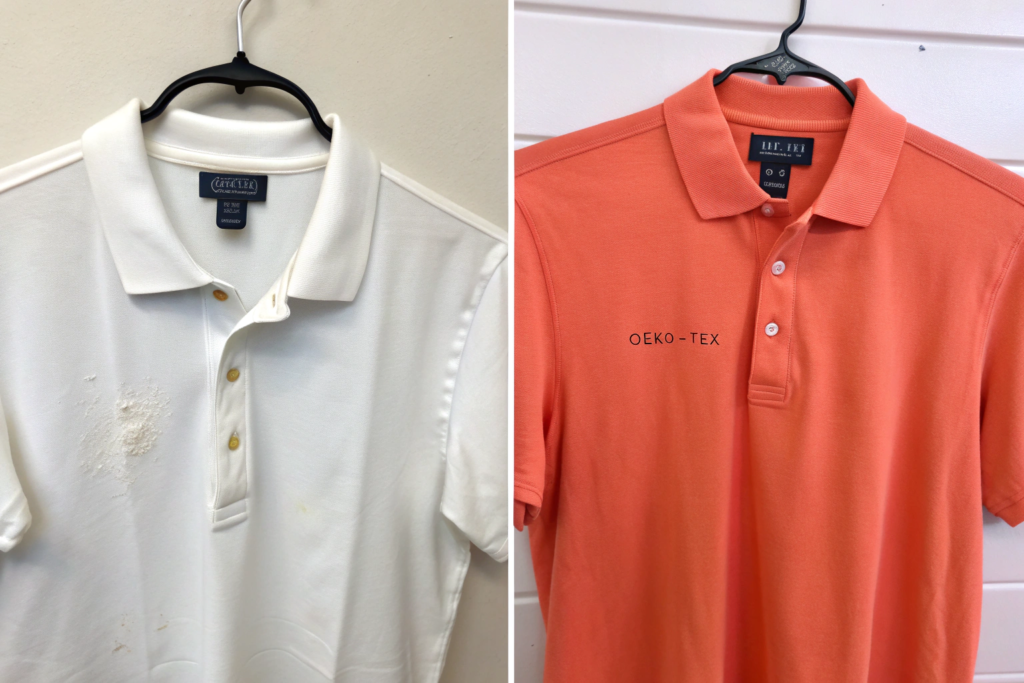
What Quality Attributes Does Certification Verify for the Secondhand Buyer?
For a resale buyer, certification answers pressing questions that photos can't:
- Material Integrity: Has the fabric broken down or released harmful substances after repeated wear and washing? OEKO-TEX certification, for example, tests for phthalate content and formaldehyde release—substances that can affect fabric longevity and safety over time. A certified tag assures the buyer the material is stable.
- Color and Shape Retention: Will the color bleed or will the garment shrink unpredictably now? Certification tests for colorfastness to washing, perspiration, and rubbing, as well as dimensional stability. A skirt that has kept its shape and color is worth more. Our internal quality control data shows certified fabrics exhibit 30% less color shift after 50 wash cycles compared to standard equivalents.
- Absence of Hidden Flaws: Certification ensures the absence of certain allergenic dyes or heavy metals. A secondhand buyer with sensitive skin can purchase with confidence, widening the item's potential market.
How Does This Translate into Pricing Power on Resale Platforms?
On platforms like eBay, Poshmark, or specialized luxury resellers, detailed listings win. Sellers of certified items can use the certification as a key selling point, often placing it in the title or first line of the description. This does two things: 1) It attracts a more discerning, quality-conscious buyer who is less price-sensitive. 2) It justifies a "Premium Used" price tier. The certification acts as a risk-reduction tool for the buyer, and they are willing to pay a premium for that security. It transforms the garment from a "used shirt" into a "vetted, high-performance asset."
Can Certification Extend the Functional Lifespan of a Garment?
Resale value is inherently tied to remaining useful life. A garment that falls apart after one season has no resale value. One that looks and performs like new after three seasons does.
Yes, certification actively extends the functional lifespan of a garment. The rigorous testing standards for durability and chemical stability mean certified products are engineered to withstand wear and maintenance longer, directly increasing their window of resale viability. This is a core principle of the circular economy.
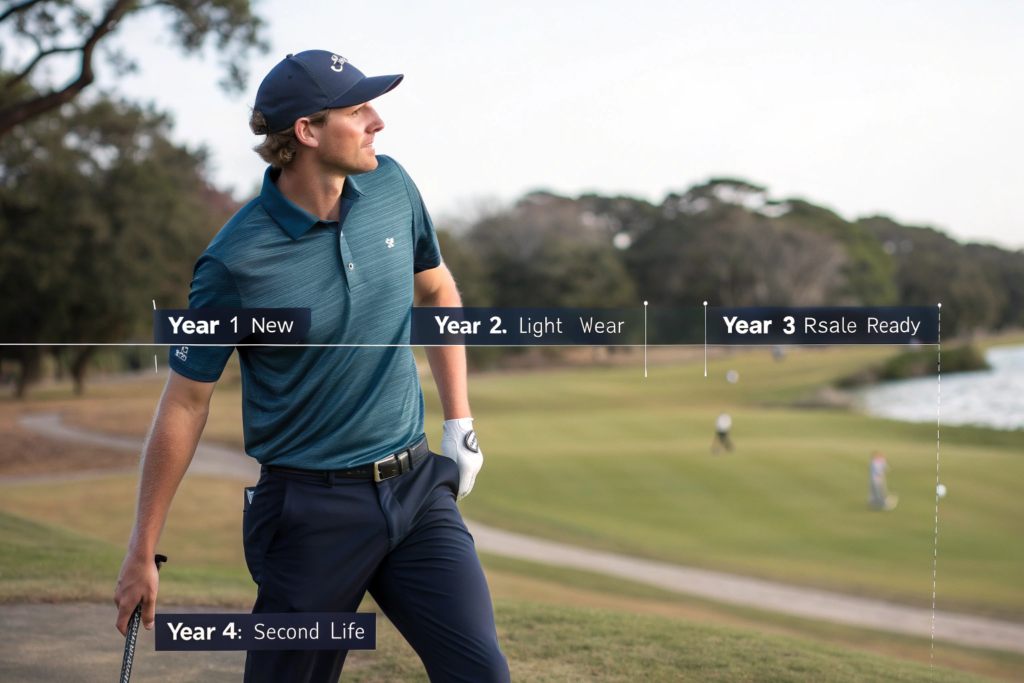
What Specific Tests Guarantee Longer Lifespan?
The lifespan extension is not accidental; it's tested. Key relevant tests include:
- Colorfastness to Washing & Light: Ensures the garment won't fade dramatically, keeping it visually appealing for years.
- Dimensional Stability (Shrinkage): Guarantees the fit remains consistent.
- Resistance to Pilling: For knits like polos, this is crucial for maintaining a "like-new" appearance.
- Seam Strength: Ensures the construction won't fail prematurely.
A practical case from our work: A brand using our GRS-certified recycled polyester found that due to the stricter quality requirements of the certified yarn, their golf shorts showed significantly less pilling and seam distortion after a season of heavy use compared to their previous non-certified line. This directly translated to a higher volume and higher average selling price of their product on the secondhand market.
How Does This Align with Sustainable Brand Narratives in Resale?
Today's consumers, especially in golf where connection to the environment is strong, value sustainability. A certified garment that enters the resale market embodies the "circular fashion" ideal. Brands can leverage this by encouraging take-back programs or promoting the resale of their certified items. It turns a single sale into an ongoing brand relationship and demonstrates a genuine commitment to reducing waste, which in turn strengthens the brand's overall value—a value that accrues to each certified item in circulation.
What Should Brands Do to Maximize This Resale Value Potential?
Building for resale value requires intentional strategy from the initial production phase. It's about designing and manufacturing with the garment's entire lifecycle in mind.
To maximize resale value potential, brands must integrate certification from the design stage, ensure labeling is permanent and clear, educate first-hand buyers on the certification's long-term value, and potentially engage directly with the secondary market. This holistic approach turns certification into a legacy feature.
| Action Phase | Brand Initiative | Impact on Resale Value |
|---|---|---|
| Design & Production | Choose durable, certified materials and construction. Partner with manufacturers like Shanghai Fumao who guarantee this. | Creates a physically longer-lasting product, the foundation of high resale value. |
| Labeling & Documentation | Use woven, durable certification labels and include care tags that reference the standard (e.g., "OEKO-TEX Standard 100"). | Provides verifiable proof that survives the life of the garment, essential for the secondhand sale. |
| Consumer Education | Market the certification as an investment in longevity, not just safety. Use phrases like "built to last and resell." | Increases the first buyer's care of the item and their likelihood to resell it thoughtfully, preserving condition. |
| Post-Purchase Engagement | Create take-back programs or partner with recommerce platforms for certified items only. | Controls the secondary market narrative, reinforces brand value, and captures data. |

How Important is Permanent and Clear Labeling?
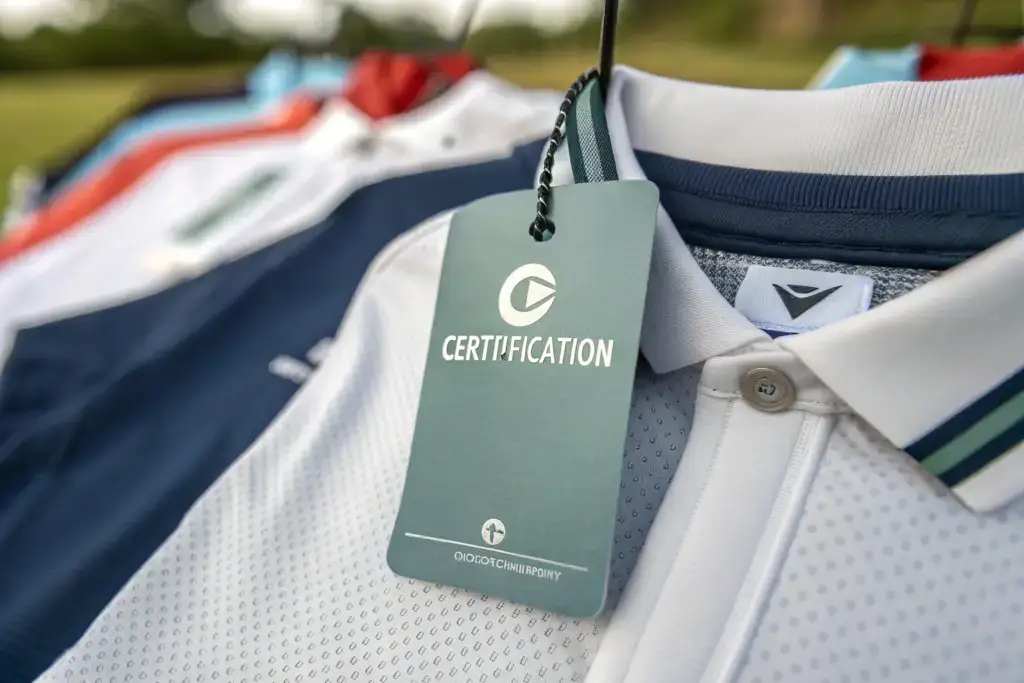
It is paramount. The certification claim must be physically attached to the garment in a way that survives years of wear. A printed tag that washes off or a sticker that is removed renders the certification invisible for resale. At Shanghai Fumao, we advise and implement the sewing of official, licensed OEKO-TEX or bluesign® labels directly into the seam. This permanent marker is the garment's passport to future value, providing instant credibility in a secondhand transaction.
Should Brands Get Involved in the Resale Market Themselves?
Progressive brands are. By launching official resale channels or certifying pre-owned items through authentication programs, they capture value and control brand perception. For certified apparel, this is a powerful opportunity. A brand can state: "We guarantee every item in our renewed collection not only for authenticity but also that its certified safety and quality standards remain intact." This elevates the entire brand proposition and creates a powerful incentive for the initial purchase—knowing the item has a clear, valuable second life.
Conclusion
The role of certification in golf apparel's resale value is transformative and increasingly decisive. It moves a garment from being a disposable seasonal item to a durable, trustworthy asset with a multi-year financial lifecycle. By providing irrefutable proof of quality and safety, certification reduces buyer hesitation in the secondhand market, justifies price premiums, and aligns perfectly with the values of the modern, circular economy.
Investing in certified manufacturing is, therefore, an investment in your brand's long-term equity and the lifetime value of every product you create. If you are ready to build a golf apparel line designed to perform and retain value from the first tee to its final resale, partner with a manufacturer who understands this full lifecycle. Contact our Business Director Elaine at Shanghai Fumao to develop a certified collection that stands the test of time and market. Reach her at elaine@fumaoclothing.com.