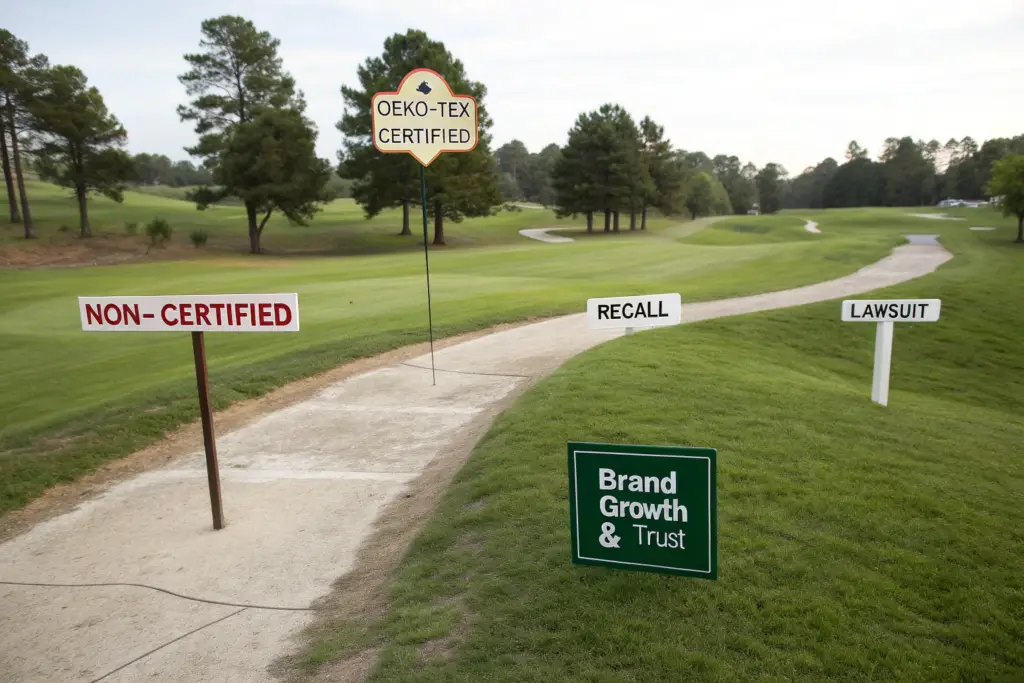
Last year, a startup brand presented us with two cost estimates for their flagship golf polo. The first, from a generic factory, was $11.50 per unit. The second, from us at Shanghai Fumao for an OEKO-TEX Class 1 certified version, was $14.75. The founder's initial reaction was, "That's a 28% premium. I can't compete with that." He chose the cheaper option. Nine months later, his best-selling polo was pulled from a major online golf retailer after a random spot-check found elevated levels of a restricted dye. The cost to manage the recall, destroy inventory, reformulate, and relaunch? Over $85,000. The "cheaper" polo ultimately cost him his relationship with that retailer and nearly sank his business. The real cost difference isn't in the price tag; it's in the total cost of ownership, risk, and brand equity.
The real cost difference between certified and non-certified golf wear is not a simple per-unit manufacturing premium. It is a strategic calculation that weighs a known, upfront incremental cost (typically 15-30%) against potentially catastrophic hidden costs: regulatory fines, shipment rejections, lost retailer partnerships, brand reputation damage, and the immense expense of crisis management. Certified apparel has a higher price but a lower total risk cost.
Let's move beyond the invoice line item and perform a true cost-benefit analysis that every serious brand must understand before sourcing.
What Constitutes the Upfront "Manufacturing Premium"?
The immediate price difference you see on a quote comes from several tangible factors in the full-package production process.
The upfront manufacturing premium (15-30%) is driven by: 1) Higher cost of OEKO-TEX certified raw materials (fabrics, threads, trims) from audited mills; 2) Third-party laboratory testing and certification fees; 3) The factory's investment in segregated production processes, specialized staff training, and supply chain management to maintain compliance integrity.
| Cost Component | Non-Certified Polo (Example) | OEKO-TEX Certified Polo (Example) | Premium Reason |
|---|---|---|---|
| Fabric (per yard) | $2.80 | $3.50 - $4.00 | Mill's investment in compliant dyes/finishes; testing overhead. |
| DWR/Performance Finish | Included in base fabric cost. | +$0.25 - $0.50 | PFAS-free, compliant chemistry is more expensive. |
| Threads & Trims | $0.30 | $0.45 - $0.60 | Sourcing from certified trim suppliers; batch testing. |
| Certification Fee | $0 | $0.75 - $1.50 (amortized) | Direct cost paid to OEKO-TEX institute (TESTEX, Hohenstein). |
| Factory Compliance Ops | Built into general overhead. | +$0.50 - $1.00 | Segregated storage, line cleaning, traceability systems, QC labor. |
| **Estimated Unit Cost | $11.50 | $14.75 | ~28% Premium |
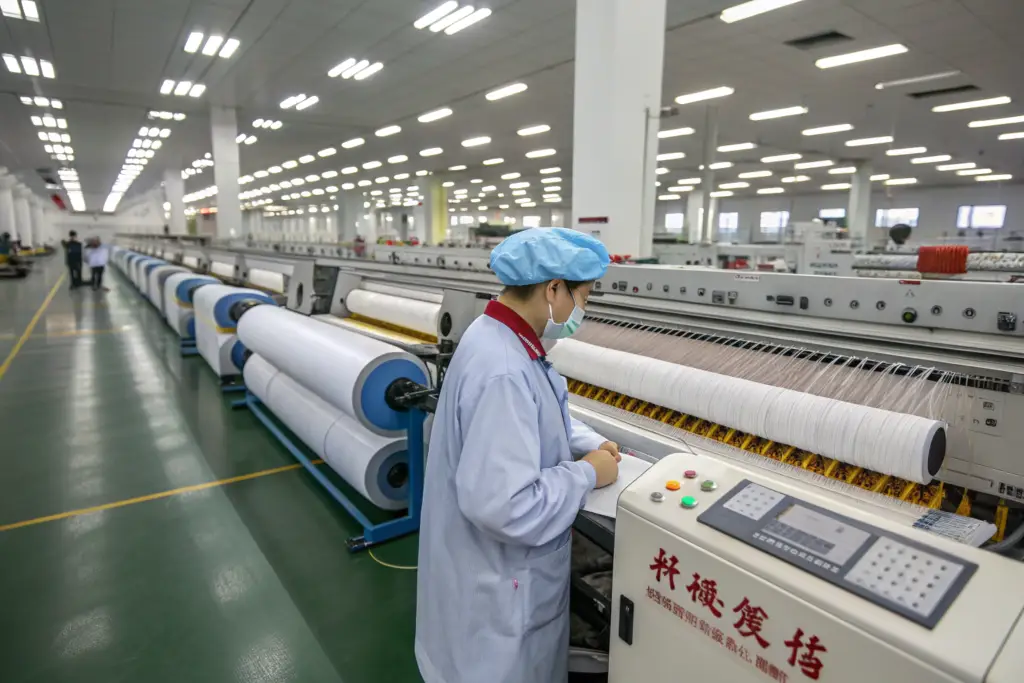
The premium is not fixed. It can be optimized through strategic sourcing and smart design. At Shanghai Fumao, we leverage our Certified Component Library and economies of scale. By ordering larger volumes of certified fabrics and trims across multiple client orders, we negotiate better prices and amortize testing fees. Furthermore, designing your collection around a curated palette of pre-certified fabrics, rather than custom-developing new ones for every style, can significantly reduce both cost and lead time.
No. The premium is typically lower for simpler garments (e.g., basic polos) and higher for complex technical pieces (e.g., waterproof jackets). This is because jackets involve more components (membranes, laminated fabrics, multiple trims) that each require certification, and the assembly process is more complex to keep compliant.
What Are the Hidden Costs of Non-Certified Production?
The "savings" from skipping certification are an illusion that ignores a landscape of potential financial landmines. These are not rare events; they are becoming commonplace as regulations tighten and retailers become more vigilant.
The hidden costs of non-certified production are probabilistic but severe. They include: 1) Compliance Failure Costs: Lab retesting, recall logistics, inventory destruction. 2) Regulatory Penalties: Fines from agencies like the CPSC or lawsuits under California Proposition 65. 3) Retailer Penalties: Chargebacks, delisting, loss of future orders. 4) Brand Salvage Costs: Crisis PR, customer refunds, discounting to clear tainted stock.
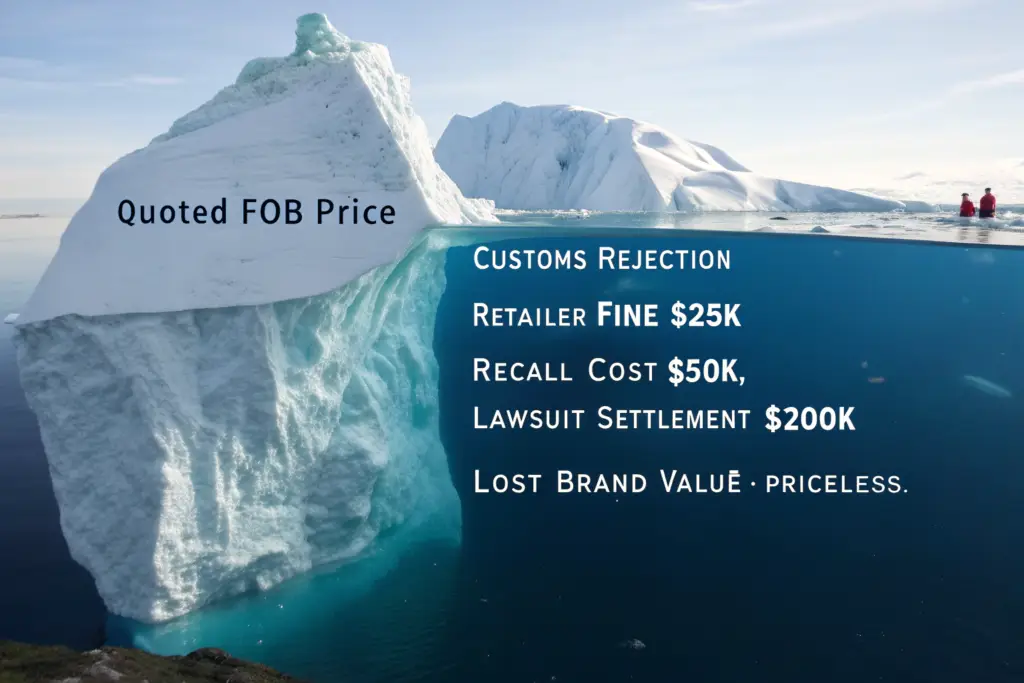
Let's take the common scenario of a Proposition 65 violation for a restricted phthalate or heavy metal:
- Immediate Testing & Legal Consult: $5,000 - $15,000
- Settlement with Plaintiff's Firm (typical for SMEs): $30,000 - $70,000
- Recall & Inventory Destruction (5,000 units): $25,000
- Retailer Chargeback Penalty: $10,000
- Lost Sales & Marketing for Relaunch: $20,000+
Total Probable Cost: $90,000 - $140,000
This one event could wipe out the entire profit from 10,000+ units of the "cheaper" polo.
How does non-certified production affect DDP (Delivered Duty Paid) shipments?
Under DDP terms, if a non-certified shipment is held or rejected by customs for safety violations, all delays, storage fees (demurrage), and re-export costs fall on the supplier. A reputable supplier will have priced this risk into their quote or will refuse the order. A cut-rate supplier may abandon the liability, leaving you with a stranded, unpaid-for container and a massive logistical and financial headache. Certified production with a partner like us virtually eliminates this DDP risk.
How Does Certification Impact Pricing Power and Brand Equity?
Cost analysis must also consider revenue potential. Certification isn't just a cost center; it's a value driver that can support higher prices and build intangible brand assets.
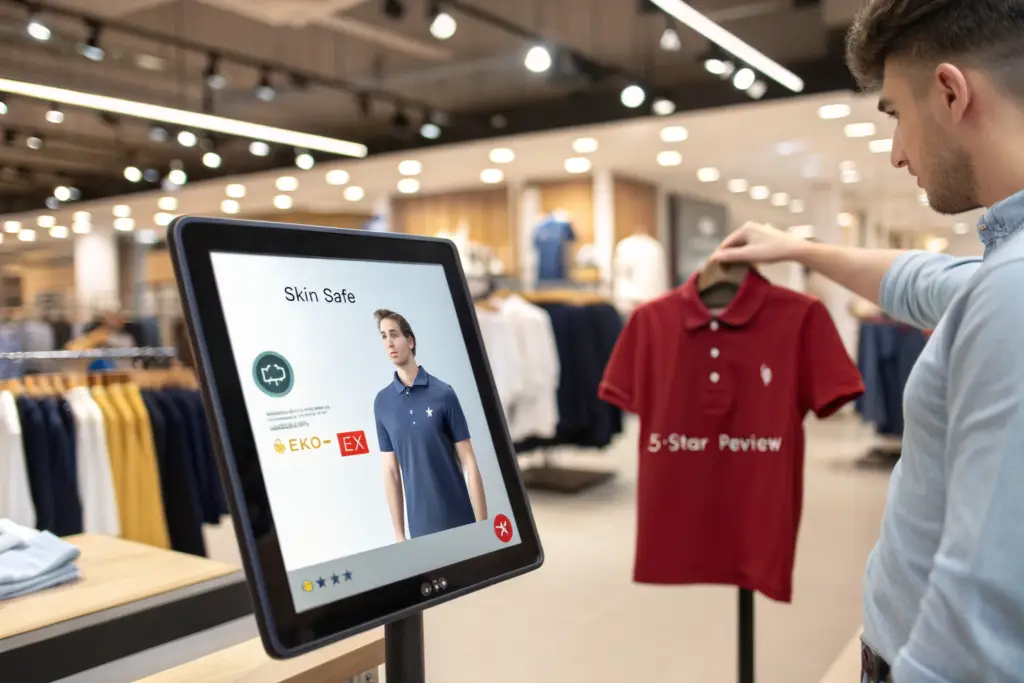
Certification impacts pricing power by providing a justifiable, third-party-verified product differentiator. In a crowded market, it allows you to command a retail price premium of 20-40% over generic competitors. More importantly, it builds brand equity as a trusted, responsible label, which drives customer loyalty, reduces price sensitivity, and creates a defensible market position.
Can certification reduce customer acquisition cost (CAC)?
Yes. Authentic safety claims are powerful marketing tools. They improve conversion rates on product pages because they reduce purchase anxiety. They also provide high-quality content for educational marketing (blogs, videos, influencer partnerships) that builds organic trust, reducing reliance on paid advertising to acquire customers. A brand story built on transparency has a lower cost to convince.
What is the long-term equity value?
A brand known for integrity and safety builds a loyal community. This community is less likely to switch based on price alone, provides valuable word-of-mouth marketing, and is more forgiving of minor missteps. This intangible equity is a business's most valuable asset and is incredibly difficult to build after a compliance scandal. For our clients at Shanghai Fumao, we position certification as an investment in this long-term equity.
What is the Total Cost of Ownership (TCO) Analysis?
To make an informed decision, brands must look beyond P&L to a holistic TCO model over a product's lifecycle.
The Total Cost of Ownership for a certified product includes the higher upfront cost but factors in near-zero risk costs, potential for higher margins, and brand equity accretion. For a non-certified product, the TCO includes the lower upfront cost PLUS the probability-weighted cost of a major compliance failure, plus the opportunity cost of being unable to command a premium or access certain retailers.
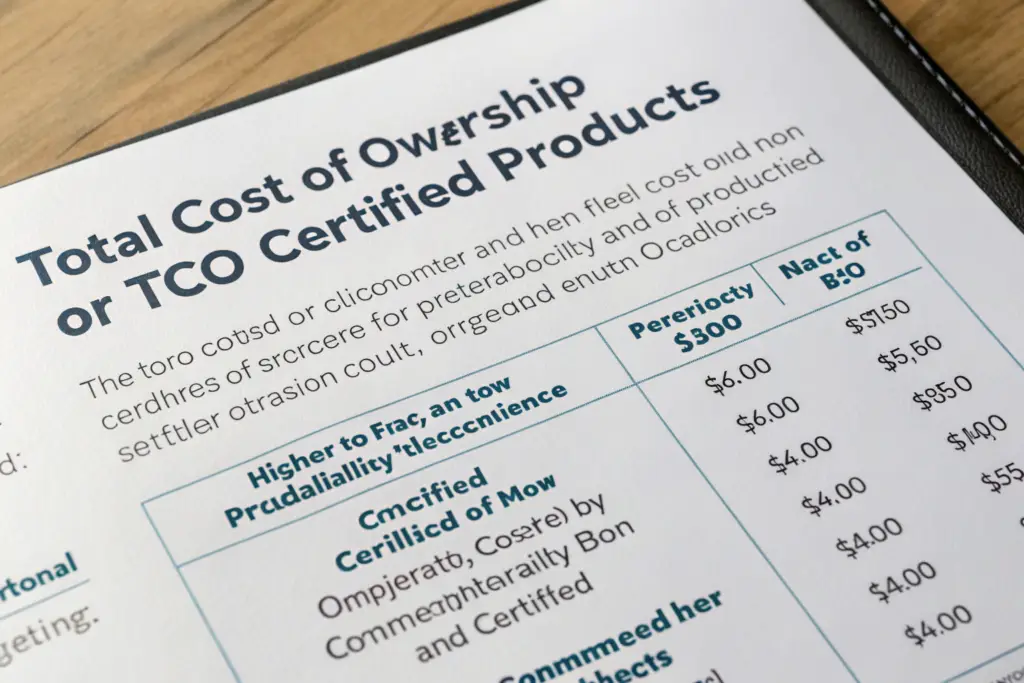
How to run a simple TCO comparison for 5,000 units:
-
Option A (Non-Certified):
- Upfront Cost: 5,000 x $11.50 = $57,500
- Risk Cost (10% probability of a $100k event): $10,000
- Estimated TCO: ~$67,500
- Assumes no price premium, standard margins.
-
Option B (OEKO-TEX Certified):
- Upfront Cost: 5,000 x $14.75 = $73,750
- Risk Cost: ~$0 (mitigated by system)
- Potential Revenue Uplift (10% higher retail price): +$25,000
- Estimated TCO (Net): ~$48,750
- This model shows the certified option can have a LOWER net cost when revenue upside is included.
What about cash flow and speed to market?
Certified production with a prepared partner like us is often faster once in production because certified materials are pre-screened and processes are streamlined. The major lead time is in the initial certification, which we manage proactively. Non-certified production can face unexpected delays if a batch fails a retailer's or customs' ad-hoc test, creating cash flow nightmares from delayed revenue.
Conclusion
The real cost difference between certified and non-certified golf wear is a classic case of "pay a little now or pay a lot later." The upfront premium is a calculated, manageable investment in supply chain integrity, brand protection, and market positioning. The potential cost of non-compliance is an existential gamble.
For emerging brands, certification is a credibility accelerator. For established brands, it is a risk management necessity. The question is not if you can afford the certification, but if you can afford the devastating cost of not having it when you need it most.
At Shanghai Fumao, we don't just add a cost; we deliver a system that maximizes the value of your certification investment through efficient full-package production, risk mitigation, and support in leveraging it for market advantage. If you're ready to build a brand on a foundation of real value, not just low cost, contact our Business Director, Elaine, at elaine@fumaoclothing.com. Let's calculate the true cost of your success.