You've invested in a unique, custom golf apparel design—a proprietary fabric blend, a distinctive print, a innovative construction. It’s your competitive edge. But to sell it in today's market, especially to discerning retailers and eco-conscious golfers, you need the gold standard of safety verification: OEKO-TEX certification. The process can seem like a black box of labs, paperwork, and delays. How do you navigate it efficiently without compromising your design or missing your launch window?
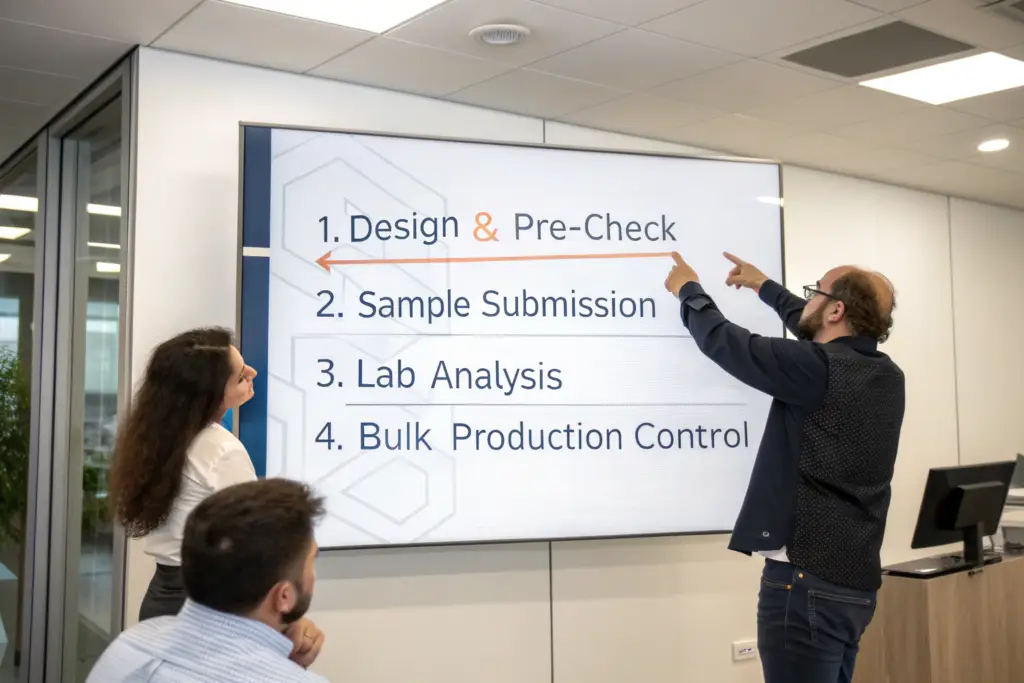
The process for getting custom golf designs OEKO-TEX certified is a structured, collaborative journey with your manufacturer and an accredited testing institute. It involves four critical phases: 1) Designing with pre-screened components, 2) Submitting a 'representative sample' for testing, 3) Awaiting laboratory analysis, and 4) Maintaining compliance in bulk production. Success hinges on upfront planning and choosing a manufacturer that manages this process as an integrated service.
Let’s walk through each step, clarifying what you control and what your manufacturing partner should handle.
Phase 1: Strategic Design and Component Pre-Screening
The certification process begins at the drawing board, not at the factory gate. The most common and costly mistake is finalizing a design with uncertified materials and then hoping it passes. The goal here is to design for certification.
This means working with your manufacturer to select materials from their library of pre-certified components. A strong manufacturing partner will have OEKO-TEX STANDARD 100 certified options for:
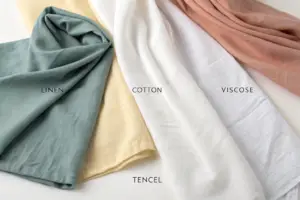
- Base Fabrics: Performance knits, wovens, outerwear shells.
- Trims & Accessories: Zippers, buttons, hook-and-loop, elastic.
- Decoration Inks: For prints and logos.
- Sewing Thread.
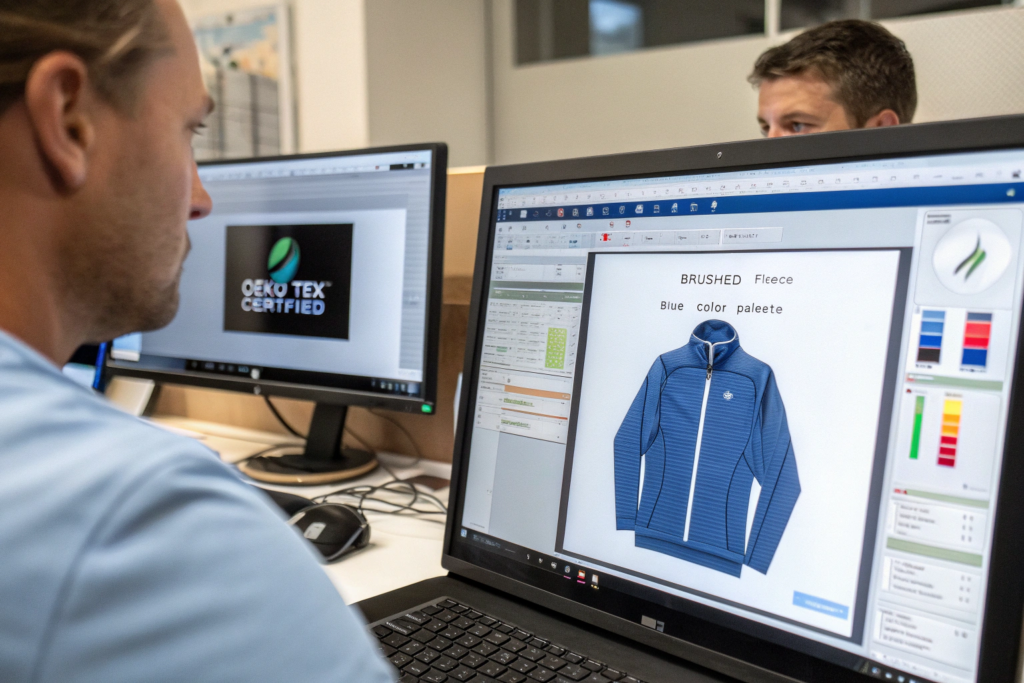
At Shanghai Fumao, when a client approaches us with a custom design concept, our first meeting is a “compliance kick-off.” We review the design and map each component against our certified material database. For instance, a client last quarter wanted a custom brushed-backing fleece for a golf vest. We presented three pre-certified fleece options that met their technical specs, allowing them to design within a compliant framework from day one.
What if My Custom Design Requires a Unique, Uncertified Fabric?
If your vision necessitates a completely new fabric, the timeline and cost increase significantly. Your manufacturer must source it from a mill willing to provide a full material composition disclosure and, ideally, pre-test it. This adds 4-8 weeks for fabric sourcing and preliminary testing before the garment certification process even starts. For true custom fabrics, building a relationship with a mill that has OEKO-TEX STeP certification for its production site is crucial, as it ensures their processes are clean.
Why is a “Bill of Materials (BOM) Audit” Essential?
Before any sample is made, your manufacturer should conduct a formal BOM audit. Every single component is checked for its certification status or chemical safety data sheet. This audit flags potential failures early. It’s a non-negotiable step in our quality assurance protocol that prevents the heartbreak of a failed test due to an overlooked $0.05 drawcord end.
Phase 2: Preparing and Submitting the Representative Sample
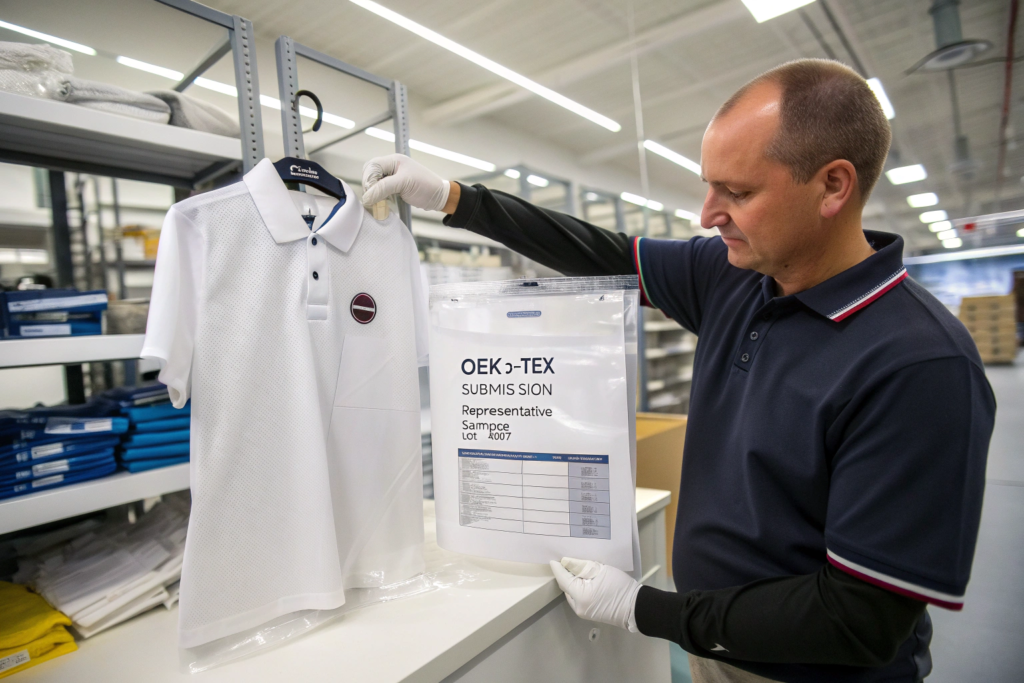
Once the prototype is made with the vetted components, it becomes the “Representative Sample” for official submission. This sample must be identical in every material aspect to what will be produced in bulk.
Your manufacturer handles the logistics with an OEKO-TEX accredited institute (like Hohenstein, TESTEX, or SGS). They will complete the application, specifying the exact product class (e.g., Class II for adult apparel close to skin) and provide detailed information on all materials. The physical sample is then shipped to the lab.
What Makes a Sample “Representative”?
The lab isn’t just testing a shirt; they are certifying that specific article construction. The sample must include:
- Every color variant of the fabric (each dye lot is considered different).
- Every type of print or decoration.
- All accessory types.
If your golf polo comes in four colors and has a chest print, you typically need to submit one sample in each color. Your manufacturer will advise on the most efficient submission strategy to cover all SKUs.
Who Bears the Cost and Time of This Phase?
The testing fees (which can range from a few hundred to over a thousand dollars per article, depending on complexity) are typically clarified upfront. In a full-package manufacturing relationship, this cost is often part of the development fee or included in the unit price. The timeline for this phase is fixed by the lab: usually 4 to 6 weeks from sample receipt to certificate issuance. This is a critical path item that must be built into your production schedule.
Phase 3: Laboratory Analysis and Certificate Issuance
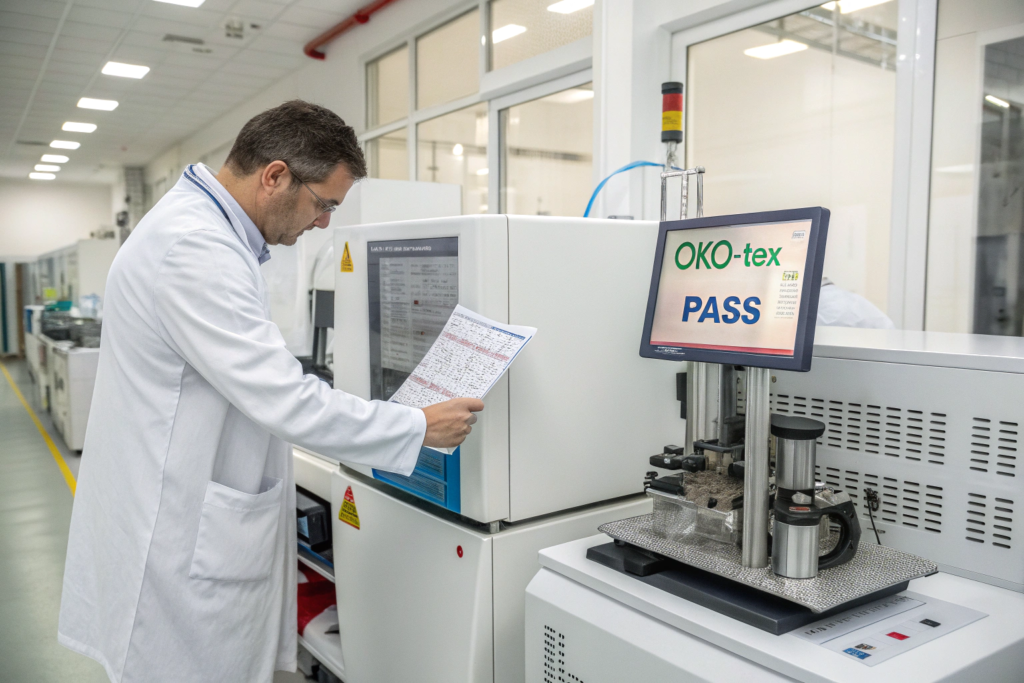
This is the “waiting period” where the science happens. The accredited lab conducts a battery of chemical and physical tests on your sample, checking for over 350 regulated substances against the strict limits of the STANDARD 100 standard.
You and your manufacturer will receive a test report. A “pass” results in the issuance of the official certificate with a unique number. A “fail” generates a report identifying the non-compliant substance(s). This is why Phase 1 is so critical—a failure here, during bulk production planning, can cause catastrophic delays.
What Happens if the Sample Fails?
This is where an expert manufacturer proves their value. They analyze the failure report, identify the offending component (e.g., a specific dye in the navy fabric, a plasticizer in the print), and work with their sub-supplier to immediately source a compliant alternative. A new sample is made and submitted. At Fumao Clothing, our experience allows us to often anticipate and prevent these issues, but when they occur, our vetted supply chain allows for rapid resolution.
How Do You Verify the Certificate?
Upon success, you will receive the certificate. You must immediately verify it on the OEKO-TEX public database using its unique number. This confirms its authenticity and links it to your product article name. This verification step is your final pre-production green light.
Phase 4: Bulk Production Under Certified Conditions
Receiving the certificate is not the finish line; it’s the starting gun for compliant bulk production. The certificate is valid only for production that is identical to the tested sample.
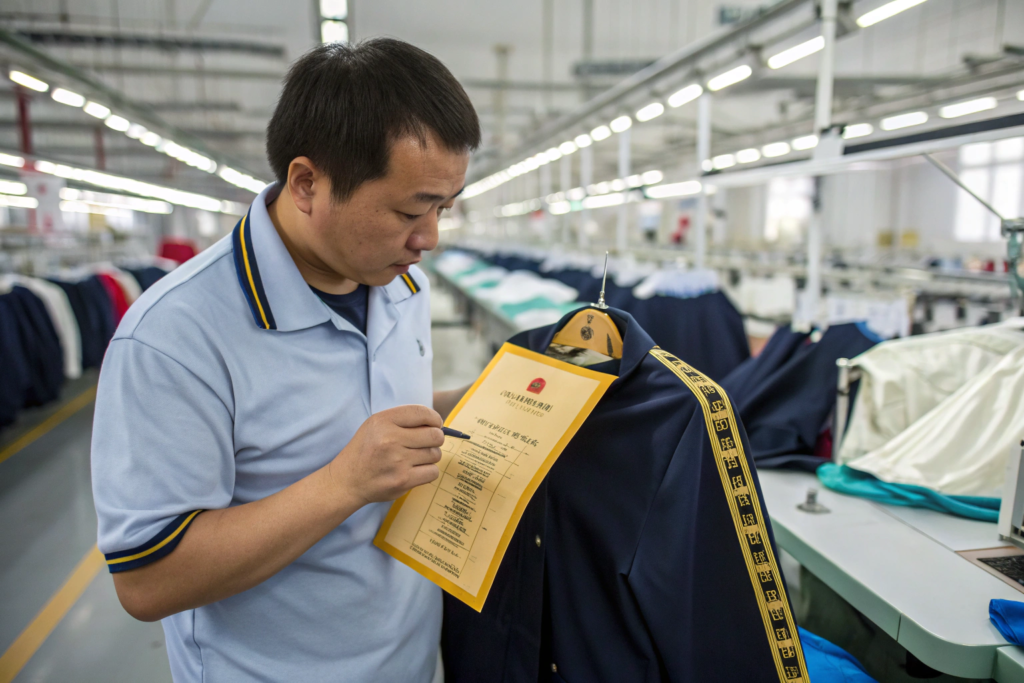
Your manufacturer must implement a strict Golden Sample system. The certified representative sample is sealed and stored as the master reference. Every material batch used in bulk production must be checked against the documentation of the certified components. This is a core function of in-line quality control. Any deviation—even a “similar” thread from a different spool—technically invalidates the certification.
How Does a STeP-Certified Factory Add a Layer of Protection?
Producing your custom design in an OEKO-TEX STeP-certified facility (like ours) provides systemic assurance. STeP certifies that the factory’s entire chemical management, wastewater treatment, and quality control systems meet high standards. This drastically reduces the risk of accidental contamination during cutting, sewing, or finishing that could render the final bulk goods non-compliant, even if the materials were correct. It’s the difference between checking parts and controlling the entire ecosystem.
What Documentation Should You Receive with Your Shipment?
Upon shipment, you should receive a copy of the OEKO-TEX certificate and test report. For maximum credibility, you can also request a Declaration of Conformity from your manufacturer, stating that the shipped goods conform to the certified sample. This complete dossier is what you provide to retailers as proof of compliance, ensuring reliable delivery of both product and trust.
Conclusion
Getting custom golf designs OEKO-TEX certified is a detailed but entirely manageable process. It transforms your innovative design from a mere prototype into a commercially viable, trusted product. The key is to partner with a manufacturer that doesn’t see certification as an external add-on, but as an integrated component of their service—one that offers pre-vetted materials, expert process management, and production in a certified, controlled environment.
By following this phased approach, you mitigate risk, avoid costly delays, and ensure that your custom design reaches the market with the prestigious, marketable proof of safety that today’s customers demand.
At Shanghai Fumao, we guide our clients through this exact process every day. Our integrated system—from certified material library to STeP-certified production—is designed to make OEKO-TEX certification a smooth, predictable part of bringing your custom golf designs to life. To start the journey with your next innovative concept, contact our Business Director Elaine at elaine@fumaoclothing.com.