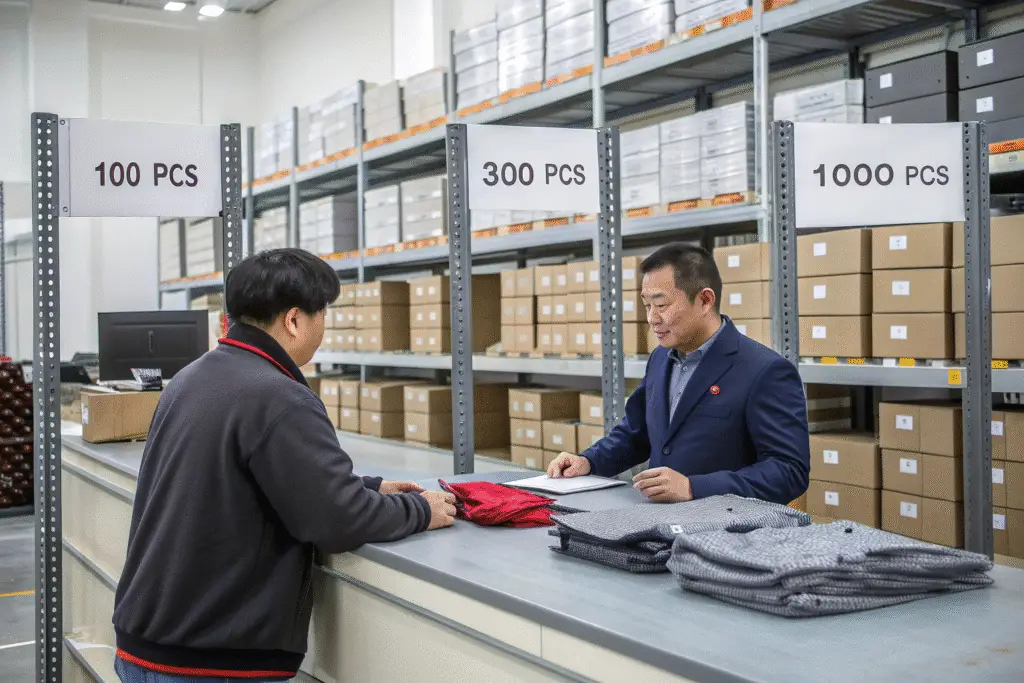
You’ve found the perfect factory, the samples look promising, and pricing fits your budget—until they hit you with a minimum order quantity (MOQ) of 1,000 units per style. That’s a big commitment, especially if you're testing a new design or launching a small brand.
So, what’s the real MOQ landscape in China’s apparel industry in 2025? It depends on the factory, fabric, and your customization needs.
This guide helps you understand MOQ standards, how to negotiate them, and what strategies to use when you're not ready for big volume—yet still want professional-level production.
What Determines MOQ in China's Apparel Factories?
MOQ is not an arbitrary number set by factories—it’s influenced by a blend of production realities and cost efficiencies.
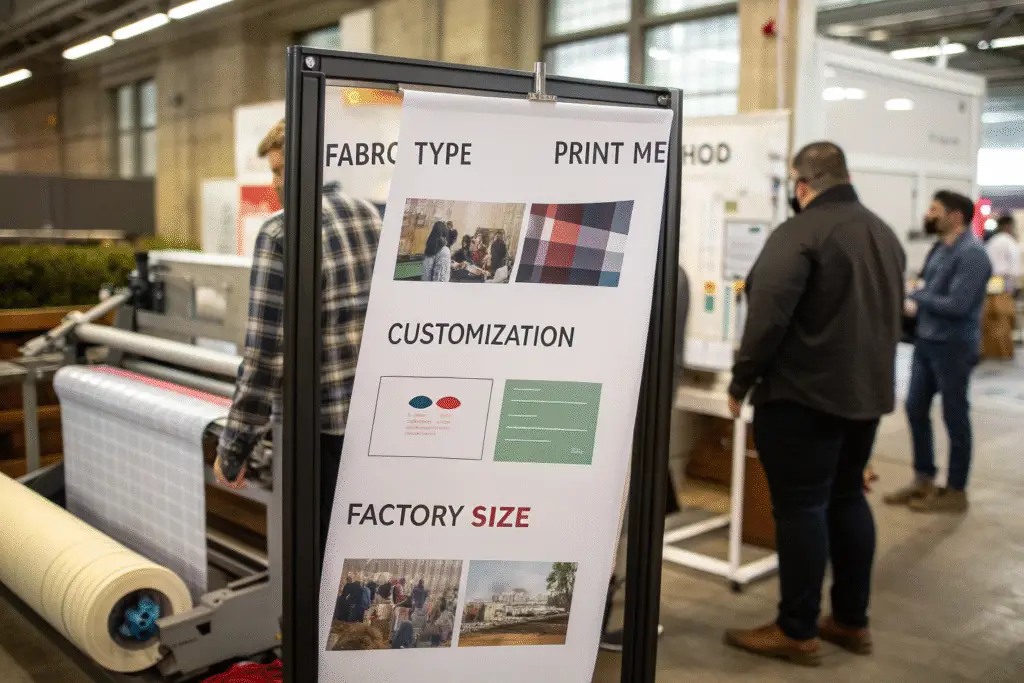
Factors like fabric sourcing, dyeing methods, printing styles, and production line setup all impact the final MOQ a manufacturer quotes.
Does Fabric Type Affect MOQ?
Absolutely. Factories order fabrics in bulk from textile mills. For standard materials like cotton jersey or polyester, MOQs can be as low as 100–200 units per style. But for custom dyed fabrics or blended technical textiles, MOQs often start at 500–1000 units.
For example, Fabric.com outlines that most mills set their lowest yardage orders around 500 meters per color, which limits what a garment factory can offer in small runs.
How Does Customization Impact MOQ?
The more unique your design is, the higher the MOQ. Custom printing, embroidery, or labels require setup costs that factories need to spread across a higher quantity.
For instance, Printful offers print-on-demand with no MOQ, but only for limited styles and slower lead times. For direct-to-garment (DTG) or sublimation printing at scale in China, expect MOQs starting at 200 pcs per graphic per size.
What Are Common MOQ Ranges by Product Type?
Depending on the product category, factories have different MOQ expectations. Some specialize in high-volume basics, while others cater to boutique customization.
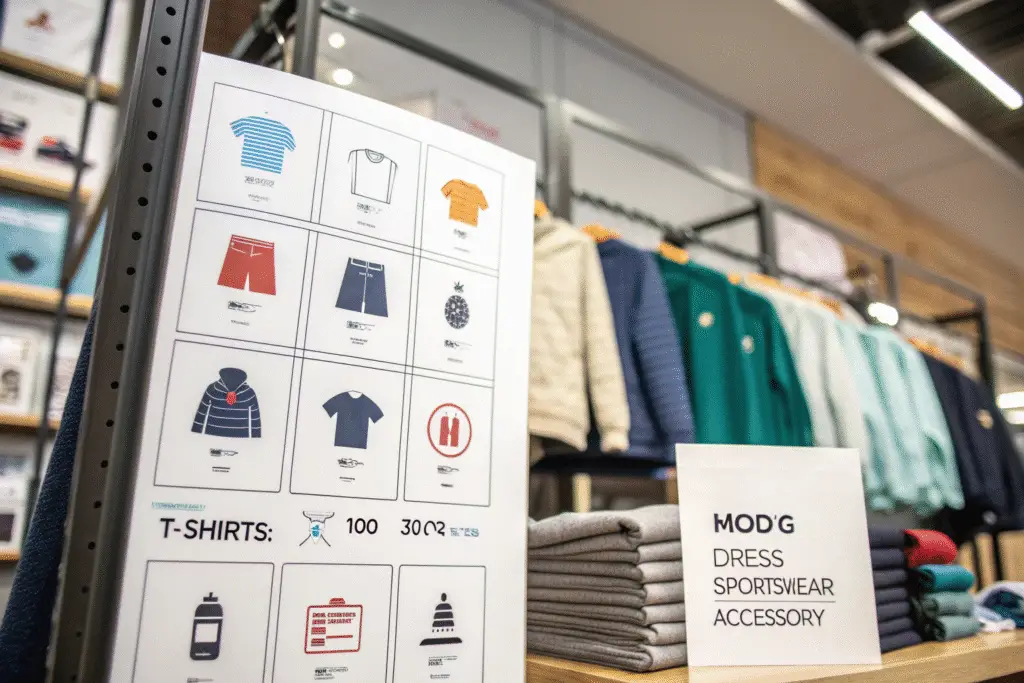
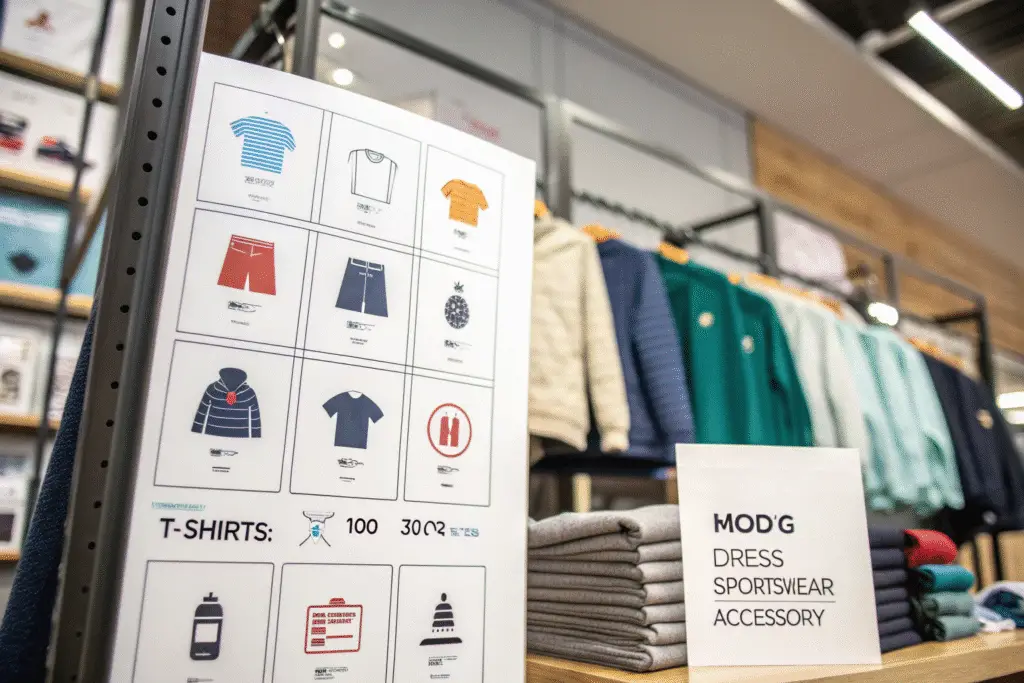
Here are average MOQ ranges for common apparel types produced in China:
What’s the MOQ for T-Shirts, Hoodies, and Casualwear?
T-shirts are the most flexible, especially in cotton or poly blends. Many Chinese factories offer 100–300 pcs per color/style. Hoodies, because of higher material use and more components (like zippers, ribbing), usually start at 300–500 pcs.
Suppliers like FUSHI Garments offer MOQ as low as 100 pcs for blank tees and hoodies when using stock fabric.
How About MOQ for Dresses, Suits, and Fashionwear?
Higher fashion items require precise tailoring and sometimes expensive fabrics. MOQ for dresses or suits often starts at 300 pcs per design, especially if lined or detailed. Factories like Sugini Fashion recommend 500 pcs per custom style to maintain affordability.
For mixed orders (e.g. 3-4 designs), some manufacturers allow grouped MOQ—like 1,000 pcs across 4 styles, 250 each.
Can You Negotiate Lower MOQs as a Small Brand?
MOQ isn’t always fixed. With the right approach and mutual understanding, factories will often reduce MOQs—especially if they see long-term value in your brand.
Negotiation is a dance between flexibility, trust, and compromise. Present your case well, and many suppliers will meet you halfway.
What Strategies Work Best When Asking for Low MOQ?
- Ask for available stock fabric to skip custom dyeing steps.
- Combine sizes to hit per-style MOQ (e.g. 50 S, 50 M, 50 L).
- Request sample production first and scale based on results.
- Offer advance payment or agree to long-term commitment.
Platforms like Alibaba now show flexible MOQ options if you tick "Ready to Ship" or "Small Orders Accepted".
Do Pre-Negotiated MOQs Help with Long-Term Growth?
Yes. Smart brands work out MOQ tiers—starting at 100 pcs but scaling to 1000+ as sales grow. This builds trust with suppliers and may result in volume discounts later.
Factories like Fumao Clothing support startup brands with tiered MOQ pricing, meaning better rates kick in as you reorder regularly.
What Alternatives Exist If Your Order Is Below MOQ?
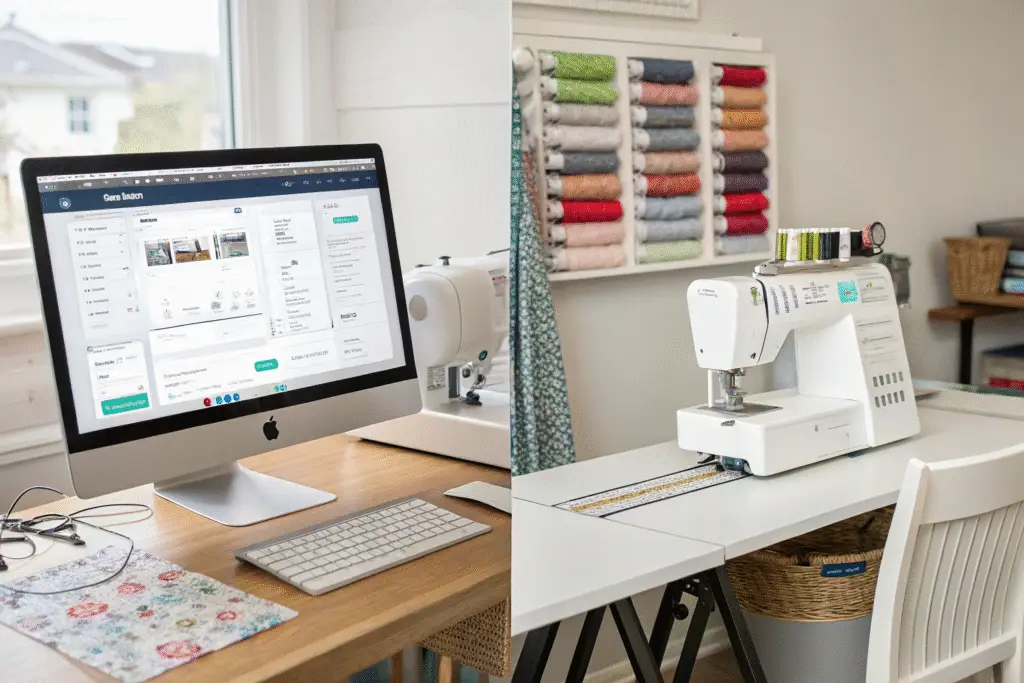
Sometimes, your order is too small for China’s factory floor. But that doesn’t mean you’re out of options. The rise of on-demand tech and local micro-factories is changing the game.
You can launch with low risk, then transition to bulk production once demand is proven.
Are Print-on-Demand Services a Viable Starting Point?
Yes, especially for graphic-based products like T-shirts, hoodies, or tote bags. Services like Printify or Teespring let you test designs with no inventory risk.
However, be aware of higher per-unit cost and longer shipping times. Print-on-demand is best for validating styles before jumping to Chinese mass production.
Can You Use Small Local Studios Before Scaling to China?
Definitely. Many small U.S.-based cut-and-sew studios (like Lefty Production Co.) can do runs of 50–100 units. Once you’ve dialed in sizing, fit, and audience feedback, you can bring the style to a Chinese factory for bulk manufacturing at a fraction of the cost.
This hybrid approach balances agility with scalability—perfect for emerging brands.
Conclusion
MOQ matters—but it doesn’t need to be a dealbreaker. By understanding how MOQs work in China, negotiating with awareness, and using alternative production options wisely, you can grow your fashion brand step-by-step.
Start with smart, low-risk orders and build long-term relationships with manufacturers who grow with you. Your production journey begins with knowing what to ask—and who to ask it from.