The conversation in golf fashion is shifting. It's no longer just about performance on the course; it's about performance for the planet and personal well-being. "Sustainable golf fashion" is now a key driver of purchasing decisions, but this term can be vague—encompassing everything from recycled materials to ethical labor. Amidst this complexity, OEKO-TEX® Standard 100 certification emerges not as a separate concept, but as a foundational, non-negotiable pillar of genuine sustainability. So, what is the concrete link between a chemical safety standard and the broader trend of sustainable golf apparel? It is the critical bridge between material innovation and human health, ensuring that the pursuit of environmental sustainability does not come at the cost of chemical safety.
The link between OEKO-TEX and sustainable golf fashion is direct and essential: OEKO-TEX provides the verified, human-centric "health" component of sustainability. While trends focus on eco-materials (like recycled polyester) and ethical production, OEKO-TEX ensures these materials are processed and finished with chemicals that are safe for the wearer's skin and the environment at large. It answers the vital question: "Sustainable for the planet, but is it safe for me?" This makes it a cornerstone of a truly holistic and credible sustainable fashion strategy.
A brand we partnered with aimed to launch a "fully sustainable" golf line using 100% recycled PET bottles for their polos. However, their initial fabric mill could not provide OEKO-TEX certification for the recycled yarn. While the material was environmentally positive, the dyeing and finishing processes used harsh chemicals that left residues. By switching to a mill that produced OEKO-TEX Class 1 certified recycled fabric, the brand could honestly market a product that was both eco-friendly and human-safe. At Shanghai Fumao, we see OEKO-TEX not as an option but as the mandatory quality baseline for any product entering the sustainable fashion conversation, ensuring our clients' claims are built on a complete foundation.
1. Beyond "Eco-Friendly": The Three Pillars of True Sustainability
Sustainable golf fashion is often mistakenly reduced to just one pillar: environmental materials. In reality, credible sustainability stands on three interconnected pillars, and OEKO-TEX is fundamental to two of them.
True Sustainability = Environmental Responsibility + Social Ethics + Human Health & Safety. OEKO-TEX is the globally recognized standard for the third pillar, while also influencing the first.
| Sustainability Pillar | Common Trends & Goals | How OEKO-TEX Contributes & Validates |
|---|---|---|
| 1. Environmental | Recycled materials, organic cotton, water-saving processes, biodegradability. | Restricts environmentally harmful substances like PFCs, APEOs, and heavy metals in finishes and dyes, ensuring "clean" chemistry even on eco-fabrics. Its LEATHER STANDARD and MADE IN GREEN labels extend to broader environmental management. |
| 2. Social & Ethical | Fair labor, safe working conditions, transparency. | While a separate standard (STeP), OEKO-TEX’s rigorous audit chain promotes supply chain transparency, indirectly supporting ethical sourcing by requiring known, compliant chemical suppliers. |
| 3. Human Health & Safety | Skin-safe, non-toxic, hypoallergenic apparel. | This is the core mission of STANDARD 100. It provides the scientific proof that garments are free from harmful levels of over 100 substances, making the "safe-to-wear" claim verifiable and trustworthy. |
Without OEKO-TEX, a garment made from organic cotton but dyed with allergenic, non-biodegradable dyes fails the human health pillar. It is this comprehensive verification that aligns perfectly with the educated consumer's demand for total accountability.
The sustainable trend is pushing towards a circular economy—designing products to be recycled or biodegraded at end-of-life. The chemical composition of a garment is the single greatest factor determining whether it can be safely recycled or composted.
OEKO-TEX certification is a prerequisite for clean circularity. Textiles contaminated with heavy metals, persistent chemicals (like certain PFCs), or hazardous dyes cannot be safely recycled into new fibers or returned to the earth. By mandating low levels of these substances, OEKO-TEX ensures that today's golf polo is a viable raw material for tomorrow's product.
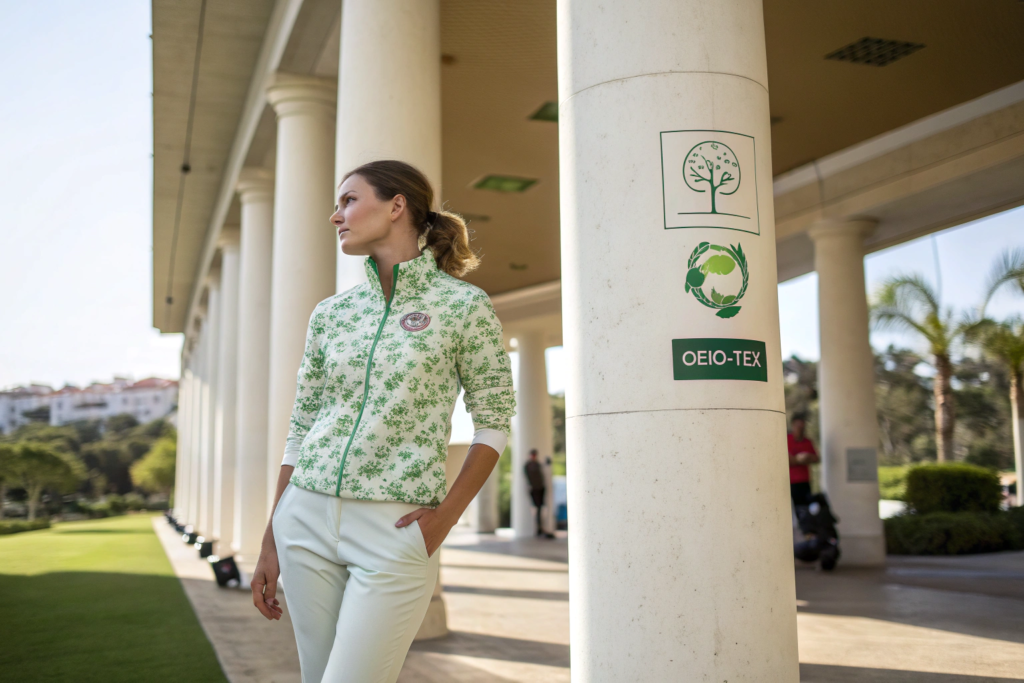
Case Study: Recycled Polyester and Chemical Load
Recycled polyester (rPET) is a huge trend. However, the recycling process can concentrate chemical contaminants from post-consumer waste if not properly managed. An OEKO-TEX certified rPET fabric guarantees that the recycled content, and any new finishes applied, meet strict safety limits. This gives brands the confidence to promote their recycled gear as both an environmental and a health-conscious choice. Our fabric sourcing for sustainable lines always prioritizes certified recycled options for this reason.
2. Building Consumer Trust in a "Greenwashed" Market
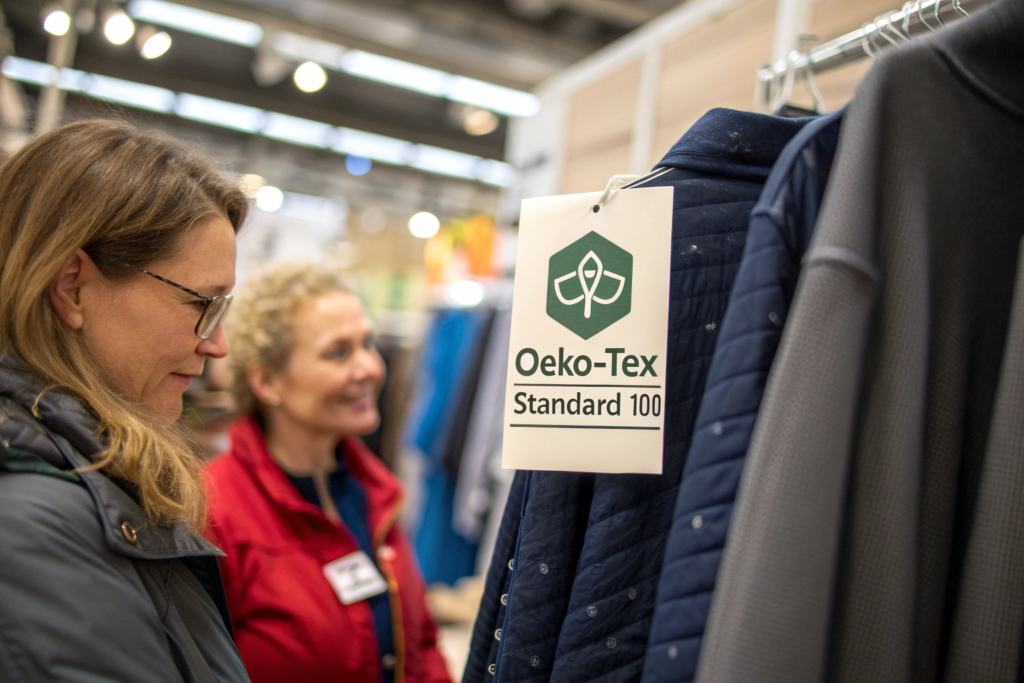
"Greenwashing" is rampant. Consumers are increasingly skeptical of vague terms like "natural" or "eco-conscious." They seek proof. OEKO-TEX provides that proof in the form of a specific, recognizable label backed by independent testing.
For the sustainable golf fashion trend to have lasting commercial power, it must be built on trust. The OEKO-TEX label is a transparent, educational tool that allows a brand to communicate a complex safety achievement simply and effectively.
From Marketing Claim to Verified Story
A brand can move its messaging from:
- Vague: "Our clothing is made with sustainable materials."
- Verified & Powerful: "Our golf polos are made from OEKO-TEX Class 1 certified recycled polyester, ensuring they are safe for your skin and produced with respect for the environment."
This shift is powerful. It leverages the sustainable trend while grounding it in science, making your brand a trusted authority. In our product development consultations, we guide clients on how to integrate this certification into their brand storytelling for maximum impact.
4. The Fumao Approach: Integrating OEKO-TEX into Sustainable Production
At Shanghai Fumao, we don't treat sustainability and safety as separate lines. Our manufacturing system is designed to deliver both concurrently for our clients pursuing the sustainable golf fashion market.
We offer a curated pathway to certified sustainable apparel. This means helping you select from a range of OEKO-TEX certified sustainable materials (organic cotton, recycled blends, etc.) and then manufacturing them in our socially compliant facility, resulting in a product that honestly addresses all three pillars of sustainability.

Our Service Integration:
- Material Selection: Access to a library of pre-certified sustainable fabrics.
- Safe Chemistry Management: Expertise in applying and testing eco-friendly DWRs, dyes, and softeners that meet OEKO-TEX standards.
- End-to-End Documentation: Providing the certificates that validate both the material's origin and its chemical safety, supporting your transparent marketing.
Conclusion
The link between OEKO-TEX and sustainable golf fashion trends is one of integrity and completeness. OEKO-TEX moves sustainability beyond a marketing narrative into the realm of verified, responsible product development. It ensures that the industry's move towards a greener future is also a move towards a safer, more transparent one.
For brands looking to lead in the sustainable golf apparel space, OEKO-TEX certification is not just linked to the trend—it is the quality standard that makes your participation in the trend credible, trustworthy, and ultimately, successful.
Build your sustainable collection on a foundation that consumers can believe in. Partner with Shanghai Fumao to develop OEKO-TEX certified golf wear that truly embodies the future of the sport. Contact our Business Director, Elaine, to begin: elaine@fumaoclothing.com.