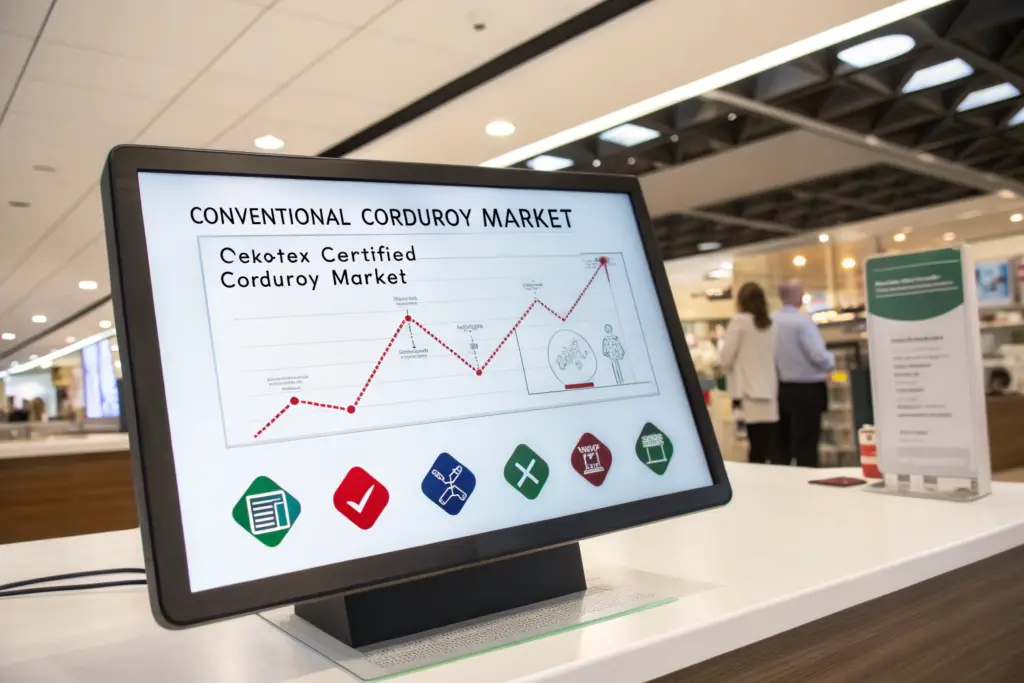
You're analyzing the 2025-2026 apparel market trends. Corduroy is resurging, forecasted for strong growth in pants, jackets, and skirts. As a brand owner or buyer, you see opportunity but also risk. Corduroy's distinctive wale texture and rich colors come from intensive dyeing and finishing processes. This historically means a higher chemical load. In today's market, where does a traditional fabric like corduroy fit within the accelerating demand for transparency and safety? The answer lies in understanding how OEKO-TEX certification is reshaping the very trajectory of the corduroy series market.
OEKO-TEX certification is fundamentally shifting the corduroy market forecast from being driven solely by aesthetic and fashion cycles to being increasingly segmented by verified safety and sustainability credentials. It is creating a premium, high-growth sub-segment for certified corduroy while simultaneously pressuring the conventional corduroy segment to adapt or lose share. The certification acts as a key differentiator, unlocking access to discerning consumers, stricter retail channels, and future-proofing brands against tightening regulations. Its impact is not a side note; it is a central variable in the market equation.
For buyers and brands, this means the decision to source OEKO-TEX certified corduroy is no longer just a quality choice—it's a strategic positioning decision that directly influences market access, price point potential, and long-term viability.
Market Segmentation: The Rise of a Premium Tier
The global corduroy market is fragmenting. Historically, segmentation was based on wale count (fine, medium, wide), color, and composition. OEKO-TEX certification is introducing a new, powerful axis of segmentation: verified safety and process integrity. This creates a distinct "Clean Corduroy" category with its own demand drivers, price elasticity, and consumer base.
This premium tier is forecasted to grow at a significantly faster rate than the overall corduroy market. The drivers are clear:
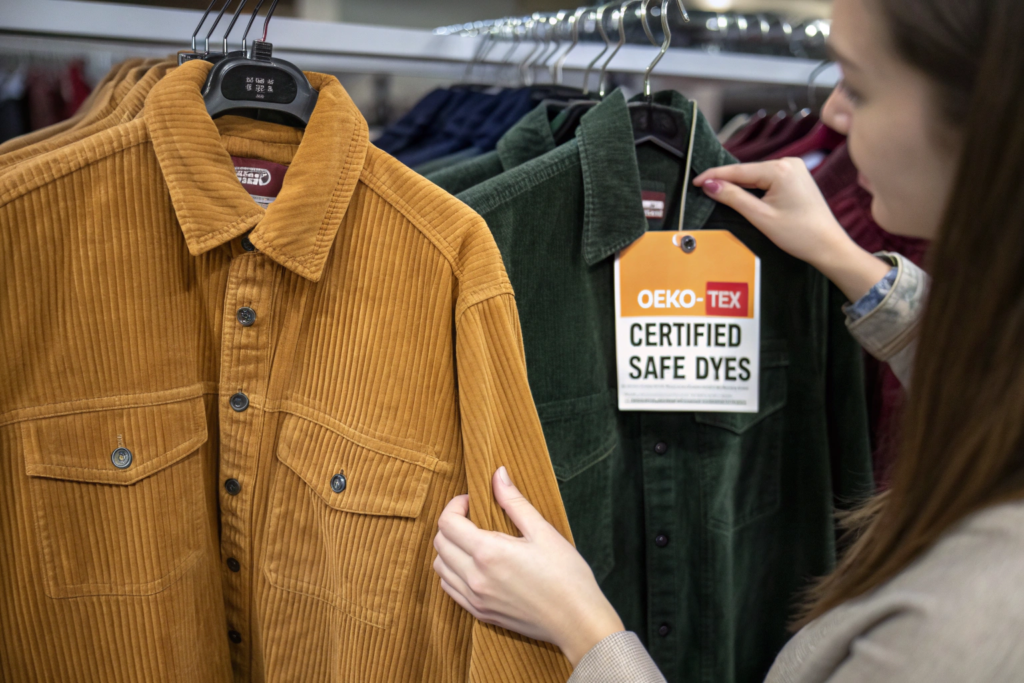
- Consumer Pull: Educated consumers, especially in Europe and North America, are actively seeking natural-feeling fabrics with clean backgrounds. A parent buying corduroy pants for a child, or a conscious consumer investing in a corduroy blazer, will increasingly prioritize a trusted OEKO-TEX label over a slightly lower price.
- Retailer Push: Major retailers and e-commerce platforms are expanding their restricted substance lists (RSLs) and requiring more proof of compliance. OEKO-TEX provides a turnkey solution. A brand with certified corduroy items will have an easier path onto these shelves. We've seen this with our own clients; those offering OEKO-TEX certified corduroy samples are getting faster and more positive responses from European boutique buyers.
- Brand Defense: In an era of social media scrutiny, a brand's reputation is fragile. Sourcing certified corduroy mitigates the risk of a product safety scandal related to heavy metals in dyes or formaldehyde in anti-shrink finishes—common historical issues with corduroy processing.
This segmentation is already impacting sourcing patterns. Factories like Shanghai Fumao are now developing two parallel corduroy sourcing lines: one for standard markets and a dedicated, traceable pipeline for OEKO-TEX certified production, often involving specific dye houses and finishing mills that have undergone chemical management audits.
How Does This Affect Price Point and Profitability Forecasts?
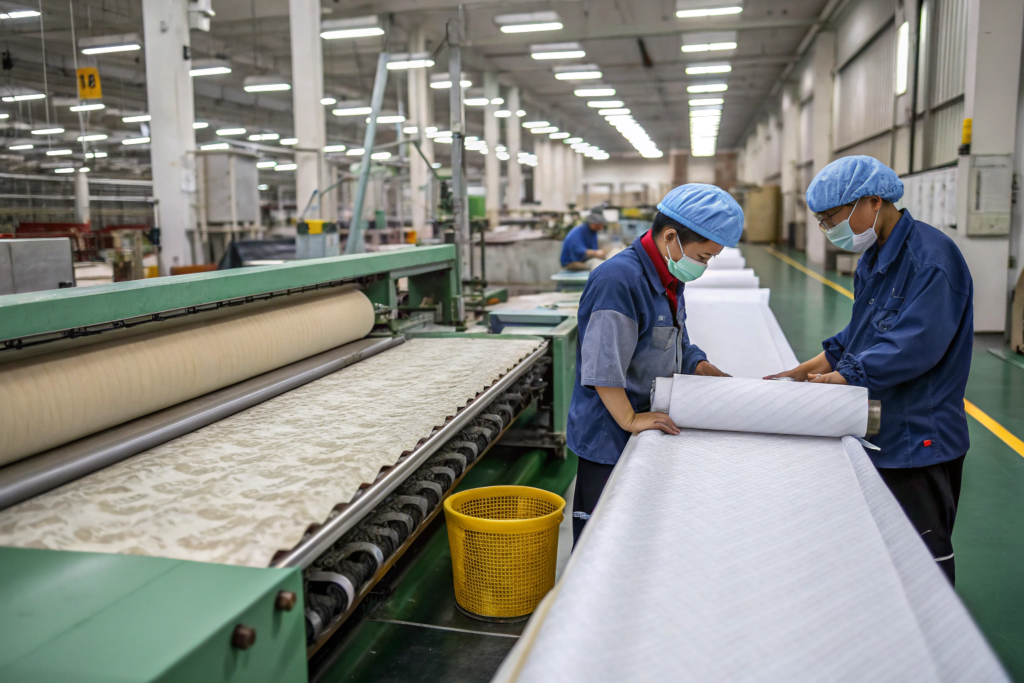
The introduction of OEKO-TEX certification creates a clear price stratification. Certified corduroy garments will command a 15-30% wholesale price premium over their uncertified equivalents. This isn't just cost-push; it's value-driven. The premium covers the cost of certified raw cotton, low-impact dyes, third-party testing, and audited manufacturing—but it also allows for a higher retail margin because the end-product carries a justified, marketable benefit.
For brands, the profitability forecast for the certified segment is strong, albeit with a different model. Margins may be slightly compressed at the manufacturing stage, but they are amplified at the retail stage through higher sell-through rates and reduced risk of markdowns or returns due to safety concerns. A client of ours launching a line of OEKO-TEX certified corduroy pinafores for children found they could achieve a 22% higher average order value (AOV) on their direct-to-consumer site compared to their non-certified lines, directly boosting profitability.
Will Conventional Corduroy Become Obsolete?
Not in the immediate forecast, but its growth trajectory will be flatter and more pressured. It will remain dominant in price-sensitive markets and fast-fashion segments where turnover is rapid and consumer scrutiny is lower. However, it will face increasing headwinds: tighter import regulations, rising costs for non-compliant chemical waste disposal, and gradual exclusion from premium retail spaces. The long-term forecast suggests a gradual share shift towards certified options as norms evolve.
Supply Chain Transformation: From Cost Focus to Compliance Capability
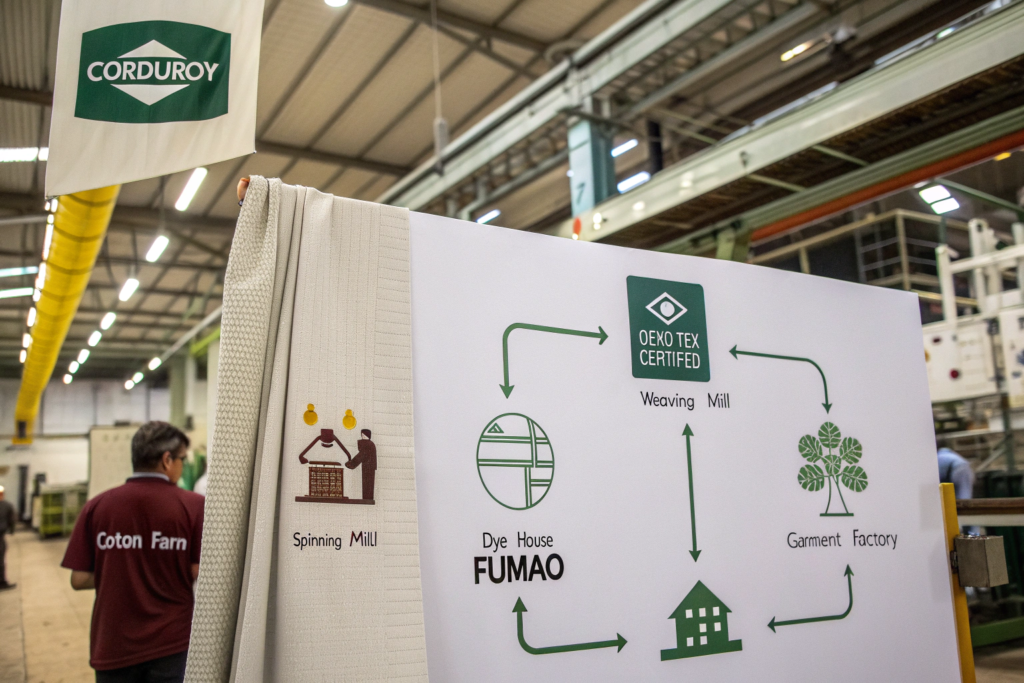
The OEKO-TEX effect is causing a ripple upstream, transforming the corduroy supply chain. The traditional corduroy manufacturing chain is complex: spinning > dyeing (yarn or piece-dye) > weaving (to form the wale) > brushing/singeing > finishing. Each stage introduces chemical agents. Certification requires control at every single point.
This is reshaping the supplier landscape:
- Consolidation Among Compliant Mills: Dye houses and finishing mills that invest in OEKO-TEX compliant processes, water treatment, and documentation are becoming preferred partners for forward-thinking brands. They are gaining market share.
- Increased Vertical Integration: Some garment manufacturers, like Fumao, are building tighter, more transparent partnerships with specific spinning and dyeing units to ensure end-to-end control for certified production. This ensures traceability for every component, a key requirement for brands facing due diligence laws like the EU's upcoming regulations.
- New Cost Structures: The cost base for certified corduroy shifts. Labor remains important, but a higher proportion of cost is allocated to certified raw materials, testing fees, and environmental management at the mill level. This favors larger, more technically capable suppliers over smaller, less organized ones.
A practical example: last season, we sourced a batch of mid-wale cotton corduroy for a US brand. The standard mill's lead time was 30 days. The OEKO-TEX certified mill's lead time was 45 days, due to the need for batch testing and certification issuance. However, the brand accepted the longer lead time because it was non-negotiable for their key retailer's compliance portal. The certified mill secured the order despite the delay, highlighting how capability is trumping pure speed in this segment.
What Are the Key Certification Challenges Specific to Corduroy?
Corduroy presents unique hurdles for certification:
- Dyeing Complexity: Achieving deep, uniform colors in the dense pile of corduroy often requires high concentrations of dyes and auxiliaries. Finding certified dye formulas that meet colorfastness and depth requirements is a technical challenge.
- Finishing Processes: The brushing/singeing process that defines the wale can generate dust and use specific chemicals. These must be non-toxic.
- Azo Dye Risk: The rich, traditional colors of corduroy (burgundies, navies, mustards) were historically prone to using azo dyes. OEKO-TEX's strict ban on certain azo dyes forces innovation in color chemistry.
Overcoming these challenges requires R&D investment. At Fumao, we've worked with our fabric partners to develop a library of "Certified Corduroy Base Colors" that guarantee performance and compliance, reducing development risk for brands.
How Does This Impact Minimum Order Quantities (MOQs)?
In the short term, MOQs for OEKO-TEX certified corduroy fabrics and garments are higher than for conventional corduroy. This is due to the batch-testing requirements; spreading the fixed cost of certification over a larger order makes economic sense. Our typical MOQ for a certified corduroy style is 800-1000 units per color, compared to 500 for a conventional style. This forecast suggests that smaller, niche brands may need to collaborate or pre-sell to access this premium segment, while larger brands will integrate it into their core lines more easily.
Forecasting Future Trends: The "Clean Heritage" Narrative
Looking beyond 2025, the impact of OEKO-TEX on corduroy will likely catalyze a broader trend we call "Clean Heritage." This is the marriage of classic, timeless fabrics and silhouettes with modern, transparent, and safe production standards. Corduroy, as a heritage fabric, is perfectly positioned to lead this trend.
The market forecast will see certified corduroy expanding beyond basic pants and jackets into new categories:
- Home Textiles: OEKO-TEX certified corduroy for upholstery, curtains, and bedding, appealing to the same wellness-focused consumer.
- Children's Products: Beyond clothing, into certified soft toys, book covers, and nursery items.
- Technical Hybrids: Corduroy blended with certified recycled polyester or Tencel™, offering enhanced performance with a sustainable, safe story.
Furthermore, marketing narratives will evolve. Brands won't just sell "a corduroy jacket." They will sell "A Heritage Corduroy Trucker Jacket, crafted from OEKO-TEX certified organic cotton, dyed with non-toxic pigments for lasting comfort and minimal environmental impact." The certification provides the factual backbone for a richer, more authentic brand story that resonates with the 2025 consumer.
How Will This Influence Fashion Design Directions?
Designers working with certified corduroy will be pushed towards quality-focused, longevity-driven design. The inherent value and story behind the fabric encourage designs that are timeless, well-constructed, and repairable, aligning with the slow fashion movement. This contrasts with the fast-fashion use of conventional corduroy in trend-driven, disposable pieces. The certification, therefore, indirectly promotes a more sustainable design philosophy across the corduroy series.
What is the Regulatory Risk Forecast for Uncertified Corduroy?
The regulatory forecast is clear: increasing strictness. Legislation like the EU Strategy for Sustainable and Circular Textiles will make brands more responsible for the entire lifecycle of their products, including chemical footprint. Uncertified corduroy, with its historically high chemical use, represents a significant liability. Brands relying on it may face rising compliance costs, due diligence burdens, and potential market access restrictions in key regions. OEKO-TEX certification is a proactive hedge against this forecasted regulatory tightening.
Conclusion
The impact of OEKO-TEX certification on the corduroy series market forecast is profound and structural. It is not a passing trend but a definitive shift that is segmenting the market, transforming supply chains, and creating a premium growth corridor aligned with future consumer and regulatory demands. For brands, the choice is clear: engage with the certified segment to access higher-value channels and build future resilience, or remain in the increasingly competitive and risky conventional segment.
The data points towards certification as a key driver of value and growth in the corduroy market over the next 3-5 years. It offers a path to differentiate, justify premium positioning, and build deeper trust with a discerning customer base.
Is your brand positioned to capture the growth in the OEKO-TEX certified corduroy segment? Partner with Shanghai Fumao to access our dedicated pipeline of certified corduroy fabrics and our expertise in developing compliant, stylish corduroy garments. Contact our Business Director, Elaine, at elaine@fumaoclothing.com to forecast a successful future for your corduroy collection. Visit Shanghai Fumao to explore how we turn market trends into tangible, certified products.