The ski industry is undergoing a digital revolution. From smart fabrics with embedded sensors to AI-driven design and blockchain-enabled supply chains, technology is reshaping how gear is made, sold, and experienced. In this high-tech future, where does a chemical safety standard like OEKO-TEX fit in? Is it an analog relic, or will it become more critical than ever? For forward-thinking U.S. ski apparel brands, understanding this intersection is key to building the next generation of trusted, high-performance gear.
The future of OEKO-TEX in skiwear’s digital transformation is one of deep integration and enhanced utility. It will evolve from a static certificate into a dynamic, data-rich digital identity for garments. This will power hyper-transparency for consumers, enable smarter sustainable design through AI, and become a foundational requirement for connected apparel in the Internet of Things (IoT), ensuring that the "smart" layers touching your skin are also verifiably safe.
The certification will not be replaced by technology; it will be amplified by it. As a manufacturer at the crossroads of traditional quality and digital innovation, I see three clear pathways where OEKO-TEX and digital transformation will merge.
How Will Digital Product Passports (DPPs) Elevate OEKO-TEX Transparency?
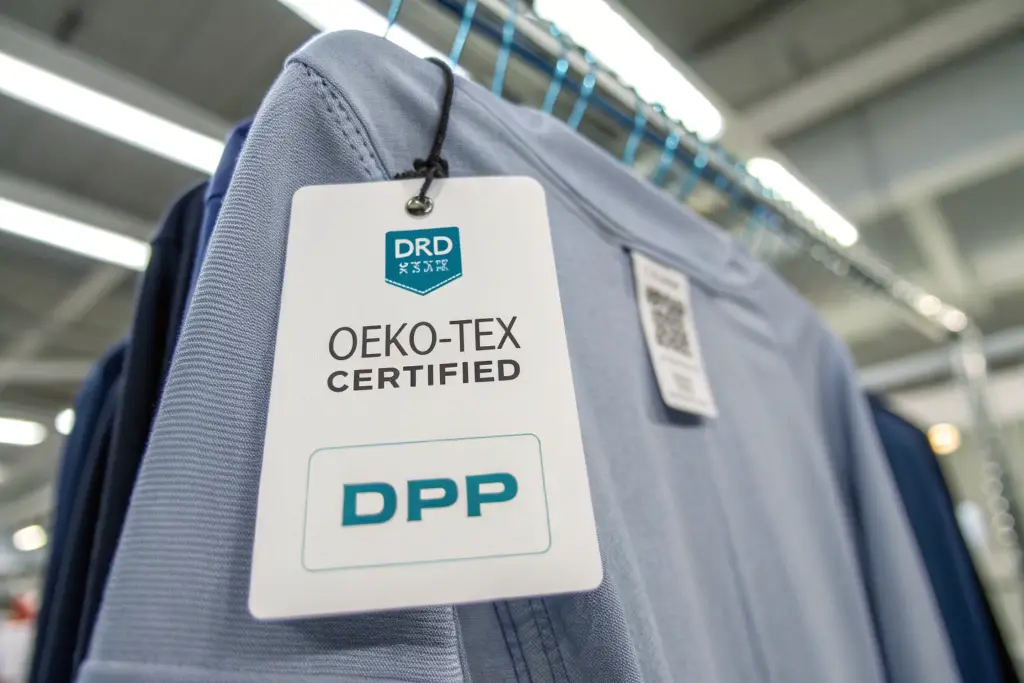
The concept of a Digital Product Passport (DPP) is moving from theory to regulation, especially in the EU. A DPP is a unique, digital identity for a physical product, storing data about its materials, origin, environmental impact, and care instructions. OEKO-TEX certification is poised to become a core, verifiable data point within these passports, moving far beyond a simple logo on a tag.
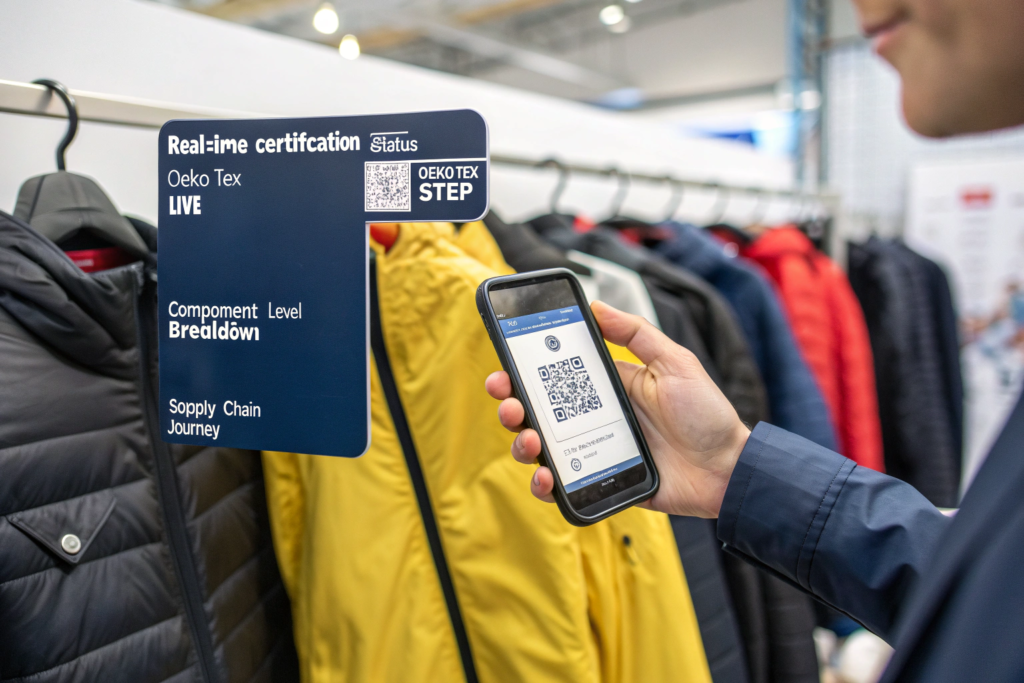
Imagine a customer scanning a QR code on their new ski jacket. Instead of just linking to a static webpage, it opens a secure, immutable DPP showing:
- Real-Time Certification Status: Live verification of the OEKO-TEX license number, its validity, and a link to the official test summary.
- Component-Level Breakdown: A visual tree diagram showing every certified component—main fabric, lining, insulation, zipper, thread, and the specific printing ink used for the logo—each with its own compliance proof.
- Supply Chain Journey: A map tracing the garment's path, highlighting the certified mills and factories (potentially using OEKO-TEX STeP data for sustainable production sites) that contributed to it.
This level of transparency answers the modern consumer's demand for proof. It turns a trust signal into an interactive experience. For brands, it transforms OEKO-TEX from a cost into a powerful marketing and engagement tool. We are already working with pilot clients at Shanghai Fumao to embed unique digital identifiers (like NFC chips or QR threads) into garments during production, laying the groundwork for this future.
What Technology Enables This?
Blockchain or distributed ledger technology (DLT) is the likely backbone for ensuring DPP data is tamper-proof and trustworthy. An OEKO-TEX certificate issued to a factory could be recorded as a transaction on a blockchain. When that certified material is used in a garment, its "digital twin" in the DPP inherits and displays that verified claim. This creates an auditable chain of custody that is incredibly powerful for combating greenwashing.
What’s the Immediate Step for Brands?
Start by digitizing your certification data. Ensure you have digital copies of all OEKO-TEX certificates (for fabrics, components, and final garments) organized and ready. Ask your manufacturing partner if they are exploring DPP solutions or can provide machine-readable data files for your certifications. Early adopters will own the narrative of radical transparency.
How Can AI and Data Analytics Optimize OEKO-TEX Certified Design?
Artificial Intelligence is revolutionizing product design, and material compliance data will be a key input. In the near future, AI-driven design platforms will be able to optimize skiwear for performance, cost, and certification compliance simultaneously.
Here’s how it could work:
- AI Material Selection: Designers will input parameters: "Men's ski shell, waterproof 20k, breathable 15k, target price point $X, OEKO-TEX Class II compliant." The AI will scour a connected database of certified fabrics and components from global mills (like those in our network) to recommend optimal material combinations that meet all criteria, including the chemical standard.
- Predictive Compliance Testing: Machine learning models, trained on thousands of past OEKO-TEX test results, could predict the certification outcome of a new fabric blend or dye combination before physical lab testing. This would drastically reduce development time and cost for new certified products.
- Automated Documentation: The AI could auto-generate technical packs and pre-filled application forms for certification bodies, pulling data directly from the selected, compliant materials.
What Does This Mean for Development Speed and Innovation?
This removes guesswork and accelerates innovation. A brand could rapidly prototype a new sustainable insulation material and use AI to predict which bonding agents or treatments would keep it OEKO-TEX compliant. It democratizes access to certified design, allowing smaller brands to compete with the R&D departments of giants. At our R&D center, we are beginning to structure our material library with rich metadata, including full OEKO-TEX test parameters, to prepare for this AI-assisted future.
Can AI Help with Ongoing Quality Control?
Absolutely. Computer vision systems on production lines could be trained to recognize certified material roll labels and component batch tags, cross-referencing them in real-time against a digital "allowed materials" list for a specific OEKO-TEX order. This would prevent a non-compliant roll of fabric or thread from accidentally entering the production stream—a digital fail-safe.
Why Will OEKO-TEX Be Crucial for the "Connected Skiwear" IoT Ecosystem?
The future of skiwear includes garments that monitor biometrics, adjust insulation, or even charge devices. This "connected apparel" involves embedding electronics, conductive inks, and sensors directly into the fabric, often in direct or close contact with the skin. This introduces new material risks: what are in those conductive polymers or sensor housings?
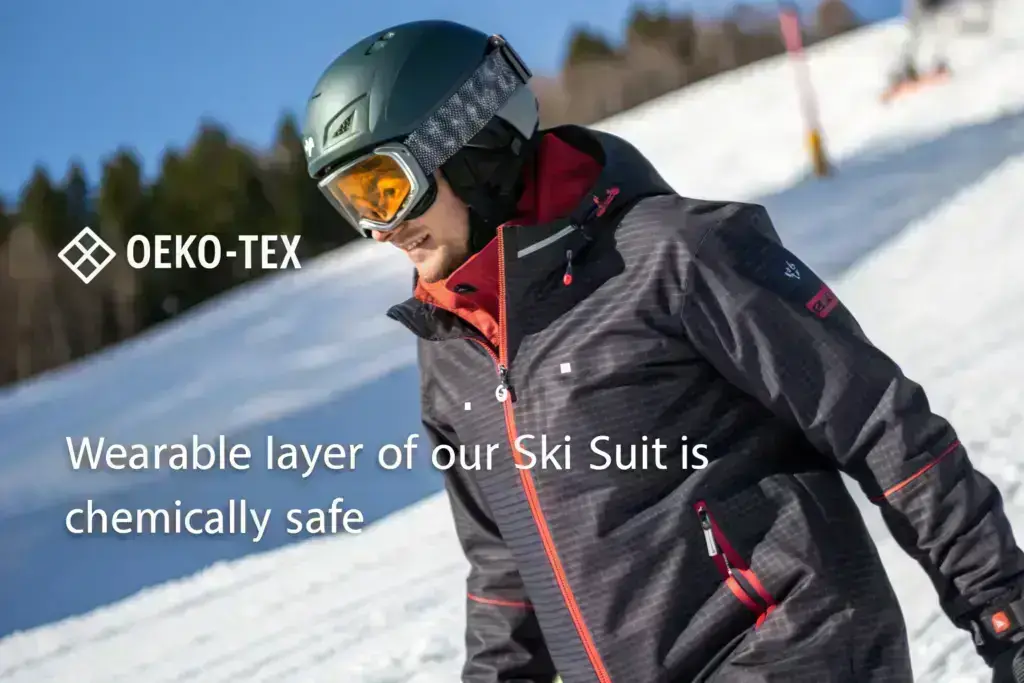
OEKO-TEX will become the essential safety standard for this intimate technology. Just as we demand our baby monitors or smartwatches meet electrical safety standards, we will demand that the "wearable" layer of our ski suit is chemically safe. Future iterations of the OEKO-TEX standard will likely include specific limits for substances commonly found in electronics, such as certain flame retardants, heavy metals in solder, or plasticizers in flexible circuits.
How Will This Interface with Performance Data?
Imagine a smart base layer that measures heart rate. Its DPP could show two integrated data streams:
- Performance Data: "Your average heart rate on the last run was 145 BPM."
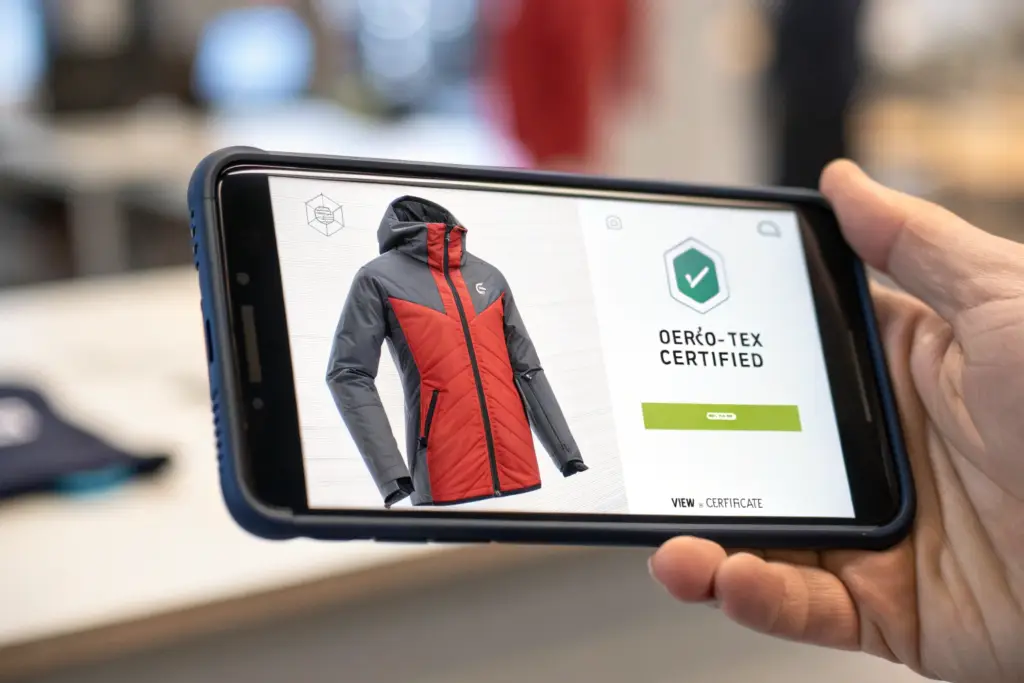
- Safety & Compliance Data: "This garment's conductive fibers and adhesives are OEKO-TEX certified for skin contact. View Certificate."
The brand that can provide both trusted performance and verified safety will win. This creates a new product category: "Verified Safe Connected Apparel." We are in early discussions with sensor technology companies to co-develop integration methods that do not compromise the OEKO-TEX status of the host garment.
What About Recycling and Circularity?
Digital transformation also drives the circular economy. DPPs are vital for end-of-life recycling, telling automated sorting systems exactly what a garment is made of. An OEKO-TEX certification embedded in the DPP provides crucial information: "This polyester shell is free of hazardous chemical residues, making it a higher-value feedstock for chemical recycling." This increases the garment's potential value in a circular system and supports true sustainability claims.
What Practical Steps Should Brands Take Now to Prepare?
The digital future is not distant; it's building now. Brands that act today will be leaders tomorrow.
-
Choose Digitally-Forward Manufacturing Partners: Ask potential suppliers: "How do you manage and share digital certification data?" "Are you exploring Digital Product Passports or blockchain for traceability?" "What is your roadmap for integrating smart textiles with compliance?" A partner like Shanghai Fumao is investing in these capabilities because we see them as the next standard for quality assurance.
-
Audit and Digitize Your Certification Assets: Gather all OEKO-TEX certificates from past and current collections. Create a centralized, cloud-based repository. This data is an asset.
-
Experiment with Transparency: Even without a full DPP, enhance your product pages. Don't just show the logo; let customers click to download the actual PDF certificate for that style (with sensitive commercial details redacted). This builds trust and acclimates your team to higher transparency.
-
Educate Your Team and Customers: Start the conversation now. Blog about the importance of verifiable safety in a digital age. Explain how certification is more than a label—it's a dataset guaranteeing quality.
The convergence of physical safety standards and digital innovation is creating a new paradigm. OEKO-TEX will not be left behind; it will be the bedrock upon which trusted digital skiwear is built.
Conclusion
The future of OEKO-TEX in skiwear's digital transformation is vibrant and essential. It will transition from a paper-based certificate to an integral, data-rich component of a garment's digital identity. Through Digital Product Passports, it will offer unprecedented transparency. Empowered by AI, it will enable faster, smarter design of safe products. And within the Internet of Things, it will become the non-negotiable safety foundation for connected apparel that touches our skin. Far from becoming obsolete, OEKO-TEX is set to be digitally supercharged, becoming more accessible, verifiable, and valuable than ever before.
For brands, this means the investment in certification today is an investment in tomorrow's digital infrastructure. It's the key to unlocking consumer trust in an increasingly complex and tech-driven market.
Navigating this future requires a manufacturing partner who understands both the rigorous standards of chemical safety and the transformative potential of digital technology. If you are looking to build the next generation of skiwear—where cutting-edge performance meets verifiable, tech-enabled trust—let's build it together. At Shanghai Fumao, we are bridging the gap between certified manufacturing and digital innovation. Contact our Business Director Elaine to future-proof your next collection: elaine@fumaoclothing.com.