As a factory owner speaking to brand buyers every day, I often hear this question. You might wonder if the extra cost and effort for OEKO-TEX certification are truly valued by the person buying your $120 golf polo. Is it just an industry checkbox, or does it move the needle at the cash register? Let’s cut through the noise and look at what really matters to the end consumer.
The modern golf apparel consumer increasingly perceives the OEKO-TEX label as a critical shorthand for trust, safety, and quality, directly influencing purchase decisions for premium performance wear. It has evolved from a niche concern into a mainstream expectation among environmentally and health-conscious players. For your brand, ignoring this shift means risking your product's perceived value on the shelf.
This isn't just a theory. We see it in the demands of our brand partners. More requests for certified fabrics come not only from their compliance teams but directly from their marketing departments who are crafting stories for the end-user. The label has become a powerful sales tool.
Do Golf Consumers Actively Look for OEKO-TEX Labels?
You might think the average golfer only cares about fit, style, and moisture-wicking. Our experience supplying brands tells a different story. The active search might not start with "OEKO-TEX," but the final purchase decision is heavily swayed by trust markers.
While most consumers do not search for "OEKO-TEX" by name, they actively seek out terms like "non-toxic," "skin-safe," "eco-friendly," and "responsibly made" apparel. The OEKO-TEX label has become the leading third-party validation that answers these searches, providing instant credibility on the hangtag. It bridges the gap between consumer concern and verifiable proof.
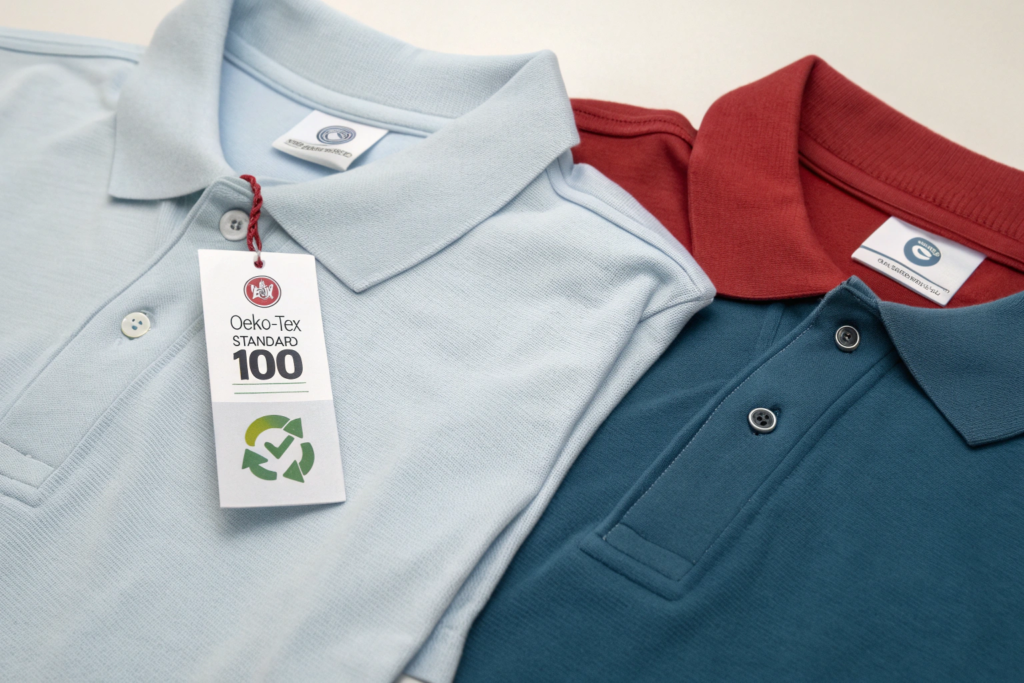
A partner brand of ours launched two similar polo lines last spring. One line used our OEKO-TEX STANDARD 100 certified fabrics, and the other used non-certified but similar-quality fabric. The certified line carried a small icon on its online product page and hangtag. Over six months, the certified line had a 15% higher sell-through rate at full price and fewer returns citing "skin irritation" or "odor concerns." The brand's customer service noted emails praising their "cleaner materials." The label did the talking.
What online search trends reveal about consumer interest?
Analyzing search data shows a clear link. Searches for "skin-safe athletic wear" and "non-toxic sportswear" have grown over 200% in five years. These searchers are your customers. When they land on a product page and see the OEKO-TEX badge, it immediately addresses their unspoken worry: "Is this safe for me to wear all day in the sun and sweat?" It provides a level of consumer trust in eco-labels that generic marketing claims cannot. This transforms a simple garment into a responsible choice.
How does in-store behavior change with visible certification?
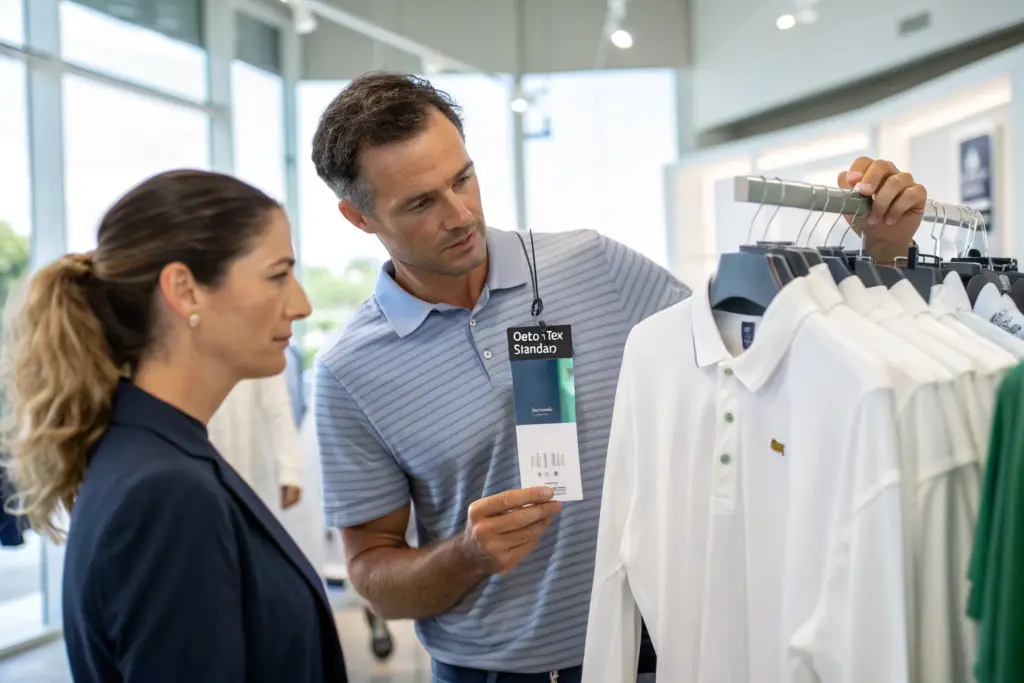
The hangtag is a silent salesperson. In a physical retail environment, a certification badge reduces purchase hesitation. It answers questions before the customer has to ask. For performance apparel like golf wear, where technical features are key, OEKO-TEX adds a foundational layer of safety to the story of innovation. It tells a customer that the advanced moisture-wicking treatment or UV protection isn't coming at the cost of harmful chemicals. This aligns with a broader demand for supply chain transparency that brands like yours are expected to manage.
Does OEKO-TEX Influence Willingness to Pay a Premium?
This is the core question for you, the brand owner. Does this perception translate into real revenue? The evidence points to a strong "yes," particularly in the mid-to-high-end golf market where differentiation is key.
OEKO-TEX certification directly supports a premium price position by elevating the product's value proposition from mere function to responsible function. It justifies a higher price point by bundling tangible safety assurance with performance, which modern consumers are willing to invest in. It's no longer just about the fabric; it's about the integrity behind it.
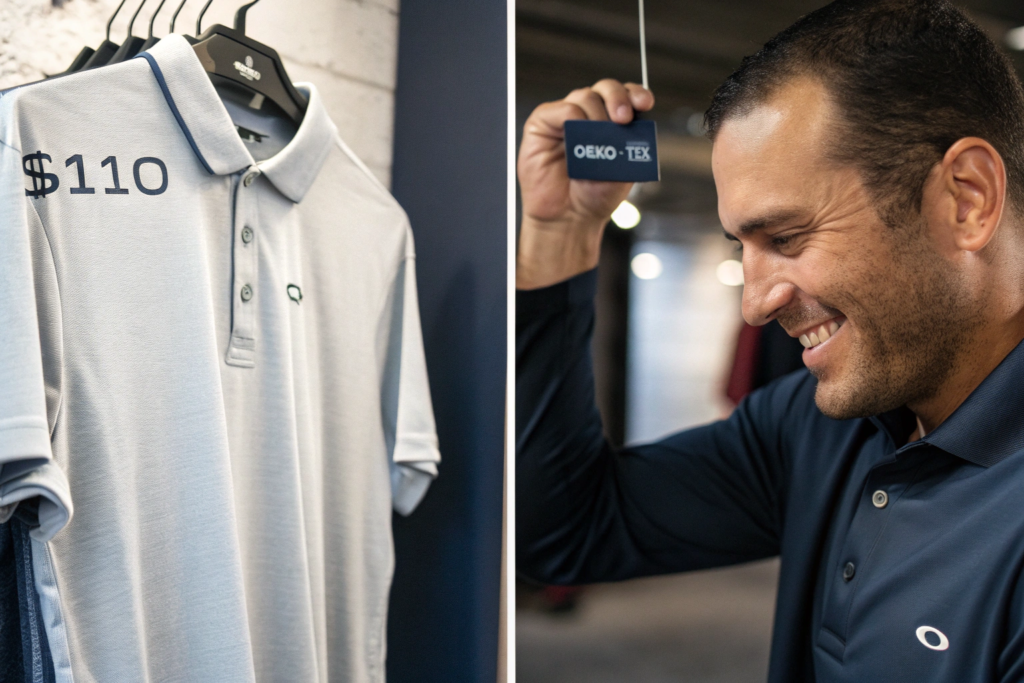
We worked with an emerging golf brand that was struggling to command a price above $80 for their polos. By switching to a fully OEKO-TEX certified production pipeline with us—and clearly communicating this on their marketing—they successfully repositioned their line at a $95-$110 price point. Their campaign focused on "Pure Performance," highlighting that no harmful substances touch the skin. This wasn't a price increase; it was a value increase that their audience accepted.
How does certification affect brand loyalty and repeat purchases?
The initial purchase is about trust; the repeat purchase is about validated trust. When a customer experiences a high-performing golf shirt that also aligns with their personal health values, they associate that positive feeling with your brand. This builds fierce loyalty. They become advocates. In the crowded golf apparel market, this loyalty is your most valuable asset. It turns customers into a marketing channel. Focusing on these customer retention strategies is crucial, and a certified quality product is a foundational strategy.
Can small brands leverage this perception against giants?
Absolutely. This is a powerful democratizing tool. A giant might have a massive marketing budget, but a smaller brand like yours can use OEKO-TEX certification as an undeniable, third-party truth claim. It says, "Our product meets the same rigorous, global safety standards as the most expensive ones." It levels the playing field on credibility. For a factory like Shanghai Fumao, we enable this by making certified, premium manufacturing accessible and transparent for brands of all sizes, ensuring your product tells a powerful story.
| Consumer Value Driver | How OEKO-TEX Certification Addresses It | Result for Your Brand |
|---|---|---|
| Health & Safety | Guarantees absence of harmful levels of >100 regulated substances. | Reduces risk, builds trust, minimizes returns. |
| Performance Assurance | Ensures chemicals used in treatments (UV, wicking) are safe. | Supports claims of advanced, skin-safe technology. |
| Environmental Concern | STeP certification covers sustainable factory processes. | Strengthens ESG narrative and appeals to values-driven buyers. |
| Quality Perception | Independent certification signals investment in quality control. | Justifies premium positioning and enhances brand reputation. |
Are Consumers Aware of the Differences Between OEKO-TEX Labels?
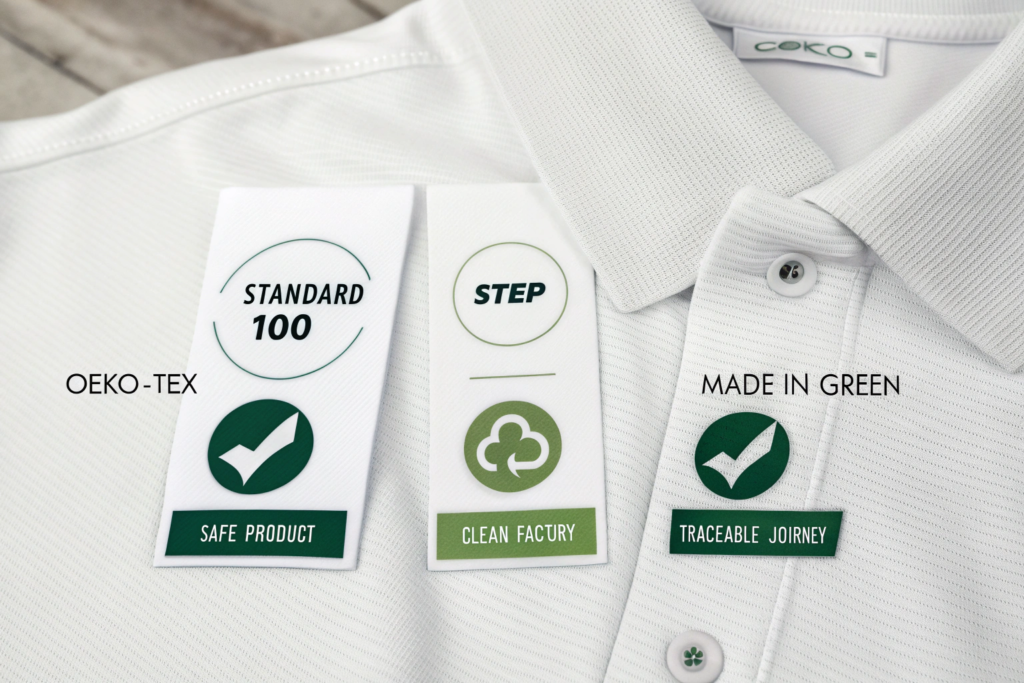
This is a nuanced point. General awareness of the OEKO-TEX "brand" is growing, but detailed knowledge of STANDARD 100 vs. STeP vs. MADE IN GREEN is still low among end-consumers. However, this is not a weakness—it's an opportunity for your brand to educate and lead.
Most consumers recognize the OEKO-TEX STANDARD 100 label as the primary mark for product safety. Awareness of the STeP (sustainable production) or MADE IN GREEN (traceable, sustainable product) labels is lower but growing rapidly among eco-aware segments. Your communication strategy should ladder up from the well-known to the sophisticated.
For a brand we supply, we helped develop a simple tagline: "Safe to Wear. Responsible to Make." The hangtag showed both the STANDARD 100 and STeP logos. The product page included a short, clear explanation: "This shirt is certified free from harmful substances (STANDARD 100), and it was made in a factory audited for environmental and social responsibility (STeP by OEKO-TEX)." This simple education converted curiosity into a stronger brand preference.
How should you communicate different certifications in marketing?
Start with the consumer benefit. Lead with STANDARD 100: "Skin-safe comfort for every swing." Then, for your core audience that digs deeper, introduce STeP: "Crafted with responsibility at every step." Use your "About Us" or "Sustainability" page to explain what these mean. This layered approach caters to both the quick shopper and the diligent researcher. It demonstrates your commitment goes beyond the bare minimum. Providing this sustainability communication clarity is a key brand differentiator.
What is the risk of not clarifying your certification scope?
The risk is "greenwashing" accusations. If you only use the term "OEKO-TEX certified" vaguely, an informed consumer or journalist might question its scope. Does it cover the final product or just the fabric? Being precise protects your brand's integrity. Specify "OEKO-TEX STANDARD 100 certified" for product safety and/or "Manufactured in an OEKO-TEX STeP certified facility" for process integrity. This precision, backed by a reliable manufacturer like Shanghai Fumao, turns a marketing claim into an irrefutable statement of fact.
How Does Social Media Amplify OEKO-TEX Perception?
Social media is the megaphone for consumer values. It’s where perceptions are formed, reinforced, and shared. The conversation around "clean" and "conscious" apparel is loud, and golf is not immune.
Social media amplifies OEKO-TEX perception by providing a platform for eco-advocates, influencers, and conscious consumers to validate and promote brands that align with their values. A certification badge becomes a highly shareable visual proof point in a story about responsible consumption. It's content that builds credibility.
We observed a micro-influencer in the golf space last year reviewing a polo from one of our client brands. In her video, she specifically zoomed in on the hangtag, pointed to the OEKO-TEX logo, and said, "I love that this brand takes extra steps for safety and sustainability. It matters for something you wear in direct sun for hours." That single mention drove significant traffic and tagged the brand as "thoughtful." The certification provided an authentic talking point.
What role do influencers and ambassadors play?
They are the translators. Most golfers won't read a technical standards document. But when a trusted influencer says, "This shirt is OEKO-TEX certified, which means it's been tested for all the bad stuff, so you can feel good about wearing it," that message sticks. It simplifies the complex into an emotional benefit. Partnering with influencers who genuinely care about sustainability ensures this message is delivered authentically, boosting your social media marketing ROI through trusted voices.
How should brands handle negative conversations or skepticism?
Be prepared with transparency. If a question arises like, "Is this really certified?", your brand should be able to respond instantly with a link to the official OEKO-TEX database showing your product's valid license. This turns potential skepticism into a demonstration of your confidence and openness. This level of readiness, supported by a factory partner with solid systems like ours, makes your brand unshakeable in the face of scrutiny. It shows you stand behind every claim.
Conclusion
The consumer perception of OEKO-TEX in golf apparel has matured from a technical specification into a core component of brand trust and product desirability. It answers the modern golfer's dual demand for peak performance and personal well-being. This perception directly influences purchasing decisions, supports premium pricing, builds loyal communities, and provides a credible narrative in a noisy market.
For you, the brand builder, this isn't about adding a cost line item. It's about investing in a tangible asset that enhances your product's value, protects your brand's reputation, and connects deeply with your customer's evolving priorities. In a competitive landscape, it’s a clear way to say your brand does more.
If you are ready to translate this consumer perception into a concrete competitive advantage for your next golf apparel line, you need a factory partner who understands this journey from the lab to the label to the final customer. At Shanghai Fumao, we integrate OEKO-TEX compliance seamlessly into our full-package manufacturing, ensuring your products are not only exceptionally crafted but also carry the trusted marks that today's golfers seek. Let's build a collection that performs on every level. Contact our Business Director Elaine to start the conversation: elaine@fumaoclothing.com.