Too many SKUs slow you down. Too few limit your offer. The key is balance—and clarity.
In rental clothing, the best SKU strategy minimizes overlap, groups styles by function, tracks usage by size and color, and supports fast reordering and analysis.
At Fumao, I’ve helped many rental brands streamline their SKU systems. A smart structure makes inventory easier to manage, forecast, and scale—without chaos.
What is SKU in garments?
If you can’t track it, you can’t scale it. That’s why SKU is more than just a code—it’s your control panel.
SKU (Stock Keeping Unit) in garments is a unique identifier assigned to each clothing item variation, used to track stock, movement, and performance across styles, sizes, and colors.
Why do rental businesses need clearer SKU structure1 than retail stores?
Rental businesses deal with returns, repairs, and multiple cycles per garment. Without precise SKUs, you lose visibility.
For example, a client had one product name: “Black Shirt.” But they had:
- Two fabrics (poly-cotton, 100% cotton)
- Five sizes
- Two collar styles
That’s 20 variations—but all logged under one SKU. Inventory was always “missing” or miscounted.
We created a format like:
BSH-PC-S-MC1
(Black Shirt – Poly Cotton – Size S – Model Code 1)
Now they could track stock by version, see which one performed better, and reorder faster.
How does a good SKU help in rental wear tracking2?
- Helps trace returns and repairs
- Identifies high-usage or damaged sizes
- Speeds up reordering from factory
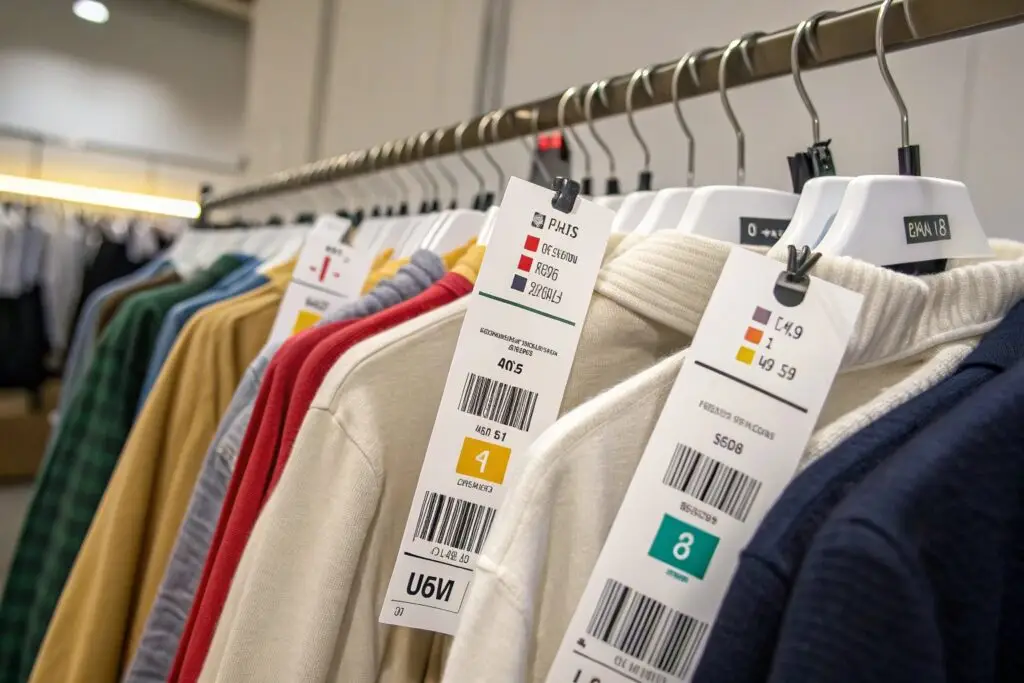
- Links physical item to digital system (via barcode)
We always print SKU on inner labels and on warehouse packaging. It saves hours every week.
What is the SKU code for clothing?
SKU codes are not random—they’re structured for speed, logic, and future use.
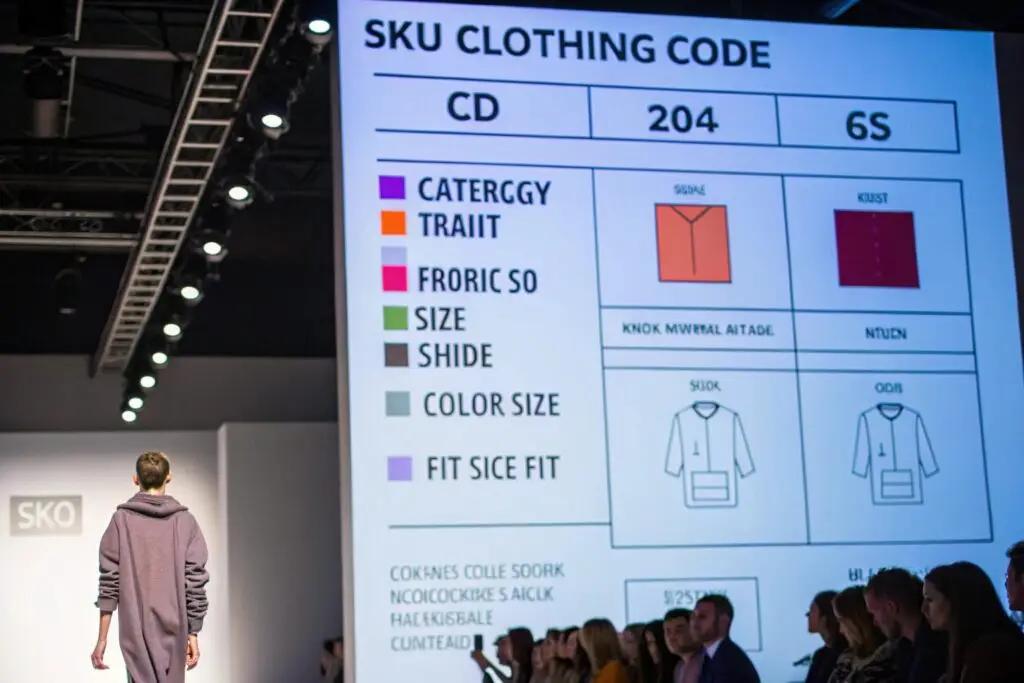
A SKU code for clothing is a string of alphanumeric characters representing key product traits like category, fabric, color, size, and fit.
What does a good clothing SKU code include, and how should it be structured?
Here’s what a typical rental-friendly SKU3 includes:
| Code Segment | What It Stands For | Example |
|---|---|---|
| Category | Product Type | SH (Shirt) |
| Material | Fabric Code | PC (PolyCotton) |
| Color | First 2–3 letters | BK (Black) |
| Fit or Cut | Model Version | M1 (Model 1) |
| Size | Letter or Number | L (Large) |
Final SKU: SH-PC-BK-M1-L
This tells you exactly what you’re dealing with—no guesswork.
Why is consistent structure4 more important than short length?
Many clients try to keep SKUs “short” for convenience. But short and vague = confusion.
Instead, go for:
- Clear hierarchy (Category > Material > Color > Cut > Size)
- Standard length per segment
- No reuse of retired codes
- Avoid confusing characters like O and 0, or I and 1
If you digitize your system later (ERP, barcode, WMS), this structure will save thousands.
How do I choose a SKU in clothing?
Choosing SKUs isn’t about creativity—it’s about consistency.
To choose a SKU in clothing, define fixed segments for category, material, color, size, and fit, then apply them to every new style using the same rules.
What’s the step-by-step to create a rental-focused SKU system5?
- List Core Categories: e.g., Shirts = SH, Pants = PT
- Assign Material Codes: PolyCotton = PC, Cotton = CT
- Define Color Codes: Black = BK, Navy = NV, White = WH
- Add Cut or Model Code: Slim = SL, Relaxed = RL
- Use Clear Size Codes: XS, S, M, L, XL
Final format: [Category]-[Material]-[Color]-[Fit]-[Size]
Example: PT-PC-NV-RL-M
We’ve helped many buyers build a shared SKU guide6 (Excel or PDF) for their warehouse and sales teams. It eliminates errors from day one.
How do you future-proof a SKU system?
- Leave room for future codes (e.g., two letters per segment)
- Avoid using year or season codes unless necessary
- Keep logic modular (so you can swap color or fit segments easily)
- Maintain a master list to avoid duplication
At Fumao, we offer template guides7 to clients building their first SKU structure. It works long-term—especially once you add barcode printing or digital scanning.
What should I put in SKU?
A good SKU is like a miniature data map. It should show the product’s identity at a glance.
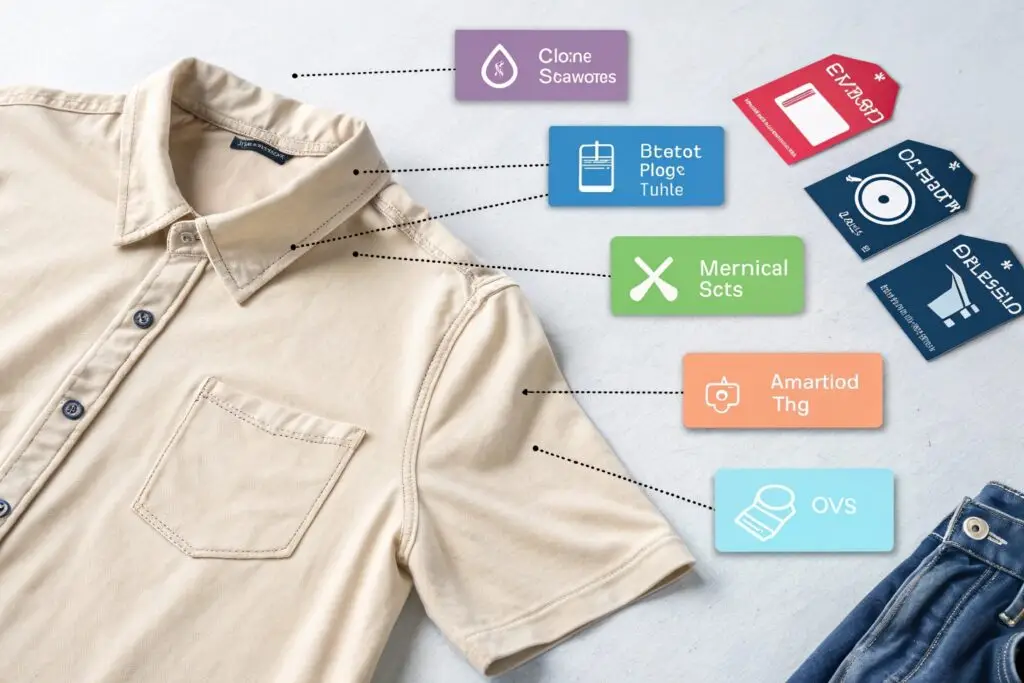
In a clothing SKU, include category, material type, color, size, and cut or version—avoiding random names or untrackable codes.
Why do vague or descriptive SKUs cause issues in rental logistics8?
If your SKU is “SummerTop1” or “ShinyJacket5,” you’ll struggle in every area:
- Warehouse won’t know which version is which
- Sales team will miscommunicate
- Repairs or replacements get mismatched
- Reporting becomes a mess
Instead, use clear, repeatable codes9.
Wrong: FashionJacket-X
Correct: JK-PC-GY-M2-L
(Jacket, PolyCotton, Gray, Model 2, Large)
What’s a checklist for building an effective SKU structure10 in rental clothing?
| Element | Required? | Notes |
|---|---|---|
| Category Code | Yes | E.g., SH (Shirt), JK (Jacket) |
| Fabric Code | Yes | PC, CT, NY, etc. |
| Color Code | Yes | BK, WH, NV, etc. |
| Fit/Model Code | Optional | Especially useful for variants |
| Size Code | Yes | XS–XXL or numbered sizes |
| Gender/Client Type | Optional | M, F, U (Men, Women, Unisex) |
| Year Code | Optional | For limited-time styles |
Don’t include:
- Manufacturer names
- Long words or spaces
- Vague descriptors
Stick to structure, and your SKUs will serve you for years.
Conclusion
In rental clothing, SKU strategy isn’t a small detail—it’s your foundation. At Fumao, we build SKU systems that grow with your business, reduce confusion, and support smarter stock management.
-
Understanding SKU structure is crucial for rental businesses to manage inventory effectively and improve operational efficiency. ↩
-
Exploring rental wear tracking can reveal strategies to enhance inventory management and streamline operations in rental businesses. ↩
-
Understanding rental-friendly SKUs can streamline your inventory management and enhance clarity in product identification. ↩
-
Exploring the importance of consistent structure in SKU coding can help you avoid confusion and improve inventory efficiency. ↩
-
Explore this resource to understand the intricacies of a rental-focused SKU system and its benefits for inventory management. ↩
-
This link will provide insights on creating a shared SKU guide, enhancing collaboration and reducing errors in your team. ↩
-
Discover effective template guides that can streamline your SKU structure development and ensure long-term efficiency. ↩
-
Exploring the challenges in rental logistics can help you avoid common pitfalls and improve your operations. Check out this insightful resource. ↩
-
Clear, repeatable codes streamline communication and logistics, reducing errors. Discover more about their significance in this resource. ↩
-
Understanding SKU structure is crucial for efficient inventory management in rental clothing. Explore this link to enhance your knowledge. ↩