I remember sitting in a meeting with a brand owner from Chicago a few years ago. He was frustrated. He had found a factory that offered "full package" services, but when his order arrived, the garments were unfinished. The buttons weren't sewn on properly, and the hang tags he specifically requested were missing. He assumed "full package" meant everything was handled. He learned the hard way that the term means different things to different suppliers. This confusion costs time, money, and trust.
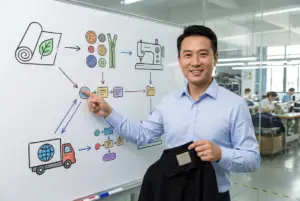
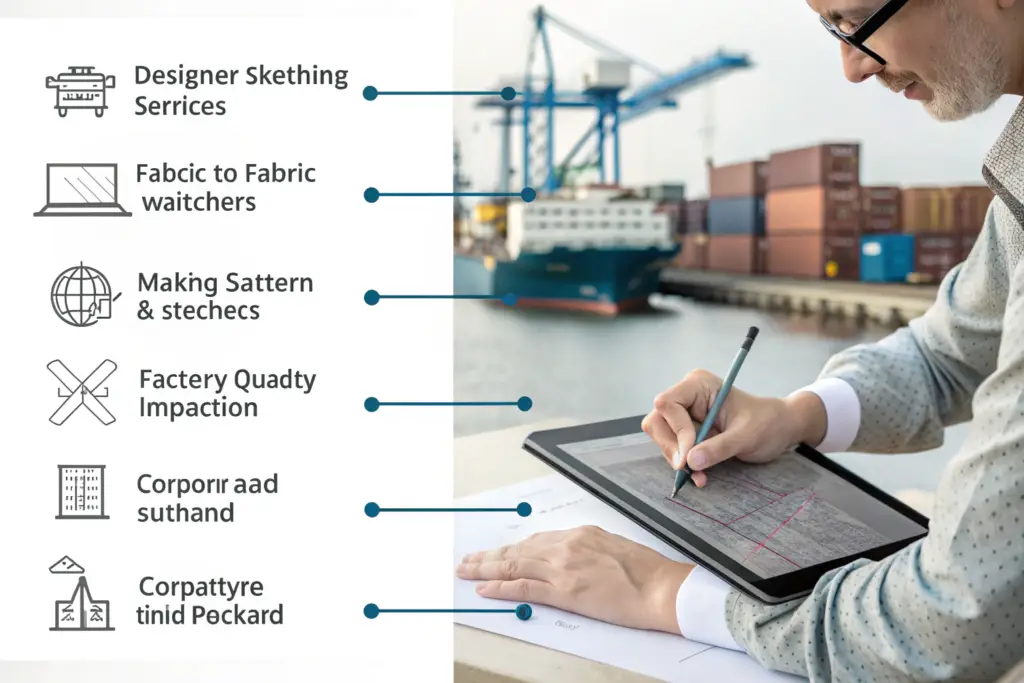
Full package manufacturing includes every single step required to turn your design concept into a finished product delivered to your warehouse. This encompasses design support, pattern making, fabric and trim sourcing, sampling, production, quality control, packaging, and logistics.
When I explain our services at Shanghai Fumao to new clients, I always emphasize that we are not just a sewing factory. We are a complete production partner. The value we provide isn't just in stitching fabric together. It's in managing the hundreds of tiny details that happen before the needle ever touches the cloth and after the garment comes off the line. Let me walk you through exactly what you should expect when you partner with a true full-package manufacturer.
What does the product development phase include in full package manufacturing?
The product development phase is where great designs become manufacturable realities. Too many brands skip this step or handle it poorly internally. They send a rough sketch to a factory and expect magic. Then they wonder why the sample looks nothing like their vision. True full package service starts here, long before production begins.
I had a client from New York last year who came to us with a beautiful sketch of a women's blouse. The design had complex draping that would have been impossible to mass produce with standard techniques. Our development team sat down with them on a video call. We showed them three alternative construction methods that would achieve the same visual effect but would actually hold up in production and through multiple washes. They left that call with a revised tech pack and a sample that looked even better than their original vision. That is what development should look like.
How do factories help with pattern making and grading?
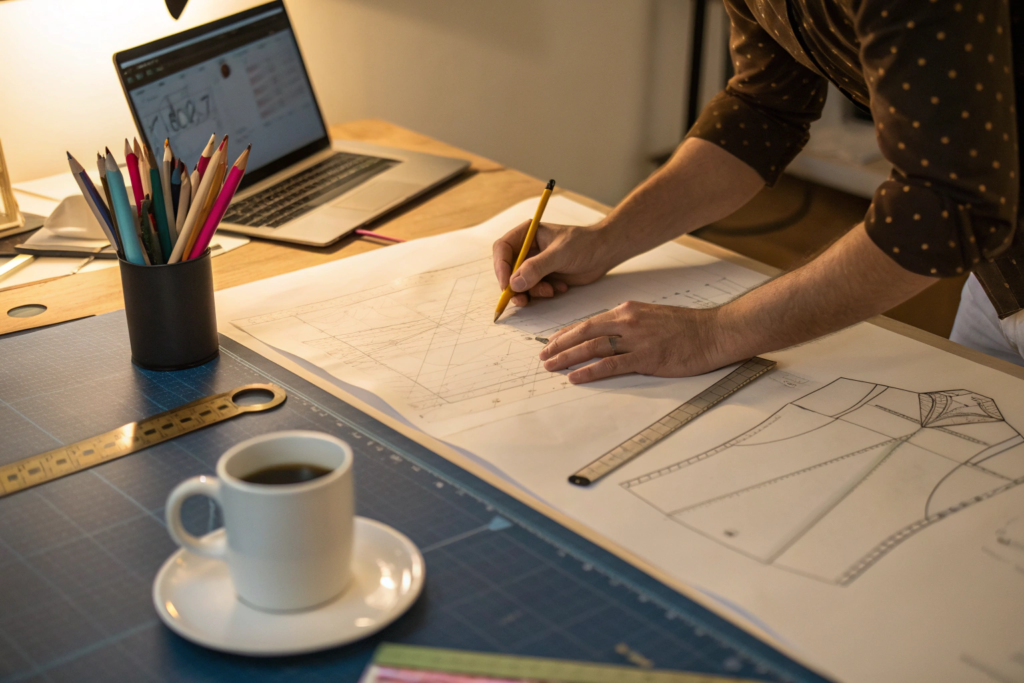
Pattern making is both an art and a science. A full-package manufacturer employs professional pattern makers who digitize your designs into precise templates. They understand how fabric grain, stretch, and weight affect the final fit. After the master pattern is created, we handle grading. This means we create a full range of sizes from your base sample. We ensure that a size large doesn't just get wider but maintains the same proportions and fit as a size small. This is critical for brand consistency. We use specialized software to ensure accuracy across all sizes, and we can store your brand's blocks for future seasons, saving you time and money on repeat styles.
What role does fabric sourcing play in the development stage?
Fabric sourcing is arguably the most important decision in garment production. A full-package manufacturer doesn't just buy whatever fabric is cheapest. We work with you to find the perfect material for your design, your budget, and your target customer. We maintain relationships with dozens of mills across China and Asia. We know which mills specialize in organic cotton, which ones have the best stretch recovery for activewear, and which ones can deliver quickly. During development, we send you fabric swatches and strike-offs. We test these materials in our lab for shrinkage, colorfastness, and strength. We don't wait until production to discover a fabric bleeds in the first wash.
What does the sampling process look like with a full-package partner?
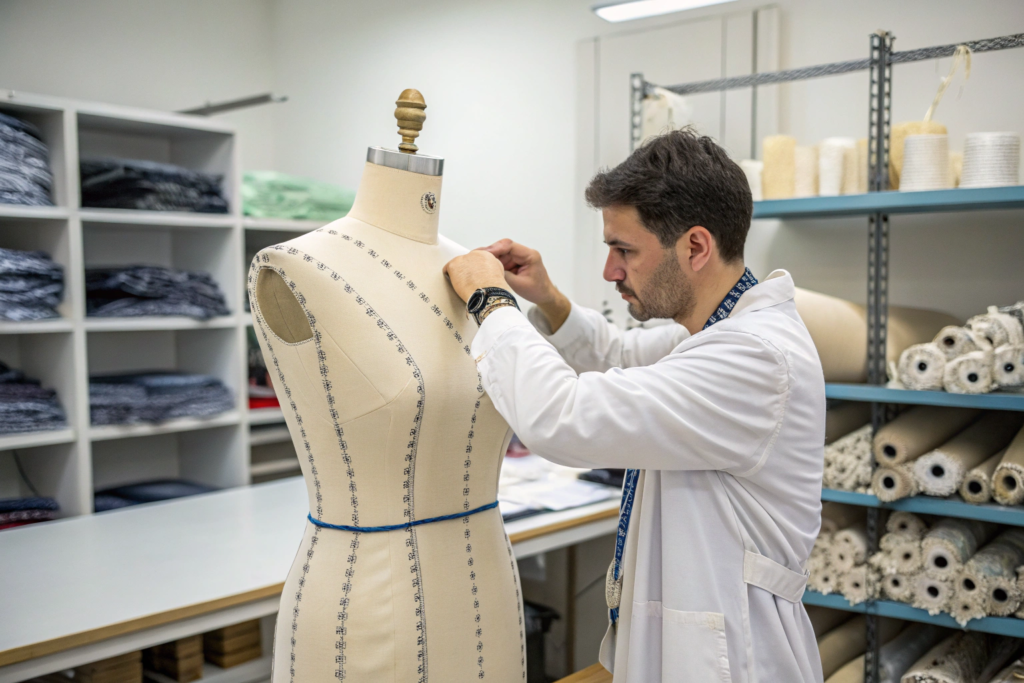
Sampling is where your design becomes something you can actually touch and feel. It is an exciting step, but it is also a critical quality checkpoint. A reliable full-package manufacturer will not rush this phase. We will push you to make changes now, before we cut thousands of yards of fabric.
I remember working with a sportswear brand from Los Angeles. They were in a huge hurry to get their samples for a trade show. We could have rushed and sent them something rough. Instead, we worked overnight to get it right. When they received the sample, they loved the fit, but they realized the pocket placement was off for their target customer. We made the adjustment in 24 hours and sent a revised sample. They went to the trade show confident, and they landed three major accounts based on that sample. Rushing the sampling phase always costs more in the long run.
How many sample rounds are typically included?
Most full-package manufacturers include at least two to three rounds of sampling in their standard service. The first is usually a "fit sample" or "development sample." This confirms the overall silhouette and construction. The second is often a "salesman sample" which uses the correct fabric and trims, allowing you to show it to buyers. The third might be a "pre-production sample" made on the actual production line to verify that the mass production process matches the sample room quality. At Shanghai Fumao, we are transparent about this process. If we need more rounds to get it perfect, we discuss it openly. But we also have the expertise to minimize rounds, saving you time and money.
What specific details are checked during the sample approval stage?
During sample approval, we examine everything. We check the measurements against the spec sheet in multiple points. We check the stitching tension and seam strength. We verify that all trims—zippers, buttons, labels—are correctly attached and match the approved materials. We check the color against the standard under multiple lighting conditions. We also test the sample by washing it according to your care instructions to check for shrinkage or distortion. We document everything and provide you with detailed comments and photos. Our goal is to have zero surprises when we move to bulk production.
How does full package manufacturing handle trim and accessory sourcing?
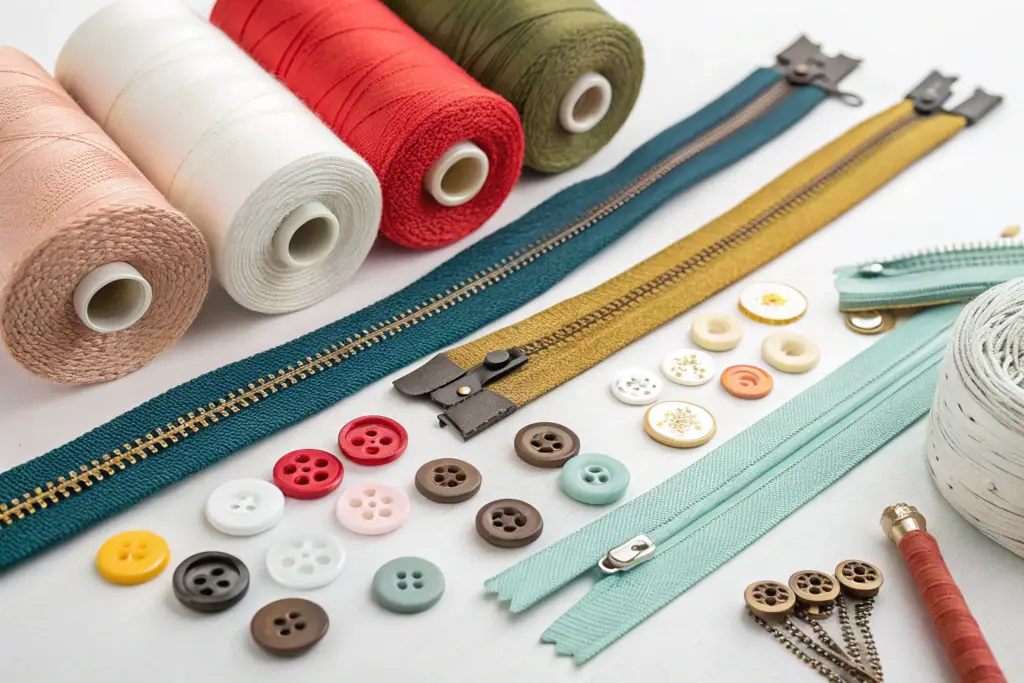
Trims might seem like small details, but they define the quality and functionality of your garment. A cheap zipper that breaks after three wears ruins your brand's reputation. Buttons that fall off frustrate customers and drive returns. A full-package manufacturer treats trim sourcing with the same seriousness as fabric sourcing.
A client from Texas who makes high-end western wear taught me this lesson. He was particular about his pearl snap buttons. They had to have a specific weight and finish. His previous supplier kept substituting cheaper alternatives without telling him. When we started working together, we didn't just find a button supplier. We found three, tested samples from each, and presented him with options that met his exact specifications at different price points. He chose the one that matched his quality needs, and we now stock those buttons specifically for his production runs.
Where do manufacturers source items like buttons, zippers, and labels?
Established full-package manufacturers have dedicated sourcing teams and long-term partnerships with trim suppliers. We don't just search online when we need something. We have catalogs from trusted vendors who we have audited and worked with for years. These suppliers specialize in everything from custom woven labels to heavy-duty zippers for outerwear. Because we buy in high volumes, we get better prices and priority service. When you need 5,000 custom-printed hang tags, we don't pay retail. We pass our volume discounts directly to you.
Can I use my own custom branded packaging and hang tags?
Absolutely. In fact, we encourage it. Custom packaging is a huge part of the unboxing experience that builds brand loyalty. We integrate your specific packaging requirements into our production workflow. Whether you need tissue paper, poly bags with custom printing, recycled boxes, or specialty hang tags, we handle it. We coordinate the delivery of these items to our factory, or we source them on your behalf. We ensure they arrive at the right time to meet your production schedule. When your garments come off the line, they go directly into your branded packaging, ready for retail.
What quality control measures are built into full package production?
Quality control is not a single step at the end of production. It is a system that runs through the entire manufacturing process. A true full-package partner builds quality checks into every stage, from incoming materials to final packing. This proactive approach prevents defects, it doesn't just catch them at the end.
I remember a situation with a children's wear brand from Florida. They were producing a line of dresses with delicate lace trim. During our in-line inspection, our QC team noticed that the lace on one batch was slightly misaligned. It was barely noticeable, but our standards caught it. We stopped that production line immediately, corrected the alignment issue with the sewing operators, and re-inspected every piece from that batch. The client never saw a single defective dress because we fixed it before it ever became a problem. That is the power of integrated quality control.
What are the different inspection points during production?
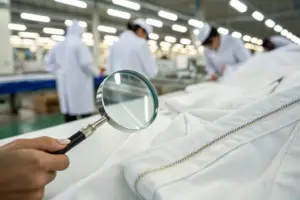
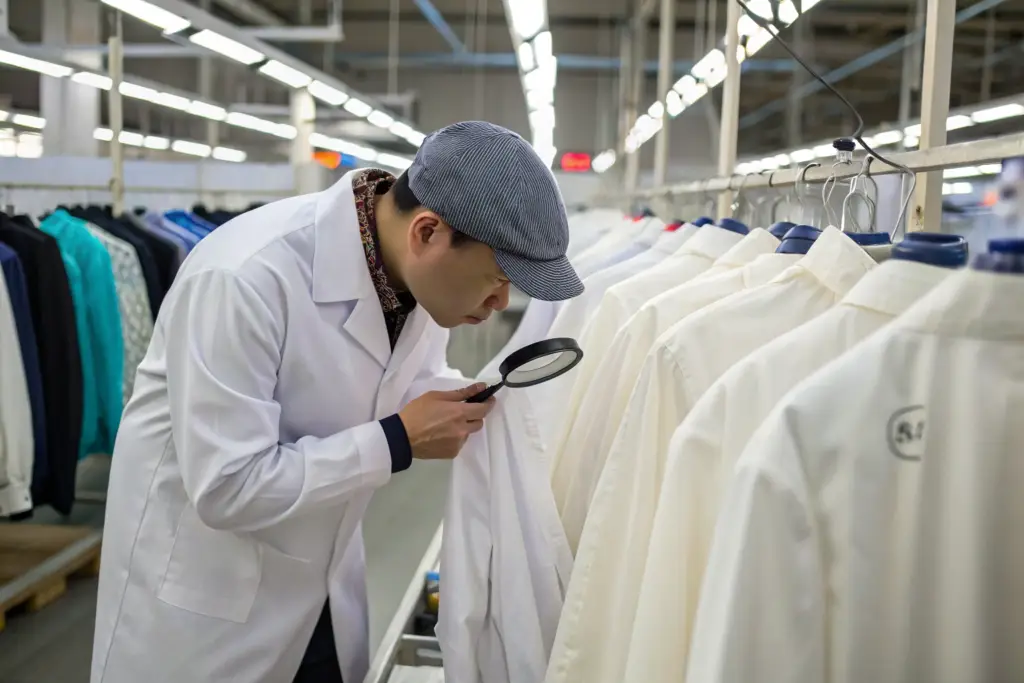
We typically have four major inspection points. First is the "fabric inspection" where we check all incoming materials against your standards using machines like the four-point system. Second is "in-line inspection" which happens during cutting and sewing. Our floor supervisors constantly check random pieces to ensure construction is correct. Third is the "final random inspection" where we inspect a statistically valid sample of finished goods against AQL standards. Fourth is the "pre-shipment inspection" where we verify that the correct styles, sizes, and quantities are packed correctly. Many clients also hire third-party inspection companies to audit our work, and we welcome that because we are confident in our systems.
How are defects categorized and fixed before shipment?
We use a clear system to classify defects. Minor defects are things like a slightly loose thread that can be trimmed. Major defects affect the appearance or wearability, like a crooked seam or a broken zipper. Critical defects make the garment unsellable, like a hole or a major stain. Any piece with a major or critical defect is pulled from the line and set aside. Our repair team then evaluates if it can be fixed. If it can, it goes to a specialized repair station. If it cannot, the garment is scrapped, and we replace the materials and labor at our own cost. We only pack garments that pass our final inspection. We never mix seconds into your shipment unless you specifically authorize it at a discounted price.
What logistics and shipping services are part of the full package?
The journey isn't over when the garments are packed. Getting them from our factory in China to your warehouse in the U.S. is a complex process involving documentation, customs, and transportation. A full-package manufacturer handles all of this, making it seamless for you.
A client from Seattle once told me that before working with us, he dreaded shipping day. He would spend hours filling out forms, calling his freight forwarder, and worrying about whether his goods would clear customs. Now, he just sends us his warehouse address and his required delivery date. We handle the rest. He recently told me that the peace of mind is worth more than any small savings he might get from managing it himself. That is the value we aim to provide.
What documentation does the factory prepare for U.S. customs?
We prepare all necessary export and import documents. This includes the commercial invoice, packing list, bill of lading, and any certificates of origin. For U.S. imports, we also handle the ISF filing, which must be done 24 hours before the vessel loads. We ensure that all Harmonized Tariff Schedule codes are correctly classified to avoid customs delays or penalties. If your products require specific compliance documentation like CPSIA testing for children's products, we provide those reports as well. Our goal is to make your customs clearance as smooth as possible.
How is shipping arranged under DDP and FOB terms?
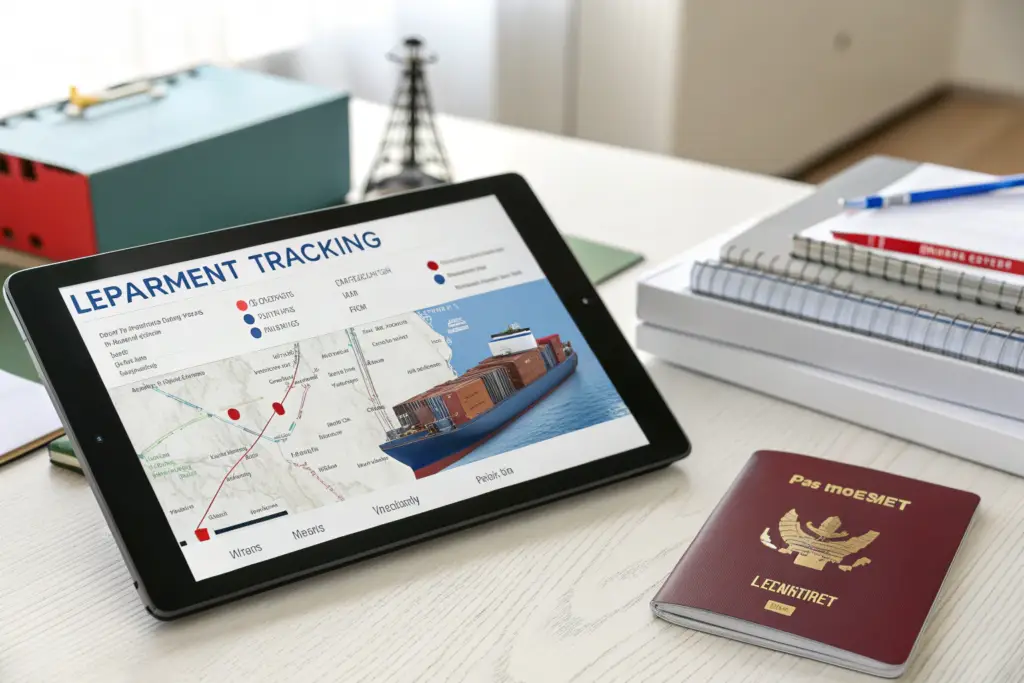
We offer flexibility in shipping terms. Under FOB (Free on Board), we handle everything up to loading the container onto the ship at the port in China. You or your freight forwarder then takes over for the ocean freight and U.S. delivery. Under DDP (Delivered Duty Paid), we handle everything door-to-door, including paying all duties and taxes. This is increasingly popular with our U.S. clients because it gives them a single point of contact and a single, all-inclusive price. We have dedicated logistics staff who book the vessels, track the shipments, and coordinate with trucking companies for final delivery. We provide you with tracking information and regular updates until the goods arrive at your door.
Conclusion
Full package manufacturing is a comprehensive partnership. It covers every step from the first sketch to the final delivery. It includes product development, expert pattern making and grading, thorough sampling, strategic sourcing of fabrics and trims, rigorous quality control at multiple stages, and complete logistics management. When you choose a true full-package partner, you are not just buying production capacity. You are buying expertise, reliability, and peace of mind. You are buying back your own time to focus on what you do best: designing and selling your collections.
At Shanghai Fumao, we have built our entire business around providing this complete service to American brands. We understand that your reputation depends on the quality of every garment that leaves our factory. We treat your deadlines as our own. We have the in-house capabilities, the experienced team, and the global logistics network to take your vision from concept to customer, seamlessly.
If you are ready to stop juggling vendors and start building a real partnership, I encourage you to reach out. Let's discuss your next project and show you how full package manufacturing should really work. Please contact our Business Director, Elaine, directly at strong>elaine@fumaoclothing.com</strong. Tell her about your brand, your goals, and let's start building something great together.