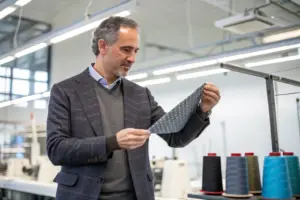
Two years ago, I stood on our factory floor with the founder of a newly launched sustainable athleisure brand. Her order was for just 500 units—a tiny batch by conventional standards. She was holding a swatch of a complex technical fabric, a recycled polyester blend with a proprietary moisture-wicking finish. "I need this to perform," she said, "but I also need to be able to market it as completely non-toxic. Can you do that for a run this small?" My answer was a definitive yes, precisely because of our integration of OEKO-TEX standards into our small-batch DNA. For us, OEKO-TEX isn't a bulk-order perk; it's the foundational protocol that makes precision manufacturing at any scale credible, repeatable, and market-ready.
In small batch precision manufacturing, OEKO-TEX plays a critical role as a systematized quality and safety framework. It provides an objective, third-party-verified "recipe" for material purity and processing integrity that allows boutique brands to achieve chemical compliance and build consumer trust without the massive R&D resources typically required. It transforms subjective assurances of quality into a standardized, scalable guarantee.
For a factory like Shanghai Fumao specializing in runs from 300 to 3,000 pieces, OEKO-TEX is not an add-on cost; it's a core operating system. It dictates how we source, test, process, and document every component, ensuring that whether we're making 500 or 5,000 units, the first piece and the last piece meet the same exacting standard of human-ecological safety. This is the essence of precision.
How Does OEKO-TEX Provide a Framework for Consistent Material Sourcing?
Small batch manufacturing lives or dies by material consistency. A variance in dye lot or fabric finish in a run of 500 units is a catastrophe. OEKO-TEX mitigates this by establishing a clear compliance baseline for every raw material.
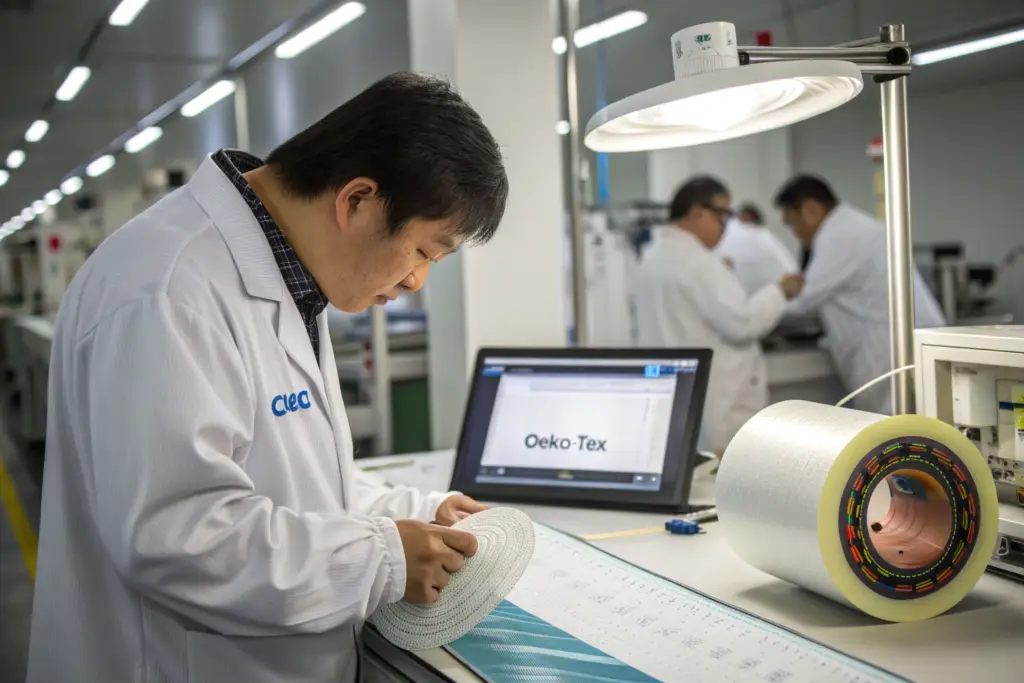
Instead of a brand having to vet dozens of fabric and trim suppliers themselves—a daunting task for a startup—they can partner with a manufacturer like us who maintains a Pre-Approved Material Library. Every fabric, thread, button, and zipper in this library comes with its own OEKO-TEX certification or test report. When a brand brings us a new material, our first step is to subject it to pre-production screening against OEKO-TEX parameters. This process does three things:
- Validates Safety: It confirms the material meets the required chemical limits.
- Ensures Batch Consistency: It checks that this specific roll matches the properties of the previously approved material.
- De-risks Production: It prevents the entire small batch from being compromised by a single non-compliant component.
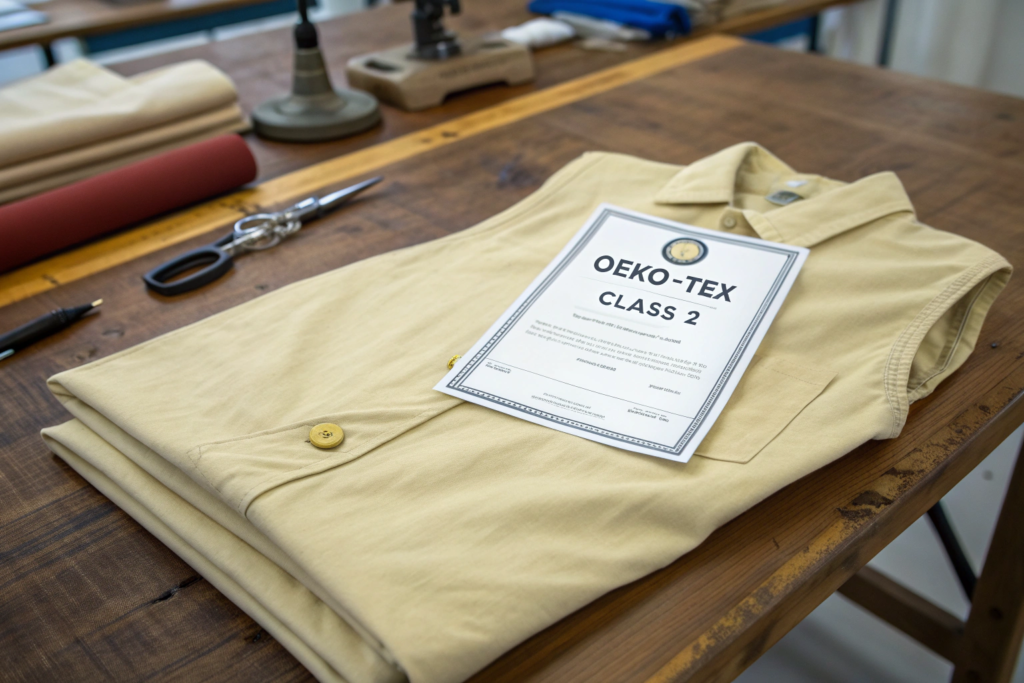
For example, a brand wanted to use a new, plant-dyed organic cotton for a 400-piece capsule collection. While "plant-dyed" sounds inherently safe, our screening revealed higher-than-acceptable levels of natural heavy metals from the dye sources for OEKO-TEX Class 2. We worked with the mill to adjust their process, re-tested, and only then cleared the fabric for production. This saved the brand from a potential product recall and protected their brand equity.
Can this framework accommodate innovative or unusual materials?
Absolutely. In fact, it's essential for them. We recently worked with a brand using seaweed fiber blended with cotton. The novelty of the material raised questions about its chemical profile. By running it through the OEKO-TEX testing pipeline from the beginning, we generated the data that became both a compliance document and a powerful marketing story: "Innovation, verified safe." The framework turns uncertainty into a sellable asset.
How does this affect minimum order quantities (MOQs) for materials?
Traditionally, sourcing small quantities of certified fabrics is difficult. Our role is to aggregate demand. By using the same OEKO-TEX certified base fabrics across multiple small-batch client projects, we can meet mill MOQs while giving each brand access to materials they could never source alone. This is a key part of our full-package manufacturing value proposition for emerging brands.
How Is the Certification Process Adapted for Small Batch Runs?
The perceived barrier for small batches is cost and time. However, the process is highly adaptable. OEKO-TEX certification is granted for an article type, not a production quantity. Once a specific product (e.g., "Women's Relaxed-Fit Organic Cotton T-Shirt, style WS01") is certified, that certification covers all units of that article produced under the same conditions, whether it's 100 or 10,000.
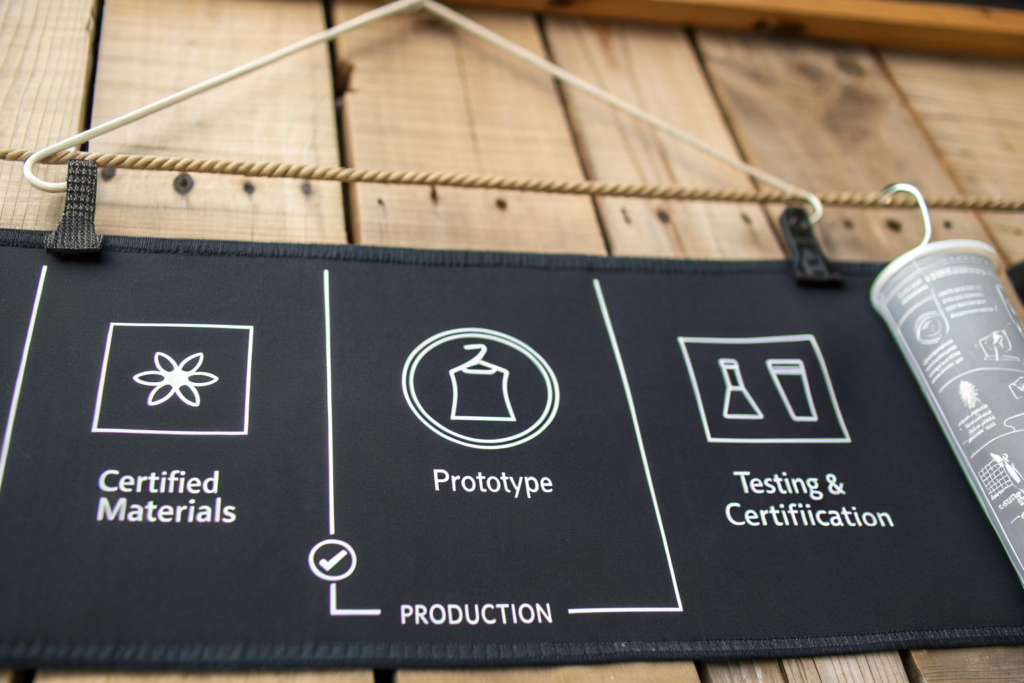
Our adaptation involves a phased testing approach:
- Component Certification: We use materials that are already OEKO-TEX certified where possible (fabrics, threads).
- Article Prototype Testing: We make a pre-production prototype from the certified components and submit it for full article testing. This is the main investment.
- Quality Assurance Agreement: Once certified, we sign a QA agreement with the certification body. This allows us to produce the certified article in subsequent batches without re-testing every time, as long as we use the same approved materials and don't change the production process.
This means the cost of certification is amortized over the lifecycle of the product style, not a single batch. For a brand, this makes the first batch more expensive on a per-unit basis, but it creates a valuable asset (the certification) that adds margin and marketability to all future re-orders.
What documentation does a small batch brand receive?
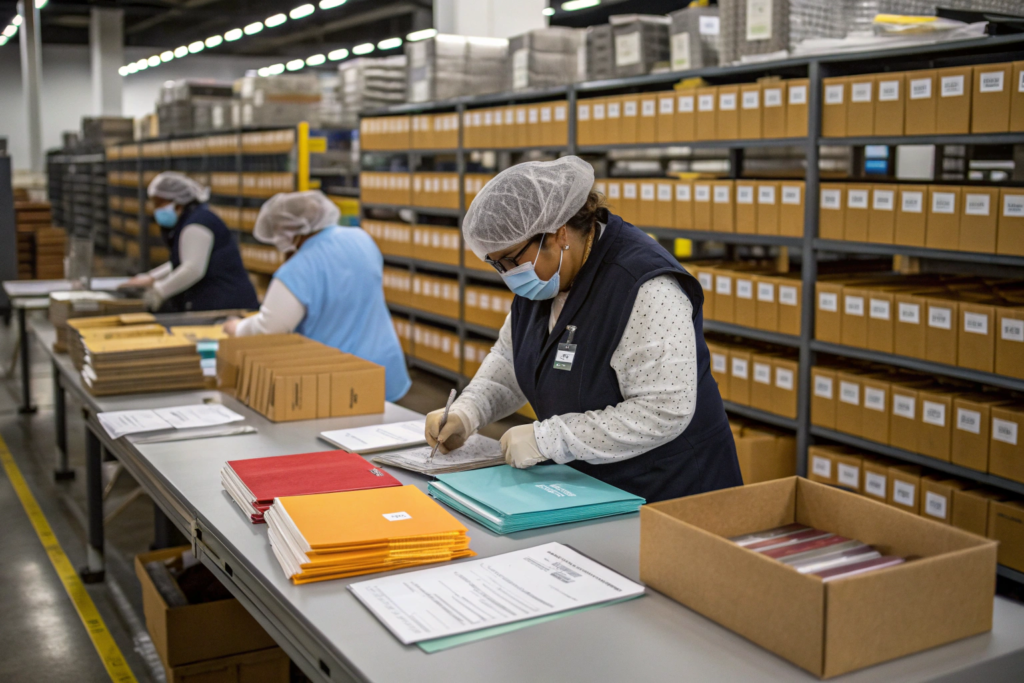
They receive the full, official OEKO-TEX certificate listing the article name and number, valid for one year. More importantly, they receive the test reports and a scope certificate for our factory (Shanghai Fumao) proving we are an approved manufacturer under the QA system. This package is what they use to assure retailers and end consumers.
How does this integrate with lean inventory models?
Perfectly. Because we control the material pipeline and production under a QA agreement, we can execute rapid re-orders of certified items. A brand can test the market with 300 units, and when they sell out, they can re-order another 300 with the same certification, without delay for new testing. This supports the direct-to-consumer "drop" model.
How Does OEKO-TEX Enhance Traceability and Storytelling for Boutique Brands?
For a small brand, traceability isn't just logistics; it's the core of their marketing. OEKO-TEX provides a skeleton key for transparency. Every certified article has a unique number. Brands can use this number in their storytelling.
We empower our clients to tell a complete story:
- "From our hands to yours, verified." We provide them with photos and videos of the production process in our OEKO-TEX STeP-certified facility.
- "Every component has a passport." They can explain that the buttons, thread, and fabric are all individually certified.
- "The science behind the softness." They can share simplified data from the test reports about pH balance or colorfastness.
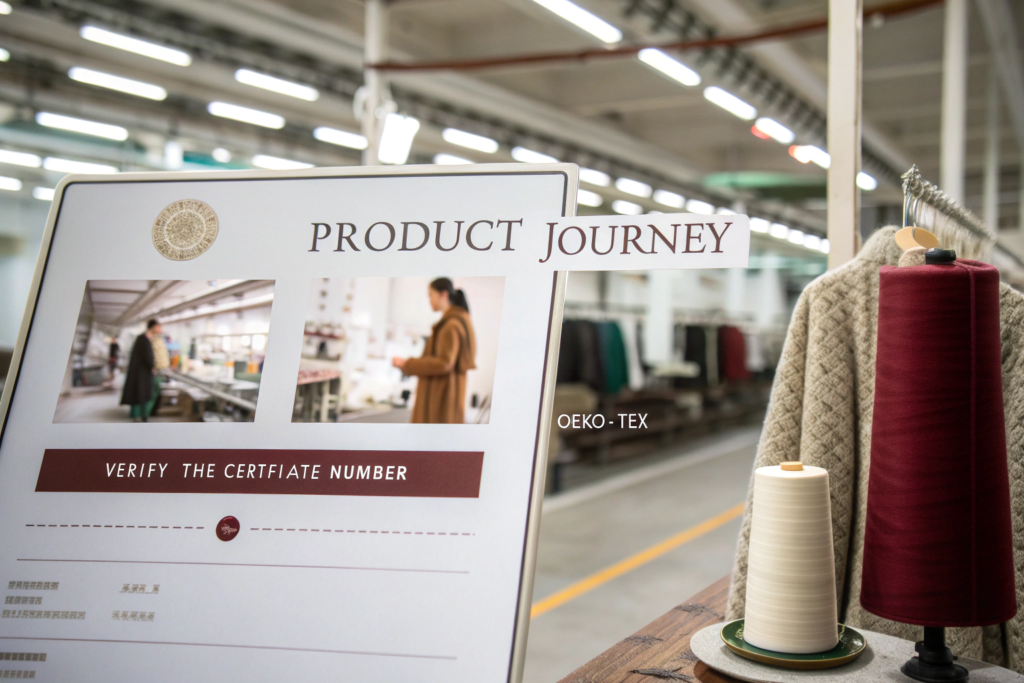
One of our clients, a luxury knitwear brand, created a beautiful "Product Journey" page on their site. It featured our factory (with permission), images of the OEKO-TEX label being sewn in, and a link to verify the certificate number. This page became their second-most visited page after the homepage, dramatically increasing conversion rates on product pages.
Can this be used for exclusive or limited-edition drops?
It's a perfect fit. The phrase "OEKO-TEX Certified Limited Edition" carries immense power. It combines exclusivity with integrity. We produced a 200-unit run of botanical-dyed scarves where the certification became the central proof point that the natural dyes were both beautiful and safe, allowing the brand to charge a significant premium.
How does it build brand equity faster?
For a new brand, establishing trust is the slowest part of growth. OEKO-TEX acts as a trust accelerator. It's a recognizable symbol that immediately aligns the brand with established values of safety and responsibility. It does the heavy lifting of credibility-building, allowing the brand to focus its narrative on design, fit, and lifestyle.
What Are the Operational Advantages for a Precision Manufacturer?
For us, OEKO-TEX is not a marketing gimmick; it's an operational discipline that makes us better manufacturers.
Key advantages include:
- Standardized Procedures: It gives us clear, written standards for chemical storage, wastewater management, and worker safety (under OEKO-TEX STeP), reducing errors.
- Supplier Management: It forces a rigorous vetting process for our own suppliers, creating a more reliable and quality-focused supply network.
- Reduced Liability: By ensuring every output meets a global safety standard, we significantly reduce the risk of compliance failures for our clients and ourselves.
- Competitive Differentiation: In the crowded landscape of Chinese manufacturing, it distinguishes us as a technical partner, not just a production facility.
This operational rigor directly benefits small batch clients. They get access to a level of process control and documentation typically reserved for huge brands with dedicated quality teams. When a retailer like REI or a marketplace like Amazon asks for compliance documentation, our clients are prepared instantly, because we've built that folder with them from day one.
Does it enable more complex product development?
Yes. It provides a safe "sandbox." When a brand wants to experiment with a new waterproof membrane or a flame-retardant coating (for workwear), the OEKO-TEX framework gives us a defined set of parameters to work within. We know exactly what substances cannot be present, which guides our sourcing and development conversations with chemical suppliers. This allows for innovative but safe small-batch production.
How does it impact pricing for small batches?
There is an upfront cost for certification and potentially higher material costs. However, this is offset by:
- Higher Retail Price Point: Certified goods command a 20-30% premium.
- Lower Risk of Waste: Eliminating batches failed due to compliance issues.
- Faster Time-to-Market: With pre-approved materials and processes, we can move from sample to shipment faster.
The total value equation favors certification for any brand targeting the mid-to-premium market.
Conclusion
In the realm of small batch precision manufacturing, OEKO-TEX transcends its role as a mere safety certificate. It evolves into the essential infrastructure for quality, consistency, and trust at a manageable scale. It provides the rigorous yet adaptable framework that allows emerging brands to compete on integrity from their very first production run, and enables manufacturers like Shanghai Fumao to deliver "big brand" assurance to the most niche and innovative labels.
It democratizes access to verifiable quality, turning what was once a competitive advantage for giants into a scalable tool for entrepreneurs. For the discerning brand owner who cares deeply about every stitch and every chemical constituent, OEKO-TEX is the silent partner that ensures their vision is realized without compromise, batch after precise batch.
If you are developing a small batch collection where quality cannot be left to chance, partner with a manufacturer who has built this system into their core. Let Shanghai Fumao be your partner in precision.
To discuss integrating OEKO-TEX certification into your next small batch project, contact our Business Director Elaine: elaine@fumaoclothing.com.