You've received a production estimate that fits your budget, but now you're examining the payment terms. The numbers look right, but when and how you pay can be just as important as how much you pay. What payment structures typically accompany garment production estimates, and how do they protect both you and the manufacturer?
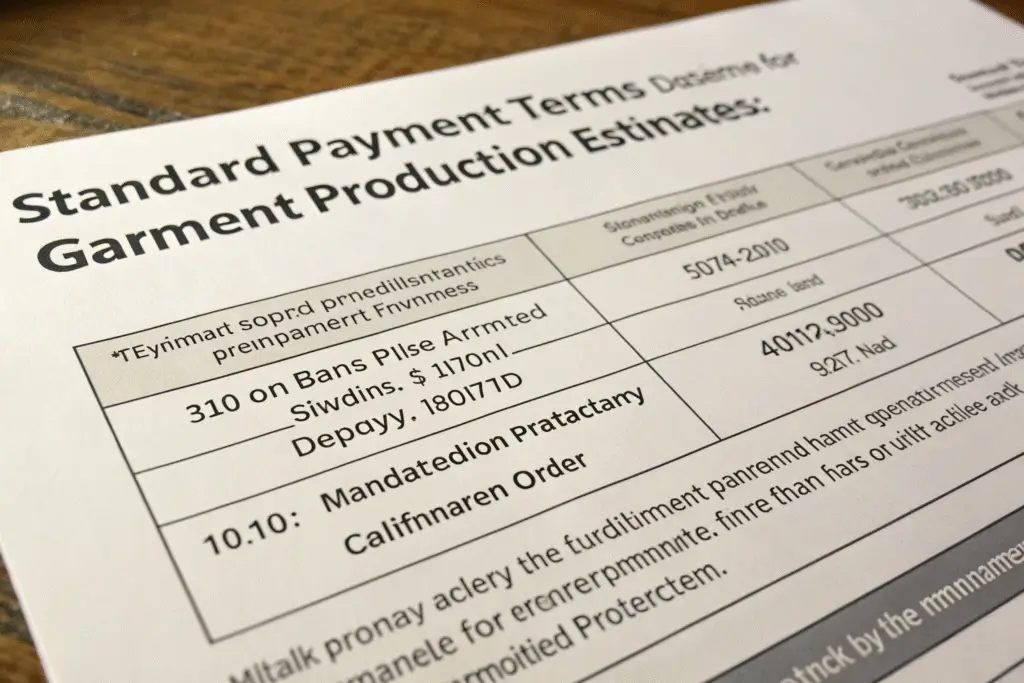
Standard payment terms for garment production estimates typically follow a 30-40% deposit with order confirmation, 40-50% balance before shipment, and 10-20% upon delivery, though specific terms vary based on order size, relationship history, and manufacturer policies. These structured payment schedules balance manufacturer security with buyer protection, ensuring production can commence while providing recourse if quality or delivery issues arise. Understanding standard terms helps you evaluate estimate fairness and plan your cash flow effectively.
Let's examine the typical payment structures in garment production and how they impact your business operations and risk management.
What Are The Standard Payment Structures?
Most garment manufacturers use established payment frameworks that have evolved to protect both parties while maintaining production cash flow.
These structures distribute financial risk appropriately between client and manufacturer throughout the production process.
What is the most common payment schedule?
The 30/40/30 structure (30% deposit, 40% before shipment, 30% after delivery) represents the industry standard for established relationships. This approach ensures manufacturers can purchase materials and begin production while protecting clients from paying fully before verifying quality. We recently worked with a contemporary brand using this structure where the 30% deposit covered their fabric and trim sourcing, the 40% payment ensured production completion, and the final 30% was processed after their quality inspection team verified the shipment.
How do payment terms vary by order size?
Smaller orders (under 1,000 pieces) often require 50% deposits due to higher relative setup costs, while larger productions (5,000+ pieces) might negotiate 20-25% deposits. We adjust our terms based on order economics, understanding that smaller productions have proportionally higher upfront costs. A startup with a 500-piece order provided a 50% deposit that covered their material costs and pattern development, while an established brand's 8,000-piece order required only 25% upfront due to their proven payment history.
How Do Deposits Protect Both Parties?
The initial deposit serves crucial functions for both manufacturer and client, ensuring serious commitment while enabling production commencement.
Understanding what deposits cover helps justify this upfront financial commitment.

What expenses do deposits typically cover?
Deposits primarily fund material purchases, pattern development, and production setup costs that manufacturers incur before full production begins. Our 30% deposit typically covers fabric procurement, trim sourcing, and the initial sampling process. A sportswear brand understood their deposit was allocated to specialized performance fabric that required 4-week lead time - without this deposit, production would have been delayed by this sourcing timeline.
How do deposits demonstrate commitment?
Deposits confirm serious business intent and secure production slots in the manufacturer's schedule. We've implemented deposit requirements after experiences with clients who placed orders then canceled after we'd reserved production time and turned away other business. A denim brand appreciated that their deposit guaranteed their production window during peak season, preventing the scheduling conflicts they'd experienced with manufacturers who didn't require financial commitments.
What Milestone Payments Are Typical?
Payment tied to specific production milestones creates accountability and ensures continuous progress while managing financial risk for both parties.
Well-structured milestone payments align financial transactions with verifiable production progress.

What milestones typically trigger payments?
Common payment triggers include fabric arrival confirmation, production completion, quality control approval, and shipping documentation. Our payment schedule includes a specific payment upon completion of quality inspection, ensuring clients only pay for verified quality. A luxury brand valued this approach, as their previous manufacturer required full payment before inspection, leaving them without leverage when they discovered quality issues.
How do milestone payments improve transparency?
Linking payments to visible production stages creates natural checkpoints for updates and verification. We provide photo and video documentation at each payment milestone, giving clients visual confirmation of progress. A remote brand used these updates to coordinate their marketing and sales activities, confident that production was advancing as scheduled based on the milestone achievements.
What Security Instruments Protect Payments?
Various financial instruments and contractual protections help secure payments while ensuring manufacturer performance and product quality.
Understanding these security options helps you select appropriate payment protection measures.

What escrow options are available?
Third-party escrow services hold payments until predetermined conditions are met, protecting both buyer and manufacturer. We've facilitated escrow arrangements for new client relationships where trust was still developing. A startup brand used escrow for their first production, with funds released only after independent quality verification, building confidence for future direct payments.
How do letters of credit work in garment production?
Letters of credit (LCs) provide payment guarantees through banking institutions, commonly used in international manufacturing. We accept sight letters of credit for large orders, particularly with new international clients. A European brand purchasing their first production from Asia used an LC to ensure payment only occurred against shipping documents, protecting them from advance payment risk.
How Do Terms Vary By Relationship Stage?
Payment terms typically evolve as manufacturer-client relationships develop, with trust-building leading to more flexible arrangements.
Understanding this progression helps set realistic expectations for initial versus established relationships.

What terms are typical for first-time clients?
New relationships often involve more conservative terms like 50% deposit, 50% before shipment, with possible escrow requirements. We implement staged relationship building where payment terms become more flexible as we demonstrate consistent performance. A contemporary brand started with 50/50 terms, progressed to 40/40/20 after two successful productions, and now enjoys 30/40/30 terms after twelve consistent orders.
How do terms improve with established relationships?
Proven clients typically access better terms including lower deposits, extended payment periods, and order consolidation. Our most trusted partners qualify for 25% deposits and 15-day payment terms after delivery. A loyal activewear brand leveraged their 3-year payment history to secure net-30 terms after delivery, significantly improving their cash flow during seasonal inventory builds.
What Contractual Protections Should You Expect?
Well-drafted production agreements should include clear payment terms that protect your interests while being fair to the manufacturer.
Understanding standard contractual protections helps you evaluate estimate fairness.

Contracts should clearly specify payment schedules, late payment penalties, cancellation terms, and quality dispute resolution processes. Our agreements include detailed payment term specifications that outline exact payment triggers and timeframes. A jewelry brand avoided potential conflicts by ensuring their contract specified that final payment was due only after successful compliance testing, not just production completion.
How should quality disputes affect payments?
Contracts should permit payment withholding for verified quality issues, with clear processes for inspection and dispute resolution. We include a quality dispute clause that allows clients to withhold a reasonable portion of payment until quality issues are resolved. A children's wear brand utilized this clause when they discovered inconsistent dye lots, withholding 15% of payment until the manufacturer corrected the color matching.
Conclusion
Payment terms accompanying garment production estimates typically follow industry-standard structures that balance manufacturer security with client protection, most commonly involving deposits, milestone payments, and balance payments tied to delivery or quality verification. These terms evolve as relationships develop, with proven clients accessing more favorable conditions. Understanding standard payment structures helps you evaluate estimate fairness, plan cash flow effectively, and establish manufacturing relationships built on financial transparency and mutual protection.
If you're evaluating production estimates and want to understand how different payment terms might impact your business operations and risk exposure, we can provide detailed explanations of standard industry practices. At Fumao Clothing, we believe transparent payment terms form the foundation of successful manufacturing partnerships. Contact our Business Director, Elaine, at elaine@fumaoclothing.com to discuss how our payment structures balance financial security with flexibility and how they might be tailored to your specific business needs.