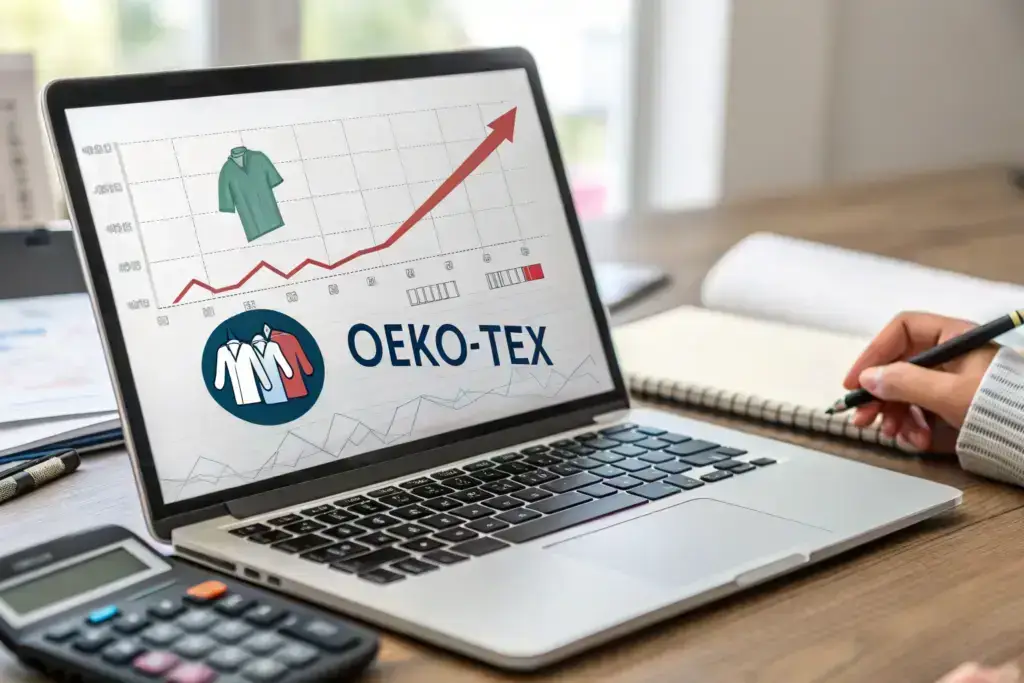
As a manufacturer deeply embedded in the activewear and kids' wear markets, I've watched the French terry jumper evolve from a basic leisure item to a wardrobe staple. But now, growth is no longer just about color trends or new silhouettes. The next phase of growth for this category is being driven by a more fundamental factor: verified safety and trust. For a brand evaluating the expansion potential of its French terry line, overlooking OEKO-TEX certification is like analyzing a car's potential without considering its safety rating—you're missing the feature that increasingly determines market access and consumer choice.
OEKO-TEX certification is essential for the French terry jumper's growth evaluation because it provides a quantifiable, third-party metric for product safety and quality integrity. This certification directly impacts key growth drivers: it enables premium pricing, facilitates entry into stricter retail channels (especially in Europe), reduces the risk of costly setbacks (like recalls), and builds the brand equity necessary for sustainable, long-term category expansion.
In today's market, growth is not just about selling more units; it's about building a more valuable, resilient product line. OEKO-TEX is the tool that makes this possible.
How Does OEKO-TEX Certification Impact Market Access and Retail Expansion?
For a French terry jumper line to grow, it needs to move beyond DTC websites and into broader wholesale and retail channels. This is where the rubber meets the road. Buyers for department stores, premium boutiques, and European retailers are not just evaluating softness and color; they are conducting compliance due diligence. A product without credible, third-party safety credentials often doesn't make it past the first filter.
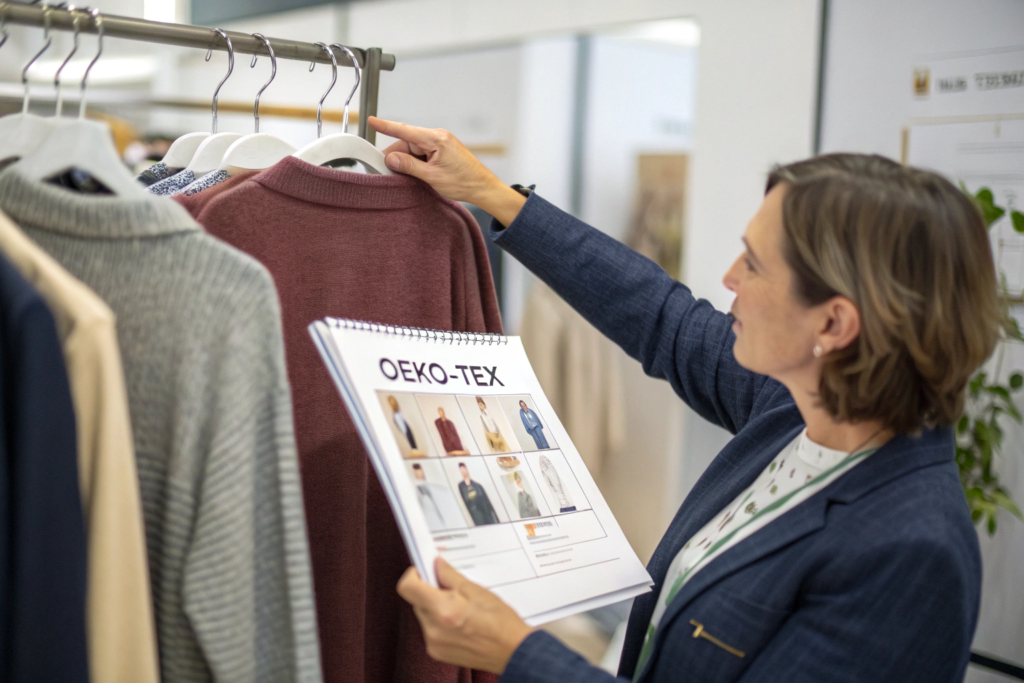
OEKO-TEX certification directly impacts market access by serving as a universal "compliance passport." It simplifies the vendor onboarding process with retailers who have stringent chemical management policies (like many in the EU and North America), often serving as a sufficient proxy for a wide range of substance restrictions. This removes a major barrier to entry and accelerates time-to-shelf for new collections.
What are the specific retailer requirements it addresses?
Major retailers and distributors are increasingly mandating or heavily favoring OEKO-TEX certified products because it de-risks their assortment. For example:
- EU Boutiques & Department Stores: They operate under strict REACH regulations. An OEKO-TEX certificate demonstrates proactive compliance.
- US Specialty Retailers: Brands like Patagonia or REI, with strong chemical footprint policies, view OEKO-TEX as a positive attribute.
- Corporate & Gift Channels: These buyers, sourcing for employee gifts or corporate merch, prioritize liability reduction. A certified product is a safer choice.
A children's wear brand we partnered with had a bestselling French terry jumper online. When they pitched to a major Scandinavian department store, the first question was about product safety certifications. Because their jumpers were produced with us under OEKO-TEX STANDARD 100, they could provide the certificate instantly. This fast-tracked the negotiation and secured the order. Without it, the conversation would have stalled or required expensive, time-consuming third-party testing. Resources like the ZDHC Gateway show how brands and retailers are converging on common standards.
How does it facilitate cross-border e-commerce growth?
For DTC brands selling internationally, customs can be a black box. Shipments can be held for random substance testing, causing delays and frustrating customers. OEKO-TEX certified goods, accompanied by their certificate, are far less likely to be flagged for such holds. This ensures reliable delivery—a critical component of customer satisfaction and repeat business. It directly mitigates the "delayed shipments leading to missed selling seasons" pain point that plagues many importers.
How Does It Transform Cost Structure into a Value-Based Pricing Model?
French terry is a competitive category. Many brands compete on price, squeezing margins. OEKO-TEX certification provides a strategic exit from this race to the bottom. It allows you to reframe the cost of safer, more responsibly made materials and processes not as an expense, but as the core of your product's value proposition.
OEKO-TEX certification transforms the cost structure by embedding verifiable safety as a value-added component. This justifies a shift from cost-plus pricing to value-based pricing. The incremental cost of certified fabrics and compliant manufacturing is no longer a margin eater; it is the documented reason why your jumper can command a 20-30% price premium over a generic alternative.
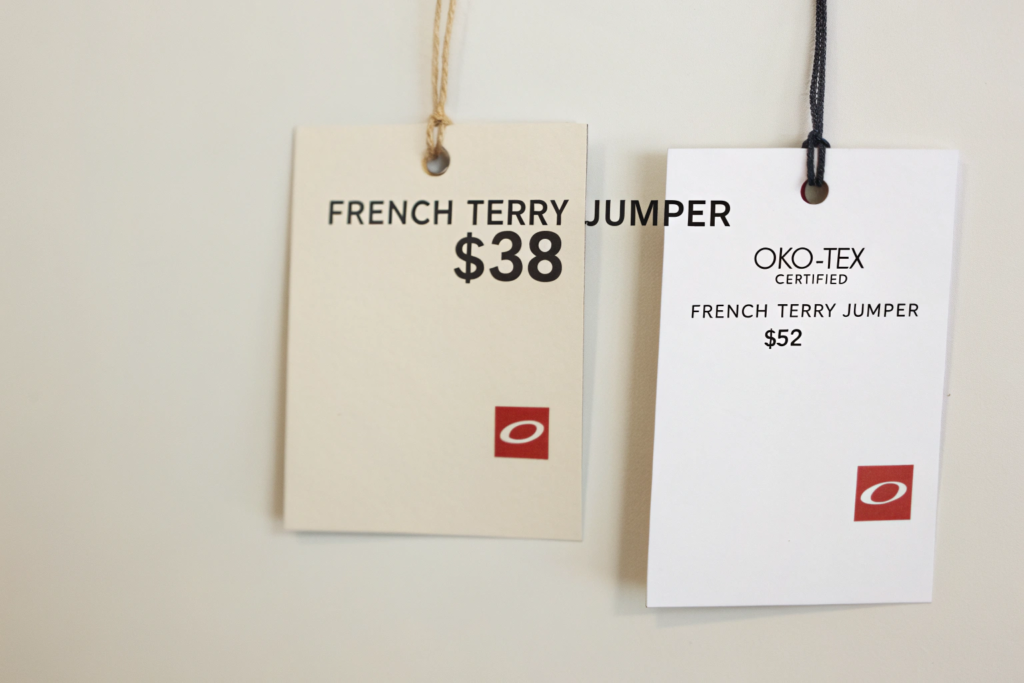
The return extends beyond the immediate higher margin. It includes:
- Brand Equity Accumulation: Each sale reinforces your brand's positioning as safe and trustworthy, which has long-term value.
- Customer Loyalty: Parents who prioritize safety are less price-sensitive and more loyal. They become repeat customers.
- Reduced Marketing Cost: The certification itself is a powerful marketing message that resonates clearly, reducing the need to explain vague "quality" claims.
Let's analyze with a hypothetical table:
| Metric | Non-Certified French Terry Jumper Line | OEKO-TEX Certified French Terry Jumper Line |
|---|---|---|
| Production Cost/Unit | $10 | $12 (due to certified fabric/process) |
| Wholesale Price | $20 | $28 (value-based premium) |
| Gross Margin | $10 (50%) | $16 (~57%) |
| Growth Driver | Price competition, volume | Brand trust, retail access, premium positioning |
| Long-Term Risk | High (vulnerable to recalls, quality issues) | Lower (systematic risk mitigation) |
This model shows how certification can actually improve margin percentage while building a more defensible market position. For a brand owner evaluating growth, this is a fundamental shift in business model.
Absolutely. The discipline required for certification reduces costs associated with quality failures. At Shanghai Fumao, our OEKO-TEX integrated system means we catch material issues in our lab before they go to production. This prevents the massive cost of reworking or scrapping finished goods—a cost that can erase the profits of an entire order. One client's previous supplier used a non-compliant dye that caused color bleeding after the first wash, leading to a full recall. The cost was catastrophic. With our system, that risk is engineered out.
How Does OEKO-TEX Certification De-Risk Long-Term Category Growth?
Growth is fragile. A single product safety incident or a negative viral review about "chemical smell" can stall a brand's momentum for years. For a staple like the French terry jumper, which relies on repeat purchases and word-of-mouth, this risk is existential. OEKO-TEX acts as a systematic risk mitigation strategy.
OEKO-TEX certification de-risks long-term category growth by providing a scientific, audited defense against the most damaging threats to a brand: safety recalls, regulatory non-compliance, and erosion of consumer trust. It ensures that as the jumper line scales, the fundamental promise of safety scales with it, protecting the brand's reputation—its most valuable asset.
How does it protect against evolving regulations?
Chemical regulations are a moving target. REACH in Europe adds new SVHCs (Substances of Very High Concern) regularly. States like California update Proposition 65. OEKO-TEX STANDARD 100 is updated annually to incorporate these changes. When you produce with a certified partner like Fumao, your product is continuously re-evaluated against the latest standard.
This means your French terry jumper line is not just compliant today; it is on a path to remain compliant tomorrow. This future-proofs your investment in the category. You avoid the sudden, massive cost of reformulating or retesting your entire product line when a new regulation hits. This proactive compliance is a hidden growth engine, allowing you to plan and execute with confidence.
How does it build consumer trust at scale?
Trust is the ultimate growth catalyst. As you scale marketing and reach new customers, you cannot personally explain your processes to everyone. The OEKO-TEX label does that for you. It's a globally recognized symbol that transcends language and marketing copy. It allows a parent in Munich, Montreal, or Melbourne to instantly understand a key benefit.
A brand that grew its French terry line through influencer marketing told us that the OEKO-TEX certification was the single most requested piece of information by the influencers' followers. It provided the "why" behind the recommendation. This built trust at the point of discovery, driving conversion rates higher than for their uncertified products. In the attention economy, a trusted symbol is a powerful shortcut.
What Are the Strategic Implementation Steps for a Brand?
Understanding the importance is one thing; implementing it is another. To leverage OEKO-TEX for growth, a brand must make strategic choices about partnership and communication from the outset.
The strategic implementation involves selecting a manufacturing partner with genuine article certification, integrating the certification story into all brand messaging, and potentially starting with a certified "hero" product within the French terry line to validate the market response before scaling the entire category.

How to choose the right manufacturing partner for growth?
This is the most critical step. The partner must have the certification and the operational depth to support your growth. Ask:
- "Is your certification for the finished article (the jumper) or just for the fabric?" (Crucial distinction).
- "Can you provide full traceability for all components (rib, thread, drawcord) in the jumper?"
- "How do you manage production to prevent cross-contamination with non-certified materials?"
- "What is your capacity for scaling certified production?"
At Shanghai Fumao, we answer these with evidence: our article certificate, our Approved Supplier List for trims, our segregated production lines for certified orders, and the capacity of our 5 production lines. We act as an extension of your quality team, which is essential for scaling with confidence.
How to launch and communicate effectively?
Don't just add a small label. Make it a core part of your product story.
- Product Page: "Built for comfort and conscience. Our French terry is OEKO-TEX certified, guaranteeing every fiber is free from harmful substances."
- Packaging: Include the OEKO-TEX logo on the hangtag.
- Content Marketing: Write a blog post or create a video about "Why we chose OEKO-TEX for our jumpers," explaining the investment in safety.
Start with your core bestseller. Measure the impact on conversion rate, average order value, and customer feedback. Use this data to justify certifying the entire line. This measured, data-driven approach de-risks the investment and provides a clear roadmap for category growth.
Conclusion
Evaluating the growth potential of a French terry jumper line without considering OEKO-TEX certification is an incomplete analysis. In the current and future market, certification is not a cost line item; it is a growth enabler. It unlocks new markets, justifies higher margins, systematically reduces existential risks, and builds the intangible brand equity that sustains long-term expansion.
For visionary brands, OEKO-TEX is the strategic lever that transforms a basic apparel category into a trusted, premium, and globally competitive collection. It aligns product development with the values of the modern consumer and the requirements of the modern retail landscape.
If you are ready to evaluate and execute a growth strategy for your French terry line that is built on a foundation of verified trust and value, the partnership begins with a certified manufacturer. At Shanghai Fumao, we are that partner. Contact our Business Director Elaine to discuss how we can help you build, certify, and scale your next high-growth apparel category. Start the conversation at elaine@fumaoclothing.com.