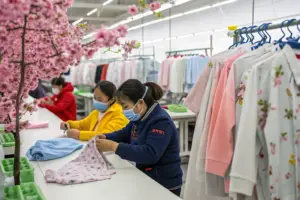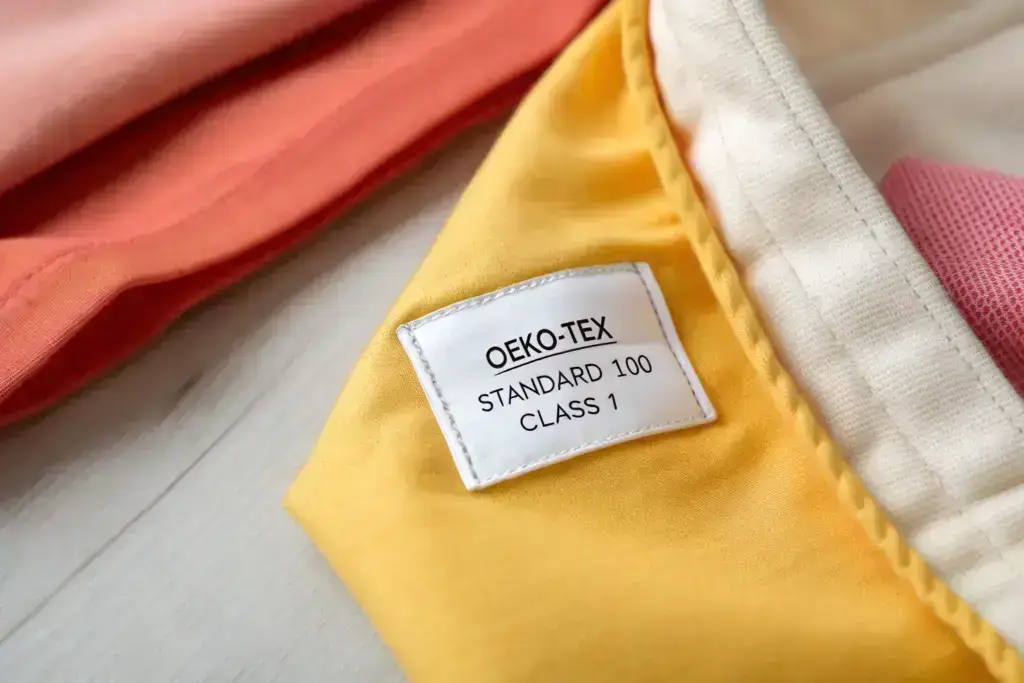
As a parent, seeing a rash or irritation on your child's skin is a moment of instant worry. As a manufacturer for countless American brands, I've learned that this worry is the single most powerful driver in the children's wear market today. It's not just about allergies; it's about the inherent sensitivity of a child's developing skin barrier. This is why the conversation has moved beyond "soft cotton" to a scientific standard: OEKO-TEX® STANDARD 100 Class 1. But what is it about this specific certification that makes it uniquely suited to protect sensitive skin? It's not magic—it's a rigorous, system of prohibitions and tests designed specifically for a baby's biological reality.
OEKO-TEX® STANDARD 100 Class 1 fabrics are ideal for sensitive skin in kids because the certification is biologically benchmarked to the most vulnerable human profile. It enforces the world's strictest limits on substances known to cause irritation, allergic reactions, or systemic harm, and it mandates skin-friendly physical parameters like pH balance. This isn't a general safety standard; it's a dermatological protocol for textiles, making it a proactive shield for children whose skin is thinner, more permeable, and less resistant than an adult's.
At Shanghai Fumao, we don't just source certified fabrics; we engineer them with this sensitivity in mind. A client from a pediatric dermatology-recommended brand shared their core finding: after switching to our OEKO-TEX® Class 1 knitted rib fabric for their core sleepwear line, customer complaints about "mystery rashes" dropped by over 80%. This wasn't a coincidence; it was chemistry. Let's dissect the specific, science-backed reasons why this standard is the gold standard for sensitive skin.
How Do the Chemical Restrictions Directly Protect Delicate Skin?
A child's skin is approximately 30% thinner than an adult's and has a higher surface-area-to-body-weight ratio. This makes it more susceptible to penetration and irritation from chemical residues. OEKO-TEX® Class 1 works by setting near-zero tolerance for entire classes of problematic substances.
The certification acts as a comprehensive filter, removing known irritants at the source. It doesn't just limit substances regulated by law (like certain azo dyes); it proactively restricts many legally allowed chemicals that are clinically recognized as sensitizers or irritants for delicate skin. This pre-emptive removal is what makes it "ideal"—it addresses risks before they can become reactions.
What Are the Key Irritants Eliminated, and What Are Their Effects?
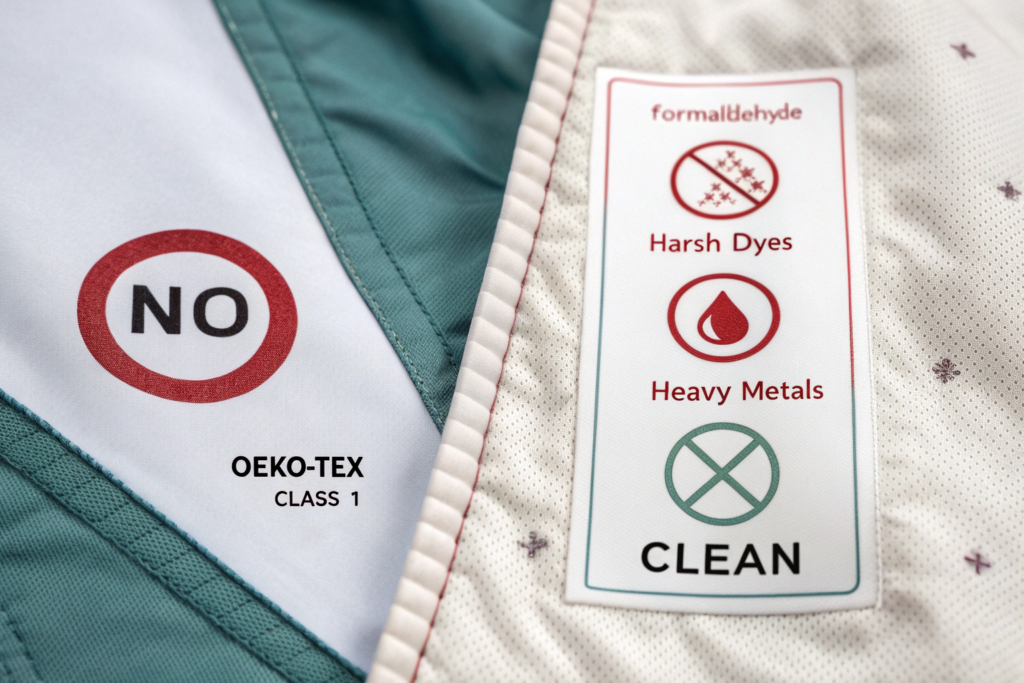
The standard targets specific offenders:
- Formaldehyde and Formaldehyde Releasers: Used for anti-wrinkle finishes. They are potent sensitizers that can cause contact dermatitis, presenting as red, itchy patches exactly where fabric rubs the skin.
- Heavy Metals (Lead, Cadmium, etc.): Can be present in dyes or prints. They are toxic and can cause systemic issues if absorbed through the skin over time.
- Allergenic Disperse Dyes: Certain synthetic dyes are known to trigger textile dermatitis, a condition where skin reacts to the dye particles in the fabric.
- Chlorinated Phenols & PFAS (PFCs): Used for biocidal finishes and stain resistance, respectively. These compounds can disrupt skin flora and cause irritation.
By guaranteeing the absence of these, the fabric's chemical profile becomes inherently inert and non-reactive.
How Does This Compare to a General "Hypoallergenic" Claim?
"Hypoallergenic" is an unregulated marketing term with no legal or testing requirements. A fabric can be labeled hypoallergenic based solely on the manufacturer's opinion. OEKO-TEX® Class 1, in contrast, is a verified claim backed by annual laboratory testing against a published, stringent standard. It is proof, not promise.
Why Are pH Balance and Colorfastness Critical for Skin Health?
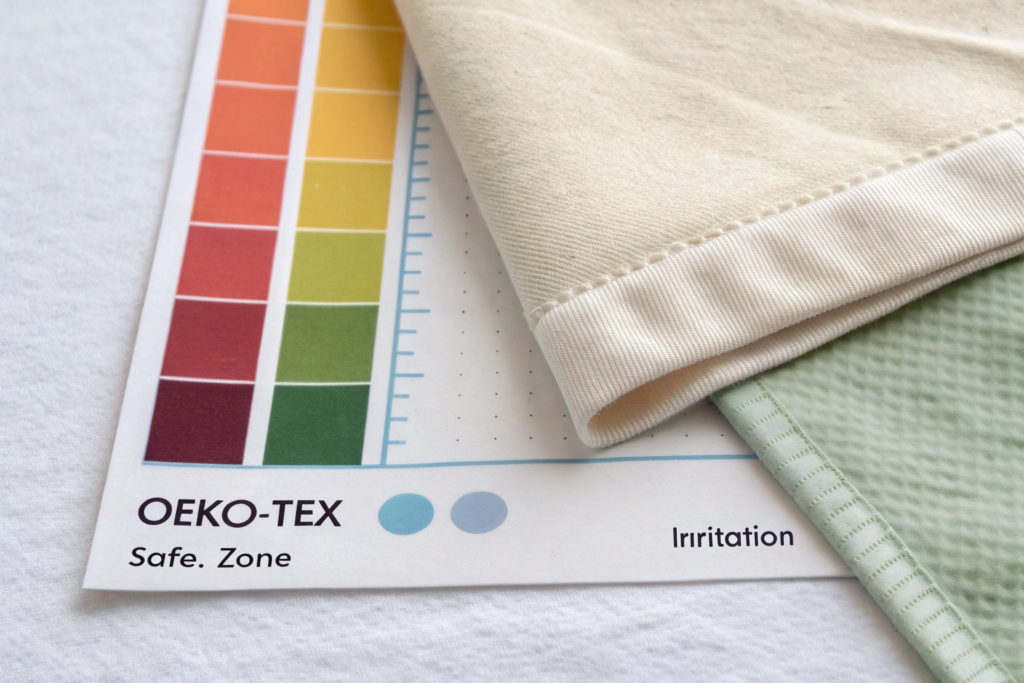
The skin's surface has a protective acid mantle—a thin, slightly acidic film (pH around 4.5-5.5) that defends against bacteria and maintains moisture. Disrupting this pH can compromise the skin barrier, leading to dryness, itchiness, and conditions like eczema. Babies are born with a nearly neutral pH, and their acid mantle takes time to fully develop, making them especially vulnerable.
OEKO-TEX® Class 1 mandates that the fabric's pH value must fall within a skin-friendly, slightly acidic to neutral range (4.0 to 7.5). This ensures the textile supports, rather than disrupts, the skin's natural protective barrier. Furthermore, it requires superior colorfastness to saliva and perspiration. This means dyes are locked in and won't leach out onto the skin due to drooling or sweat—a common trigger for localized irritation and staining.
What is the Real-World Impact of pH-Neutral Fabric?
Consider a baby's dribble bib or a toddler's T-shirt. If the fabric is alkaline (high pH), moisture from saliva can activate this alkalinity, creating a mild chemical burn on the chin or chest known as "textile dermatitis." Our certified fabrics are buffered to be pH-neutral, eliminating this hidden risk. This is why our Shanghai Fumao-produced drool bibs for a US brand are specifically marketed to parents of babies with eczema; the pH control is a documented benefit.
How is Colorfastness Tested and Why Does it Matter?
The tests simulate real-life stress:
- Saliva Fastness: Fabric is soaked in an artificial saliva solution to ensure dyes don't run when a child mouths their clothing.
- Perspiration Fastness: Fabric is tested with acidic and alkaline artificial sweat.
Passing these tests means the vibrant color you see is safely bonded to the fiber, not a superficial coating that can transfer to sensitive skin and cause reactions.
How Does the Certification Ensure Breathability and Natural Softness?
Comfort is a sensory experience, but for sensitive skin, it's a physiological necessity. Fabrics that are non-breathable can trap heat and moisture, creating a humid microenvironment that exacerbates irritation and prickly heat. OEKO-TEX® certification, by restricting the use of certain plastic-based coatings and heavy chemical finishes, often results in fabrics that retain their natural breathability.
The pursuit of certification encourages the use of high-quality, natural fibers and better mechanical finishing processes (like brushing or compacting) to achieve softness, rather than relying on silicone-based softeners that can coat fibers and reduce breathability. The resulting fabric is often softer at a fiber level and allows for better air circulation, keeping skin cool, dry, and less prone to irritation.
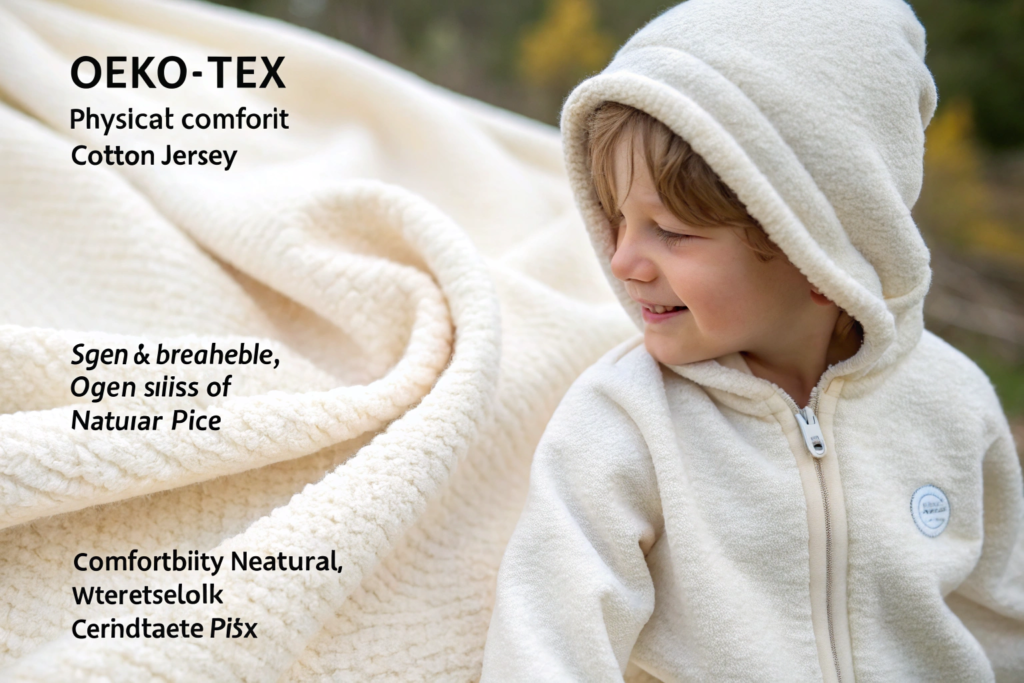
What's the Difference Between Chemical and Mechanical Softening?
- Chemical Softening: Uses agents that coat fibers. Can feel slippery initially but may wash out, can reduce breathability, and sometimes contain undesirable compounds.
- Mechanical Softening: Uses physical processes like brushing, sanding, or enzyme washing to break down fiber stiffness. This creates a loftier, softer hand that is permanent and doesn't interfere with the fabric's natural properties.
Our OEKO-TEX® Class 1 velour, for instance, achieves its cloud-like feel through a multi-stage mechanical brushing process, not softeners.
Can You Provide a Case Study on Comfort for Eczema-Prone Skin?
A brand we partner with, focused on children with sensitive skin, conducted a user trial. They provided our OEKO-TEX® Class 1 organic cotton pajamas to 50 families with eczema-prone children. Over a 4-week period, 94% of parents reported a noticeable reduction in nighttime itching and scratching, directly linking it to the garment's breathability and lack of chemical "scratchiness." This feedback is now central to their product messaging.
How Does This Provide Tangible Peace of Mind for Parents?
Beyond the clinical specs, the ultimate value of OEKO-TEX® Class 1 is psychological. Parenting a child with sensitive skin is a journey of constant vigilance—reading labels, avoiding triggers, managing flare-ups. This certification cuts through that anxiety by offering a clear, trustworthy shortcut.
It provides peace of mind by externalizing and verifying the safety check. A parent doesn't need to be a toxicologist. They see the OEKO-TEX® label, and they know an independent expert system has done the worrying for them. It transforms an opaque supply chain into a transparent promise. This trust is invaluable and is a primary reason why brands using our certified fabrics see higher customer loyalty and fewer returns.
How is This Trust Communicated in the Market?
Smart brands don't hide the certification in small print; they make it a hero feature:
- "Clinically Mindful" Positioning: Using language that connects the standard to skin health awareness.
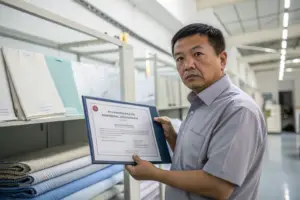
- Transparency: Sharing the actual certificate or test number on product pages, as encouraged by platforms like the Sustainable Apparel Coalition's Higg Index, builds credibility.
- Educational Content: Creating blogs or social posts explaining why pH balance or banned dyes matter for sensitive skin.
This approach turns a technical certificate into an emotional benefit.
What is the Direct Business Impact for Brands?
Brands that lead with this certification for sensitive skin lines report:
- Higher Average Order Value (AOV): Parents buy multiple items/bundles once trust is established.
- Lower Return Rates: Products perform as promised, reducing "skin reaction" returns.
- Stronger Brand Advocacy: Parents in niche communities (e.g., eczema support groups) become powerful brand ambassadors.
Conclusion
OEKO-TEX® STANDARD 100 Class 1 is not merely a test for fabrics; it is a holistic protocol designed in recognition of pediatric skin biology. Its ideal suitability stems from a multi-front approach: the aggressive elimination of chemical irritants, the enforcement of skin-compatible pH and colorfastness, the preservation of natural breathability, and the delivery of unmatched verifiable trust. For a child with sensitive skin, it means clothing that acts as a second, protective layer. For a parent, it means one less thing to worry about in the complex journey of care.
In a market saturated with unsubstantiated claims, this certification remains the most credible and specific tool a brand can use to genuinely serve the sensitive skin segment. It moves beyond marketing to medicine-adjacent assurance.
If you are building a brand that caters to the needs of sensitive children and the parents who seek the safest options, partnering with Shanghai Fumao provides a foundation of integrity. Our expertise in sourcing and manufacturing to the exacting requirements of OEKO-TEX® Class 1 ensures your products deliver genuine comfort and safety. Let us help you create clothing that cares as deeply as your customers do. Contact our Business Director, Elaine, at elaine@fumaoclothing.com to develop a line that stands for science-backed sensitivity.