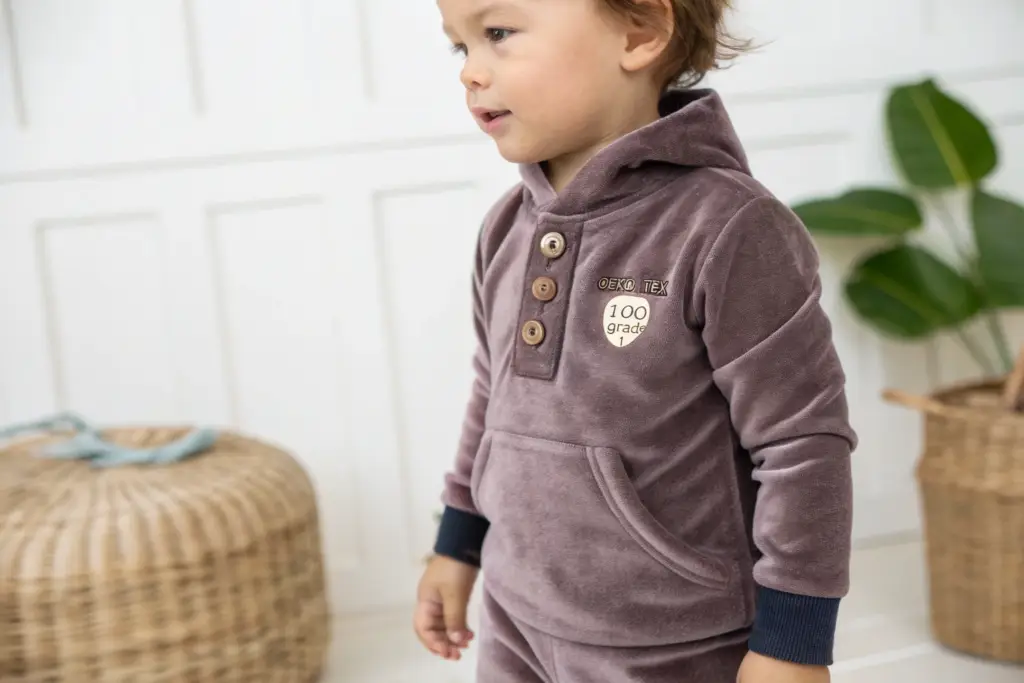
When you touch a velour jumper from our production line, you feel premium softness. But what you can't feel is the rigorous, multi-layered safety architecture that makes it compliant with OEKO-TEX Standard 100 Class 1—the world's strictest safety standard for baby textiles. Last season, a client came to us after their previous supplier's "soft" velour failed a retailer's random test for formaldehyde, a substance used in some pile-fixing resins. The result was a full recall. At Fumao, compliance isn't an afterthought; it's the first line item in our design brief. Let's pull back the curtain on the specific engineering that transforms plush velour into a certified-safe haven for a baby's skin.
Fumao's velour jumper achieves OEKO-TEX 100 Grade 1 compliance through a holistic system that controls every input and process: sourcing yarns from OEKO-TEX Class 1 certified spinners, using only approved dyes and chemical auxiliaries, applying certified non-formaldehyde pile-fixing resins, ensuring every trim component (snaps, thread, elastics) meets Class 1 limits, and subjecting the final assembled garment to accredited third-party testing that simulates real-world baby behaviors like saliva exposure.
This compliance is not a single attribute; it's the product of a controlled, documented, and audited ecosystem. Here’s how each layer builds the final guarantee.
1. Foundation: Certified Yarns and the Chemistry of Softness
The journey to a compliant jumper begins long before the fabric is knitted. It starts with the purity of the fiber.
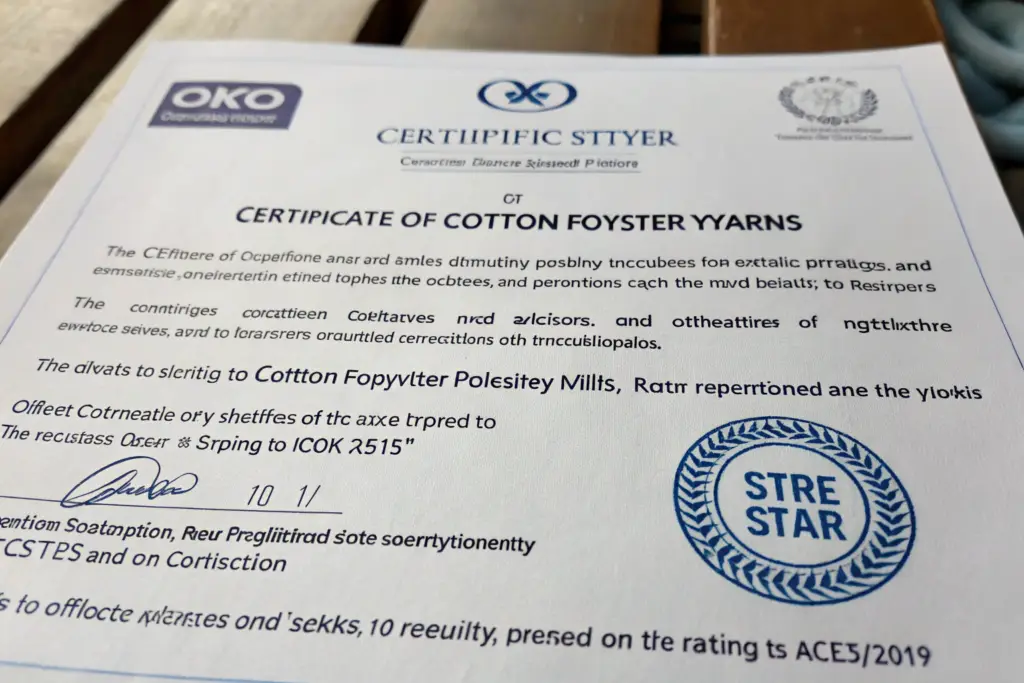
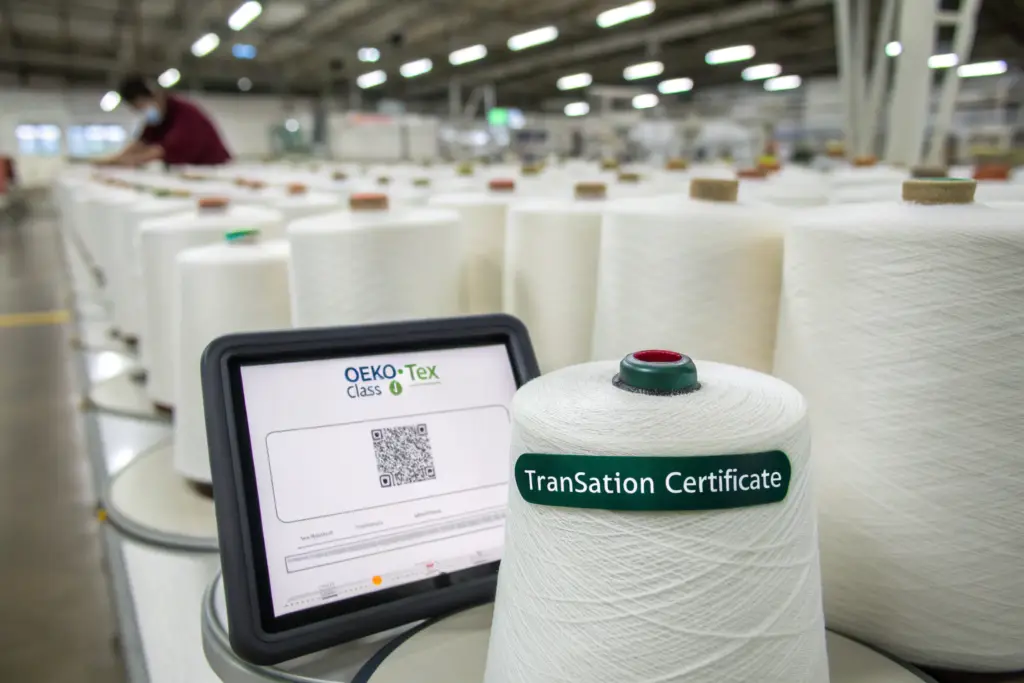
We exclusively use cotton or polyester yarns sourced from spinning mills that hold active OEKO-TEX Class 1 certification. This is verified per batch via official Transaction Certificates (TCs). These certifications confirm the raw fibers are free from pesticide residues, heavy metals, and other contaminants at the strictest infant-safe levels, establishing a clean foundation.
Why is Yarn-Level Certification Critical for Velour?
Velour is a pile fabric. The knitting and cutting process exposes the entire fiber structure. Any impurity in the base yarn could become a point of chemical release. By mandating Class 1 at the yarn stage, we eliminate risk at the source. Our procurement team audits these mills as part of our supply chain management, ensuring they also adhere to good manufacturing practices.
How Do We Achieve the Signature Softness Safely?
The luxurious hand-feel of velour comes from brushing and shearing, processes that require lubricants and softeners. We use only OEKO-TEX ECO PASSPORT certified chemical auxiliaries. These are specially formulated compounds tested for safety, ensuring that the agents that make the fabric soft do not introduce allergenic or irritating substances. This is our "Chemistry by Design" principle.
2. Process: Controlled Dyeing and the Pile-Fixing Breakthrough
Color and stability are where many velour products fail compliance. We engineer both for safety.
Our dyeing process uses only OEKO-TEX compliant colorants, free from banned arylamines and heavy metals. The critical step is pile fixation. Traditional resins can release formaldehyde. We use advanced, formaldehyde-free or ultra-low formaldehyde fixation agents that have passed the ECO PASSPORT certification. Our finishing parameters (time, temperature, pH) are tightly controlled to ensure complete reaction and no residual harmful substances.
How is Colorfastness to Saliva Guaranteed?
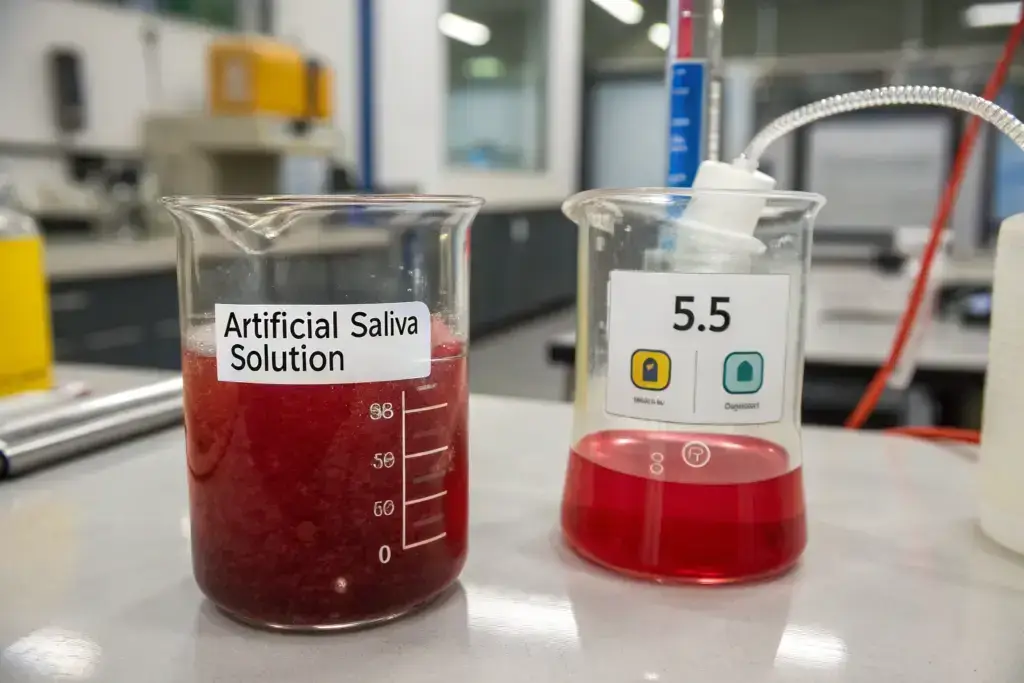
OEKO-TEX Class 1 requires brutal saliva and perspiration fastness tests. A baby will chew on their cuff. Our dyes are specifically selected and bonded using safe fixatives to prevent any color migration in wet conditions. We run in-house pre-tests on every dye lot using simulated saliva solution before the fabric is approved for production. This prevents the risk of ingestion of dyes.
What's the Role of pH Balance in Comfort?
The fabric must have a skin-neutral pH (within a strict range). An unbalanced pH can cause skin irritation. Our final washing and neutralizing process is calibrated to achieve this, ensuring the velour is not just chemically safe but physiologically comfortable against sensitive skin. This is a mandatory check in our in-house quality lab.
3. Construction: The "Full Assembly" Certification of Every Component
A jumper is a system. Certification fails if any single component is non-compliant.
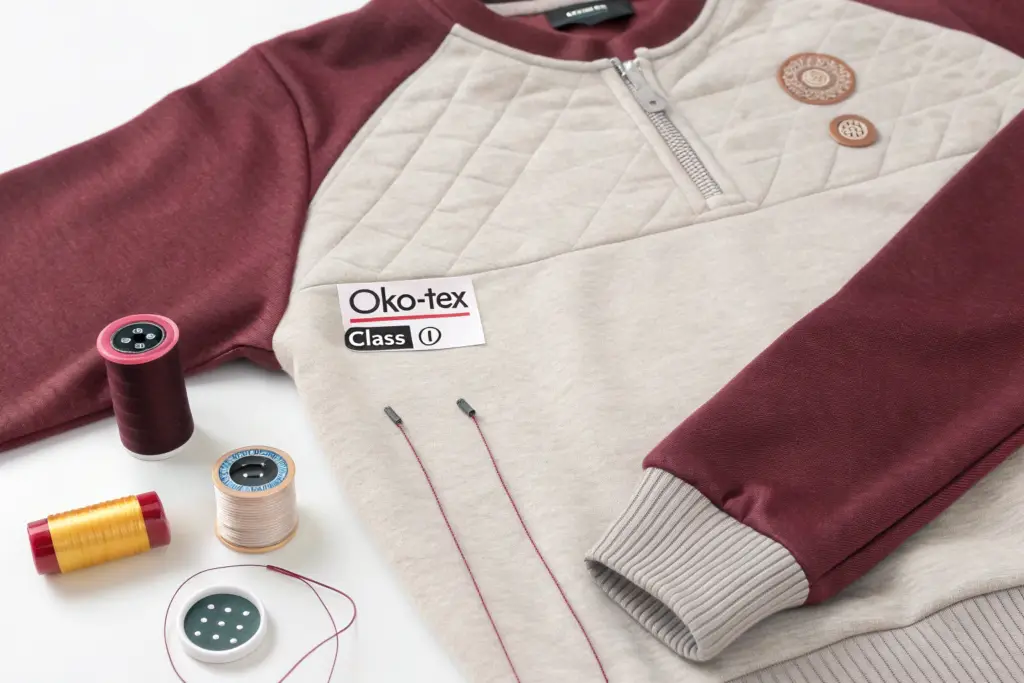
For each velour jumper style, we submit a complete component dossier for OEKO-TEX certification. This includes samples of: the velour fabric, the rib knit cuffs/waistband, the sewing thread, the plastic snaps or zipper, the care label, and any appliqués or prints. Each must carry its own supporting certification or pass testing. The final certificate is issued for the complete, assembled garment.
What are the Hidden Risks in Trims?
- Snaps/Buttons: Tested for heavy metal release (lead, cadmium, nickel).
- Elastics: Tested for allergenic disperse dyes and elasticity-retaining chemicals.
- Sewing Thread: Often polyester or cotton, must meet same dye safety standards.
- Print Inks/Embroidery Thread: Must be certified if used.
We maintain a library of pre-certified trim components. Our designers work from this "safe menu," eliminating the risk of last-minute substitution with an uncertified part that would void the entire product's certification.
4. Verification: Testing, Documentation, and Transparent Proof
The final step is proving it. We provide our clients with a transparent audit trail.
Every production batch of a certified jumper style is covered by our master OEKO-TEX certificate. We provide clients with: 1) The certificate number for online verification, 2) Transaction Certificates for key materials, and 3) Access to test reports from our accredited third-party lab (e.g., SGS, Intertek). This dossier is your insurance policy and marketing asset.
How Can You Independently Verify Our Compliance?
We empower you to check:
- Database Check: Use the certificate number we provide on the official OEKO-TEX website.
- Audit: Conduct a virtual or physical audit of our material segregation and chemical inventory.
- Sample Test: You are welcome to send a purchased sample to any lab of your choice.
This transparency is the cornerstone of our partnership with brands who cannot afford reputational risk.
What is the Role of OEKO-TEX STeP in Our Factory?
Our facility holds OEKO-TEX STeP certification for sustainable and responsible production. This means our entire manufacturing system—from wastewater treatment to chemical storage and worker safety—is audited. It provides systemic assurance that our Class 1 products are made in an environment dedicated to controlled, clean production, not just in a final test. It's the difference between a product that passes a test and a product made in a system designed to pass every day.
Conclusion
Fumao's OEKO-TEX 100 Grade 1 compliant velour jumper is more than a product. It is the physical output of a meticulously managed system that spans molecular chemistry, mechanical engineering, and supply chain ethics. Every aspect—from the spin of the yarn to the click of the snap—is governed by the strictest safety protocol for infants.
This depth of compliance is what allows your brand to make an uncompromising promise to parents. It transforms a beautiful garment into a trusted one. In the competitive world of children's wear, this is not just a feature; it is the foundation of brand integrity and consumer loyalty.
If you are looking to develop velour or any babywear where certified safety is as important as adorable design, partner with a manufacturer for whom this is a core competency. At Shanghai Fumao, we have built our reputation on this exacting standard. Let us help you create products that are as safe as they are soft. Contact our Business Director Elaine at elaine@fumaoclothing.com to begin developing your OEKO-TEX Class 1 collection.