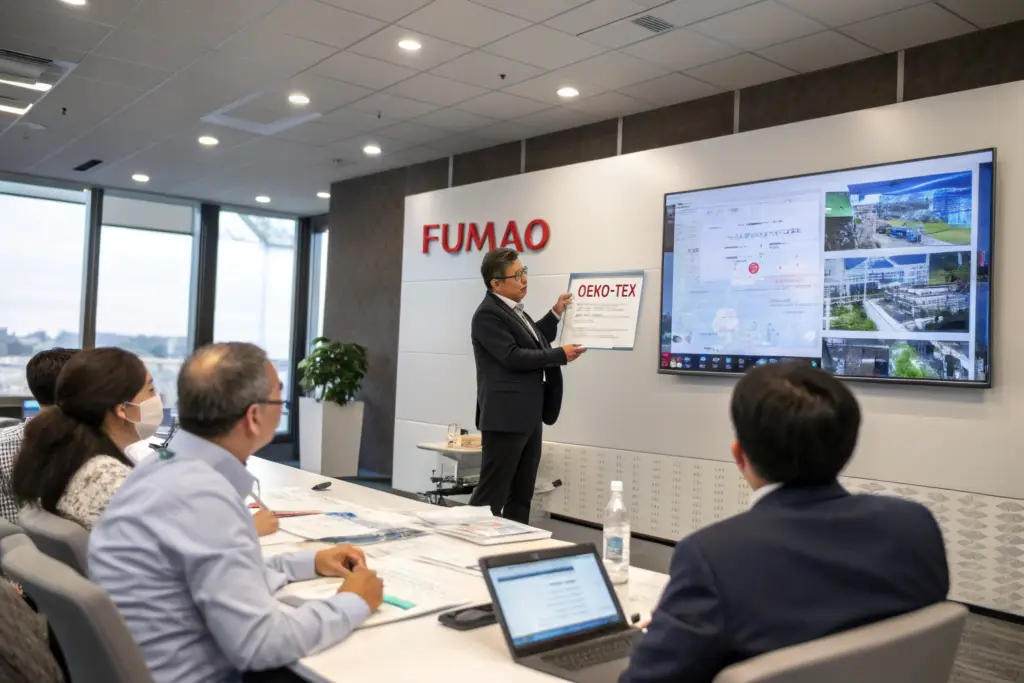
You're a procurement manager for a major apparel brand or retailer. Your job is to mitigate risk. You receive dozens of supplier profiles, all claiming OEKO-TEX certification. Yet, your team has been burned before—certificates that don't match the shipment, factories that can't explain their own processes, delays due to failed compliance checks. In this sea of claims, what separates a truly reliable partner from a risky one? For large company buyers, the reliability of a supplier's OEKO-TEX certification hinges not on the certificate itself, but on the integrated management systems, verifiable traceability, and proactive partnership that underpin it. This is where Fumao’s approach is fundamentally engineered for your scale and scrutiny.
Fumao’s OEKO-TEX reliability is built on three pillars that directly address the core pain points of large buyers: Systemic Integration (certification is woven into our operational DNA, not tacked on), Unbroken Traceability (we provide a documented chain of custody from yarn to carton), and Proactive Compliance Partnership (we act as an extension of your quality team, anticipating and solving issues before they reach you). This transforms certification from a static document into a dynamic, auditable process you can trust.
For a buyer managing millions in volume, this reliability translates to fewer audits, faster onboarding, secure supply chains, and ultimately, protected brand equity. It's the difference between checking a box and building a fortress.
Pillar 1: Systemic Integration – Beyond a Paper Certificate
For large buyers, a certificate alone is a starting point, not proof of reliability. The critical question is: How is this standard implemented and maintained day-to-day in the factory? At Fumao, OEKO-TEX compliance is not a separate department; it's embedded in our Quality Management System (QMS), influencing decisions from procurement to packing.
This systemic integration is evident in several concrete ways:
- Certification-Driven Procurement: Our sourcing team does not buy fabric based on price and hand-feel alone. The first filter in our vendor management system is compliance status. We maintain an approved vendor list (AVL) where mills and trim suppliers are categorized by their valid certifications (OEKO-TEX, GOTS, GRS) and the last audit date. A new, uncertified supplier cannot be used for a certified order without undergoing our pre-qualification and batch-testing protocol. This policy was solidified after a 2023 incident where a non-AVL thread supplier caused a small batch contamination, leading us to double down on systemic controls.
- Operational Process Controls: Our production floor is organized to prevent cross-contamination. OEKO-TEX certified fabrics are stored in designated, labeled warehouse zones. Cutting tables and sewing lines are cleaned before running certified orders, especially when switching from non-certified production. This is documented in our standard operating procedures (SOPs) and can be witnessed during virtual or physical audits.
- Staff Training and Accountability: Every team member, from warehouse staff to line supervisors, receives basic training on the importance of material segregation and handling for certified orders. Responsibility for maintaining compliance at each stage is clearly defined, making it a collective operational goal, not just a QC checkpoint.
This system ensures that reliability is procedural, not personal. It doesn't depend on one person's vigilance; it's built into the workflow, creating consistency at scale—exactly what a large buyer requires.
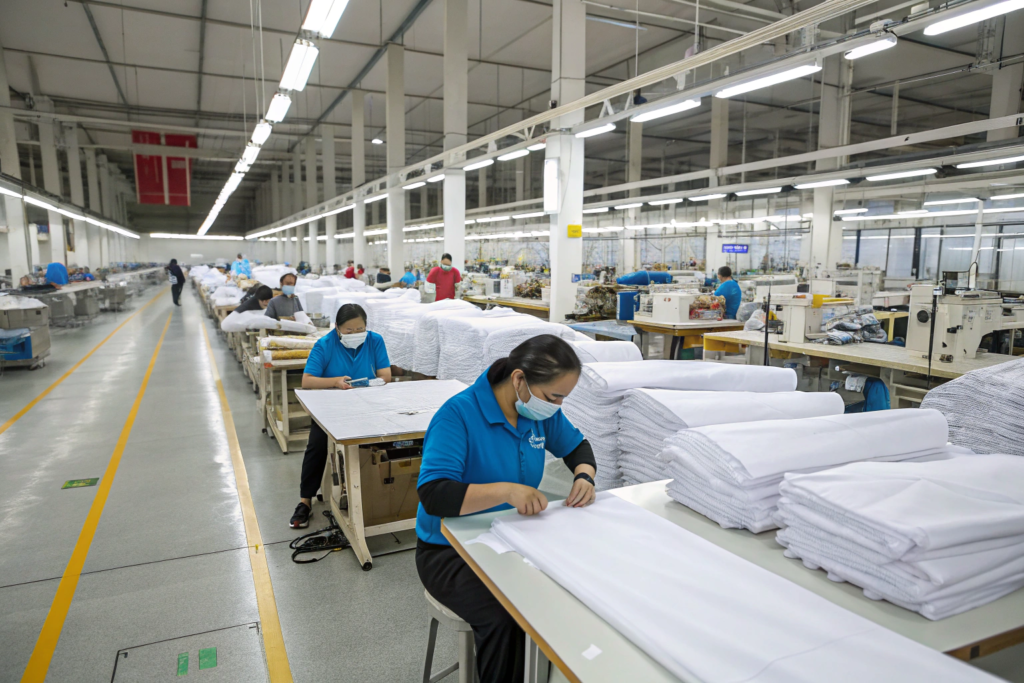
How Does This System Prevent the "Falsified Certificate" Risk?
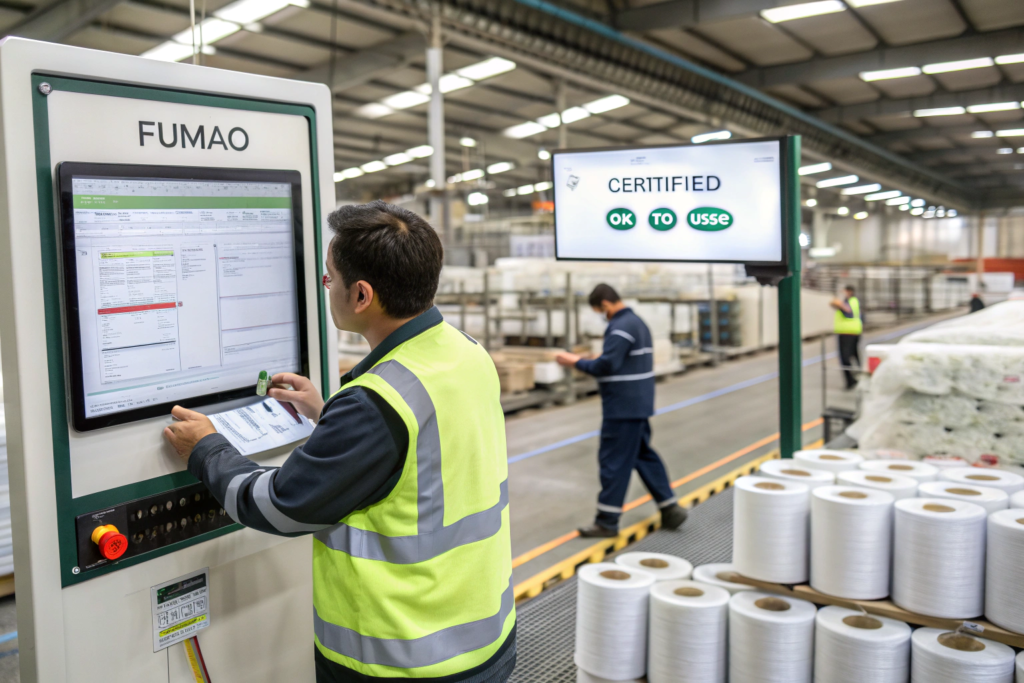
The systemic approach attacks this risk from multiple angles. First, our procurement system requires certificate numbers before purchase orders are issued to material suppliers. We then verify these in the OEKO-TEX database. Second, when certified materials arrive, our incoming QC doesn't just check quantity and color; they cross-reference the physical roll labels with the expected certificate data. A mismatch triggers an immediate hold and investigation. This two-step verification—pre-order and at receipt—creates a robust defense against fraudulent documentation.
Can You Provide Evidence of This Systemic Approach During an Audit?
Absolutely. For a recent audit by a Fortune 500 apparel brand, we didn't just present certificates. We showed:
- Digital purchase orders linked to mill certificates in our system.
- Training records for floor staff on handling certified goods.
- Logs of cleaning procedures for production lines.
- Our internal audit reports that routinely check these processes.
The brand’s auditor later commented that our level of documentation and process integration was "unusually mature for a manufacturing partner," which accelerated our approval into their tier-1 supplier list.
Pillar 2: Unbroken Traceability – From Mill to Shipping Carton
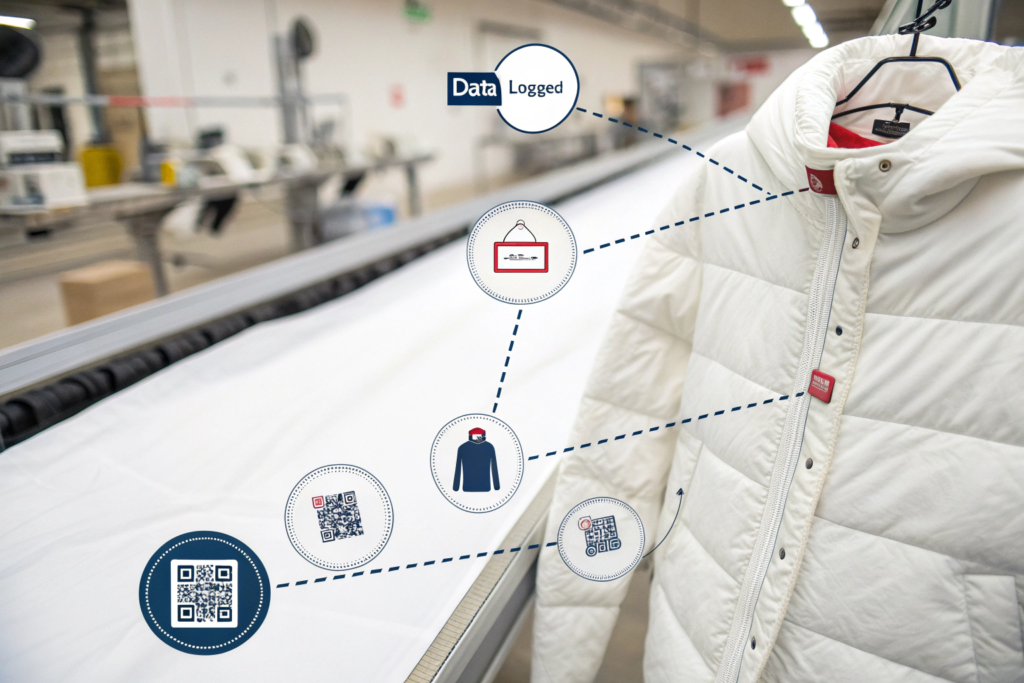
Large companies demand transparency. They need to know not just that a product is certified, but exactly which batch of certified materials was used, and have proof that only those materials were used. Fumao provides this through a digitized traceability system that creates an unbroken chain of custody.
Every certified component in a Fumao order is assigned a unique lot/batch number in our system. This includes:
- Fabric (with the mill's roll number and OEKO-TEX certificate ID)
- Sewing thread
- Labels, zippers, buttons
- Packaging materials (if required for certification)
These numbers are tracked through every stage. During cutting, the lay report notes the fabric roll numbers used. During assembly, the batch tracking continues. Finally, for each shipping carton, we can generate a packing list with traceability codes that link back to all the source documentation. This means if a retailer has a question about a specific garment from a specific store, we can trace its production history in minutes, not days.
This capability directly addresses a key buyer pain point: delayed shipments due to vague investigations. Last year, a European retailer questioned the dye lot consistency in a shipment of 5,000 certified chinos. Within two hours, we provided them with the OEKO-TEX test reports for the two fabric lots used, proving both were compliant and within acceptable color variance limits. The shipment was accepted without delay.
How Does This Traceability Support Your Due Diligence Requirements?
Increasingly, large buyers are legally obligated to conduct supply chain due diligence under laws like the German Supply Chain Due Diligence Act. Our traceability system provides the auditable data trail you need. We can supply a comprehensive dossier for any order that includes:
- Mill certificates (OEKO-TEX, etc.)
- Mill social compliance audit reports (e.g., SA8000, BSCI)
- Transportation documents linking the mill to our factory
- Our own production and QC records
- Final shipment test reports (if applicable)
This turnkey dossier reduces your internal compliance workload and provides defensible evidence of your own due diligence.
What Happens if a Component Runs Out Mid-Production?
Our traceability system includes contingency management. For critical certified components, we pre-approve and pre-test backup suppliers. If a primary zipper runs out, we don't switch to an unverified alternative. We switch to the pre-approved backup, and the new component's certificate is immediately linked to the production order in our system, maintaining the chain. This process is predefined in our SOPs to prevent panic substitutions that break compliance.
Pillar 3: Proactive Compliance Partnership – Your Extended Team
Reliability for a large buyer means a supplier doesn't just react to problems; they anticipate and prevent them. Fumao operates as a proactive compliance partner. Our technical team is trained to think from your perspective, identifying risks in your tech packs and specifications before they become costly issues.
This partnership manifests in several key services:
- Pre-emptive Tech Pack Review: Before quoting, we analyze your tech pack for potential compliance gaps. For example, if you specify a "water-repellent finish" without detail, we will ask: "Does this need to be PFAS-free? We have two OEKO-TEX compliant options: C0 DWR and a wax-based finish. Here are the performance and cost differences." This clarifies requirements upfront, avoiding post-sample redesign.
- Regulatory Intelligence Sharing: We monitor changes in global chemical regulations (REACH updates, US state laws, etc.) and brief our key clients. When California proposed new rules on phthalates in apparel, we proactively contacted all affected clients to review their material specs and suggest pre-compliant alternatives.
- Dedicated Compliance Liaison: Large accounts are assigned a dedicated QC manager who serves as a single point of contact for all certification and compliance discussions. This person understands your specific standards portal requirements and prepares documentation in your preferred format.
This approach turns compliance from a cost center into a value-added service. A major US brand sourcing activewear with us reported that our proactive catch of an uncertified print ink in their design phase saved them an estimated $80,000 in potential recall costs and production delays.
How Does Fumao Handle Third-Party or Client Audits?
We treat audits as a collaborative verification, not an inspection. We have a standardized audit preparation protocol that includes pre-audit internal reviews, dedicated staff escorts, and immediate access to all requested digital records. Our systems are built to be audited. We understand you need to satisfy your internal stakeholders and external regulators; we make that process as efficient and painless as possible for your team.
Can You Provide a Quantifiable Example of Risk Mitigation?
Quantifiable risk mitigation is our benchmark. For a global children's wear brand, we implemented a statistical process control (SPC) chart for pH testing on incoming certified fabrics. Before this, they experienced occasional lots with out-of-spec pH, causing delays. In the 18 months since implementation, the incidence of pH-related holds dropped to zero, improving their production schedule reliability by an estimated 3%. This is the kind of tangible, operational reliability that large buyers count on.
Conclusion
For a large company buyer, reliability is non-negotiable. It is the foundation of strategic sourcing. Fumao’s OEKO-TEX reliability is not a marketing claim; it is the output of a deliberately engineered system built on integration, traceability, and partnership. We understand that your trust is earned through consistent, transparent, and proactive action that protects your brand, your timelines, and your bottom line.
Choosing Fumao means selecting a partner whose compliance infrastructure matches the complexity and scale of your operations. It means moving from managing supplier risk to leveraging supplier capability as a competitive advantage.
Are you ready to partner with an OEKO-TEX certified manufacturer whose systems are designed for the scrutiny of the world's leading brands? Contact our Business Director, Elaine, at elaine@fumaoclothing.com to schedule a capabilities presentation and see our management systems in action. Visit Shanghai Fumao to learn how we build reliability into every stitch, for every major buyer.