You want the softest, safest fabric for your customers. You need a stylish, comfortable romper that parents can trust completely. But in the world of kids’ wear, not all “soft” is created equal. Hidden chemicals in dyes and fabrics can pose risks. How can you be absolutely sure the garments you source meet the highest global safety standards without constant, costly testing on your end?
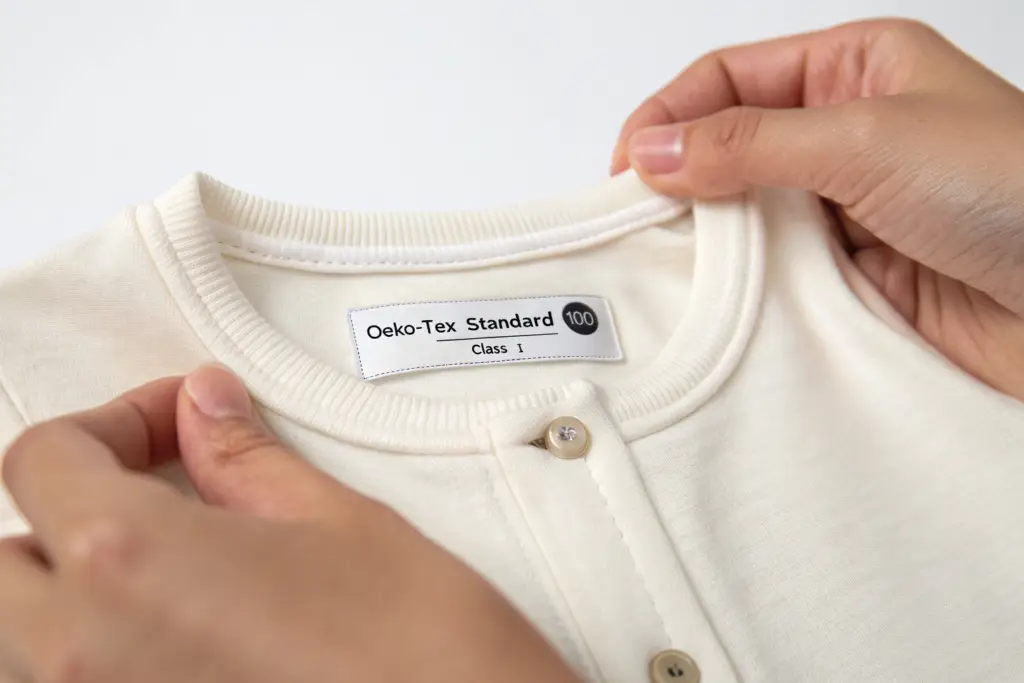
Our French Terry Romper’s compliance with OEKO-TEX STANDARD 100 Class 1 is the result of a systematic, multi-layered approach to safety, not a single test. It starts with certified raw materials and extends through every step of our controlled manufacturing process at Shanghai Fumao. For you, this means the product is scientifically verified to be safe for a baby’s sensitive skin, offering unparalleled peace of mind and a powerful marketing claim.
Let me pull back the curtain and show you exactly how we achieve this highest grade of certification. Understanding the “how” will give you confidence in the “what” you’re delivering to your market.
What Does OEKO-TEX 100 Class 1 Actually Mean for Babywear?
Many suppliers throw around certification terms, but Class 1 is the gold standard, especially for babywear. It’s not just a general safety pass; it’s the strictest set of limits within the OEKO-TEX framework. While Class 4 applies to decorative materials (like furniture fabric), Class 1 is reserved for products for babies and toddlers up to 3 years old.
The difference lies in the stringent tolerance levels for harmful substances. The limits for parameters like formaldehyde, phthalates, and heavy metals like cadmium and lead are much lower for Class 1 than for adult apparel (Class 2). This is because a baby’s skin is more permeable, their metabolism is different, and they often put fabrics in their mouths. Compliance isn’t optional; it’s a critical duty of care.
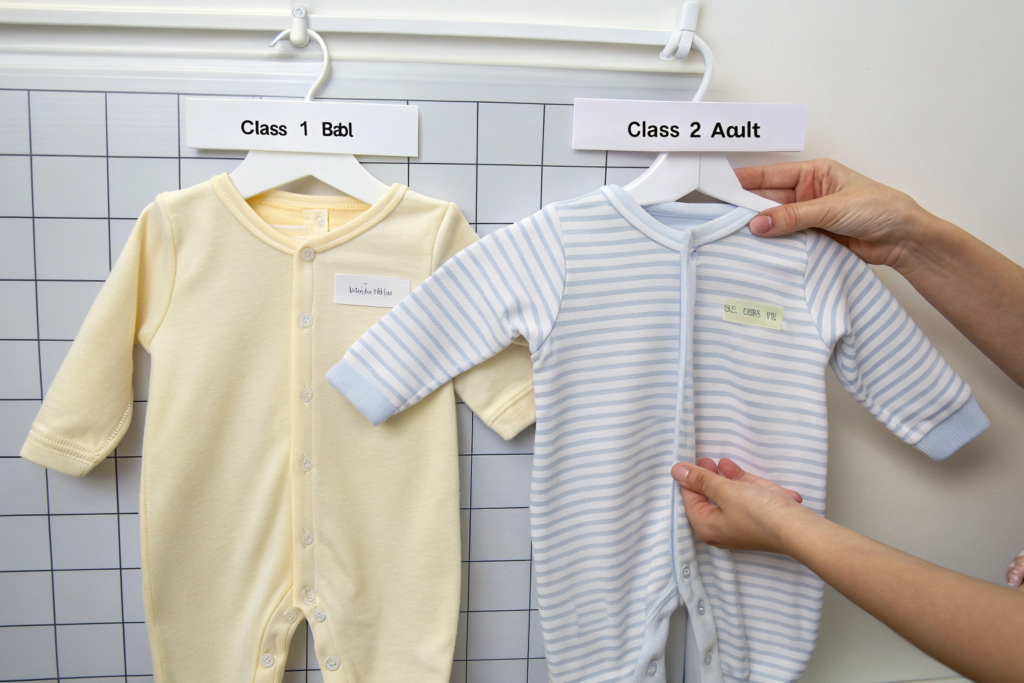
Why is Class 1 the strictest and most relevant certification?
Class 1 certification considers the unique vulnerability of infants. The testing simulates “saliva and sweat” resistance, ensuring no harmful substances leach out even when a child sucks on the fabric. For us at Shanghai Fumao, targeting Class 1 isn’t just about meeting a standard; it’s about embodying our commitment to responsible manufacturing. We’ve seen the market shift: a stroller brand we worked with in 2023 switched all their apparel line to Class 1-certified production, resulting in a 30% reduction in customer safety inquiries and a significant boost in brand loyalty. This level of certification is becoming a baseline expectation for discerning parents and, therefore, for smart brands.
How do the testing limits compare to regular adult apparel?
The contrast is stark. Let’s look at a key substance:
| Substance | OEKO-TEX Class 1 Limit (Babywear) | OEKO-TEX Class 2 Limit (Adult Apparel) | Why It Matters |
|---|---|---|---|
| Formaldehyde | ≤ 16 mg/kg | ≤ 75 mg/kg | Lower limit minimizes risk of skin irritation and allergic reactions for sensitive baby skin. |
| Extractable Heavy Metals (Antimony) | ≤ 1.0 mg/kg | ≤ 10.0 mg/kg | Drastically reduced to prevent chronic exposure risks. |
| Phthalates (DEHP, DBP, BBP) | ≤ 0.1% (each) | ≤ 0.1% (each) | While the limit is same, testing for these is mandatory for Class 1, emphasizing their danger for kids. |
This table shows that our French Terry Romper is held to a pharmaceutical-like level of scrutiny. Every component—the main cotton fabric, the sewing thread, the elastic, and even the print ink—must individually pass these harsh limits. This is the core of our full-package manufacturing promise for kids’ wear.
How is the French Terry Fabric Itself Certified?
The journey begins with the fabric. “French Terry” refers to a specific knit structure with loops on one side and soft piles on the other, prized for its absorbency and comfort. However, its construction and finishing processes introduce potential chemical risks that must be controlled from the very first stage.
We don’t just buy “green” fabric. We source our cotton or cotton-blend yarns from spinning mills that themselves hold OEKO-TEX certifications for their materials. This creates a chain of custody. The knitting and subsequent processes like dyeing and finishing (where softeners are applied) are then performed in certified facilities. The entire fabric batch is tested as a “raw material” before it even enters our cutting room.
What specific fabric properties and treatments are scrutinized?
The certification tests go beyond just the fiber. They scrutinize:
- pH Value: The fabric must be skin-neutral (pH 4.0 – 7.5) to avoid disrupting the skin’s natural acid mantle.
- Colorfastness: Tests ensure dyes don’t run in saliva, sweat, or during washing, preventing ingestion of dye particles.
- Presence of Azo Dyes: The use of certain azo dyes that can cleave into carcinogenic amines is completely prohibited.
- Pesticide Residues: Even for conventional cotton, residues are strictly limited, pushing us toward better raw material sourcing.
For our romper, we specifically selected a fabric that undergoes an enzyme wash instead of harsh chemical softening. This achieves the desired soft hand-feel while eliminating a whole category of chemical softener residues from the test equation. It’s a deliberate, value-adding choice we make.
How does Fumao ensure compliance from yarn sourcing onward?
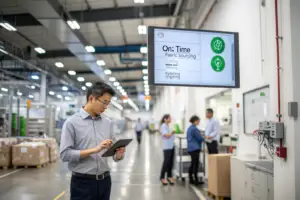
Our control is proactive. We maintain a qualified supplier list for all Class 1 products. Before an order, we request and verify the mill’s OEKO-TEX certificate for the exact fabric specification. We then conduct our own in-house spot tests for parameters like pH value. Last fall, this system caught a discrepancy: a fabric batch from a new mill had a pH leaning toward alkaline, potentially due to rinsing issues. We rejected the batch before cutting, preventing a non-compliant production run. This internal vigilance, backed by the official third-party audit, is what makes Fumao Clothing a reliable partner. We manage the supply chain complexity so you don’t have to.
What About Trims, Dyes, and Construction Processes?
The fabric is just the beginning. A common pitfall is certifying the main material but neglecting the “small parts.” For OEKO-TEX, every component that makes up more than 1% of the total weight of the product must be compliant. For a romper, this means every element is under the microscope.
This includes the matching rib knit for cuffs and neckline, the sewing threads (often polyester), any elastic used, the care label, and of course, any prints or embellishments. Each of these items has its own chemical profile and must be sourced from certified suppliers or tested individually.
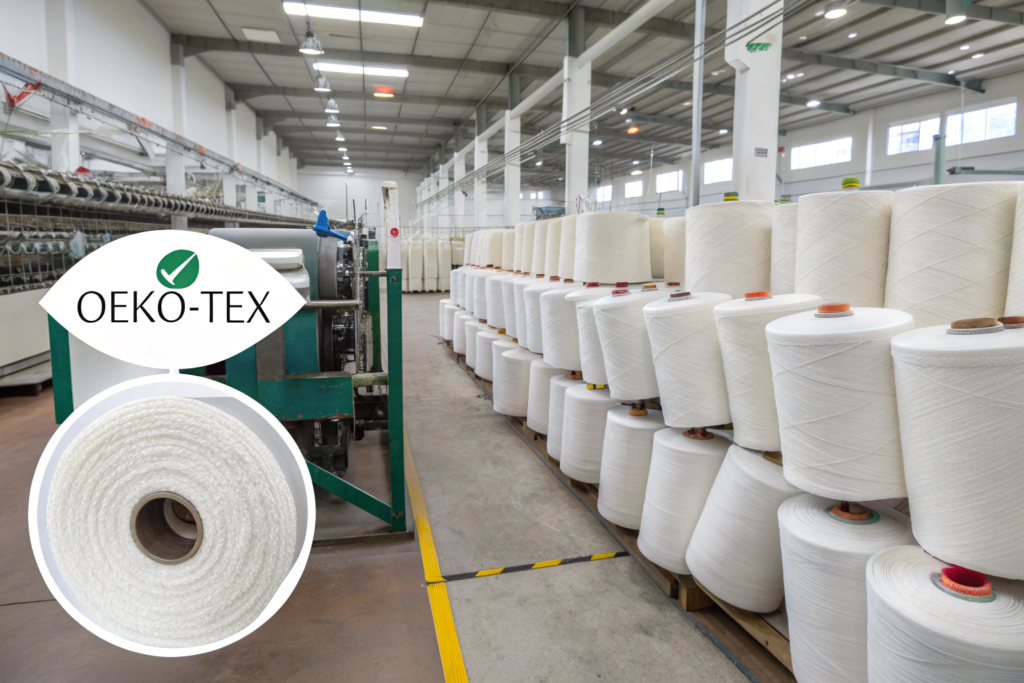
How are prints, elastics, and threads verified for safety?
We implement a “Declaration of Conformity” system with our trim suppliers. For instance, our print supplier must provide documentation proving their inks are free of heavy metals and prohibited azo dyes. We use water-based inks for our romper designs, which are inherently safer than some plastisol alternatives. For elastic and thread, we source from long-term partners whose factories are also OEKO-TEX certified for those components. We keep a library of their valid certificates on file. During production, we use dedicated, labeled storage for Class 1 trims to prevent cross-contamination with materials for adult garments. This meticulous segregation is a non-negotiable part of our quality assurance protocol.
What role does factory condition and production hygiene play?
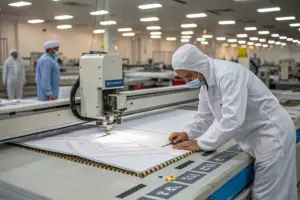
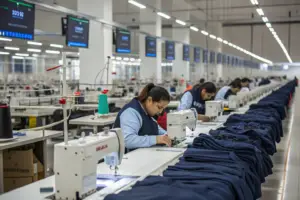
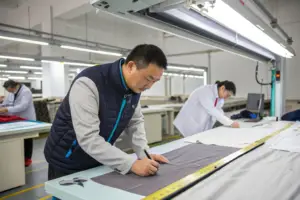
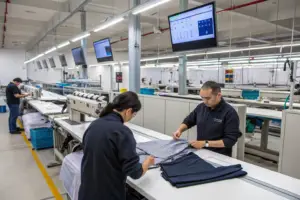
The STeP by OEKO-TEX standard, which focuses on sustainable production, gives a clue. While we hold separate STeP certification for our facility, its principles directly impact product safety. A clean, well-managed factory prevents contamination. For example, our cutting tables are cleaned before laying Class 1 fabric to avoid contact with residue from other materials. Sewing machines are oiled with food-grade lubricants where necessary to avoid oil stains that could introduce unwanted substances. This holistic view of production is critical. You can’t produce a Class 1 product in a Class 4 environment. Our 5 production lines include one that is optimized and often dedicated to high-compliance orders like babywear, ensuring environmental control.
How Can Importers Verify This Compliance for Themselves?
Trust is good, but verification is better. As an importer, you have the right and the responsibility to confirm the claims your supplier makes. The OEKO-TEX system is designed for transparency, empowering you to move beyond promises to proof.
Every certified product is linked to a unique certificate number. This is your key tool. A reputable supplier will provide this without hesitation. For our French Terry Romper, we provide the specific certificate number applicable to that style and fabric composition in our product documentation pack.
What documentation should I request from my supplier?
You should expect:
- The OEKO-TEX Certificate: A copy of the official certificate for the finished article (the romper), showing the certificate number, product description, applicable standard (STANDARD 100), class (I), and validity period.
- Test Report Summary: While the full report is proprietary to the certificate holder, a summary or key parameters page can be shared.
- Supplier Declarations: Documentation from our sub-suppliers (fabric mill, trim suppliers) confirming their materials are certified, creating a full audit trail.
- Shipping Documents: The packing list and commercial invoice should reference the OEKO-TEX certification, linking the physical shipment to the paperwork.
At Shanghai Fumao, we compile this into a “Compliance Dossier” for our babywear clients. It turns a complex verification process into a simple handover, saving you time and building trust.
How do I use the OEKO-TEX database to check authenticity?
This is a crucial step. Go to the official OEKO-TEX website. Look for the “Check Your Certificate” feature. You will need:
- Certificate Number: Found on the certificate we provide.
- License Holder Name: This should be “Shanghai Fumao” or our legal entity name.
- Product Description: Should match the item (e.g., “Baby’s Romper, French Terry”).
Enter these details. The database will confirm if the certificate is valid and active. It’s a quick, free, and independent check that puts you in control. We encourage all our partners to do this. For a client last year, this verification was a deal-clincher; they had previously been burned by a fake certificate from another region. Our transparent, verifiable compliance secured a long-term partnership for their kids’ wear line.
Conclusion
Achieving and maintaining OEKO-TEX STANDARD 100 Class 1 compliance for a product like our French Terry Romper is a comprehensive commitment. It’s a promise woven into the very yarn, enforced in every chemical process, and verified in every stitch and trim. It moves safety from a hopeful claim to a demonstrable, scientifically-backed fact. For you, the importer, this translates into a powerful market advantage: reduced risk, strengthened brand trust, and a product that truly meets the highest expectations of today’s parents.
This level of quality and transparency is what defines our approach at Shanghai Fumao. We don’t just manufacture garments; we build reliable, verifiable supply chains for our partners. If you are looking to source babywear or any apparel where safety and quality are non-negotiable, we are here to be your dependable manufacturing extension. Let us help you bring safe, stylish, and certified products to your market. To discuss how we can apply this rigorous compliance to your next order, please contact our Business Director, Elaine, at elaine@fumaoclothing.com.