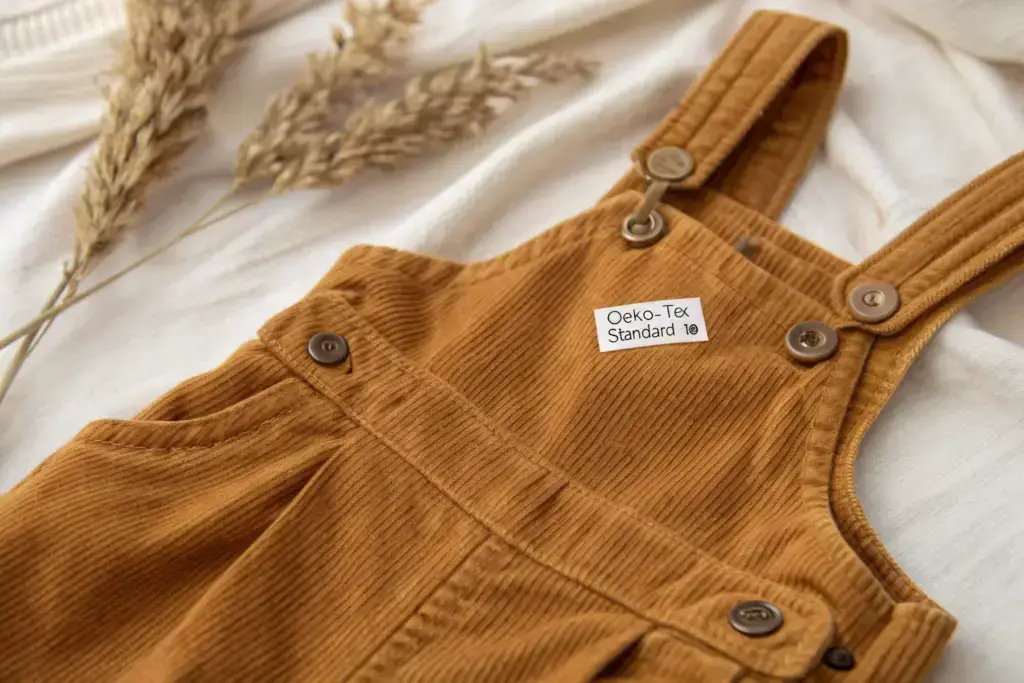
As a manufacturer, I hear from brands every day. They love the look of corduroy for fall kids' wear. The texture is rich, the X-strap design is trendy. But then comes the worry: "Is it safe? Will it irritate sensitive skin? Can I trust my supplier on this?" These are not small questions. One failed product can damage a brand for years. Choosing a corduroy X-strap romper with OEKO-TEX certification is not just a style choice; it's a fundamental business safety decision.
Corduroy X-strap rompers with OEKO-TEX certification are a safe choice for brands because the certification provides a science-backed, independent guarantee that every component—from the corduroy fabric and dyes to the straps, snaps, and thread—is free from harmful levels of over 100 regulated and unregulated substances. This mitigates the major risks of recalls, customs holds, and customer safety complaints, protecting both the child and the brand's reputation.
The safety goes beyond what the eye can see. It's in the chemistry of the fabric, the safety of the color, and the integrity of every small part. For a brand owner, this translates to sleep-filled nights and a stable bottom line.
How Does OEKO-TEX Certification De-Risk Corduroy Production?
Corduroy is a complex fabric. It's typically a cotton base with cut pile ribs (the wales). The production involves heavy dyeing, brushing, and sometimes finishing chemicals to achieve that soft, durable feel. Each step introduces potential risks. A brand from Colorado once sourced cute corduroy pinafrees elsewhere. They arrived with a strong chemical smell, and a spot test revealed high pH levels. The entire shipment had to be aired out and re-tested, missing their key launch window.
OEKO-TEX certification de-risks corduroy production by enforcing strict, verifiable controls at every stage of the supply chain. It transforms subjective assurances like "our fabric is safe" into objective, testable facts. For brands, this means the variable risks of corduroy—from allergenic dyes in the colored wales to harmful residues from finishing agents—are systematically eliminated before production even begins.
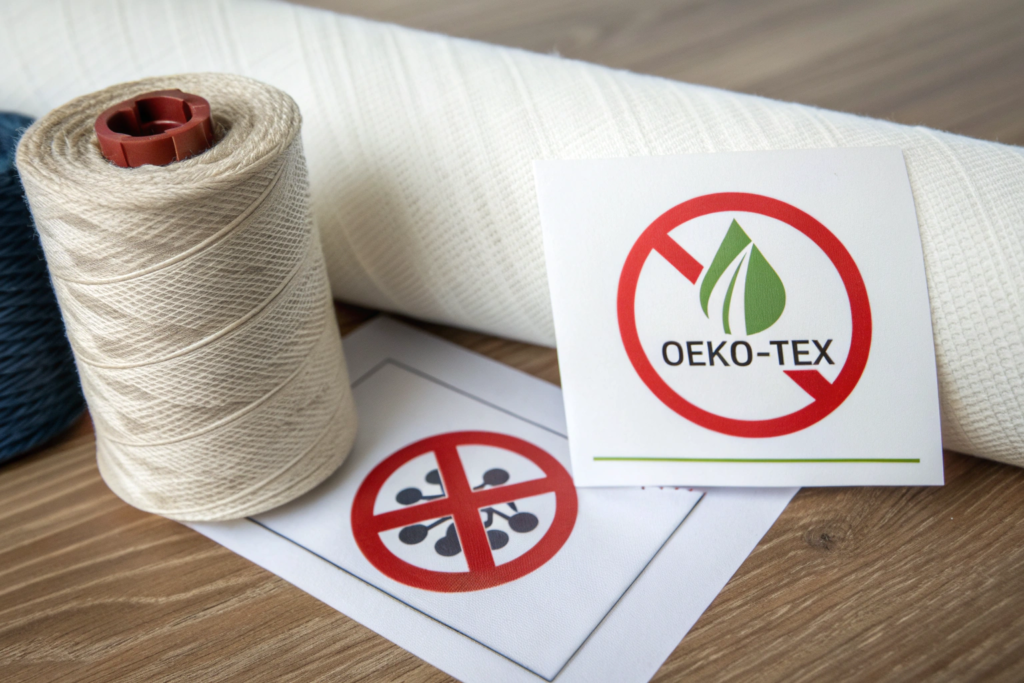
What specific corduroy hazards does OEKO-TEX test for?
The testing is exhaustive and specifically relevant to corduroy's structure and common treatments:
- Colorant Safety: The vibrant colors of corduroy come from dyes. OEKO-TEX tests for banned azo dyes that can release carcinogenic amines, and for heavy metals like cadmium, lead, and chromium VI used in some pigments.
- pH Value: Skin has a natural, slightly acidic pH. Corduroy that is too alkaline (high pH) from improper washing or finishing can strip the skin's natural oils, causing irritation, dryness, or eczema. OEKO-TEX mandates a skin-friendly pH range.
- Formaldehyde: Often used in finishes to prevent wrinkling or shrinkage. It's a known skin irritant and allergen. OEKO-TEX sets limits far stricter than many national laws.
- Pesticide Residues: For cotton-based corduroy, residues from cotton farming are tested.
- Volatile Compounds & Odor: That "new clothes smell" can be harmful VOCs. The certification includes stringent odor tests.
At Shanghai Fumao, our process starts long before the fabric reaches the cutting table. We source our corduroy from OEKO-TEX certified mills, but we don't stop there. We perform our own incoming lab checks, focusing on pH and formaldehyde for every new batch. This dual-layer verification caught an issue last season where a mill's finishing process had changed slightly, pushing the pH to the upper limit. We worked with them to correct it before the fabric entered our production for a major client's X-strap romper line. This is proactive de-risking in action. Resources from the OEKO-TEX Association detail all test parameters.
How does certification prevent supply chain surprises?
The "X" in X-strap romper isn't the only variable. Think about all components: the corduroy fabric, the interlining inside the straps, the polyester thread, the plastic snaps or metal buckles, and any care label printing ink. A non-certified supplier might change a snap vendor to save $0.001 per unit, introducing a phthalate-ridden plastic.
OEKO-TEX STANDARD 100 requires article certification. This means the finished, salable romper is tested as a whole. At our factory, this forces an integrated, transparent supply chain:
- Approved Supplier List: Every component supplier must provide valid OEKO-TEX certification or pass our commissioned lab tests.
- Batch Documentation: We track lot numbers for every material.
- No Unauthorized Substitutions: Our production managers cannot swap in a cheaper, unapproved thread mid-run.
This system eliminated the "surprise" for a boutique brand we work with. Their previous supplier used a non-compliant elastic in the back of a romper, which was only discovered during a random retail audit in Europe. The cost of destroying that inventory was catastrophic for their small business. With our certified process, they have the paperwork and peace of mind for every single component. The Consumer Product Safety Commission (CPSC) enforces strict standards in the US, making such documentation critical.
Why is the X-Strap Design Particularly Dependent on Safe Components?
The X-strap design is charming and functional, allowing for adjustability. But from a manufacturing and safety perspective, it introduces more points of potential failure than a simple slip-on style. Each strap is a mini-assembly of fabric, interfacing, stitching, and hardware. More components mean more complexity and more risk points that need to be managed.
The X-strap design is particularly dependent on safe components because it increases the surface area and number of parts in direct, prolonged contact with a child's skin (shoulders and chest). It also incorporates hardware like buckles or snaps that have their own chemical composition risks. A failure in any single component compromises the entire garment's safety, making holistic certification non-negotiable.
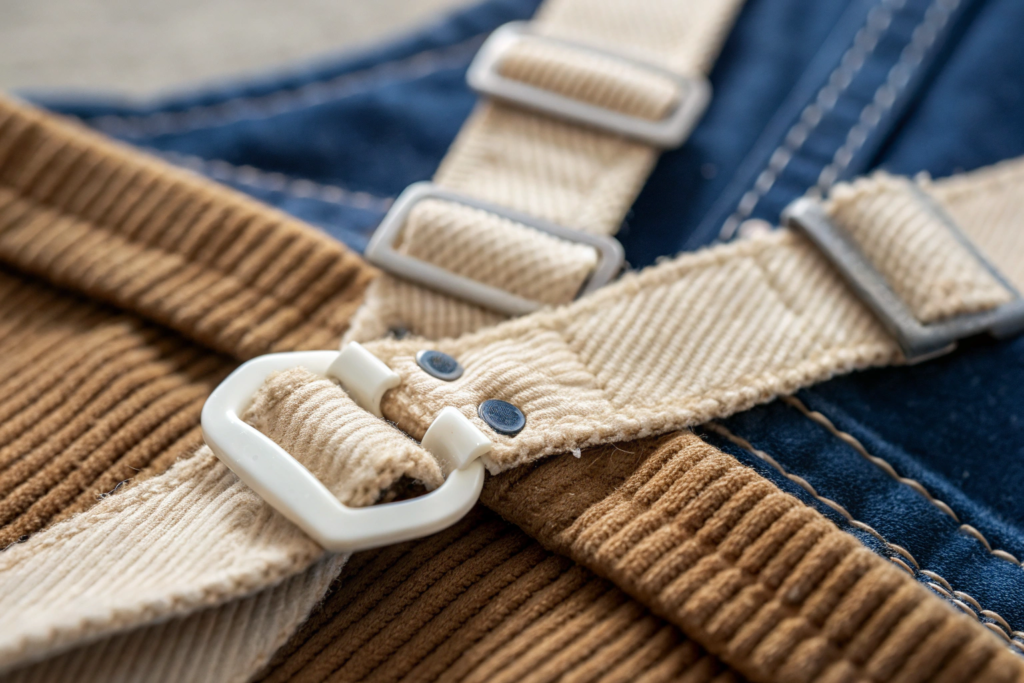
Let's break down a typical X-strap:
- Fabric & Interfacing: The corduroy outer is backed with an interlining for structure. This interlining is often a fused material. The adhesives used in fusing can contain harmful solvents or formaldehyde.
- Thread: The polyester thread used for top-stitching the straps is dyed. Again, the dye must be free of harmful substances.
- Hardware: Plastic adjuster buckles or metal snap buttons. Plastics may contain phthalates (softeners) or heavy metals like lead used as stabilizers. Metal snaps can contain nickel, a common allergen.
We learned this the hard way early on. For a client's pilot order, we sourced beautiful corduroy and designed perfect straps. However, the D-ring buckles we initially sourced, while visually perfect, failed our in-house heavy metal screening test for lead content. They were from an unverified vendor. Because our OEKO-TEX protocol demanded component pre-approval, we caught this before production. We switched to a certified buckle supplier. The delay was two days; the alternative could have been a two-month recall nightmare. This experience is why at Shanghai Fumao, we maintain a library of pre-certified trims for styles like X-strap rompers.
How does certification ensure durability and safety during use?
Safety isn't just about chemistry; it's also about physical safety during wear. OEKO-TEX tests for colorfastness to perspiration and saliva. For an X-strap romper, a teething baby will chew on those straps. If the dye isn't fast, it can transfer to the child's mouth. The certification ensures this won't happen to a harmful degree.
Furthermore, the discipline of certification often correlates with higher general quality control. A factory meticulous enough to manage chemical compliance is usually meticulous about physical construction. We perform tensile strength tests on strap attachments as part of our internal QC, ensuring those cute straps are also durable. This holistic approach to "safety" – both chemical and physical – gives brands a complete package. Information on physical safety standards for children's clothing from organizations like ASTM International complements chemical certification.
Can OEKO-TEX Certification for Rompers Support Higher Brand Value?
Brands are not charities; they need to make money. The cost of OEKO-TEX certified corduroy and components is higher. The question from savvy buyers like Ron is always: "Can I get this money back?" The answer lies in moving the conversation from cost to value. A certified romper isn't just a product; it's a brand asset.
Yes, OEKO-TEX certification for rompers can strongly support higher brand value. It provides the foundational story for premium positioning, allowing brands to authentically market safety, responsibility, and quality. This justifies a higher retail price, attracts discerning customers, and builds long-term brand equity that protects against low-price competition.
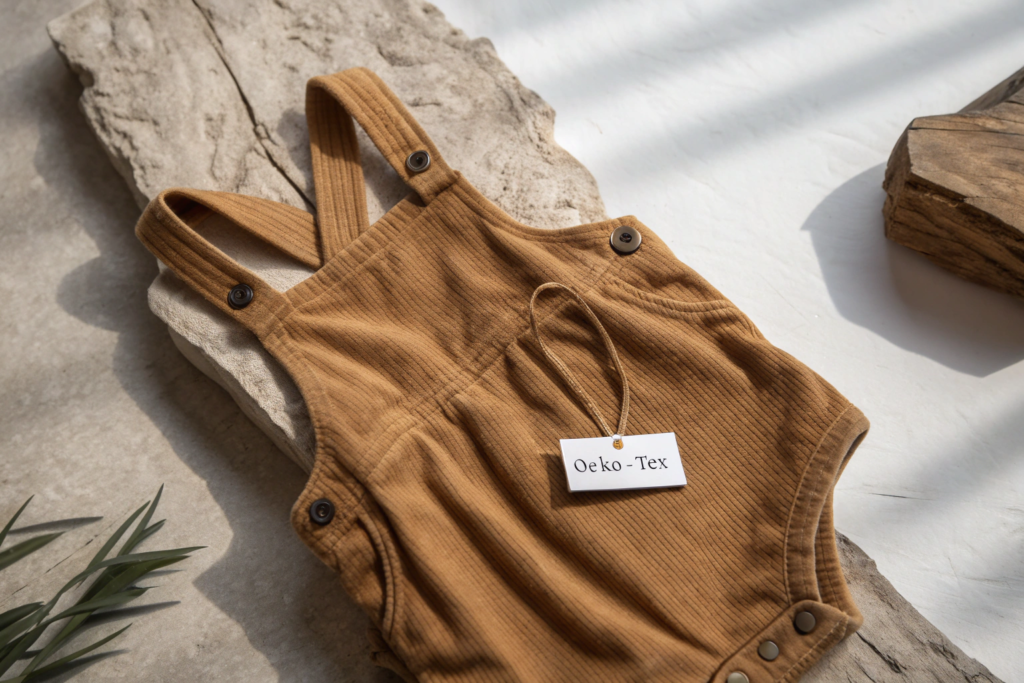
How to communicate this value to the end consumer?
The certification is a marketing tool. Brands need to use it correctly. It's not a footnote on the care label; it's a key selling point.
- Product Descriptions: Don't say "soft corduroy romper." Say "OEKO-TEX certified corduroy romper, guaranteed free from harmful substances for gentle wear on sensitive skin."
- Packaging: Include the OEKO-TEX label prominently on the hangtag.
- Storytelling: Use your "About Us" or blog to explain why you chose certified manufacturing. "We partner with Shanghai Fumao because their OEKO-TEX certification means every part of this romper, down to the thread, is tested for your child's safety."
We helped a direct-to-consumer brand implement this. They launched their corduroy X-strap romper line at a 25% premium over their basic cotton line. Their marketing focused on "Certified Safe from Seed to Strap." They used our factory audit photos (with permission) in their story. The line sold out its first production run in 3 weeks and now has a loyal following. The certification gave them a credible, non-negotiable reason for the higher price that resonated with modern parents.
What is the financial ROI beyond the price tag?
The return on investment includes risk avoidance, which has a direct financial value:
- Avoided Recall Costs: The average cost of a children's product recall can run into hundreds of thousands of dollars when accounting for logistics, destruction, legal fees, and lost sales.
- Reduced Customer Service Burden: Safe products generate fewer complaints and returns. One of our clients reported a 50% drop in customer service contacts about skin irritation after switching to our OEKO-TEX certified line.
- Market Differentiation: In a saturated market, a verifiable safety claim is a powerful differentiator that can command shelf space and retailer attention.
For a brand owner calculating margins, the extra few cents per unit for certification is a minor line item compared to the potential multi-million dollar impact of a single safety scandal. It's one of the most cost-effective insurance policies available.
What Should Brands Verify in Their Manufacturer's OEKO-TEX Claims?
Trust, but verify. This is the golden rule. Ron's pain point about suppliers falsifying certificates is a real and present danger in our industry. A certificate is a piece of paper; the integrity behind it is everything. Brands must be proactive investigators.
Brands should verify three key things in their manufacturer's OEKO-TEX claims: the authenticity and scope of the certificate, the factory's internal processes to maintain compliance, and the transparency of their component supply chain. This due diligence ensures the certification is a living practice, not a framed decoration on the wall.
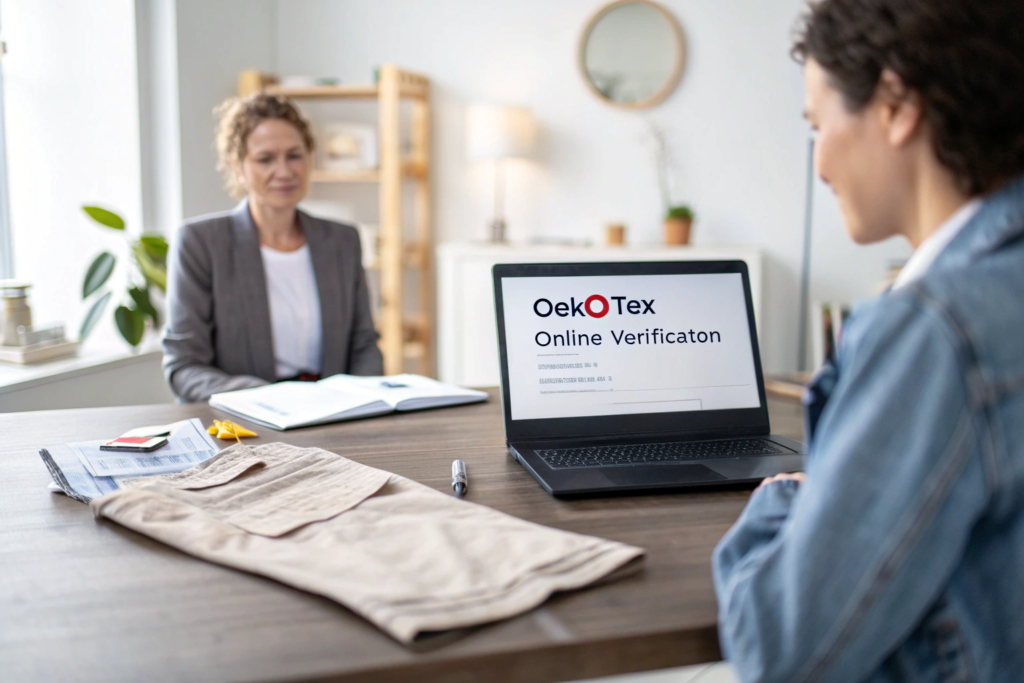
How to conduct a bulletproof certificate verification?
Do not accept a PDF or scanned copy as proof. Follow this checklist:
- Get the Certificate Number & Applicant Name: The applicant must be the actual manufacturing entity (e.g., Shanghai Fumao Clothing Co., Ltd.), not a trading company.
- Use the Official Database: Go to the OEKO-TEX Certificate Check website. Enter the details.
- Verify Scope: The database will show the certified "article description." Does it accurately describe your product (e.g., "Corduroy romper for children")? If it says "fabric only," that is a red flag.
- Check Validity: Certificates expire yearly. Ensure it is valid for your production period.
A client from New York once sent us a certificate from a previous Chinese supplier asking for our opinion. The certificate number was valid, but the applicant name was a trading firm in Hong Kong, and the product scope was "knitted fabric." The factory had likely used a fabric certificate to imply finished garment certification. We helped the client understand this discrepancy, which saved them from a potentially disastrous partnership.
What questions to ask during a factory audit (virtual or in-person)?
Ask process-based questions that reveal true integration:
- "Can you show me your approved chemical and trim supplier list?"
- "What is your procedure if a new material needs to be sourced urgently? How do you ensure it complies before use?"
- "How do you train your production line staff on maintaining compliance (e.g., preventing cross-contamination with non-certified materials)?"
- "Can we see the lab test reports for the corduroy and the plastic buckles used in this specific romper sample?"
A factory with a robust system will have answers and documentation ready. At our facility, we welcome these questions. We can show our material tracking system and our internal audit reports. This transparency is what builds the deep trust that turns a buyer into a long-term partner. Understanding quality management systems like ISO 9001 can provide a framework for these audits, as OEKO-TEX compliance often integrates with such systems.
Conclusion
Choosing corduroy X-strap rompers with OEKO-TEX certification is one of the most intelligent decisions a children's wear brand can make. It directly addresses the core anxieties of modern business: product safety, supply chain reliability, and brand reputation protection. The certification is not an extra cost; it is the foundation of a responsible, profitable, and sustainable product line.
It transforms the charming, textured corduroy and the stylish X-strap design from potential liabilities into unequivocal assets. It provides a story you can tell with confidence and a promise you can keep without fear. In a market where parents are increasingly vigilant, this is not just a competitive edge—it's a business imperative.
If you are looking to launch a corduroy collection that is as safe as it is stylish, you need a partner who understands this equation at its core. At Shanghai Fumao, we specialize in turning detailed, safety-critical garments like X-strap rompers into market-winning products. Contact our Business Director Elaine to discuss how we can craft your next OEKO-TEX certified line with precision and integrity. Start a conversation at elaine@fumaoclothing.com.