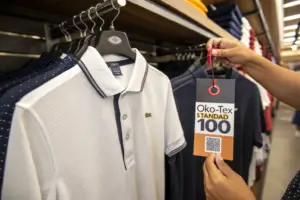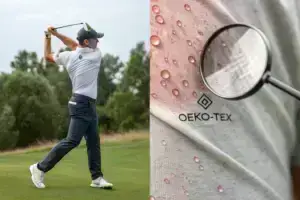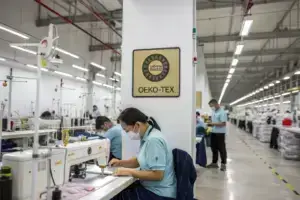
As an apparel brand sourcing golf shirts, you likely see “OEKO-TEX certified” everywhere. But when a customer asks you for proof, can you trace that certification from the raw yarn all the way to the finished shirt in their hands? The unsettling truth is that many shirts on the market carry the label based on a single fabric certificate, while the threads, trims, and dyes used in assembly may never have been tested. This gap isn’t just technical—it’s a liability for your brand.
A golf shirt is only truly OEKO-TEX certified when every discrete component that constitutes the finished garment has been individually tested and certified according to the OEKO-TEX STANDARD 100, and the final production is audited to ensure compliance. This means moving beyond a “fabric certificate” to a “garment system” approach, where each part is verified safe for prolonged skin contact during active wear.
This distinction separates authentic, reliable manufacturers from those cutting corners. Let’s dissect the journey a shirt must take to earn genuine, end-to-end certification.
Why Does Certification for Just the Main Fabric Fall Short?
Relying solely on a fabric mill’s OEKO-TEX certificate is the most common and dangerous misconception. Think of it like this: you can build a house with certified lumber, but if you use paint with lead or insulation with formaldehyde, the house is not safe. The same logic applies to apparel.
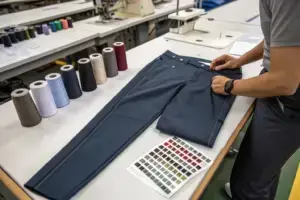
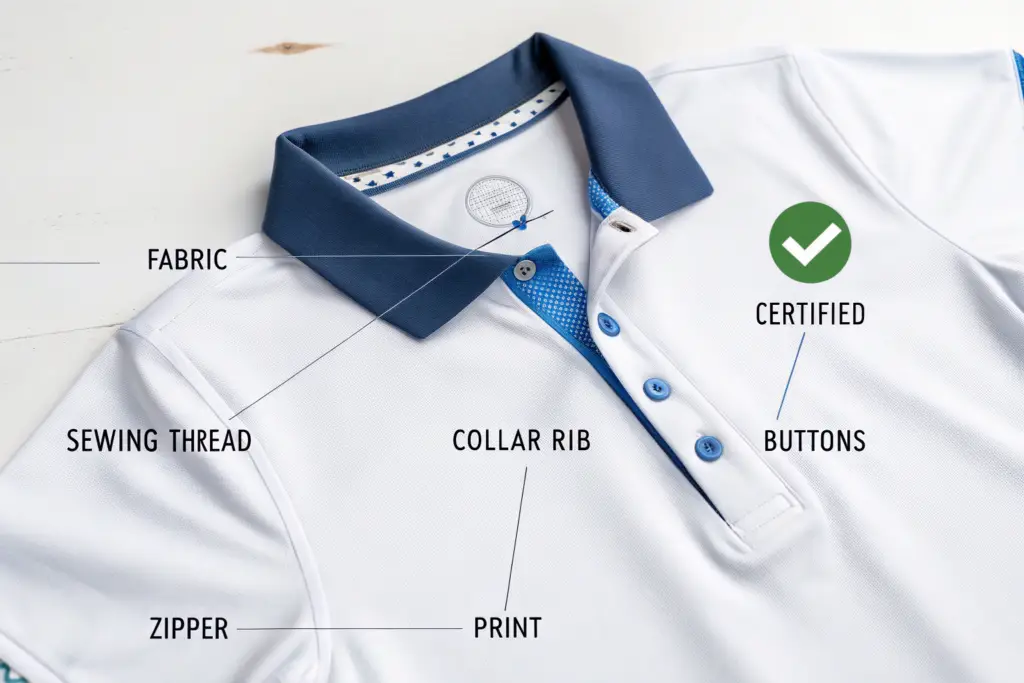
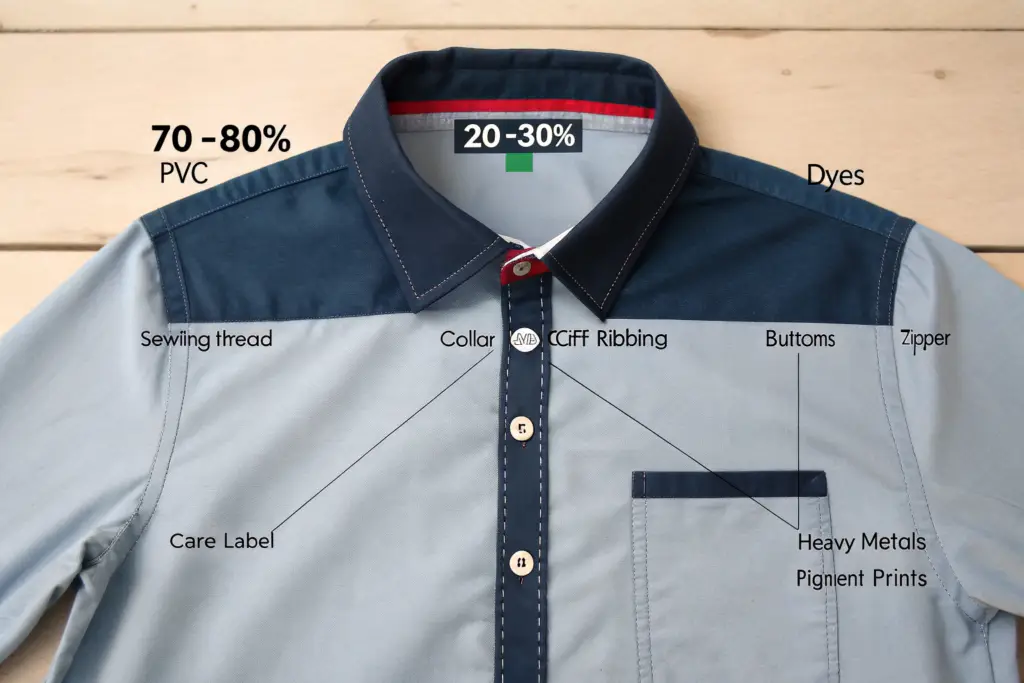
The fabric is often only 70-80% of a shirt’s material makeup. The remaining 20-30% consists of what the industry calls “trim” or “sundries.” These include the sewing thread, the collar and cuff ribbing, the buttons or zipper, the care label, and any prints or embroidery. Each of these introduces its own chemical inputs. For example, the dyes in sewing thread, the plasticizers in PVC labels, or the heavy metals in certain pigment prints can all contain restricted substances.
What Hidden Components Often Get Overlooked?
A systematic audit is crucial. Here is a checklist of components that are frequently missed but must be certified:
- Sewing Thread: Often polyester or cotton, it undergoes dyeing and finishing processes.
- Interlinings & Fusibles: Used in collars or plackets for structure, these involve adhesives.
- Elastics: In collar ribs or sleeve cuffs, they contain rubber and processing chemicals.
- Labels (Main, Care, Size): Both the fabric and the ink used for printing/washing.
- Buttons, Zippers, Snaps: Metal or plastic, often with coatings or dyes.
- Printing Inks & Pastes: For logos or designs, especially plastisol or pigment prints.
- Embroidery Thread: Similar risks to sewing thread.
At Shanghai Fumao, we maintain an Approved Trim Supplier List. Each supplier must provide valid, component-specific OEKO-TEX certificates before they are even allowed into our sourcing pool. This system was built after a 2022 incident where a shipment of otherwise perfect polos was flagged because the silicone ink in the small chest logo failed a random lab test. The main fabric was fine, but the print was not.
How Can Inconsistent Dye Lots Break Certification?
A certificate is tied to a specific article description and a specific supplier’s production process. If your fabric mill changes a dye supplier or adjusts its chemical recipe to cut costs—even slightly—the resulting fabric may no longer comply with the original test report. This is why batch-to-batch verification is non-negotiable. A true manufacturing partner will conduct in-house quality control tests on incoming materials. We perform simple but effective spot tests for pH and formaldehyde on every fabric roll that enters our warehouse. If a roll fails, it is quarantined immediately, protecting the integrity of the entire production run.
What Does the “Full Garment” Certification Process Actually Involve?
Achieving true “from fabric to finish” certification is a managed process, not a one-time event. It requires the manufacturer to have a controlled system for sourcing, verifying, assembling, and finally auditing the complete product.
The process can be broken down into three definitive stages: Component Certification, Certified Production, and Final Verification. Missing any stage introduces risk.
Stage 1: Sourcing and Verifying Every Certified Component
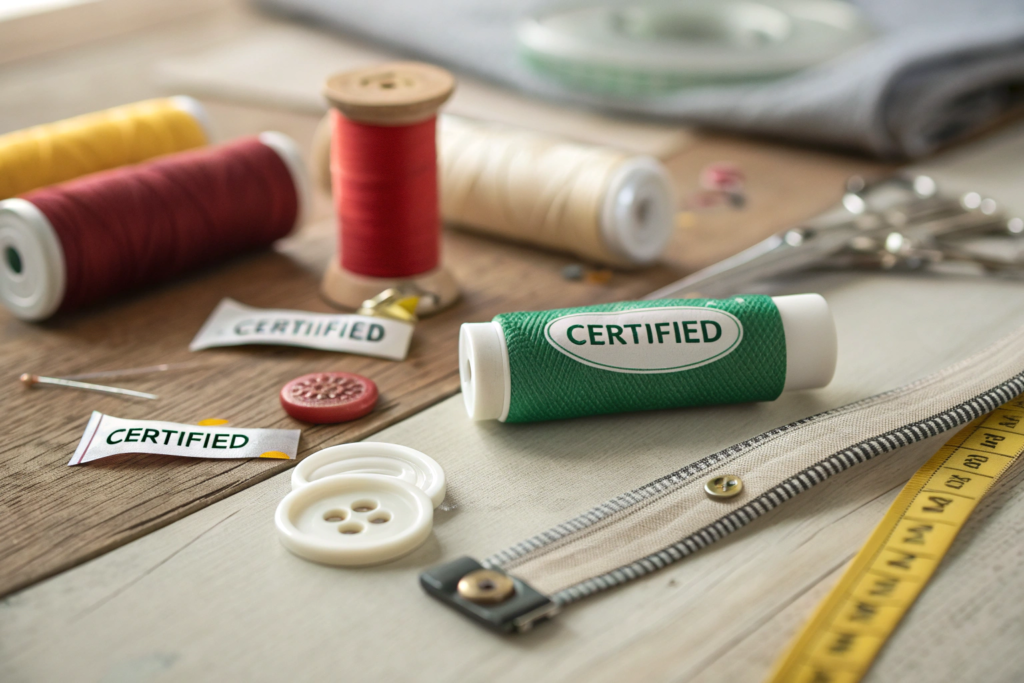
This is the foundational stage. The factory must collect and validate the OEKO-TEX certificate for each component from its respective supplier. The validation includes checking:
- Certificate validity dates.
- Exact company name match.
- Correct product class (Class II for direct skin contact like golf shirts).
- Precise article description matching the supplied item.
We manage this through a digital database. For every style we produce, a digital dossier is created that links each component to its corresponding certificate PDF. This transparency is something we readily share with our clients at Shanghai Fumao to build trust.
Stage 2: Managing a “Certified” Production Environment
This is the most critical operational phase. It involves physically preventing contamination and mix-ups.
- Segregated Storage: Certified fabrics and trims must be stored separately from non-certified materials, with clear labeling.
- Tracked Usage: The factory must have a system (like a cutting ticket or barcode) to track certified material from the warehouse to the specific production batch.
- Clean Production: The sewing lines must be cleaned to avoid cross-contamination from other, non-certified projects. For instance, using the same uncertified thread on a certified order would void the certification.
The table below contrasts a basic vs. a robust production control system:
| Control Point | Basic System (High Risk) | Robust System (Low Risk) |
|---|---|---|
| Material Storage | All materials stored together. | Certified materials in designated, labeled areas. |
| Thread Management | Generic thread used for all orders. | Dedicated, certified thread spools issued for certified orders. |
| Batch Tracking | No link between fabric roll and finished batch. | Roll number recorded on each bundle ticket through cutting and sewing. |
How Can You Verify a Supplier’s “Fabric to Finish” Claims as a Buyer?
You don’t have to be a chemist to conduct effective due diligence. Your power lies in asking the right questions and demanding specific evidence. Move the conversation from “Do you have it?” to “Show me how it works.”
Start by requesting the complete certification dossier for a golf shirt sample they provide. Then, use targeted questions to probe their systems. A supplier who is genuinely certified will welcome these questions as a chance to demonstrate their expertise.

What Specific Documents Should You Request?
A trustworthy supplier should be able to provide you with a package that includes:
- Component Certificates: The individual OEKO-TEX certificates for the main fabric, thread, interlining, buttons, etc.
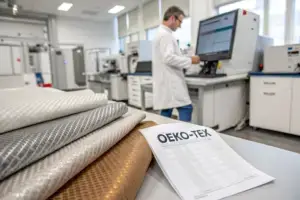
- Material Test Reports: Recent lab reports (from labs like Intertek or SGS) for the specific batch of materials used in your sample, testing for key parameters like pH, formaldehyde, and heavy metals.
- Factory Audit Report: Evidence of their quality management system, which shows control over certified production.
When you receive these, cross-check the company names and product descriptions. Do they all align with the supplier you’re talking to and the product you’re buying?
What On-Site or Virtual Audit Questions Uncover the Truth?
If visiting the factory or doing a video tour, ask to see these points live:
- “Can you show me your labeled storage area for OEKO-TEX certified fabrics?”
- “How do you ensure the certified thread from the warehouse is used on the correct production line?”
- “What is your procedure if a pre-production test fails?”
Listen for specific answers about procedures and checkpoints. A vague answer is a red flag. For example, last year, a potential client asked us to conduct a virtual audit. We walked them through our warehouse via video, showed our labeled fabric rolls, and even demonstrated a quick pH test on a fabric swatch. That level of transparency secured the partnership because it proved our full-package manufacturing claim was operational, not just marketing.
What Are the Real Business Impacts of Partial vs. Full Certification?
Choosing between a supplier offering partial (fabric-only) certification and one guaranteeing full certification is a strategic business decision with clear consequences. The cheaper upfront cost of partial certification often leads to much higher hidden costs down the line.
Full certification is an investment in brand protection, customer trust, and supply chain resilience. It directly addresses the major pain points of brand owners: avoiding recalls, ensuring on-time delivery, and building a reputable brand.

How Does It Protect Against Legal and Financial Risk?
Regulatory bodies and large retailers are increasingly stringent. If your product is randomly tested at customs or by a retailer’s lab and fails due to a non-compliant button or thread, the repercussions are severe:
- Shipment Seizure or Recall: You lose the entire inventory and may face fines.
- Brand Damage: Public recalls or negative press can be devastating.
- Retailer Penalties: You may be blacklisted from future orders.
Full certification from a partner like Shanghai Fumao acts as your insured due diligence. It demonstrates you took every reasonable step to ensure product safety, significantly mitigating legal liability.
How Does It Enhance Brand Value and Customer Loyalty?
Today’s consumers are informed. They read labels and value transparency. Marketing a golf shirt as “100% OEKO-TEX Certified from Fabric to Finish” is a powerful, verifiable claim. It allows you to:
- Command a Premium Price: Consumers pay more for proven safety and quality.
- Build Trust: Transparency fosters long-term customer loyalty.
- Differentiate in Market: It moves your product from a commodity to a trusted technical garment.
This isn’t just theory. A client of ours who switched to our fully certified production was able to secure a partnership with an eco-conscious golf resort chain, directly attributing the win to their verifiable, comprehensive safety documentation.
Conclusion
A truly OEKO-TEX certified golf shirt is the result of a meticulous, system-driven journey—not a single piece of paper. It requires every component to be individually certified and those certified elements to be managed through a controlled production process that prevents contamination. The difference between “fabric-certified” and “garment-certified” is the difference between marketing hype and genuine product integrity.
For your brand, this distinction is everything. It transforms certification from a cost line into a core competitive advantage, protecting you from risk while building undeniable value with your end-customer. The due diligence you perform in selecting a supplier who masters this end-to-end process is the most important investment you can make in your product’s success.
You now know the critical questions to ask and the evidence to demand. Use this framework to find a partner whose standards match your ambitions. When you are ready to produce golf shirts with verifiable, from-fabric-to-finish certification, we are here to deliver that certainty. Contact Shanghai Fumao’s Business Director Elaine today. Let us show you our component certification dossiers and controlled production system, and discuss how we can become your reliable, transparent manufacturing partner for your next line. Reach her at elaine@fumaoclothing.com. Let's craft certified quality together.