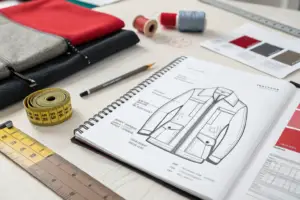
You just approved the perfect sample. The excitement is real—your new collection is one step closer to market. But then the question hits: "How long until the bulk order is in my warehouse?" If your supplier says "4-6 weeks," you might be setting yourself up for a painful surprise. The gap between sample approval and bulk delivery is the most misunderstood and underestimated phase in apparel production. Getting this timeline wrong means missed seasons, rushed marketing, and lost sales.
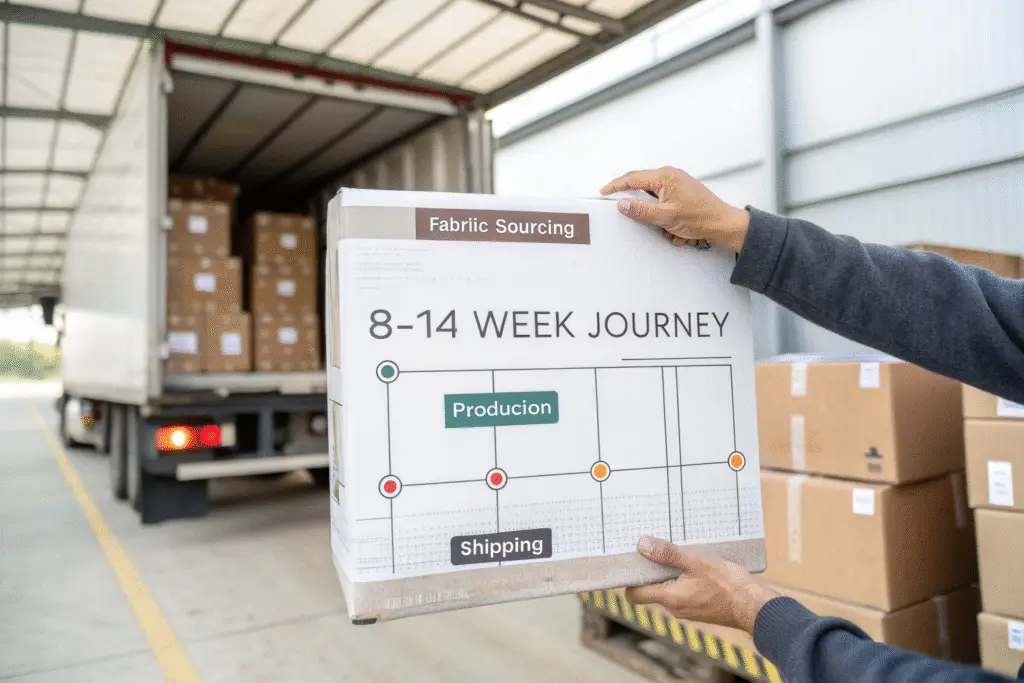
The true timeline from sample approval to bulk delivery is rarely a simple, fixed number. It is a dynamic sequence of interdependent stages, each with its own variable lead time. For standard apparel orders, a realistic range is 8-14 weeks, not the commonly quoted 4-6. This timeframe accounts for raw material procurement, production scheduling, quality checks, and logistics. Understanding what happens in these weeks is the key to planning a successful launch.
At Shanghai Fumao, we recently worked with a streetwear brand that had been promised a 5-week turnaround by another factory. After sample approval, they were met with constant delays—fabric wasn't ready, then production was pushed back. Their 5-week promise turned into a 13-week nightmare. They came to us for their next order, and we mapped out a detailed 11-week timeline upfront. We delivered on day 75. Their CEO said the clarity alone was worth the "longer" timeline. Let's unpack what really goes into those weeks.
Why Is The "4-6 Week" Promise Often A Myth?
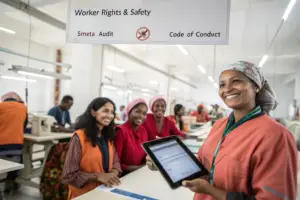
Many suppliers, especially those competing primarily on price and speed, give optimistic timelines to secure your order. This "4-6 week" promise usually assumes that all materials are in stock and production lines are immediately available. In reality, this is almost never the case for a custom order. This myth sets unrealistic expectations and forces factories to cut corners, compromising quality and ethical practices.
A realistic timeline must account for the natural, sequential processes of manufacturing. Compressing these processes introduces risk at every stage. The 4-6 week model typically only covers the physical sewing time, ignoring everything that must happen before and after.
What Critical Pre-Production Steps Happen After Sample Approval?
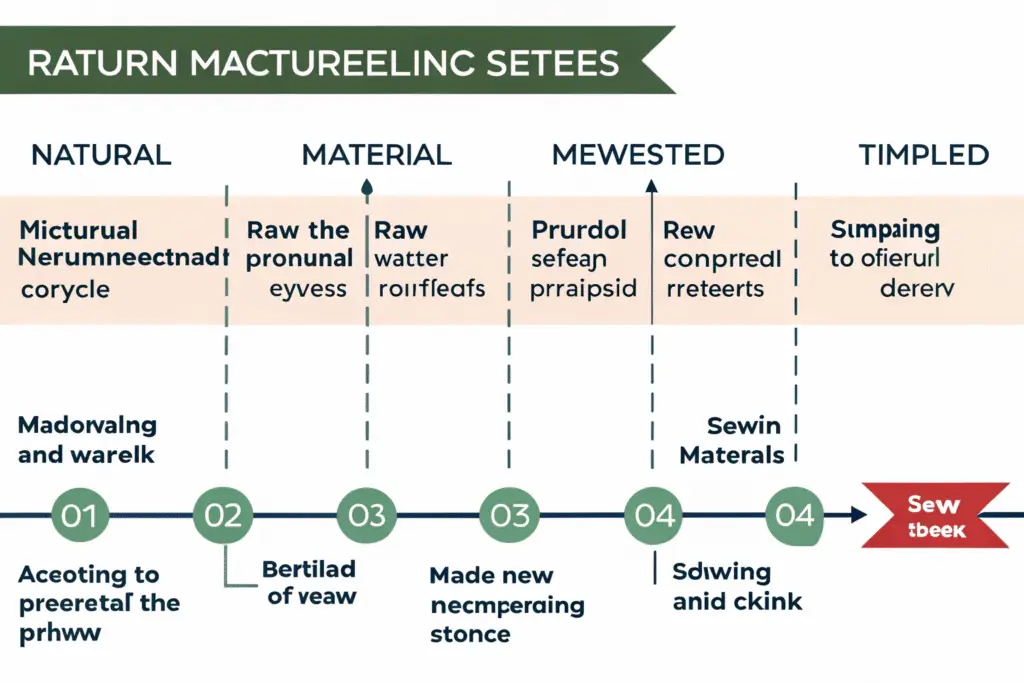
The moment you approve the sample, the clock starts on several parallel but critical paths:
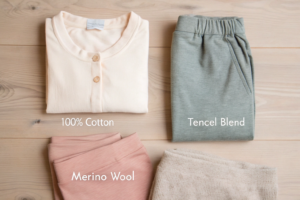
- Finalizing Bill of Materials (BOM): The sample uses prototype materials. For bulk, every single component—fabric, thread, buttons, zippers, labels, packaging—must be specified, sourced, and ordered in the correct quantities. This coordination alone can take 1-2 weeks.
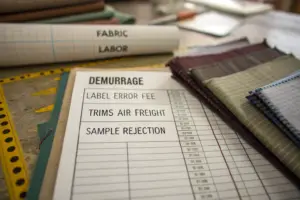
- Raw Material Sourcing & Delivery: This is the single biggest variable. Fabric lead times are not controlled by your garment factory. If a specific cotton blend or custom-dyed fabric is needed, the mill may need 3-6 weeks to produce and ship it. We never book production lines until we have firm fabric arrival dates from our trusted mills.
- Production Planning & Line Allocation: A professional factory like ours doesn't have empty lines waiting. They are scheduled. Your order is slotted into the production calendar based on material arrival and existing commitments. This scheduling buffer is essential for quality but is often omitted from quick quotes.
How Does Order Complexity Directly Impact Time?
A simple 5,000-piece order of basic t-shirts will move faster than a 2,000-piece order of technical outerwear with multiple fabrications and trims. Consider this complexity matrix:
| Complexity Factor | Low Impact (Adds 1-2 weeks) | High Impact (Adds 3-5+ weeks) |
|---|---|---|
| Fabric | Basic, in-stock fabrics | Custom-developed, woven, or printed fabrics; imported fabrics |
| Trims & Details | Standard buttons, labels | Custom metal hardware, embroidered logos, imported specialty zippers |
| Construction | Simple silhouettes, few pieces | Complex tailoring, many panels, bonded seams, waterproof taping |
| Color Count | 1-2 solid colors | 5+ colors, color blocking, garment dyeing |
What Are The Concrete Stages and Their Realistic Durations?
Breaking down the timeline into concrete stages demystifies the process and gives you clear milestones to track. This transparency is what turns a supplier from a "black box" into a accountable partner. Each stage has a minimum realistic duration, and rushing any one can compromise the entire order.
Think of it as a relay race, not a sprint. Each stage must be completed satisfactorily before the baton is passed to the next. A detailed schedule protects both you and the factory.
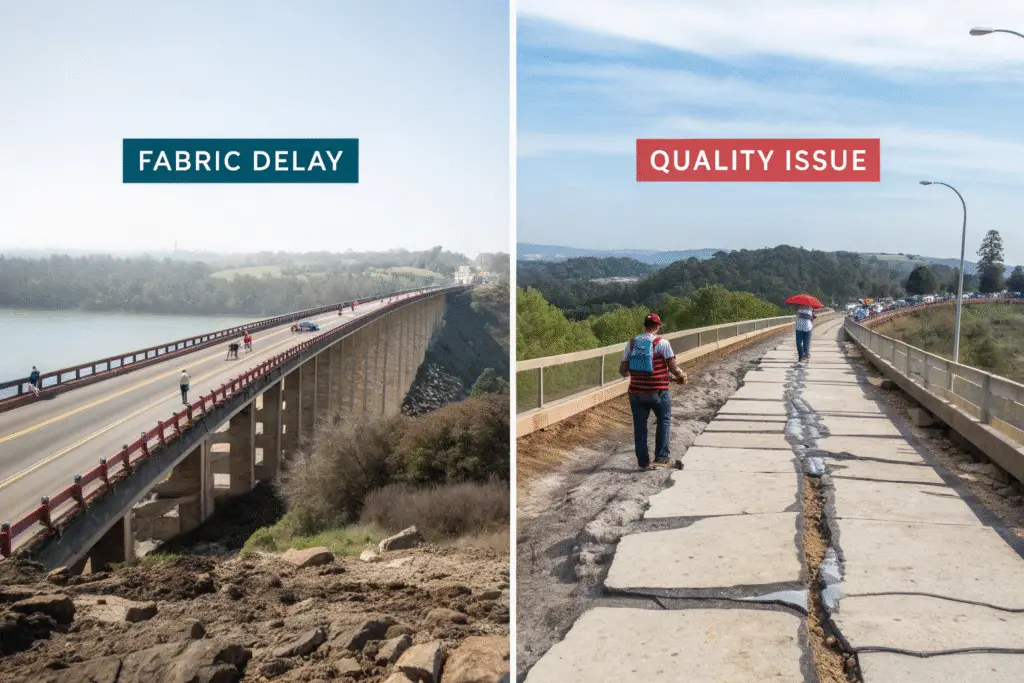
Stage 1: Material Procurement & Confirmation (2-5 Weeks)
This stage begins the day you approve the sample.
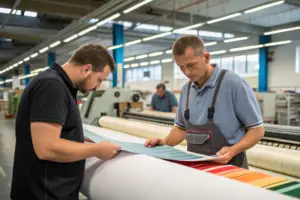
- Week 1-2: Place bulk orders with fabric and trim suppliers. Secure lab dips, bulk fabric swatches, and trim approvals from you. Never skip bulk material approval. We once had a client who approved a prototype fabric but the bulk roll had a slight weave variation. Catching it at this stage saved the entire order.
- Week 3-5: Wait for material production and delivery to the garment factory. This is often the longest wait. Fabric testing (shrinkage, colorfastness) is done upon arrival. Any failure means rejecting the fabric and starting over—a major reason to work with a factory that controls this process.
Stage 2: Production & In-Line QC (3-5 Weeks)
Materials are in-house. Production begins.
- Cutting: Fabric is laid, marked, and cut (3-5 days).
- Sewing & Assembly: Garments are assembled on production lines (2-4 weeks, depending on quantity/complexity). In-process quality control (IPQC) is conducted here. For a recent order of tailored trousers, our IPQC team flagged a minor stitch tension issue on day 2 of sewing. It was corrected on the spot, preventing a defect in thousands of pieces.
- Finishing: Trimming loose threads, ironing, final inspection (3-5 days).
Stage 3: Final Inspection, Packaging & Shipping (1-4 Weeks)
- Final Pre-Shipment Inspection (PSI): An AQL check is performed on a random sample of finished goods (2-3 days). This is your last chance to verify quality before shipment.
- Packaging & Labeling: Garments are polybagged, tagged, and boxed per your instructions (3-5 days).
- Logistics & Shipping: Booking vessel/airline space, container loading, customs documentation, and transit (1-3 weeks). DDP shipping to the US West Coast typically takes 4-5 weeks via sea.
What Factors Can Drastically Delay Your Shipment?
Even with perfect planning, delays happen. The professional difference lies in anticipating risks and having mitigation strategies. A trustworthy factory will communicate these risks upfront and have contingency plans. The most common delays are not mysteries; they are known variables that must be managed.
Proactive risk management is what separates a reliable partner from an order-taker. Understanding these factors allows you to ask the right questions and make informed decisions.

How Do Raw Materials Create the Biggest Bottleneck?
As mentioned, fabric is king. Delays occur when:
- Mill Delays: The fabric supplier faces raw material shortages, energy issues, or overbooking.
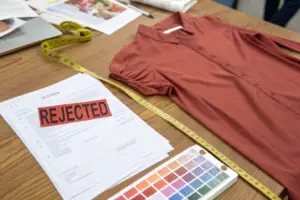
- Quality Rejection: The bulk fabric fails arrival tests. In Q3 last year, a shipment of recycled polyester failed our pilling test. We rejected it immediately and activated our backup mill, but this added 2 weeks.
- Your Delays in Approval: If you take 10 days to approve a bulk fabric swatch instead of 2, the entire schedule shifts back. Clear communication protocols are vital.
What Role Does Factory Capacity and Scheduling Play?
An overloaded factory is a delayed factory. Key questions to ask:
- "How do you schedule orders? Is my order date based on confirmed material arrival?"
- "What is your current line capacity utilization?" A factory running at 95% capacity has no buffer for problems.
- "What is your policy on order 'jumping'?" Will a larger client's order bump yours from the schedule? At Shanghai Fumao, we work on a first-confirmed, first-scheduled basis to ensure fairness and predictability for all our partners.
How Can Inefficient Communication and Approvals Stretch Timelines?
This is often the hidden delay. Every time you need to clarify a detail or approve a step, and there's a 2-day email lag, the timeline stretches. Establishing a single point of contact and agreed-upon approval windows (e.g., "all submits will be reviewed within 48 hours") is critical to keeping the schedule tight.
How Can You Ensure Your Timeline Is Realistic and Reliable?
You are not powerless in this process. Your actions and choices directly influence the reliability of the timeline. Moving from a passive buyer to an active co-manager of the schedule is the most effective way to ensure on-time delivery.
Reliability is built on transparency, shared expectations, and disciplined process adherence from both sides. It's a partnership.

What Questions Must You Ask Before Placing an Order?
Do not accept a single number. Demand a breakdown:
- "Can you provide a week-by-week schedule from today until estimated port arrival, with key milestones (fabric ETD, production start, inspection date)?"
- "What are the lead times for each key material in my BOM? Are these materials in stock, or must they be produced?"
- "What is the buffer time included in this schedule for potential delays?"
- "What is your historical on-time delivery rate for orders of similar complexity?"
How Can Technology and Communication Protocols Help?
Insist on modern project management:
- Shared Dashboards: Use platforms where you can see real-time progress—fabric status, production percentage, inspection reports.
- Scheduled Updates: Instead of you chasing, the factory should provide weekly progress reports with photos/videos.
- Visual Approval Systems: Use tools that allow you to comment directly on images of submits (lab dips, trims) to accelerate approval loops.
At Shanghai Fumao, we provide clients with a shared timeline and regular visual updates. This transparency transforms the waiting period from a source of anxiety into a period of confident planning.
Why Is Building a Partnership More Reliable Than Shopping for Speed?
A factory invested in a long-term relationship will give you a honest timeline to protect that relationship. A factory looking for a one-time order might tell you what you want to hear. Investing time in finding and nurturing a partner like us, who values clarity over empty promises, is the ultimate strategy for timeline reliability.
Conclusion
The true timeline from sample approval to bulk delivery is a carefully orchestrated process, typically spanning 8 to 14 weeks for a well-executed order. It is a journey through material sourcing, production, and logistics, where each phase demands time and precision. The myth of the 4-6 week turnaround is a dangerous oversimplification that leads to rushed jobs, quality failures, and missed market opportunities.
Embracing a realistic timeline is not a concession; it is a strategic advantage. It allows for thorough quality control, ethical production practices, and stress-free planning. Your success depends on aligning your business calendar with the realities of manufacturing physics, not supplier fantasies.
If you value clarity and reliability over empty promises, we should talk. At Shanghai Fumao, we build our partnerships on transparent, detailed scheduling and proven execution. We will give you a realistic timeline and the communication tools to track it every step of the way. Let us help you plan your next collection with confidence. Contact our Business Director Elaine to begin with a clear, honest schedule: elaine@fumaoclothing.com.