You're ready to launch your women's wear collection but concerned about meeting high minimum order quantities. You want to test the market without over-committing, yet you need enough inventory to make production viable. What are the realistic MOQ requirements for wholesale women's wear production?
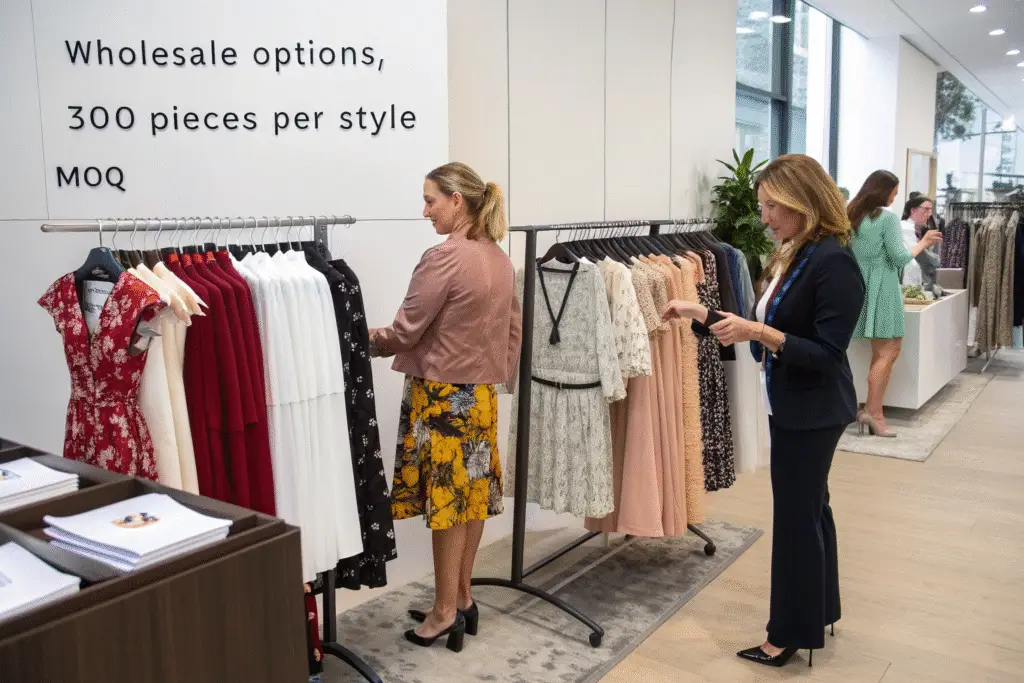
Our MOQ for wholesale women's wear starts at 300 pieces per style, with flexible options that can accommodate emerging brands while maintaining production efficiency. We understand that new brands need manageable entry points, which is why we've developed tiered MOQ structures that balance your business needs with our production requirements. The exact MOQ depends on fabric type, design complexity, and your long-term growth potential, with solutions available for brands at every stage.
Let's explore our flexible MOQ approach and how we help women's wear brands launch successfully without excessive inventory risk.
What Are Your MOQ Options Across Different Product Categories?
Different women's wear categories have varying production requirements that influence realistic minimum order quantities.
We've structured our MOQ system to accommodate the specific characteristics of each product type while maintaining quality and efficiency.
What MOQ applies to basic women's wear styles?
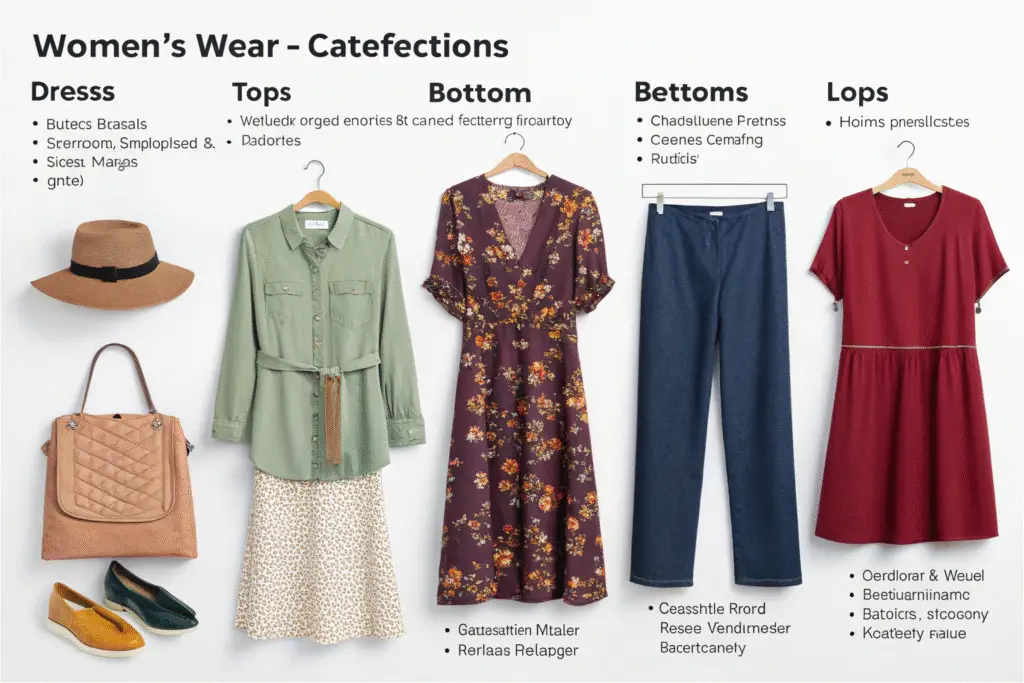
For basic styles like t-shirts, tanks, and simple woven tops, our MOQ starts at 300 pieces per style. This applies to standard fabrics and straightforward constructions. We maintain this accessible entry point by grouping similar basic styles from multiple clients in our production planning. A contemporary basics brand recently launched with three styles at 300 units each, using our standard cotton jersey fabric from existing inventory. This approach allowed them to test market response without the financial risk of larger commitments.
How do MOQs vary for complex women's wear?
Dresses, jackets, and technical garments typically have higher MOQs due to their complexity. Our MOQ for structured blazers starts at 500 pieces, while detailed dresses begin at 400 pieces. A sustainable dress brand worked with us at 450 units for their signature wrap dress, which involved multiple pattern pieces and intricate finishing. The slightly higher MOQ reflected the additional production steps and specialized pressing required for quality execution.
How Can New Brands Meet MOQ Requirements?
Launching a new women's wear brand presents unique challenges in meeting MOQ requirements while managing cash flow and inventory risk.
We've developed specific strategies to help emerging brands overcome these hurdles and establish successful production partnerships.

What options exist for brands below standard MOQ?
For brands ordering below our standard MOQs, we offer style consolidation and fabric pooling options. By producing multiple styles in the same production run, you can reach viable quantities. A new luxury knitwear brand produced three different sweater styles at 150 units each, combining them to meet our 450-piece MOQ for knitwear. This approach maintained their style variety while accessing efficient production pricing.
How does our emerging brand program work?
Our emerging brand program accepts lower MOQs (starting at 200 pieces for simple styles) for brands demonstrating growth potential. Qualification requires a business plan, marketing strategy, and commitment to seasonal reordering. Three seasons ago, we accepted a resort wear brand at 250 pieces per style; they've since grown to 800-piece orders and become one of our most successful growth stories.
What Factors Influence Your Specific MOQ?
Multiple factors determine the exact MOQ for your women's wear project, understanding these helps in planning your production strategy effectively.
The main variables include fabric type, design complexity, and your color/size distribution requirements.

How does fabric selection affect MOQ?
Specialty fabrics typically require higher MOQs due to mill minimums. While our standard cotton styles start at 300 pieces, silk charmeuse begins at 400 pieces, and technical fabrics at 500 pieces. A activewear brand learned this when developing their performance leggings - the technical fabric they selected had a 500-yard mill minimum, translating to a 500-piece MOQ for their specific design.
What design elements increase MOQ requirements?
Complex design features like intricate pattern matching, extensive embroidery, or special dyeing techniques typically increase MOQ requirements. The table below shows how different elements affect our base MOQ:
| Design Element | Base MOQ | MOQ Impact | Example |
|---|---|---|---|
| Basic Construction | 300 pieces | Base | Simple t-shirts, basic tops |
| Pattern Matching | +100 pieces | 33% increase | Placed prints, striped designs |
| Embroidery | +50-150 pieces | 17-50% increase | Logo embroidery, detailed designs |
| Special Dyeing | +200 pieces | 67% increase | Garment dye, special wash effects |
How Can You Optimize MOQ Through Smart Planning?
Strategic planning and design decisions can help you meet MOQ requirements more efficiently while maximizing your production investment.
Small adjustments to your approach can significantly impact your ability to meet MOQ thresholds.

What size and color strategies reduce MOQ pressure?
Consolidating color options and focusing on core sizes first can help you meet MOQ per style more easily. We recommend new brands start with 3-4 colors and 4-5 core sizes rather than extensive color/size matrices. A contemporary brand launched with their signature black dress in four sizes, producing 400 units total. Once established, they expanded to additional colors and sizes in subsequent productions.
How does seasonal planning affect MOQ efficiency?
Planning production across multiple seasons or developing core styles with longer lifecycles can improve your MOQ efficiency. We work with brands to identify styles that can transition across seasons with minor modifications. A sustainable brand developed a core blouse style that worked for both spring and fall collections with sleeve length variations, effectively doubling their order quantity and achieving better pricing.
What Are The Cost Implications Of Different MOQ Levels?
Understanding how MOQ affects your per-unit cost helps in making informed decisions about your production quantities.
Higher quantities typically yield better per-unit pricing through economies of scale and more efficient production runs.

How does MOQ affect your per-unit pricing?
Moving from 300 to 500 pieces typically reduces per-unit costs by 15-20%, while increasing to 1,000 pieces yields an additional 10-15% reduction. The most significant savings occur between 300-800 pieces, with diminishing returns beyond 1,500 pieces for most styles. A dresses brand increased their order from 400 to 700 pieces, achieving 18% better pricing that allowed them to maintain their retail price point while improving margins.
What is the cost difference between MOQ tiers?
Our tiered pricing structure reflects production efficiencies at different quantity levels. For a basic woven shirt, the cost difference between 300 pieces (MOQ) and 500 pieces is typically 18-22%, while the jump to 1,000 pieces yields an additional 12-15% reduction. Understanding these economies of scale helps brands plan their growth strategy effectively.
How Does Our MOQ Compare to Industry Standards?
Understanding how our MOQ structure compares to the broader industry context helps you evaluate your options realistically.
We've positioned our MOQ requirements to be competitive while maintaining production quality and efficiency.

What are typical MOQs in women's wear manufacturing?
Industry MOQs vary significantly based on factory size and specialization. Small specialized factories often require 500-1,000 pieces, while larger factories may demand 1,000-3,000 pieces. Our 300-piece starting MOQ positions us favorably for emerging and mid-size brands. A brand that came to us after being quoted 1,000-piece MOQs elsewhere found our 300-piece threshold accessible for their launch collection.
Why can we offer lower MOQs than many competitors?
Our flexible production system and diverse client base allow us to maintain lower MOQs without sacrificing efficiency. We achieve this through strategic production planning and maintaining relationships with fabric suppliers who accommodate smaller quantities. This flexibility has been particularly valuable for brands developing capsule collections or testing new categories.
Conclusion
Our MOQ for wholesale women's wear starts at 300 pieces per style, with flexible options that accommodate brands at different growth stages. We understand that manageable MOQ requirements are crucial for emerging brands, which is why we've developed solutions like style consolidation, fabric pooling, and our emerging brand program. The exact MOQ for your specific project depends on fabric selection, design complexity, and your overall collection strategy, but we're committed to finding workable solutions that support your business growth.
If you're developing a women's wear collection and want to discuss MOQ options tailored to your specific needs, we'd be happy to explore the possibilities. At Fumao Clothing, we've helped hundreds of women's wear brands navigate production requirements successfully. Contact our Business Director, Elaine, at elaine@fumaoclothing.com to discuss how we can help you meet your production goals with appropriate MOQ levels for your business stage.