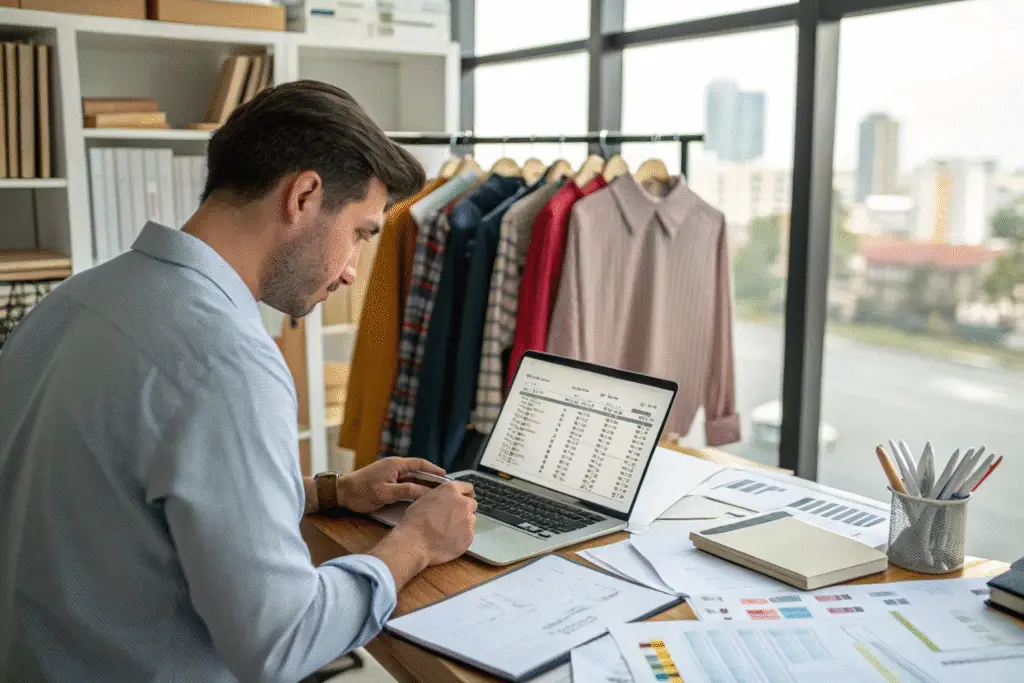
As a U.S. apparel brand owner, you're likely constantly balancing the need for fresh inventory with the risks of overproduction. One of the most common and critical questions we hear from our American partners is about the minimum order quantity, or MOQ. It's a gatekeeper to production, often determining whether a promising design makes it to market. Understanding MOQs is not just about a number; it's about finding a manufacturing partner whose flexibility aligns with your brand's growth stage and ambitions.
The minimum order quantity for clothing production is the smallest number of units a factory requires you to purchase for a single order. There is no universal MOQ; it varies drastically based on the garment type, fabric, factory capacity, and the level of customization involved. While some large-scale manufacturers demand thousands of pieces per style, others, like us at Fumao Clothing, offer much lower and more flexible MOQs to support the growth of emerging and established brands.
Navigating the world of MOQs can be complex, but it's crucial for making informed sourcing decisions. A clear grasp of what influences these numbers and the strategies to work with them can save you significant time and capital. Let's break down the key factors and explore how you can successfully manage MOQs for your clothing line.
How is MOQ determined for different clothing items?
The MOQ for a specific garment isn't a random number. It's a calculated figure based on the cost and complexity of the production process. Understanding these variables empowers you to negotiate better and make smarter design choices. For brand owners like Ron, who are sensitive to both quality and cost, this knowledge is power.
The primary factor is the cost-efficiency for the factory. Setting up a production line involves fixed costs for pattern making, fabric cutting, and machine calibration. These costs are amortized over the number of units produced. Therefore, a simpler item like a basic t-shirt will have a much lower MOQ than a complex technical jacket with multiple components. We structure our MOQs at Fumao to cover our baseline costs while remaining accessible, allowing us to build lasting partnerships.

What factors influence the cost of production setup?
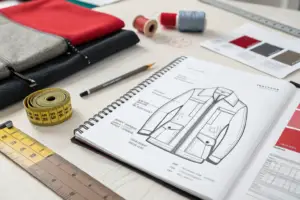
The initial setup is a significant investment for any factory. The more complex your design, the higher this investment. For example, a simple polo shirt requires a standard set of operations. However, a piece with unique prints, intricate embroidery, or specialized washing techniques demands more time and specialized equipment. Each additional feature, like custom dyeing or specific fabric sourcing, adds layers of complexity. We advise our clients to consider the balance between design uniqueness and production feasibility early in the product development stage. This collaboration helps us achieve your vision without imposing prohibitively high MOQs.
Can you provide examples of typical MOQs by garment type?
Absolutely. While each factory is different, here is a general guide to what you might expect. It's important to remember that these are estimates and we often work within these ranges to meet client needs.
| Garment Type | Typical MOQ Range (Pieces/Style/Color) | Key Influencing Factors |
|---|---|---|
| Basic T-Shirts | 500 - 1,000 | Fabric type (e.g., common cotton vs. specialty blend), number of print colors. |
| Woven Shirts | 300 - 500 | Complexity of collar and cuff construction, type of buttons, pocket details. |
| Denim Jeans | 300 - 600 | Type of wash (stonewash, enzyme), hardware (rivets, zippers), embroidery. |
| Technical Outerwear | 100 - 200 | Number of components, waterproof laminates, insulation, specialized zippers. |
As you can see, simpler items have higher MOQs because the cost per unit is lower, requiring more units to make the production run viable. Complex items have a higher cost per unit, so the factory can accept a lower MOQ while still maintaining profitability. Our approach at Fumao is to be transparent about these ranges from our first conversation.
Why do clothing manufacturers have MOQs?
MOQs are not arbitrary barriers; they are a fundamental aspect of sustainable and profitable manufacturing. For a business owner like Ron, who understands sales and profitability, recognizing the rationale behind MOQs is key to a successful supplier relationship. It's about the economics of scale and operational efficiency.
At its core, an MOQ ensures that a production run is economically viable for the manufacturer. Every order incurs fixed costs that do not change with the quantity produced. By setting an MOQ, we ensure that these baseline costs are covered, allowing us to offer you competitive pricing and remain in business to serve you long-term. This stability is crucial for your own supply chain reliability.

How do MOQs protect the manufacturer's bottom line?
Imagine the process of cutting fabric. Whether we cut 50 or 500 pieces, we still need to spend time and labor to lay out the fabric, create and secure the marker (the digital cutting plan), and run the cutting machine. The cost of this process is largely fixed. Spreading this fixed cost over only 50 units would make the cost per unit unreasonably high. The MOQ ensures that this cost is distributed across a sufficient number of units, keeping the per-unit price attractive for you. This principle applies to every stage, from cost calculation to quality control.
Many buyers only see the cost of fabric and labor. However, MOQs also help cover less obvious but critical expenses. These include administrative overheads for order management, the cost of testing fabrics for compliance with quality and safety standards, and the time invested by our product development team in perfecting your sample. By having a reasonable MOQ, we can dedicate the necessary attention to your order without cutting corners, ensuring the high quality that you, as a quality-sensitive buyer, require.
How can you negotiate a lower MOQ with suppliers?
Negotiating a lower MOQ is a common goal, especially for growing brands. It's not just about haggling over a number; it's about presenting your business as a valuable, long-term partner. From my experience working with many U.S. brands, the most successful negotiations are based on strategy and mutual benefit.
The most powerful lever you have is building a strong relationship and demonstrating future potential. We are more inclined to offer flexible MOQs to partners who show clear planning, consistent communication, and a vision for growth. Showing us that you have a roadmap for scaling up can make us confident in investing in a smaller initial order.

What strategies increase your leverage in MOQ negotiations?
Flexibility on your part can lead to flexibility on ours. Consider simplifying your design by reducing the number of colors in a print or using a stock fabric instead of a custom-dyed one. Another highly effective strategy is to propose a multi-style order. While the MOQ per style might be 300 pieces, we might agree to 200 pieces per style if you order three different styles, keeping your total volume high. This shows you are serious about your business and helps us optimize our production lines. Being open about your logistics and payment terms also builds trust.
Is it better to focus on total order volume or per-style MOQ?
For a factory, the total order volume across all styles is often more important than the MOQ for a single item. A commitment to a larger total volume over a season gives us predictability. You could propose starting with a lower MOQ for a launch collection with the firm commitment of a larger reorder if the items sell well. This de-risks the initial investment for you while giving us a clear forecast of future business. We've built some of our strongest partnerships this way, acting as a true extension of our clients' teams and supporting them from a small start to significant growth.
What are the alternatives if you can't meet the MOQ?
Sometimes, even with negotiation, a brand's initial needs may not align with a factory's standard MOQ. This doesn't mean your production dreams are over. There are several practical pathways forward that can help you launch your line without compromising on quality or your budget.
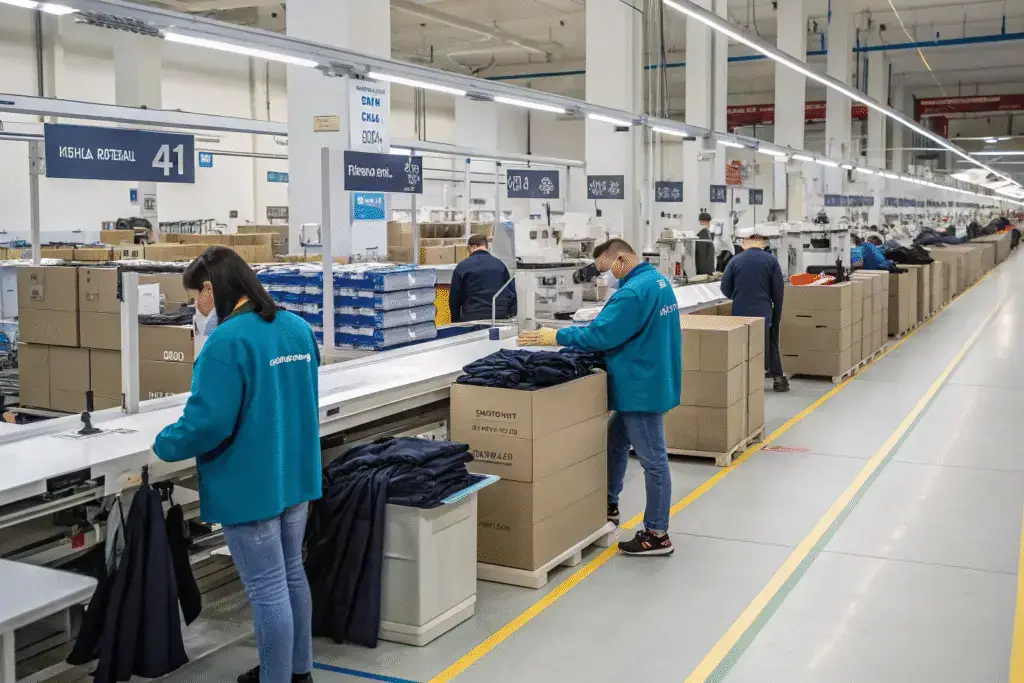
The most common solution is to work with a manufacturer that specializes in low MOQ production, like Fumao Clothing. We have structured our 5 production lines and services specifically to cater to this need. Our business model embraces the challenge of delivering top quality at lower volumes, understanding that this is where many great brands begin.
Should you consider stock fabric or pre-production samples?
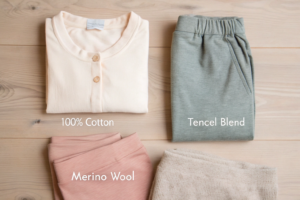
Yes, absolutely. Using our existing stock fabrics is one of the fastest ways to reduce the MOQ. This eliminates the need for us to order a large minimum quantity of custom fabric. Another option is to start with a pre-production run. This involves producing a very small batch, perhaps just 50-100 units, primarily for market testing or as a pre-sales collection. While the per-unit cost will be higher, it allows you to validate your design and generate initial sales data without a massive financial commitment, mitigating the risk of a large, untested inventory.
How does a full-package supplier simplify low-volume production?
Partnering with a full-package clothing manufacturer like us can significantly streamline low-volume production. We handle everything from raw material sourcing to final packaging under one roof. This integrated approach is far more efficient than you coordinating with multiple separate vendors (a fabric mill, a printer, a cutter, a factory). This efficiency allows us to absorb and manage the complexities of smaller orders more effectively than a fragmented supply chain could, ensuring reliable delivery and consistent quality control throughout the entire process.
Conclusion
Navigating minimum order quantities is a fundamental step in bringing your apparel designs to life. We've seen that MOQs are not just a barrier but a reflection of production realities, influenced by garment complexity, fabric choices, and the economics of manufacturing. The key takeaway is that flexibility, clear communication, and a strategic partnership with your manufacturer are your greatest assets in finding an MOQ that works for your brand.
For American brand owners like Ron, who are building a profitable business by sourcing from overseas, the right manufacturing partner is not just a supplier but a strategic ally. At Fumao Clothing, we pride ourselves on being that ally. We understand the pain points of delayed shipments and communication gaps, which is why we have built a transparent and efficient process with a focus on reliable DDP delivery to the U.S. If you are looking for a manufacturer that offers competitive pricing without compromising on quality and is willing to work with you to define a feasible MOQ, let's start a conversation. We are here to help you bring your apparel visions to market successfully. For a direct discussion on your next project, please contact our Business Director, Elaine, at elaine@fumaoclothing.com.