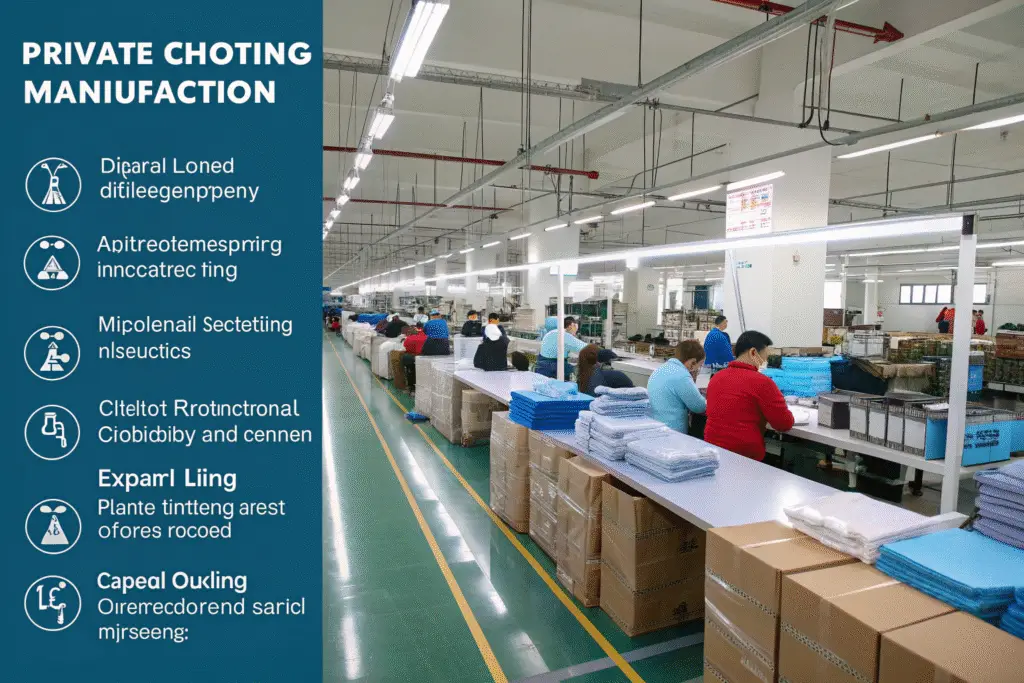
You're developing your private label clothing line and need to understand realistic timelines for manufacturing in China. Whether you're a new brand launching your first collection or an established retailer expanding your private label offerings, knowing the actual production timeline helps you plan effectively and avoid costly mistakes.
The lead time for private label clothing from China typically ranges from 8 to 14 weeks, with most standard orders completing in 10-12 weeks. This timeframe includes design approval, material sourcing, sample development, bulk production, quality control, and international shipping. The exact duration depends on your customization level, order quantity, fabric choices, and shipping method.
Let's break down what drives these timelines and where your specific project might fall within this range.
What Factors Determine Your Private Label Timeline?
Multiple variables influence your specific production schedule, with each customization choice adding time to the overall process.
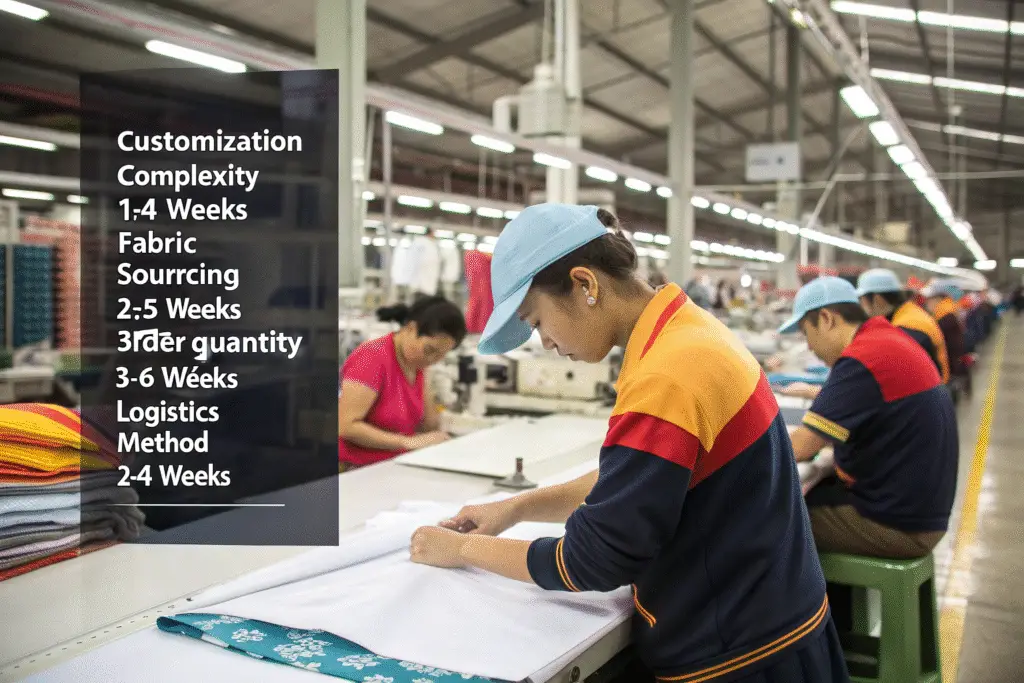
The primary timeline factors include: customization complexity (1-4 weeks), fabric sourcing (2-5 weeks), order quantity (3-6 weeks production), and logistics method (2-4 weeks). These elements combine to create the 8-14 week standard range. A recent case with an Australian activewear brand illustrates these variables: their custom fabric development added 3 weeks, complex printing added 1 week, but their use of established manufacturing patterns saved 1 week, resulting in an 11-week total timeline from order confirmation to delivery in Sydney.
How Does Customization Level Impact Timeline?
Customization depth significantly affects your production schedule, with basic private label requiring 8-10 weeks while fully custom development needs 12-14 weeks. The customization spectrum includes: basic label/branding only (8-9 weeks), selected materials with your branding (9-11 weeks), adapted designs with custom elements (10-12 weeks), and fully custom developed products (12-14 weeks). This explains why we offer a graded customization approach that allows brands to choose the right balance of uniqueness versus speed to market.
What Role Does Order Quantity Play?
Production time increases with quantity but benefits from economies of scale in Chinese manufacturing. The quantity timeline relationship follows: 500-1,000 units (8-10 weeks), 1,000-3,000 units (9-11 weeks), 3,000-5,000 units (10-12 weeks), and 5,000+ units (11-14 weeks). While larger quantities take more production time, they often have shorter per-unit production time due to manufacturing efficiencies in Chinese factories. Our production data shows that doubling order size typically adds only 30-40% more production time due to these efficiencies.
What Does A Typical 10-Week Timeline Include?
The 10-week timeline represents the sweet spot for balanced private label production, providing sufficient time for quality execution while maintaining reasonable speed.
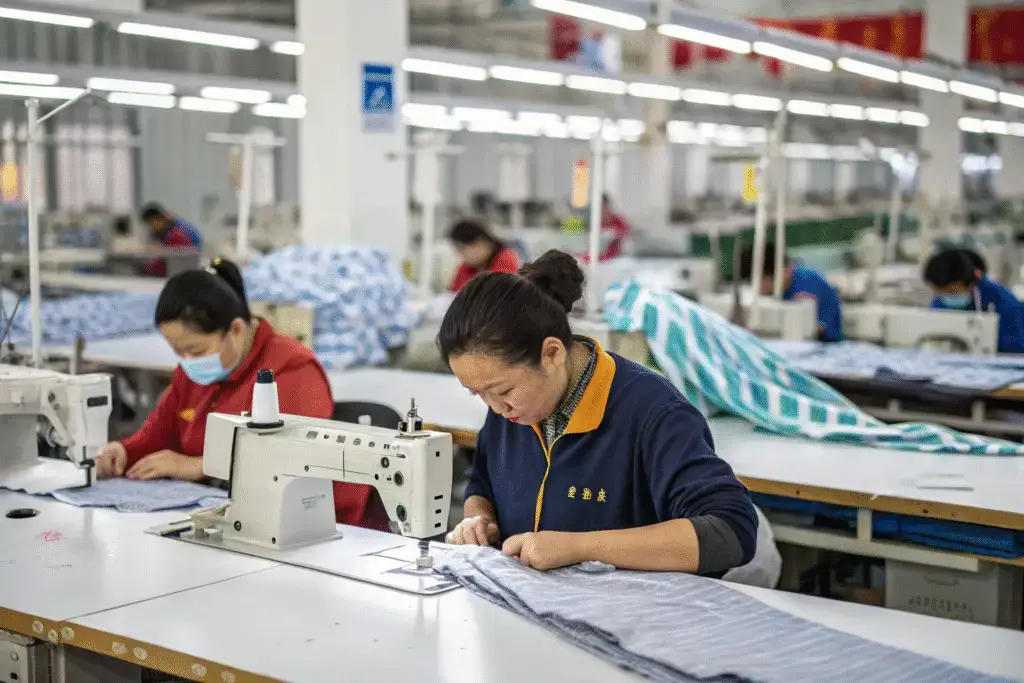
A standard 10-week private label production in China typically allocates: design finalization and tech pack completion (1 week), material sourcing and approval (3 weeks), sample development and fit confirmation (2 weeks), bulk production (2 weeks), and quality control with shipping (2 weeks). This balanced approach worked perfectly for a UK streetwear brand's 1,200-unit order - they achieved strong quality while maintaining the agility to make color adjustments based on early pre-order data.
What Occurs During Material Sourcing?
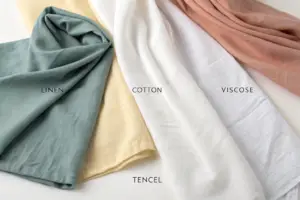
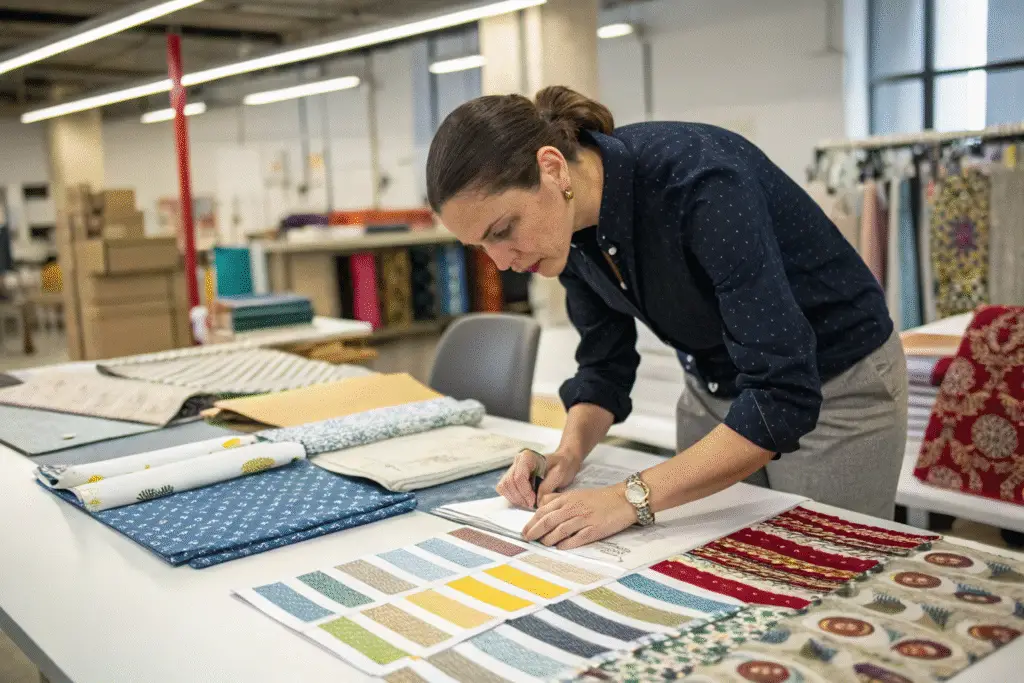
Material sourcing in China typically requires 2-3 weeks for standard materials but can extend to 4-5 weeks for custom developments. The sourcing process includes: material selection from supplier offerings (3-5 days), sample approval and testing (5-7 days), bulk order placement and production (1-2 weeks), and quality verification upon arrival (2-3 days). Chinese textile manufacturing offers significant advantages in speed and cost, but proper quality verification remains essential. We maintain relationships with certified fabric suppliers throughout China to ensure both speed and quality.
How Does Sample Development Work?
Sample development in Chinese factories typically requires 2-3 weeks including: prototype sample creation (5-7 days), fit evaluation and adjustments (3-5 days), pre-production sample verification (3-5 days), and approval process (2-3 days). The efficiency of Chinese sample rooms significantly accelerates this process compared to many other manufacturing regions. Our sample development process has been optimized over hundreds of private label projects, achieving a 85% first-sample acceptance rate through detailed technical packages and clear communication.
How Does Shipping Method Impact Your Timeline?
International shipping represents a significant portion of your total timeline, with method selection balancing cost against delivery speed.
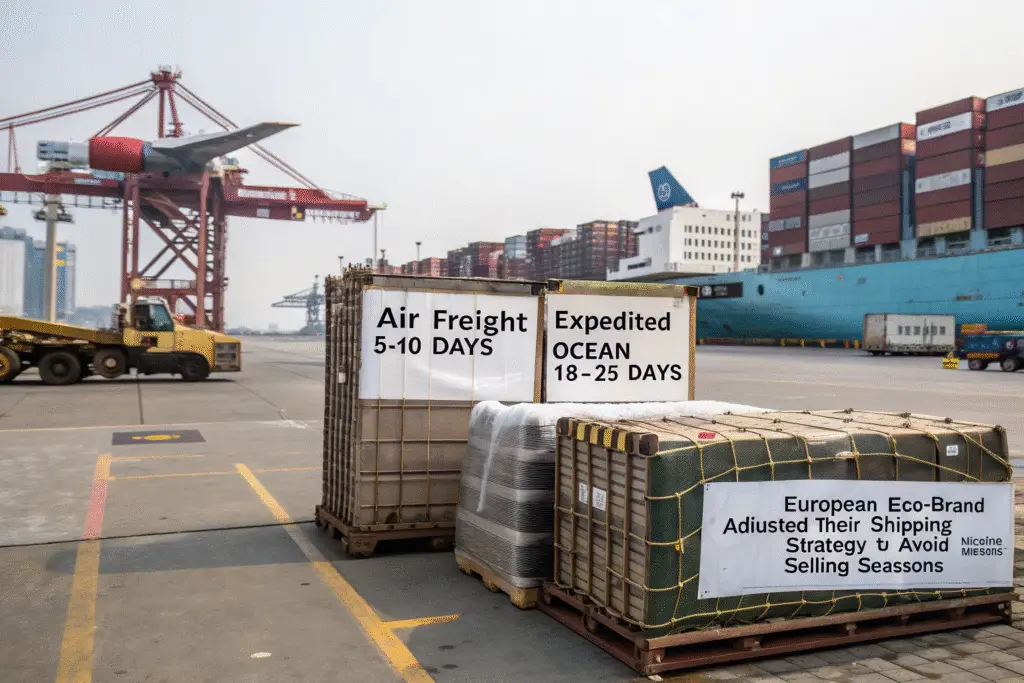
Shipping from China typically requires: air freight (5-10 days), expedited ocean (18-25 days), and standard ocean (25-35 days). These timeframes include factory-to-port transportation, customs clearance, ocean/air transit, and port-to-warehouse delivery. A European eco-brand learned to factor shipping carefully when their first order missed the selling season - they now use air freight for initial deliveries and ocean for replenishment, optimizing both timeliness and cost.
What Are Realistic Ocean Shipping Timelines?
Ocean shipping from China to major markets requires 25-35 days total, including: factory to port transportation (2-3 days), port operations and loading (2-4 days), ocean transit (15-25 days depending on destination), customs clearance (3-5 days), and destination port to warehouse (2-3 days). These timelines have stabilized post-pandemic but still show 5-7 day seasonal variations. The World Shipping Council provides current transit time data that informs our shipping recommendations to clients.
When Does Air Freight Make Sense?
Air freight becomes cost-effective when: dealing with time-sensitive product launches, small quantities where shipping cost differential is minimal, high-value items where inventory carrying costs justify premium shipping, or when missing seasons has significant revenue impact. The decision typically involves calculating the cost of missed sales versus the additional shipping expense. Our clients typically use air freight for 15-20% of their volume - the initial season launch and any unexpected bestseller replenishment.
How Can You Accelerate Your Private Label Timeline?
Strategic approaches can compress Chinese manufacturing timelines while maintaining quality, though each acceleration method involves specific trade-offs.
Effective timeline compression strategies include: using factory stock fabrics (saves 2-3 weeks), limiting sample revisions (saves 1-2 weeks), implementing parallel processes (saves 1 week), and using established manufacturing patterns (saves 1 week). A US-based DTC brand needed rapid production for an influencer collaboration - by selecting from our pre-approved fabric library and using modified existing patterns, we compressed their typical 12-week timeline to 8 weeks while maintaining their quality standards.
What Are Realistic Rush Production Options?
Realistic rush production in China can achieve 6-8 week timelines through: premium access to factory capacity (adds 10-15% cost), simplified customization using existing templates (saves 1-2 weeks), stock material utilization (saves 2-3 weeks), and overlapping approval and production phases (saves 1 week but increases risk). Our "fast track" manufacturing program maintains reserved capacity for urgent projects, though this premium service requires 4-week advance booking and carries a 15-20% cost premium.
How Does Advanced Planning Help?
Advanced planning provides the most effective timeline compression by enabling Chinese factories to prepare resources before order confirmation. The most impactful planning strategies include: seasonal fabric pre-booking (saves 2-3 weeks), preliminary pattern development during design phase (saves 1 week), and production slot reservation based on forecasted needs (saves 1-2 weeks). Brands that share their 6-month production forecast with us typically achieve timelines 3-4 weeks faster than reactive planners because we can pre-allocate capacity and materials with our Chinese manufacturing partners.
What Are The Real Quality Considerations?
While Chinese manufacturing offers speed advantages, understanding quality management approaches ensures your private label meets expectations.
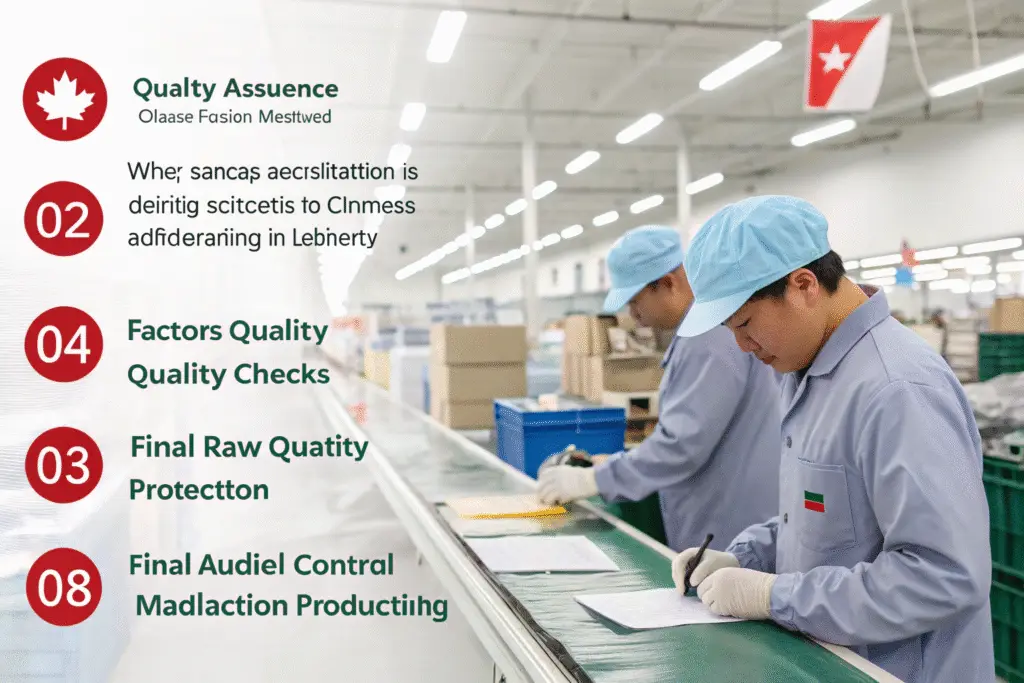
Quality assurance in Chinese private label manufacturing involves: factory qualification and auditing, in-process quality control, final inspection protocols, and continuous improvement systems. The most reliable manufacturers implement: raw material inspection upon factory arrival, in-line quality checks during production, and final random inspection following AQL standards. A Canadian retailer transformed their quality outcomes by implementing our three-stage inspection system, reducing their defect rate from 8% to 2% while maintaining their timeline.
How Does Communication Impact Quality?
Clear communication protocols prevent quality issues by ensuring specifications are understood, changes are documented, and issues are addressed promptly. Effective communication with Chinese manufacturers requires: detailed technical packages with visual references, scheduled video conferences across time zones, digital sample approval systems, and structured feedback mechanisms. We've found that brands providing comprehensive technical documentation experience 40% fewer quality issues despite the language and distance challenges.
What Certifications Should You Verify?
Reputable Chinese manufacturers maintain relevant certifications that verify their quality systems and compliance standards. Key certifications include: ISO 9001 (quality management), BSCI (social compliance), OEKO-TEX (material safety), and specific technical certifications for performance fabrics. These certifications provide independent verification of manufacturing standards rather than relying solely on factory claims. Our partner factories in China maintain these certifications with regular audits ensuring consistent compliance.
How Does Seasonality Affect Chinese Manufacturing?
Production timing in China follows predictable seasonal patterns that impact both capacity availability and pricing.
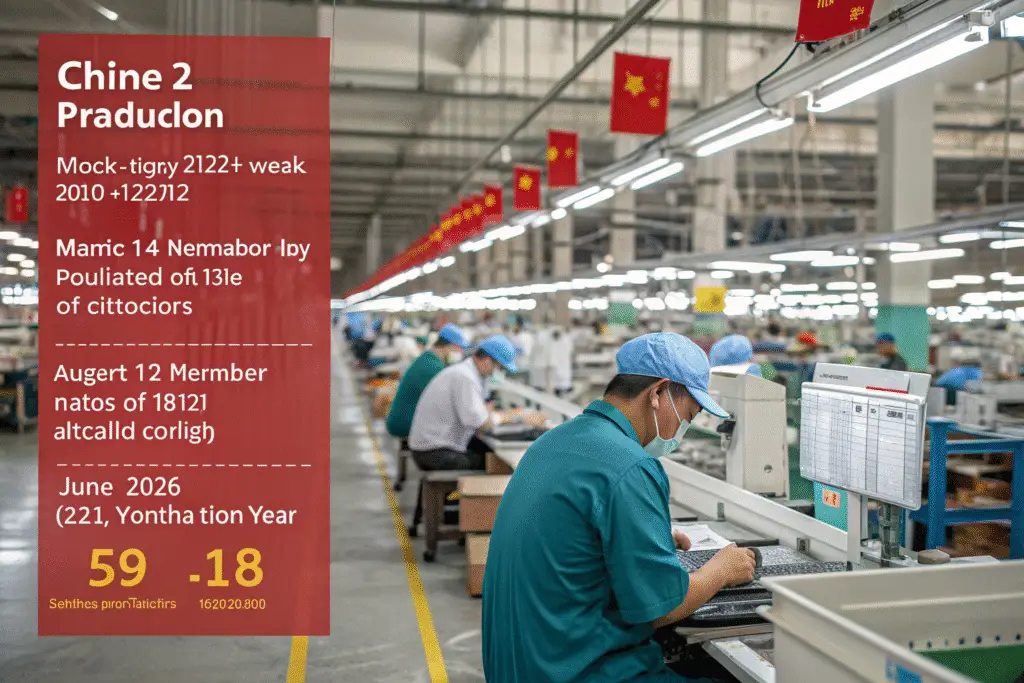
Chinese manufacturing experiences: peak production periods (March-May and August-October) adding 1-2 weeks to timelines, holiday periods (Chinese New Year - 3-4 week shutdown, Golden Week - 1 week) requiring advanced planning, and slower periods (June-July, November-December) offering potential timeline advantages. Understanding these patterns helps optimize your production scheduling. A European fashion brand now plans around Chinese New Year by completing their pre-production 6 weeks before the holiday, ensuring immediate production startup when factories reopen.
How Should You Plan Around Chinese New Year?
Chinese New Year planning requires: completing all pre-production 4-6 weeks before the holiday, confirming production schedules immediately after factory reopening, and allocating additional buffer for post-holiday production ramp-up. The holiday typically creates a 3-4 week production gap in January/February, with factories requiring 1-2 weeks to fully resume operations afterward. Brands that master Chinese New Year planning typically maintain their delivery schedules while competitors face 4-6 week delays.
What Are The Best Production Timing Windows?
The optimal production timing in China considers: early year production (February-April) for Fall collections, mid-year production (May-July) for Spring collections, and late year production (September-November) for Summer collections. These windows align with factory capacity availability while meeting Western retail calendars. Our manufacturing calendar helps clients identify these optimal timing windows based on their specific market needs and product categories.
Conclusion
Private label clothing manufacturing in China typically requires 8-14 weeks from order confirmation to delivery, with the 10-12 week range representing the optimal balance of speed, cost, and quality for most projects. Understanding the factors that drive these timelines - including customization level, order quantity, shipping method, and seasonal patterns - enables effective planning and reliable delivery to market.
The brands that consistently succeed with Chinese manufacturing are those who respect these timeline realities while implementing strategic planning, clear communication, and proper quality verification. If you're planning private label production in China and want to develop a realistic timeline, contact our Business Director, Elaine, at elaine@fumaoclothing.com to discuss how our manufacturing approach can support your requirements.