You're a wholesaler or brand owner evaluating sustainable manufacturing. The immediate question is: How much more will it cost? It's a valid concern. Sustainable practices, from certified organic cotton to waterless dyeing, often come with a higher upfront price tag. But framing this as a simple "price increase" misses the bigger financial picture. The real question is: What is the total cost of ownership, and where does the value lie?
Sustainable manufacturing typically increases the upfront wholesale price by 15-35%, but this initial premium is mitigated by long-term value in brand equity, risk mitigation, and operational efficiency. At Shanghai Fumao, we help clients navigate this balance by providing transparent cost breakdowns and demonstrating how strategic investments in sustainability can protect and even improve margins through higher sell-through rates, reduced waste, and future-proofing against regulations. The impact is not just a line-item cost; it's a strategic repositioning of your product's value.
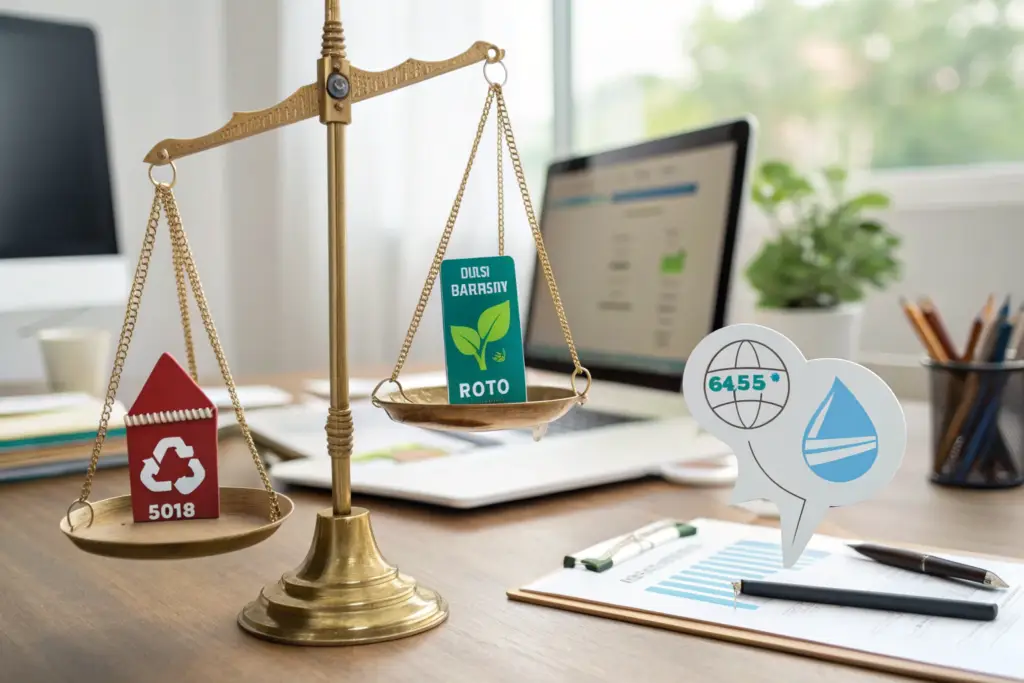
Understanding the price impact requires looking at the cost drivers behind sustainability and weighing them against the tangible and intangible returns. It’s an investment, not just an expense. The goal is to optimize the cost-to-value ratio, ensuring every dollar spent on sustainability delivers a measurable return in brand strength, customer loyalty, and supply chain resilience.
What Are the Direct Cost Drivers of Sustainable Manufacturing?
The initial price premium stems from specific, verifiable practices that replace conventional, often cheaper, but more polluting or exploitative methods. These costs are not arbitrary; they reflect the true environmental and social cost of production that was previously externalized.
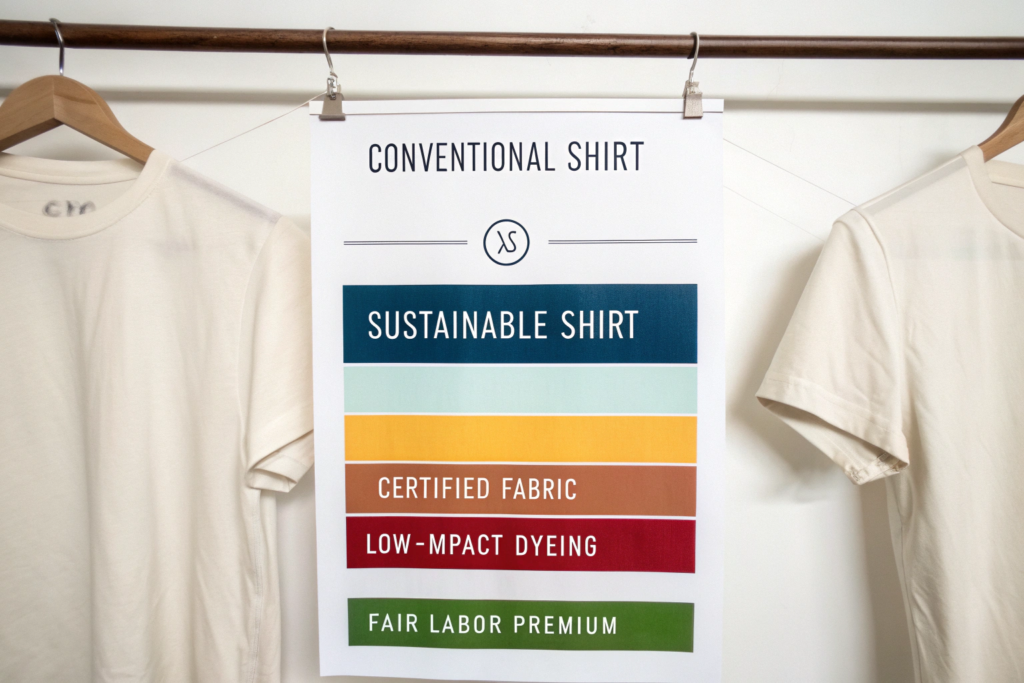
The direct cost increase comes from three primary areas: raw materials, specialized processing, and certification/auditing. Each adds a measurable, though variable, percentage to the base cost of a garment.
Dive Deeper Paragraph: Let's break down where the cents are added per garment.
Why Are Sustainable Raw Materials More Expensive?
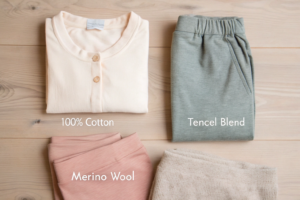
- Certified Organic Cotton: GOTS-certified organic cotton can cost 20-50% more than conventional cotton. This accounts for lower yield per acre, manual weed management, and certification costs for the entire supply chain.
- Recycled Materials: High-quality GRS-certified recycled polyester often costs 10-25% more than virgin polyester due to the collection, sorting, cleaning, and processing of post-consumer waste.
- Next-Gen Fibers: Materials like Tencel™ Lyocell or recycled wool carry a premium due to patented processes and smaller production scales.
For a basic organic cotton t-shirt, the fabric alone might add $1.50-$3.00 to the Free On Board (FOB) cost compared to a conventional version. This is the most significant and visible cost driver.
What Do Specialized Processes and Certifications Add?
- Low-Impact/Waterless Dyeing: Technologies like supercritical CO2 or foam dyeing require significant capital investment, which is reflected in a 5-15% processing surcharge.
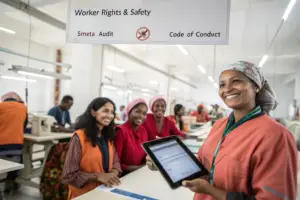
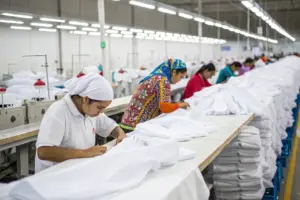
- Fair Labor & Social Compliance: Audited facilities paying living wages and ensuring safe conditions have higher labor costs, often adding 3-10%.
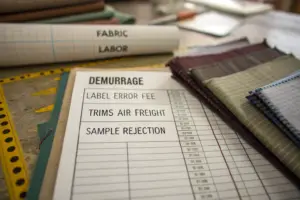
- Third-Party Certification & Traceability: Maintaining GOTS, OEKO-TEX®, or BCI certifications involves annual audit fees, transaction certificate costs, and internal staff to manage the system, adding 2-5% in administrative overhead.
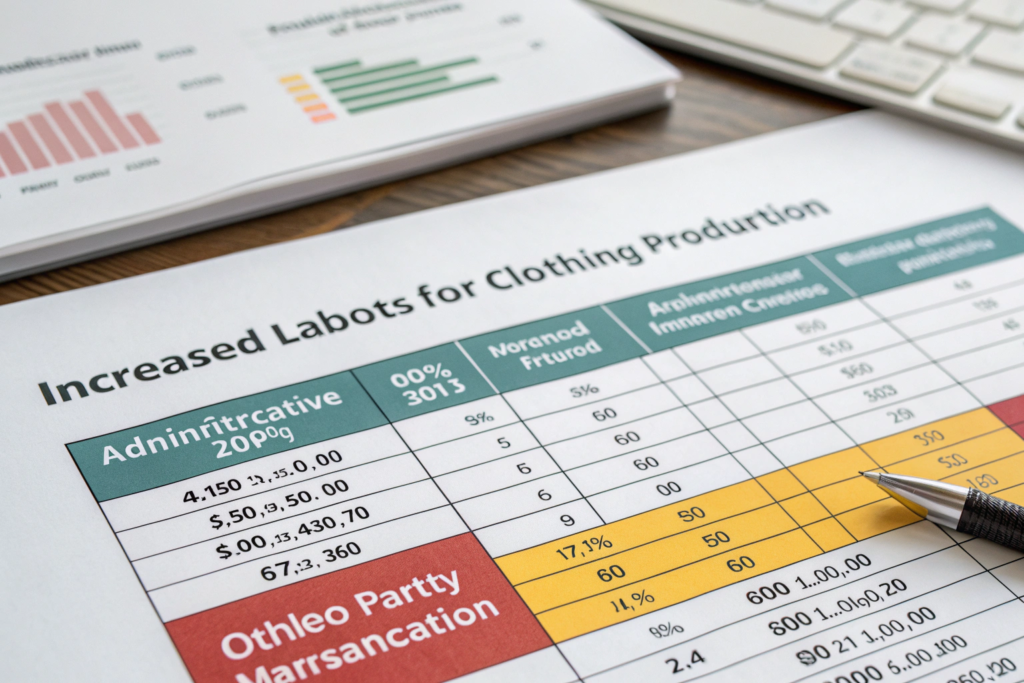
A client's decision to switch to a fully GOTS-certified production of a dress added approximately 28% to the FOB cost. However, this was a fully transparent, all-in cost covering material, processing, and certification.
How Can Strategic Sourcing and Efficiency Offset the Premium?
A savvy manufacturer doesn't just pass on costs; it works to optimize them. Through volume commitments, vertical integration, and process innovation, a significant portion of the sustainability premium can be absorbed or reduced.
The initial premium is not fixed. It can be managed through long-term partnerships, smart design, and lean manufacturing principles applied to sustainable workflows.
Dive Deeper Paragraph: Proactive management can compress the cost delta.
How Does Vertical Integration in Sustainable Sourcing Help?
By controlling or having deep partnerships with key stages (like spinning or dyeing), a manufacturer can reduce middleman markups on sustainable materials. At Shanghai Fumao, our long-term contracts with organic cotton mills secure us stable pricing that is 10-15% lower than spot market rates for equivalent quality, a saving we pass on to committed brand partners. This strategic sourcing is crucial for cost management.
Can Design and Production Efficiency Mitigate Costs?
Absolutely. This is called Eco-Design for Cost.
- Design for Efficiency: Simplifying a garment design can reduce fabric waste and sewing time. We helped a brand redesign a blouse with a slightly narrower cuff, which allowed for more efficient fabric marker planning, reducing fabric consumption by 7% and offsetting some of the organic fabric premium.
- Lean Sustainable Manufacturing: Applying lean principles to sustainable production—like optimizing energy use in solar-powered facilities or reducing water recycling cycle times—lowers operational overheads. Our investment in energy-efficient LED lighting and machinery pays back over time, keeping our general overhead lower than less efficient factories, which helps balance the other added costs.
What Are the Indirect Financial Benefits That Justify the Investment?
The true impact on your bottom line is seen beyond the wholesale price. Sustainable manufacturing delivers value that protects revenue, enhances brand value, and reduces future risks—factors that directly affect profitability.
The premium is an investment that generates returns in customer loyalty, operational stability, and market positioning. These are not soft metrics; they are hard financial advantages.
Dive Deeper Paragraph: The return on investment (ROI) manifests in several key areas.
Does Sustainability Drive Higher Sell-Through and Full-Price Sales?
Yes. Consumers, especially in key markets like North America and Europe, are voting with their wallets. Products with credible sustainability stories often experience:
- Higher Full-Price Sell-Through: They are less likely to be discounted because they are purchased for their values, not just price.
- Increased Customer Lifetime Value: Sustainability is a strong driver of brand loyalty, leading to repeat purchases.
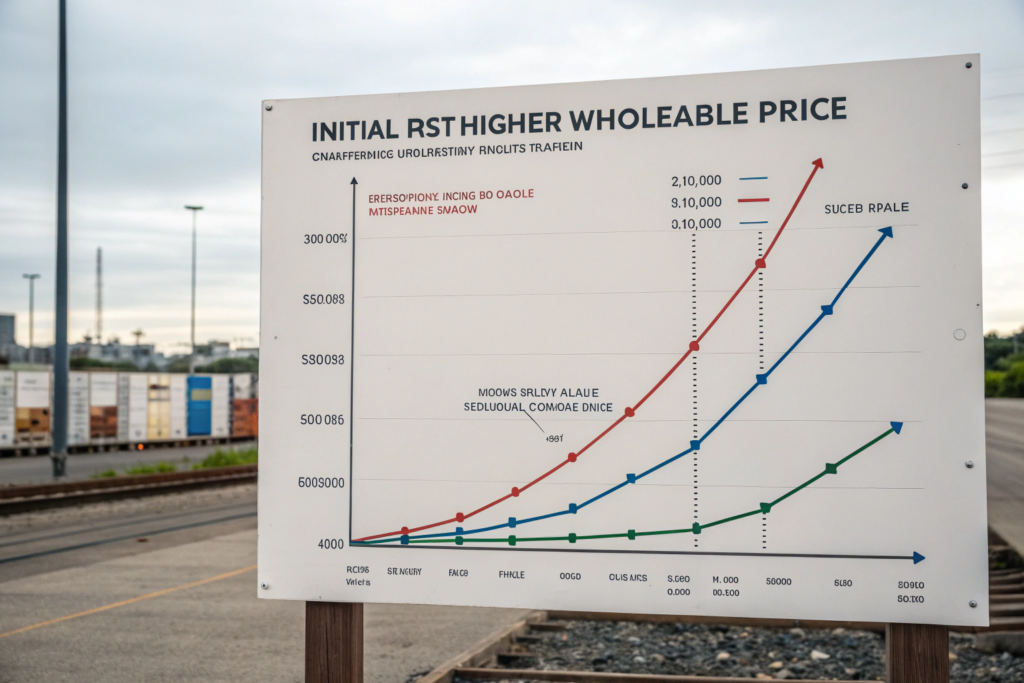
A client who introduced a sustainably manufactured knitwear line at a 25% wholesale premium found that the line sold out 30% faster than their conventional line at retail, and its sell-through rate at full price was 40% higher. The higher margin per unit, combined with faster turnover, resulted in greater total profit.
How Does It Mitigate Regulatory and Reputational Risk?
Future-proofing has tangible value.
- Avoiding Future Tariffs/Carbon Taxes: Governments are increasingly proposing carbon border adjustments and penalties on unsustainable practices. Investing now avoids future surprise costs.
- Preventing Costly Recalls/Scandals: Traceability and certified materials prevent issues like toxic substance violations or social compliance scandals, which can lead to recalls, fines, and irreparable brand damage. The cost of a single scandal can dwarf years of sustainability premiums.
This is risk management with a clear financial upside. It insures your business against volatile future regulations and fickle consumer sentiment.
How Should Wholesalers Communicate the Price to Retailers?
A higher wholesale price is a conversation, not an announcement. The key is to equip your retail buyers with the narrative and tools to justify the higher retail price to the end consumer and sell the value, not just the product.
Transparency and education are your best tools. The story behind the price—the "why"—becomes a powerful sales aid for the retailer.
Dive Deeper Paragraph: Successful communication bridges the cost gap with a compelling value proposition.
What Information Should Accompany the Price Sheet?
Provide retailers with a Sustainability Fact Sheet for each product or collection that includes:
- Cost Breakdown Transparency: A simple visual showing where the premium goes (e.g., "This $5 premium supports: Organic Farming, Fair Wages, Water Recycling").
- Certification Logos & Meanings: Explain what GOTS or OEKO-TEX® actually means for the consumer.
- The Impact Story: Quantify it: "Choosing this shirt saved 1,200 liters of water compared to conventional production."
This turns the price point from a hurdle into a proof point of quality and ethics.
Can Higher Wholesale Prices Actually Improve Retailer Margins?
Paradoxically, yes. While the wholesale cost is higher, the retail price can often be elevated by a greater percentage. If a sustainable garment has a strong story and demand, retailers can maintain a healthy keystone markup or even a premium markup, resulting in higher absolute dollar profit per unit sold, even if the percentage margin stays the same. The key is providing the marketing support and story that enables this pricing power.
Conclusion
The impact of sustainable manufacturing on clothing wholesale prices is multifaceted. There is a clear, upfront cost increase driven by better materials, fair labor, and cleaner processes. However, this premium is an investment that delivers measurable financial returns through stronger brand equity, higher sell-through rates, customer loyalty, and significant risk mitigation. It shifts the business model from competing solely on low cost to competing on verifiable value.
At Shanghai Fumao, we provide the transparency, efficiency, and strategic partnership to help you navigate this investment wisely. We show you the cost, help you manage it, and, most importantly, help you capture the value it creates in the market. Don't view sustainability as a cost center; view it as a brand and business accelerator. To discuss a cost-benefit analysis for making your line more sustainable, contact our Business Director, Elaine, at elaine@fumaoclothing.com or visit Shanghai Fumao. Let's build value that lasts.