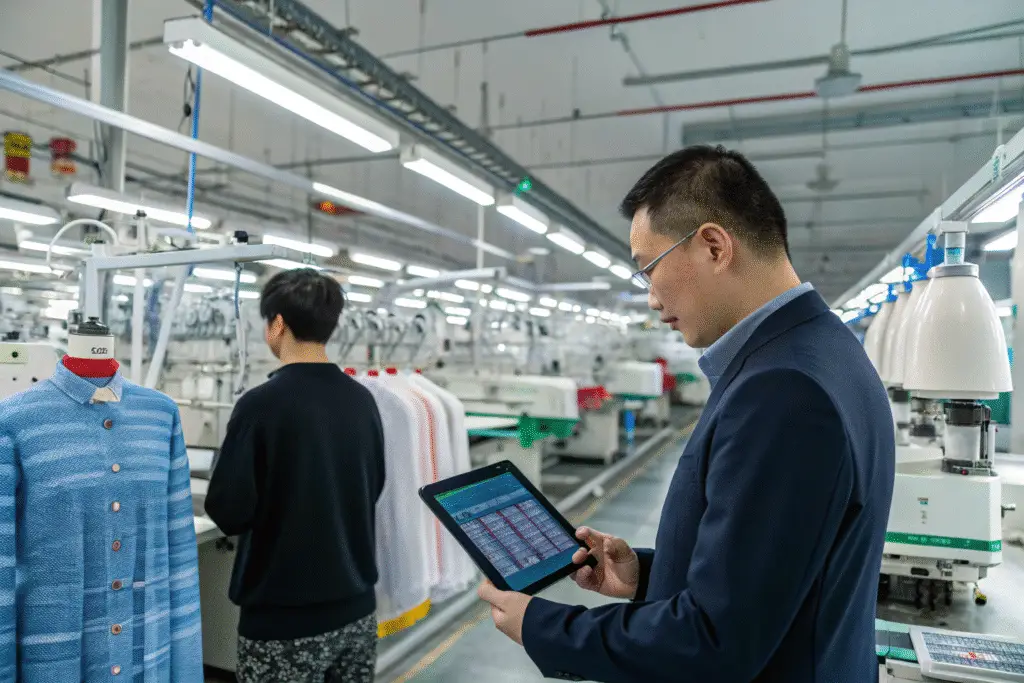
Many American fashion entrepreneurs ask me if MOQs will eventually disappear entirely. They wonder if the industry is moving toward a future where they can produce any quantity they want without cost penalties. While complete elimination of minimums isn't realistic, the future points toward smarter, more flexible MOQ systems that serve both manufacturers and brands better.
The future of minimum order quantities in fashion is moving toward dynamic, data-driven systems that balance production efficiency with market responsiveness. We're transitioning from rigid quantity thresholds to flexible manufacturing ecosystems powered by technology, sustainability imperatives, and changing consumer behavior.
The traditional MOQ model is being reshaped by multiple forces that demand more adaptive approaches to fashion production. Let me share what we're seeing from the manufacturing front lines.
How Is Technology Reshaping MOQ Standards?
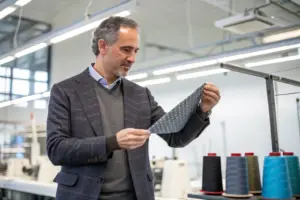
Technology is fundamentally altering what's possible in small-batch manufacturing. From AI-driven production planning to automated pattern making, technological advancements are reducing the efficiency barriers that traditionally justified high minimums.
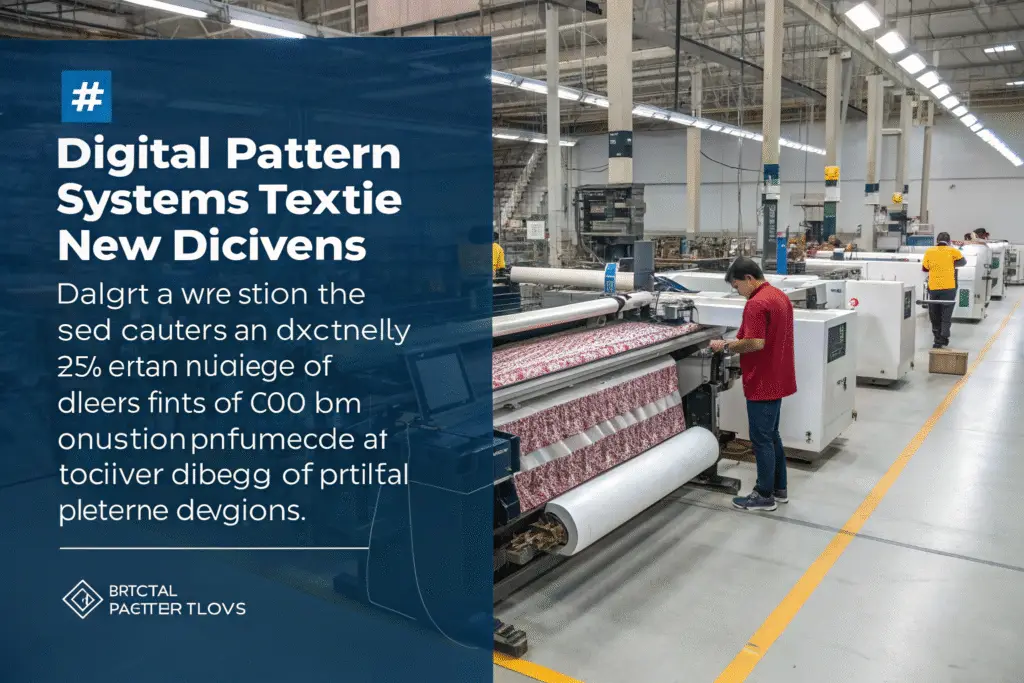
We've invested in digital pattern systems that can adapt existing blocks to new designs in hours rather than days. This technology allowed us to reduce our MOQ for complex woven shirts from 300 to 75 units while maintaining profitability. The efficiency gains come from reduced setup time and minimized manual labor in the pre-production phase.
What role does AI play in optimizing production efficiency?
Artificial intelligence is revolutionizing how we approach production planning and resource allocation. Our AI systems analyze hundreds of variables—from fabric characteristics to operator skill levels—to create optimized production schedules that make small batches economically viable. A San Francisco tech-enabled brand uses our AI platform to mix multiple small orders into efficient production runs, achieving unit costs that compete with much larger quantities. This intelligent batching represents the future of MOQ optimization.
How are digital manufacturing technologies impacting minimums?
Digital manufacturing technologies like 3D prototyping and automated cutting are eliminating traditional constraints. We've reduced sampling costs by 70% through digital prototyping, making small orders more feasible. A New York contemporary brand now produces initial runs of 50 units using our digital manufacturing capabilities, testing market response before committing to larger productions. The reduced risk and faster time-to-market justify slightly higher per-unit costs for these exploratory batches.
How Are Sustainability Demands Influencing MOQ Evolution?
The sustainability movement is pushing the industry toward more responsible production practices, which inherently favor smaller, more intentional production quantities. This shift aligns perfectly with evolving MOQ structures that support rather than fight against sustainable principles.
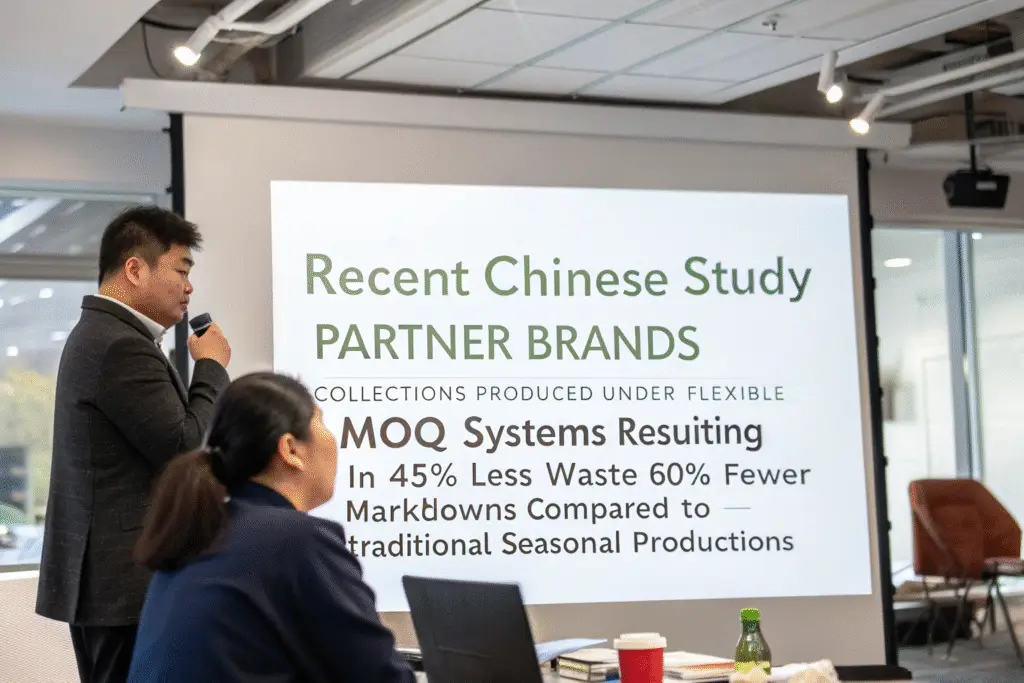
A recent study we conducted with our partner brands showed that collections produced under flexible MOQ systems had 45% less waste and 60% fewer markdowns than traditional seasonal productions. These environmental and economic benefits are driving rapid adoption of new MOQ models.
What is the connection between MOQ and circular fashion?
The rise of circular fashion principles demands production systems that avoid overproduction. Flexible MOQ enables the made-to-order and small-batch models that circular fashion requires. A Portland sustainable brand uses our 30-unit MOQ for their core collection, producing only what's needed each month based on actual orders. This approach has eliminated their inventory waste completely while maintaining healthy margins through premium pricing justified by their sustainable practices.
How do consumer attitudes affect MOQ requirements?
Modern consumers increasingly value uniqueness and sustainability over mass-produced uniformity. This changing consumer behavior supports brands that produce limited quantities and frequently refresh their offerings. A Los Angeles direct-to-consumer brand has built their entire business model around 100-unit productions using our flexible MOQ system. Their customers appreciate the exclusivity and sustainable positioning, allowing them to command prices 40% above competitors producing in traditional quantities.
What New Business Models Are Emerging Around Flexible MOQ?
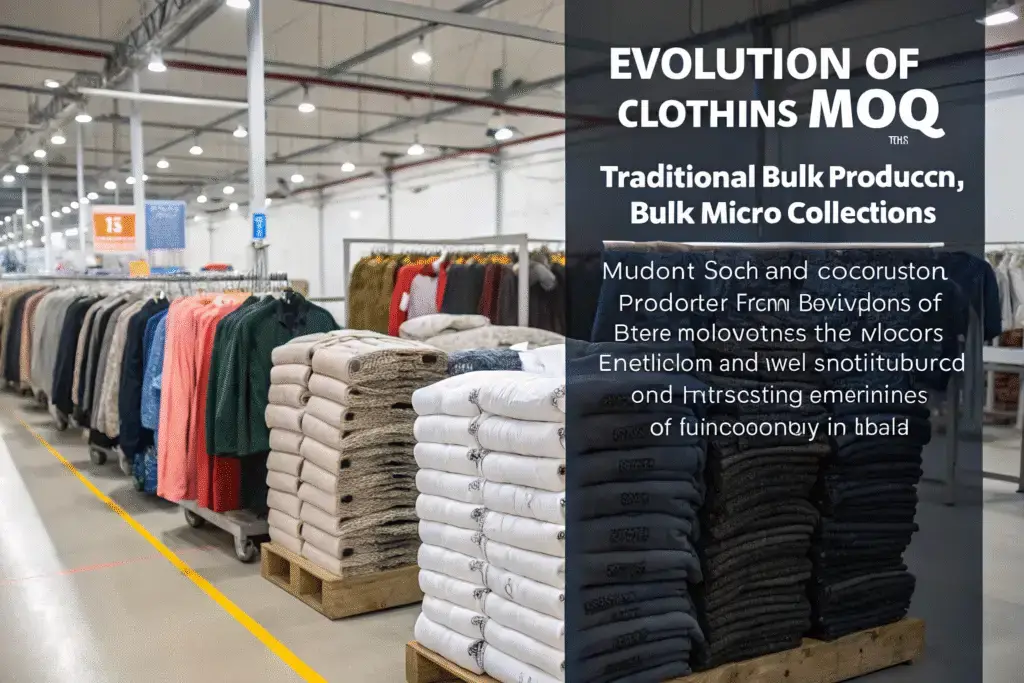
The evolution of MOQ standards is enabling entirely new fashion business models that weren't economically feasible just five years ago. From micro-collections to on-demand manufacturing, these models represent the future of fashion production.
We're seeing particularly strong growth in subscription-based brands that use our flexible MOQ capabilities to produce monthly collections of 150-300 units. This model provides constant novelty for subscribers while maintaining manageable inventory levels and production risks.
How is on-demand manufacturing changing MOQ expectations?
On-demand production represents the ultimate flexible MOQ—literally one unit. While not suitable for all garment types, we're seeing growing demand for on-demand capabilities, particularly for personalized and customized items. A Chicago made-to-measure brand uses our hybrid system where common components are produced in small batches while final assembly happens on-demand. This approach balances efficiency with customization, creating a new category between mass production and bespoke.
What role do manufacturing collectives play in MOQ evolution?
Manufacturing collectives and shared production platforms are emerging as powerful solutions to the MOQ challenge. Through our production collective, multiple small brands share production capacity and fabric sourcing. A group of three emerging designers recently pooled their orders to access premium Italian fabric that would have required 800-unit minimums individually. Together, they ordered 250 units each, meeting the mill's requirements while maintaining their individual design identities.
How Are Global Supply Chains Adapting To New MOQ Realities?
The pandemic and subsequent supply chain disruptions exposed the vulnerabilities of traditional fashion production models. This has accelerated the shift toward more flexible, responsive manufacturing approaches that can adapt to changing conditions.
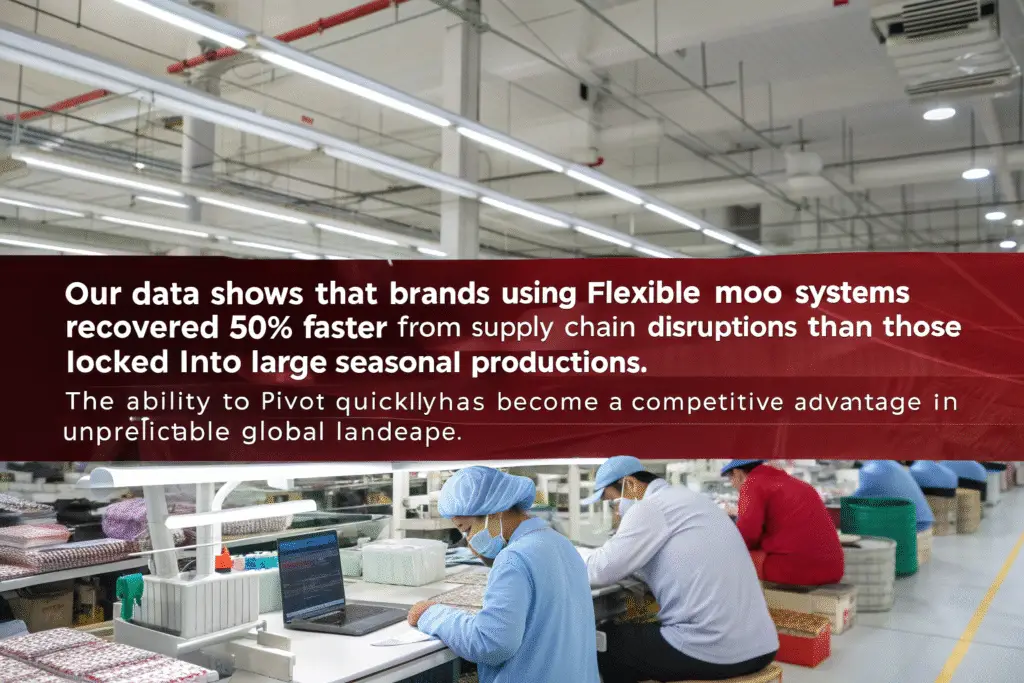
Our data shows that brands using flexible MOQ systems recovered 50% faster from supply chain disruptions than those locked into large seasonal productions. The ability to pivot quickly has become a competitive advantage in an unpredictable global landscape.
What is the impact of nearshoring on MOQ flexibility?
The movement toward nearshoring and distributed manufacturing is creating new MOQ possibilities. We're developing hybrid models where initial sampling and small batches happen in our Chinese facilities while replenishment production occurs closer to end markets. A Miami brand uses this approach to maintain 75-unit MOQ for new styles while enabling rapid 30-unit replenishments from regional facilities. This distributed model combines the cost advantages of Asian manufacturing with the speed of local production.
How are payment structures evolving with new MOQ models?
Traditional payment terms are adapting to support flexible MOQ systems. We've developed scaled payment plans that align with brands' cash flow realities. A startup from Austin uses our graduated payment system where they pay for initial 50-unit batches upfront, then transition to net-30 terms once they establish consistent ordering patterns. This financial flexibility has enabled several emerging brands to scale gradually without the cash flow crises that often accompany rapid growth.
Conclusion
The future of minimum order quantities is not about elimination but transformation. We're moving toward intelligent, flexible systems that serve the needs of modern fashion businesses while maintaining manufacturing viability. The brands that embrace these evolving MOQ models will gain significant advantages in responsiveness, sustainability, and financial health. The factories that invest in the technologies and systems to support this flexibility will become the manufacturing partners of choice for the next generation of fashion brands.
If you're ready to explore how evolving MOQ standards can benefit your fashion business, our forward-looking manufacturing systems are designed for the future of fashion. Contact our Business Director Elaine today at elaine@fumaoclothing.com to discuss how our flexible approaches can support your growth in the coming years.