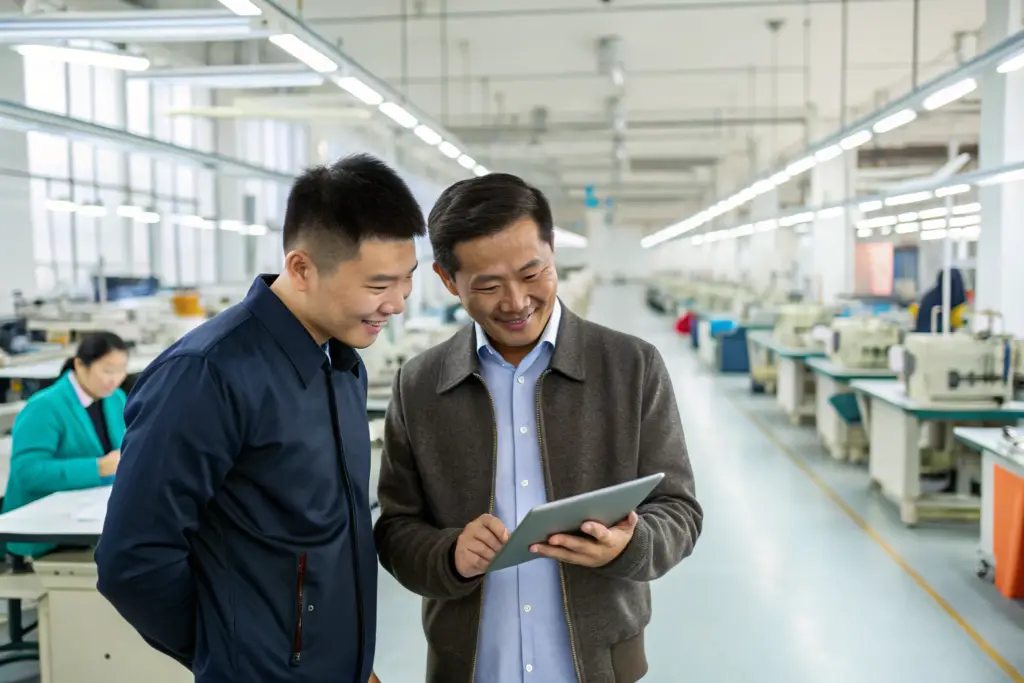
The old way of B2B clothing wholesale meant long email chains, slow samples, and hoping for the best. Today, everything is changing. Technology is rewriting the rules of how American brands connect with Chinese manufacturers.
The future of B2B clothing wholesale is a fully integrated digital ecosystem. This system combines real-time video production monitoring, AI-powered fabric sourcing, and seamless logistics management into a single, transparent platform. It shifts the focus from simply finding a supplier to building a data-driven, collaborative partnership that guarantees quality, speed, and reliability. For brands, this means less risk and more control.
For over a decade, I have run Shanghai Fumao, a clothing factory in China with five production lines. I have seen the shift firsthand. American buyers used to visit our factory twice a year. They would touch fabrics and sign contracts in person. Now, many of our largest partnerships began with a video call and a shared digital screen. The future is not coming. It is already here. The key is understanding how to use these digital tools to build trust and deliver exceptional products.
How is digital transformation actually solving old B2B clothing problems?
Old problems in apparel sourcing were not about finding a factory. They were about communication gaps, quality surprises, and shipment delays. Digital tools are finally fixing these core issues.

Why was communication the biggest barrier in the past?
Time zones and language created a massive gap. A simple question about a collar stitch could take 24 hours to answer. That delay would slow down the entire production schedule.
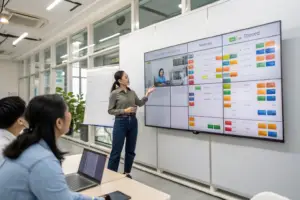
Now, we use shared project management platforms. Our team at Shanghai Fumao and our buyers in the US work on the same digital task board. We see updates in real-time.
For example, last year a menswear brand from New York needed a last-minute change to a jacket lining. Instead of waiting for an email, we used a group chat with photos. We showed them three lining options within two hours. They approved the change by the end of their workday. This speed saved the production line from a costly shutdown. It also built immense trust. Good communication is now our standard, not an exception. You can learn more about our integrated communication approach on our website.
How does technology solve the problem of delayed shipments?
Missed shipping deadlines are a brand's worst nightmare. They lead to empty shelves and lost revenue. In the past, a buyer only knew a shipment was late when it did not arrive.
Today, we provide digital production tracking. Our clients have a private login. They can see which stage their order is in. They see the fabric arrival date. They see the cutting date. They see the sewing start date. They see the packing photos.
Last spring, a California activewear brand was worried about a big order for their summer line. They checked the tracking portal weekly. When a small delay in zipper supply happened, they saw it immediately. We discussed it in a video call. We rearranged the production schedule to prioritize their final assembly. The order shipped on time. The brand owner told me that having this visibility was more valuable than a low price. It gave them peace of mind. We use systems that integrate with major logistics platforms for US importers to ensure every step is coordinated.
Can digital tools really improve quality control?
Trust is the hardest thing to build in a remote relationship. In the past, a buyer had to fly to China to inspect the final goods. That is expensive and time-consuming.
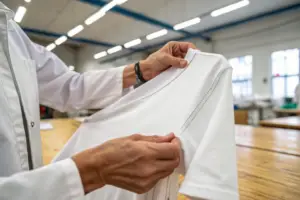
Now, quality control happens live. We perform random in-line inspections. We then share videos and high-resolution photos with our clients. They see the garment at the cutting stage. They see it as it is being sewn. They see the final ironed product.
One of our clients, a children's wear brand from Texas, was very worried about fabric safety. For their first order, they requested third-party testing. We provided digital certificates with time-stamped photos of the samples being taken. We also set up a live video call during the final inspection. The inspector showed them 20 random pieces from the shipment, pointing out every seam and button. The client said it felt like they were walking the floor with us. Now, they trust our in-house QA team for reorders because we have proven our process. We always share our quality control certifications to give our partners full confidence.
What digital tools are essential for modern B2B clothing wholesale?
Digital tools are no longer optional. They are essential for staying competitive. For a factory like ours, they are the foundation of our service.
What role does 3D design and digital sampling play?
Physical samples used to take weeks and cost hundreds of dollars per style. We had to ship them by courier. If a buyer wanted a change, we started over.
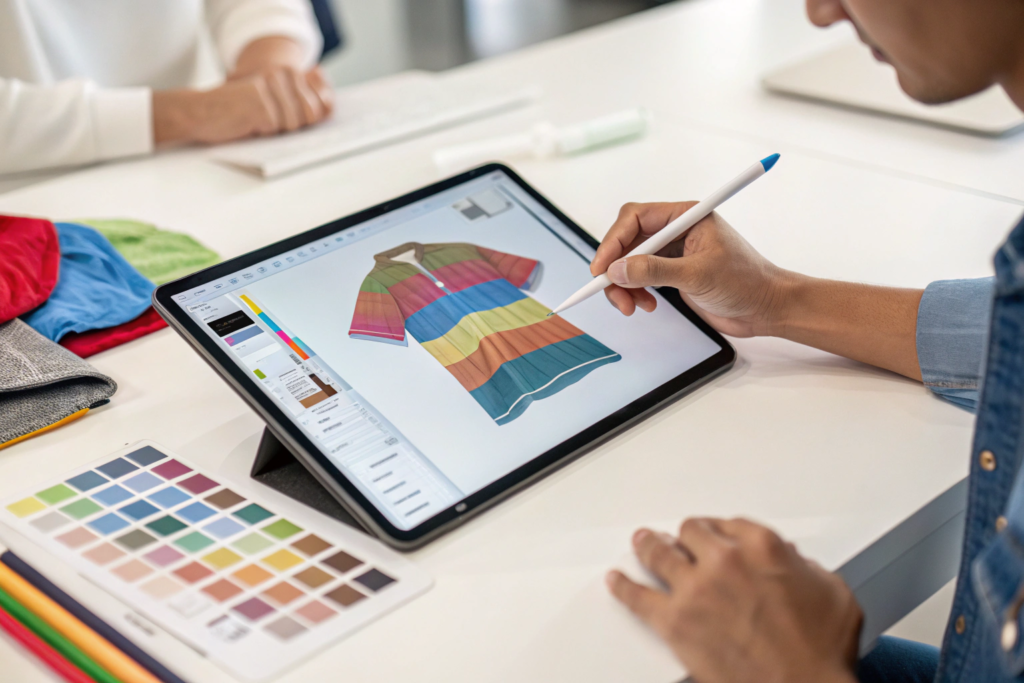
Now, we use 3D design software. Our team creates a digital prototype first. The buyer sees the garment on a 3D model. They can rotate it. They can zoom in on the pocket stitching. They can change the fabric color with a click.
This process has changed everything for us. A New York-based distributor approached us last year for a complex woven shirt. Instead of making five physical samples, we created three 3D versions. They saw the fit issues on the digital model. They requested adjustments to the sleeve length. We made the changes in two days, not two weeks. Once the 3D sample was approved, we made one final physical sample for their photoshoot. This process saved them over $2,000 in sampling costs and three weeks of development time. It also meant we could start bulk production faster. Digital sampling is now a core part of our full-package product development service.
How does AI help with fabric sourcing and pricing?
Finding the right fabric at the right price used to require endless phone calls to local mills. A buyer would request a specific weight cotton, and we would search our network.
Today, AI-powered platforms help us source globally. We input the fabric specifications. The system shows us mills with available stock and current pricing. This means we can find better deals and faster lead times.
For a recent project, an eco-conscious brand from Oregon needed organic cotton jersey. They wanted a specific GOTS certification. Using our digital sourcing tools, we found a mill in India that had the exact fabric in stock. The price was 8% lower than our usual supplier. We passed this saving to the client. The AI tool also showed us the mill's past performance and delivery reliability. This data gave us the confidence to recommend a new partner. The client was happy with the fabric quality and the lower cost. AI helps us make smarter sourcing decisions.
This is our most important tool for client relationships. A shared dashboard creates total transparency. It is not just a production schedule. It is a communication hub.
| Feature | Benefit for the Buyer |
|---|---|
| Live Order Status | See real-time progress: fabric arrival, cutting, sewing, finishing. |
| Photo & Video Uploads | View visual proof of quality at every stage. |
| Inspection Reports | Access and download QA reports with time-stamped photos. |
| Shipment Tracking | Get container tracking numbers and live location updates. |
| Document Center | Find all certificates, invoices, and packing lists in one place. |
A brand owner from Chicago told me the dashboard helped them manage their cash flow better. They could see exactly when an order was 90% complete. This allowed them to arrange their payment and warehouse staffing in advance. The dashboard eliminates guesswork. It turns our factory into a seamless extension of their own operation.
How do you build trust with a digital-only supplier?
Trust is not built by a website. It is built by consistent actions and verifiable data. In a digital world, we use technology to create more proof, not less.
What are the key digital trust signals for a factory?
American buyers want to see evidence. A simple "we are a good factory" is not enough. You need to show it. We focus on several key digital trust signals.
First, we invest in our digital presence. Our Alibaba store features verified badges, transaction history, and client reviews. We update our LinkedIn company page with factory floor videos and project updates.
Second, we share all our certifications digitally. We do not wait for a client to ask. We provide our ISO 9001, BSCI, and Oeko-Tex certificates upfront. These are verifiable documents. They show a commitment to standards. You can find many of these on the official BSCI platform.
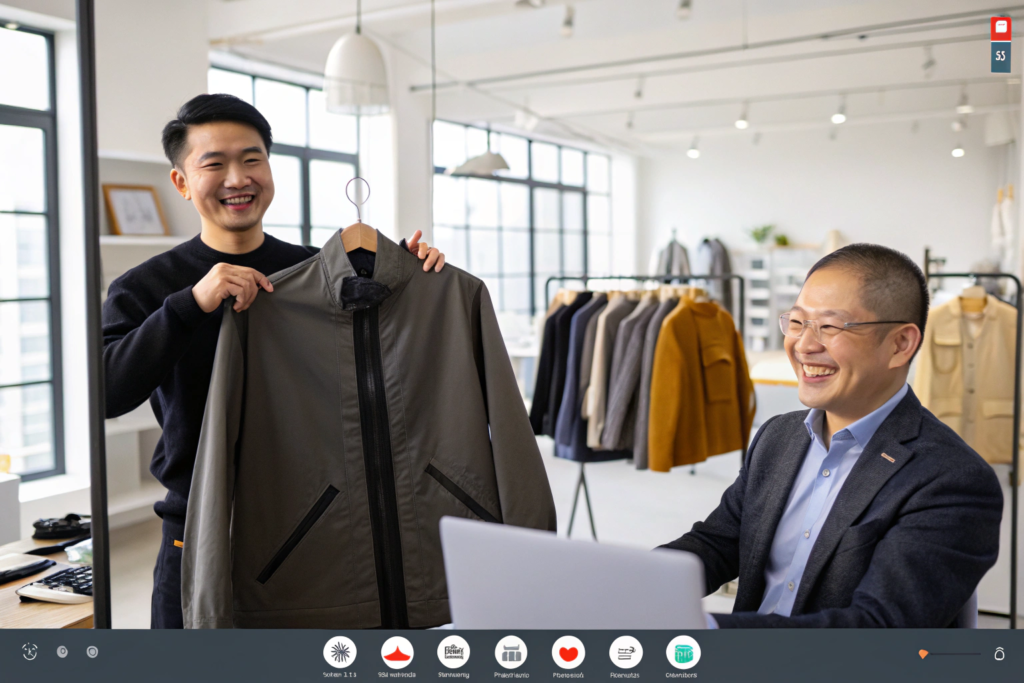
Third, we provide video tours. For new clients, we do not just send a PDF. We record a 10-minute video walking them through our factory. We show the cutting room, the sewing lines, and the packing area. We introduce key team members. This makes us a real company, not just an email address.
Can video calls replace in-person factory visits?
I believe video calls can handle 80% of the need for a factory visit. They are efficient. They save time and money.
We use video calls for initial meetings, sample reviews, and production check-ins. For the children's wear client from Texas, we did everything by video. We had weekly calls to review their first order. They saw the patterns being laid out. They saw the first piece come off the line. They approved the final shipment after a live video inspection.
However, a physical visit is still valuable for major partnerships. It builds a personal connection. We encourage our biggest clients to visit once. After that, we rely on our digital tools for all subsequent orders. The key is that the video calls are not a one-time thing. They are a regular, scheduled part of the process. This consistency creates the same rhythm as an in-person relationship.
How do we handle payment security in a digital B2B environment?
Payment is the biggest point of anxiety for a new buyer. Sending a large deposit to a factory on the other side of the world is a risk. We address this head-on.
We offer clear, standard payment terms. For new clients, we often use a Letter of Credit (L/C). This protects both sides. The bank acts as the intermediary. We do not get paid until we present shipping documents proving the goods are on the water.
For repeat clients, we use a mix of T/T (telegraphic transfer). We invoice them in stages: a deposit to start, a second payment after production, and final payment before shipment. Every invoice is sent through a secure portal. We have never had a security issue. We are happy to share references from our US clients. They will confirm we handle payments with total professionalism. We also always provide detailed packing lists and commercial invoices well in advance of any payment due date.
Conclusion
The future of B2B clothing wholesale is here. It is a digital future. But the goal of the technology is not to replace human connection. It is to strengthen it.
For my factory, tools like 3D sampling, AI sourcing, and shared production dashboards do more than just streamline work. They build trust. They give our clients the visibility they once had to travel thousands of miles to get. They turn a complex supply chain into a transparent partnership.
The old problems of slow communication, quality surprises, and delayed shipments are being solved. The solution is not a single app. It is a commitment to using every digital tool to be a better, more reliable partner. We have seen it with our own clients. The brands that embrace these tools grow faster. They launch products quicker. They face less risk.
If you are an American apparel brand looking for a manufacturing partner, you need a factory that speaks your language in more ways than one. You need a partner who sees technology as a bridge, not a barrier.
At Shanghai Fumao, we have built our entire service model around this digital-first philosophy. We combine our 5 production lines of hands-on expertise with cutting-edge digital tools. We are ready to show you our factory floor, our quality control process, and our production schedule from your office. Let us show you how we can bring your next collection to market with speed, quality, and complete transparency.
To start a conversation, please contact our Business Director, Elaine, directly at elaine@fumaoclothing.com. She is ready to answer your questions and set up a video meeting to explore how we can become your trusted manufacturing partner.