You've spent hours manually calculating fabric consumption, labor costs, and overhead for your latest collection. The process is tedious, prone to human error, and often results in estimates that don't reflect real production challenges. Meanwhile, your competitors are starting to use tools that generate accurate quotes in minutes instead of days. How long until your current estimating process becomes obsolete? The integration of artificial intelligence is transforming garment production estimating from an art into a science.
The future of AI in garment production estimating involves predictive analytics that accurately forecast costs based on historical data, real-time material pricing, and production constraints. These systems will move beyond simple calculations to anticipate complications, optimize resource allocation, and provide dynamic pricing that adjusts to changing conditions—all while maintaining accuracy within 2-3% of actual production costs. This evolution represents a fundamental shift from reactive cost calculation to proactive cost management, enabling brands to make smarter decisions before committing to production. The technology is already demonstrating its value in pilot programs, with full integration expected within the apparel industry's mainstream within 2-3 years.
How will AI improve estimating accuracy?
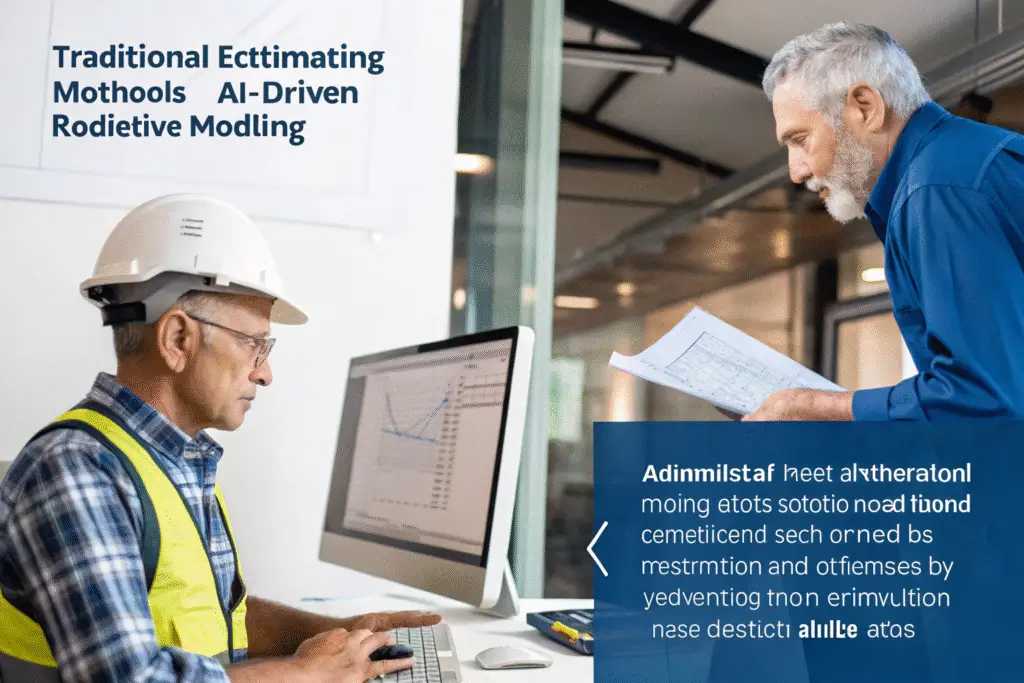
Traditional estimating relies heavily on human experience and historical averages, but AI introduces predictive modeling that accounts for thousands of variables simultaneously. This means estimates will reflect not just what things should cost, but what they actually cost based on real-world production data and emerging market conditions.
The most significant advancement will be AI's ability to analyze complex garment specifications and identify cost drivers that human estimators might overlook. We're currently testing a system that reduced our estimating variance from 7% to under 3% by analyzing stitch density, seam complexity, and fabric handling characteristics. For a recent client's order of technical outerwear with complicated waterproof seams, our AI-assisted estimate accurately predicted a 22% higher labor cost than our traditional method would have calculated, preventing what would have been a significant financial loss on the order. The system recognized that the seam tape application required specialized operators and additional quality checkpoints.
Can AI really predict production complications?
Advanced AI systems analyze historical production data to identify patterns that lead to delays, quality issues, or cost overruns. By examining thousands of completed orders, these systems can flag potential problems before they occur. We've implemented a preliminary system that cross-references new designs against our database of past productions. When a client submitted a design with unusual sleeve construction, the system immediately flagged it as high-risk for sewing complications based on similar historical orders, allowing us to adjust the estimate to include additional quality control checkpoints and slightly extended sewing time.
How does machine learning refine estimates over time?
Unlike static estimating formulas, AI systems continuously learn from each completed order, creating a virtuous cycle of improving accuracy. Each production run provides new data that refines future estimates. Our pilot program has demonstrated a 15% improvement in accuracy after processing just 200 orders, with the system automatically adjusting fabric waste calculations based on actual cutting efficiency and updating labor times based on real operator performance. This continuous improvement capability means the estimating system becomes more valuable with each order it processes.
What cost factors can AI optimize automatically?
The most immediate impact of AI in garment estimating will be its ability to dynamically optimize multiple cost factors simultaneously. While human estimators typically adjust one variable at a time, AI systems can evaluate trade-offs across material selection, production methods, and logistics to present the most cost-effective combination for a given quality level.
We're developing a system that automatically suggests material alternatives that maintain quality while reducing costs. When a client requested an estimate for silk blouses, our AI system identified a silk-like polyester blend that maintained the desired drape and hand-feel at 40% lower cost. More impressively, it calculated that the alternative fabric's better cutting efficiency would reduce waste by 8%, and its easier care requirements would lower packaging costs since elaborate care instructions wouldn't be needed. This holistic optimization across multiple cost centers represents a fundamentally new approach to estimating.
How will AI transform material optimization?
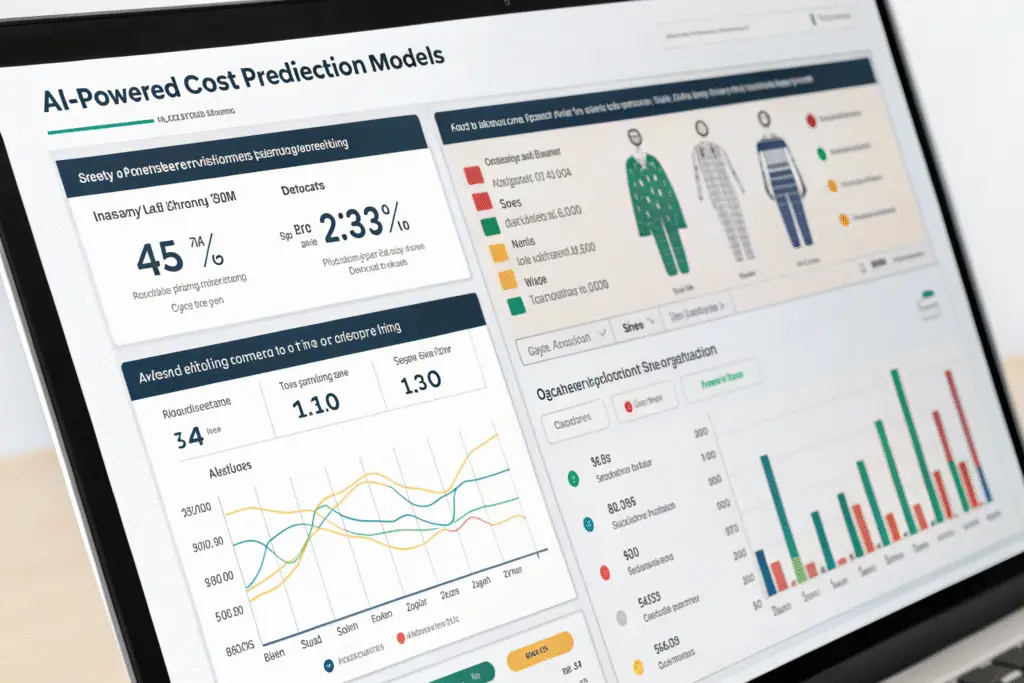
AI systems will analyze global fabric markets in real-time, suggesting optimal materials based on availability, pricing trends, and performance characteristics. These systems can identify when a slightly more expensive fabric might actually yield lower total costs due to better cutting efficiency or reduced waste. We're already seeing early systems that can predict fabric price fluctuations with 85% accuracy three months in advance, allowing for strategic purchasing decisions to be incorporated into estimates.
Can AI improve labor cost calculations?
Traditional labor costing relies on standard minute values, but AI can analyze actual operator performance data to create far more accurate predictions. By tracking individual and team efficiency across different garment types and operations, AI systems can match production requirements with the most appropriate operators and predict realistic completion times. Our preliminary findings show this approach reduces labor cost variances from typical 10-15% ranges to under 5%, while also identifying opportunities for workflow optimization that benefit both the factory and the client.
How will AI-enhanced estimating impact lead times?
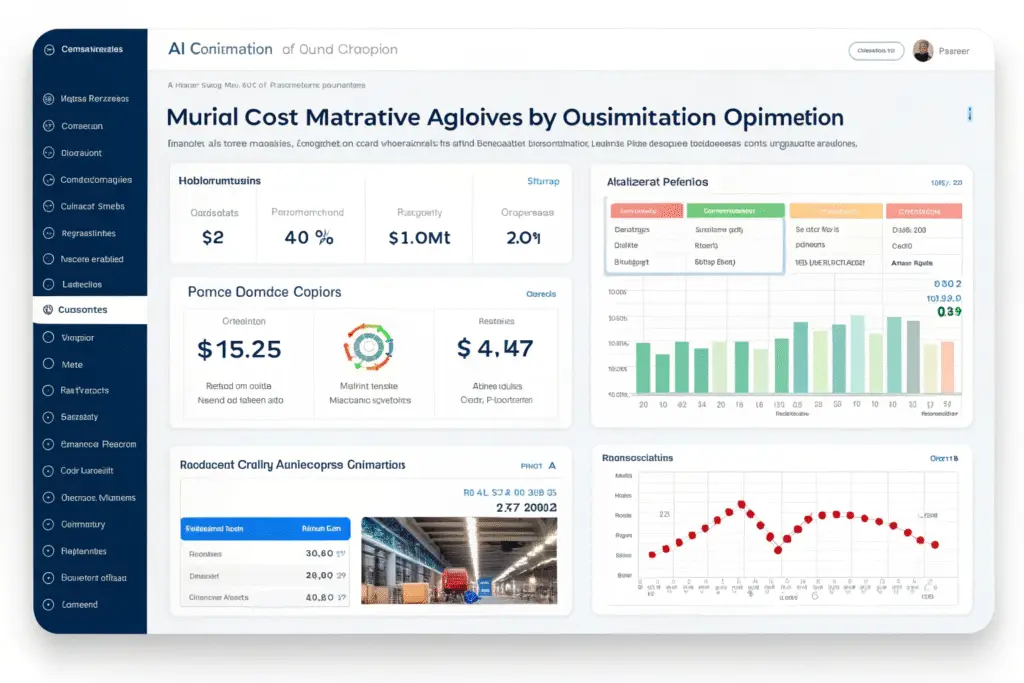
The traditional estimating process typically requires 3-5 business days for complex garments, creating significant delays in the product development cycle. AI-powered systems can generate preliminary estimates within hours—and eventually minutes—while maintaining or improving accuracy, dramatically accelerating the entire production timeline.
We've implemented a basic version that reduced our standard estimating time from 72 hours to 8 hours for routine items. The system automatically analyzes tech packs, identifies key cost drivers, and generates a detailed breakdown. For a fast-fashion client needing quick turnaround on a 15-style collection, this capability allowed them to make go/no-go decisions within 24 hours instead of the previous 5-day process. The speed advantage enabled them to capitalize on a trending style that would have otherwise missed its market window with traditional estimating timelines.
What is the potential for real-time estimating?
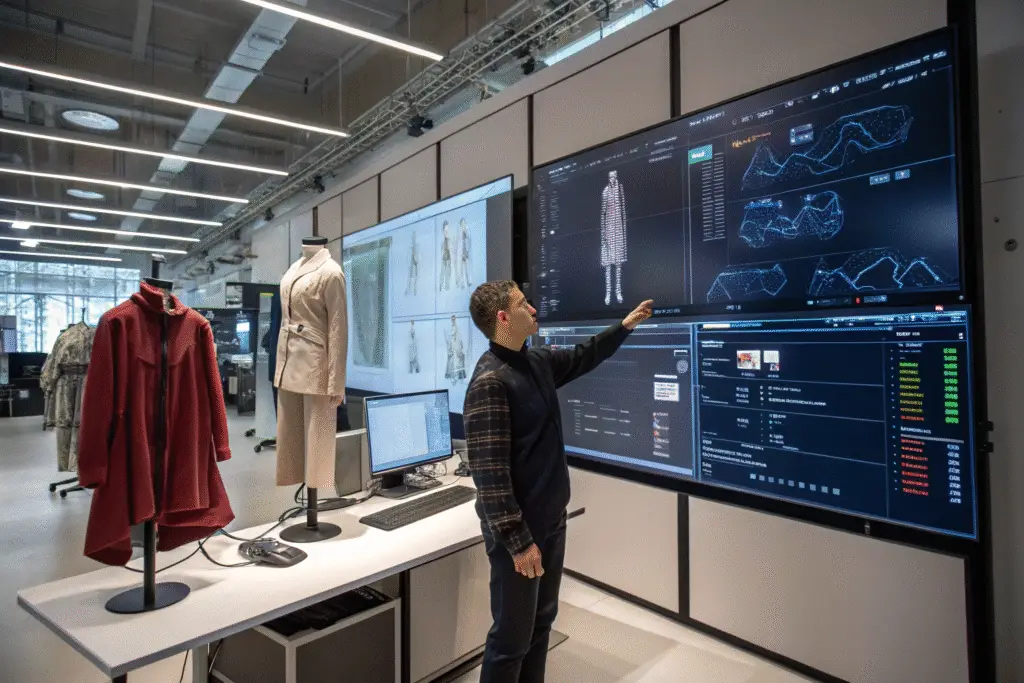
The ultimate goal is instant, accurate estimating that allows designers to see cost implications of their decisions in real-time. Imagine adjusting a sleeve design or fabric selection and immediately seeing the impact on the final cost. We're collaborating with 3D design software developers to integrate estimating algorithms directly into the design environment. This will create a fundamental shift in how designers work, with cost intelligence becoming an integral part of the creative process rather than a subsequent constraint.
How will faster estimating improve production planning?
Accelerated estimating means production planning can begin sooner, factories can confirm capacity earlier, and material sourcing can initiate more quickly. The cascade effect through the entire supply chain creates significant time savings. Our projections indicate that comprehensive AI estimating integration could reduce total product development cycles by 15-20% simply by eliminating waiting periods between stages. This acceleration will become increasingly valuable as fashion cycles continue to compress and consumer demand for newness intensifies.
What new capabilities will AI estimating enable?
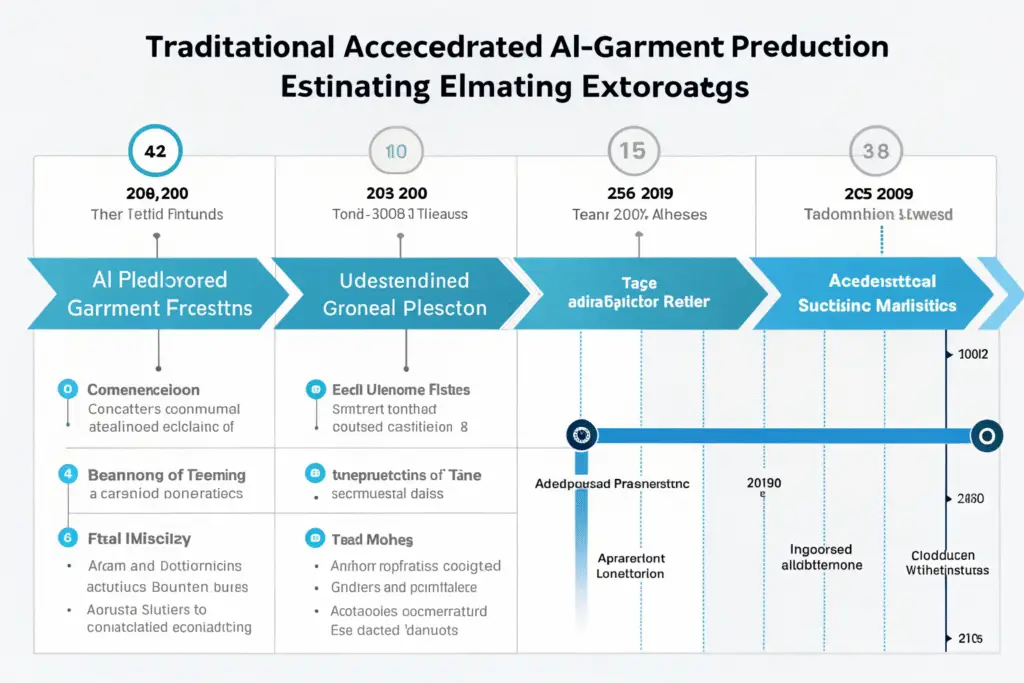
Beyond simply doing existing tasks faster and more accurately, AI-powered estimating will enable entirely new capabilities that are impossible with traditional methods. These include scenario modeling, risk assessment, and sustainability impact calculations that provide a more comprehensive view of production decisions.
The most exciting development we're testing is predictive scenario analysis that models how design changes, material substitutions, or production location alternatives would impact cost, timing, and quality. For a client considering moving production of their denim line from China to Vietnam, our AI system didn't just compare labor rates—it modeled transportation costs, tariff implications, skill availability, quality consistency, and political risk to provide a comprehensive comparison. The analysis revealed that while direct labor costs were 18% lower in Vietnam, the total cost difference was only 7% when all factors were considered, and the risk profile was significantly higher.
How will AI integrate sustainability metrics?
Future estimating systems will automatically calculate environmental impact alongside financial cost, allowing brands to make informed decisions that balance both priorities. We're developing a module that estimates water consumption, carbon footprint, and chemical usage for different material and production choices. This will enable clients to see not just what options cost financially, but what they cost environmentally, supporting the industry's move toward greater sustainability transparency.
Can AI really assess production risks?
Advanced AI systems will evaluate supplier stability, geopolitical factors, capacity constraints, and compliance history to quantify production risks. By analyzing diverse data sources including financial records, news reports, and industry databases, these systems can flag potential problems before they impact production. Early warning of supply chain disruptions will become a standard feature of AI-powered estimates, allowing brands to make contingency plans or consider alternative approaches before committing to production.
Conclusion
The future of AI in garment production estimating represents a fundamental transformation from reactive calculation to proactive cost management. Within three years, AI-assisted estimating will become standard practice in the apparel industry, delivering unprecedented accuracy, speed, and strategic insight. Brands that embrace this technology will gain significant competitive advantages through better decision-making, reduced risk, and accelerated time-to-market.
The transition to AI-powered estimating requires partnerships with manufacturers who are investing in these technologies today. For a manufacturing partner at the forefront of estimating innovation, contact our Business Director Elaine at elaine@fumaoclothing.com. Let's explore how AI-enhanced estimating can bring new precision and intelligence to your production planning.