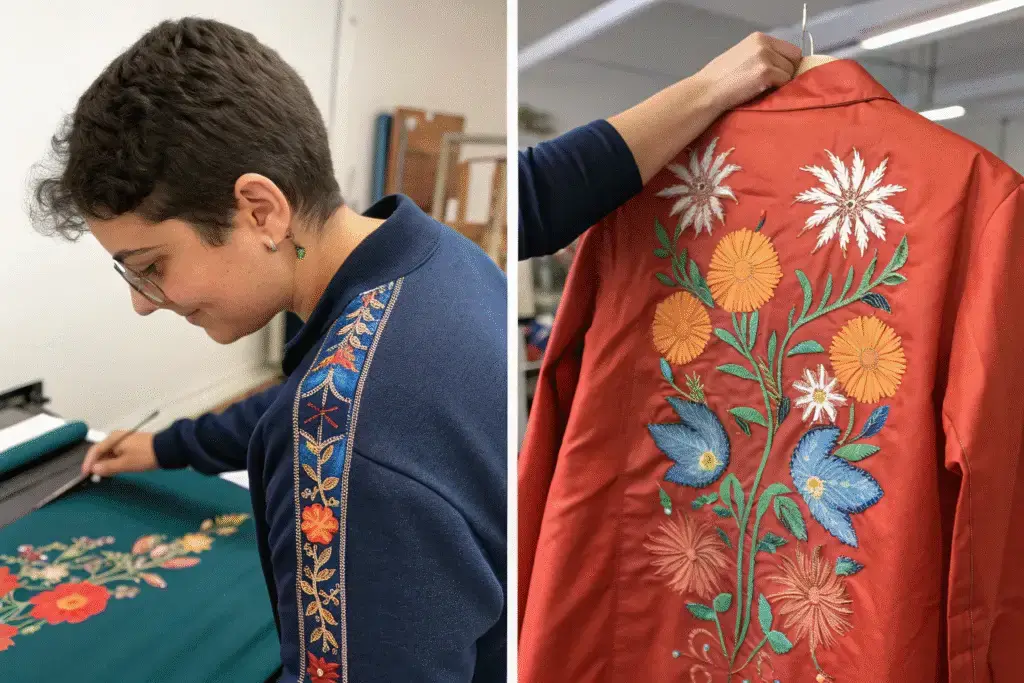
You're designing custom apparel and want to add your logo or design. Should you choose embroidery or printing? This is one of the most common questions we receive from brands developing their product lines. The choice significantly impacts the look, feel, and perception of your garments.
Embroidery involves stitching threads directly into the fabric to create a raised, textured design, while printing applies ink onto the fabric surface to create a flat graphic. Embroidery offers premium durability and texture, while printing provides superior detail and color variety at lower costs for larger designs. Understanding these fundamental differences helps you select the right method for your specific application, budget, and brand image.
Many brands make the mistake of choosing based on cost alone, only to discover the method doesn't suit their fabric type or desired aesthetic. A sportswear client initially chose printing for their polyester jackets, but the ink cracked during movement. Switching to embroidery solved their durability issues. Let's explore both methods in detail.
How Does The Manufacturing Process Differ?
The creation processes for embroidery and printing are fundamentally different, requiring specialized equipment and expertise. Understanding how each method works helps explain why they produce such distinct results.
Embroidery uses computerized machines with needles and threads to stitch designs into fabric, while printing transfers ink onto fabric surfaces using screens, heat, or digital printers. Embroidery is an additive process building up the design, while printing is an application process laying design onto the fabric surface. Each method has specific technical requirements that affect the final product.
What Equipment Is Used For Each Method?
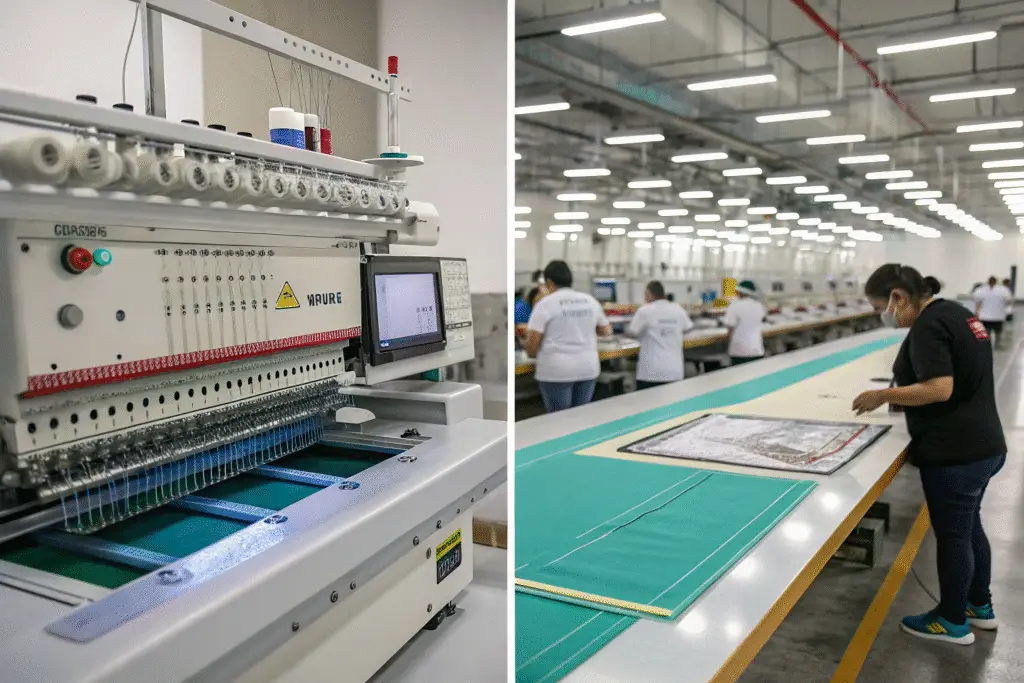
Embroidery requires specialized computerized embroidery machines with multiple needle heads, thread spools, and framing hoops that stabilize the fabric during stitching. These machines follow digital instructions from embroidery digitizing software that converts artwork into stitch patterns. Printing equipment varies by type: screen printing uses mesh screens and squeegees, DTG (Direct-to-Garment) uses modified inkjet printers, and heat transfer uses thermal presses. Each printing method requires specific garment decoration expertise. We operate both departments in our facility and often advise clients on which method suits their specific design needs.
How Long Does Each Process Take?
Embroidery setup is relatively quick once the design is digitized, but the stitching process itself is slower, especially for complex designs with many colors. Printing setup varies significantly - screen printing requires screen creation (1-2 days) but then produces quickly, while DTG printing has minimal setup but slower per-piece production. For a recent order of 500 polo shirts with a simple logo, embroidery took approximately 45 seconds per shirt, while screen printing would have taken about 15 seconds per shirt after screen setup. The choice depends on your quantity, timeline, and design complexity.
What Are The Durability And Feel Differences?
The tactile experience and longevity of embroidery versus printing represent their most noticeable differences. These factors directly influence customer perception and product lifespan.
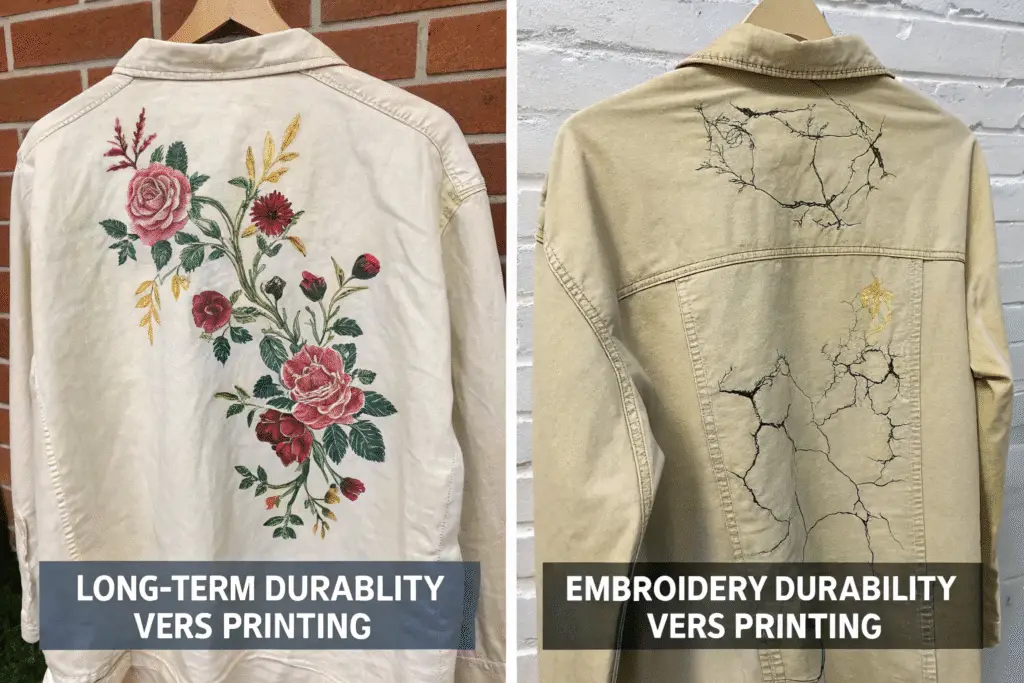
Embroidery creates a durable, textured feel that withstands repeated washing and wearing, while printing offers a smooth, flat surface that can crack or fade over time, especially with lower-quality applications. Embroidery adds physical structure to the garment, while printing remains on the fabric surface without adding substance.
How Does Each Method Feel On The Garment?
Embroidery creates a raised, textured surface you can feel with your fingers. The weight and thickness depend on the stitch count and thread type. Printing typically lies flat on the fabric surface, though some methods like puff printing can create slight texture. For corporate wear where a premium feel is important, embroidery often conveys higher quality. A financial services client we worked with switched from printed to embroidered logos on their dress shirts and immediately received positive feedback from employees about the more professional appearance and feel.
Which Method Lasts Longer?
Properly executed embroidery typically outlasts the garment itself, maintaining its appearance through dozens of washes. The threads become integrated with the fabric. Printing durability varies by method: plastisol screen printing is very durable, while DTG and heat transfer may crack or fade over time, especially if not cured properly. Our quality control includes wash testing for both methods. We recently tested a batch of embroidered work uniforms that showed no visible degradation after 50 industrial washes, while a comparable printed design began showing minor cracking at 30 washes.
When Should You Choose Embroidery Vs Printing?
Selecting the right method depends on your design requirements, fabric type, budget, and desired brand image. Each technique has ideal applications where it performs best.
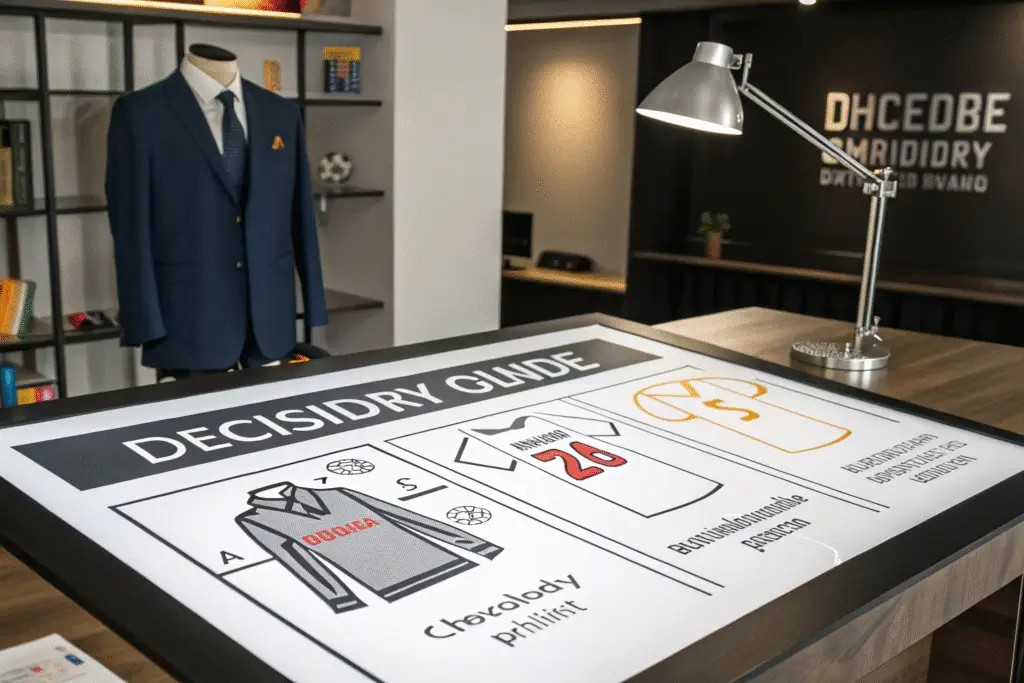
Choose embroidery for small, simple designs on sturdy fabrics where durability and premium appearance are priorities. Choose printing for large, detailed, or full-color designs, delicate fabrics, and when cost efficiency for larger areas is important. The decision matrix involves balancing multiple factors to achieve your desired outcome.
| Application | Recommended Method | Key Considerations |
|---|---|---|
| Corporate Logos | Embroidery | Professional appearance, durability |
| Large Art Designs | Printing | Cost-effective coverage, detail preservation |
| Performance Wear | Embroidery or Specialty Printing | Flexibility, moisture resistance |
| Delicate Fabrics | Printing (DTG) | Prevents fabric damage from needle penetration |
What Design Types Work Best For Each Method?
Embroidery works best with simple, bold designs with clear boundaries and limited colors. Fine details like small text or subtle gradients may not translate well to stitches. Printing excels with complex designs, photographic images, gradients, and large color areas. A restaurant chain client wanted their detailed mascot illustration on staff shirts. We recommended DTG printing to preserve all the subtle shading and color transitions that would have been lost in embroidery. The result perfectly matched their brand identity requirements.
How Does Fabric Type Influence The Choice?
Heavier fabrics like denim, twill, and polo pique accommodate embroidery well, while delicate fabrics like silk or lightweight performance materials may pucker or distort with embroidery. Printing generally works on most fabrics, though results vary by method and material. We recently helped an activewear brand choose between methods for their new running shirt collection. For the lightweight, stretchy fabric, we recommended specialty sublimation printing that wouldn't affect the fabric's flexibility or moisture-wicking properties, whereas embroidery would have created uncomfortable rigid spots.
What Are The Cost Differences?
Understanding the cost structure of each method helps with budgeting and decision-making. The pricing models differ significantly, making each method more or less economical depending on your specific order.
Embroidery typically has higher per-piece costs but lower setup fees, making it economical for smaller quantities. Printing often has lower per-piece costs but higher setup fees, becoming more cost-effective for larger quantities with complex designs. The breakeven point depends on your design complexity, color count, and order size.

How Are Prices Calculated For Each Method?
Embroidery pricing is primarily based on stitch count - the total number of stitches in your design. More stitches mean longer machine time and higher cost. Additional factors include thread colors and garment type. Printing pricing varies by method: screen printing costs relate to color count and setup, while DTG pricing is more consistent per piece regardless of colors. We provide transparent cost calculation for both methods so clients can make informed decisions. For a recent order of 300 work uniforms, embroidery was 15% more expensive than basic screen printing but offered better long-term value for their daily-wear application.
What Are The Hidden Costs To Consider?
Beyond the direct application costs, consider long-term value and potential issues. Embroidery rarely fails in production, while printing can have higher defect rates. Also factor in the perceived value - customers often associate embroidery with higher quality, which can justify a higher price point. A fashion brand found that switching from printing to embroidery on their premium hoodies allowed them to increase their retail price by $15 while actually improving their profit margins due to stronger customer perception of value.
Conclusion
Choosing between embroidery and printing ultimately depends on your specific design, fabric, budget, and brand positioning. Embroidery offers unmatched durability and a premium, textured appearance ideal for corporate branding and applications where longevity is crucial. Printing provides superior detail reproduction and cost efficiency for larger, more complex designs across various fabric types.
The best approach often involves using both methods strategically across different products in your line. Many successful brands use embroidery for their main logos on heavier garments and printing for detailed graphics on t-shirts and lighter items. Understanding the strengths of each technique allows you to make informed decisions that enhance your brand's presentation and value.
Need help determining whether embroidery or printing is right for your next apparel order? Contact our Business Director, Elaine, today at elaine@fumaoclothing.com for expert guidance based on your specific designs and requirements.