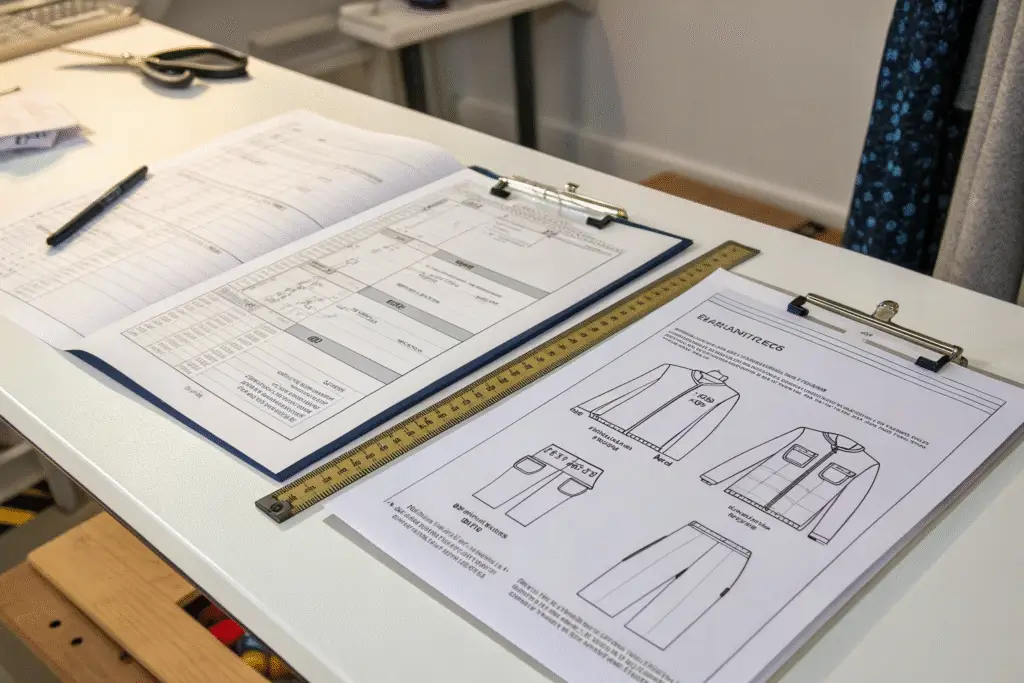
Have you ever received a garment sample that was completely wrong? The fabric felt off, the stitches were uneven, and the fit was nowhere near your vision. I have seen this happen too many times. The root cause is often a simple misunderstanding: confusing a tech pack with a spec sheet. This mix-up costs brands time, money, and a lot of frustration.
A tech pack is the comprehensive blueprint for a garment, containing all design, material, and construction details, while a spec sheet is a subset of that blueprint, focusing solely on the garment's critical measurements and tolerances. Think of the tech pack as the full instruction manual and the spec sheet as the quick-reference guide for checking sizes. Knowing the distinct roles of each document is the first step toward flawless production.
Clear communication is the backbone of successful apparel manufacturing. When these two documents are used correctly, they align your creative vision with our manufacturing capabilities. Let's dive into the specifics to ensure you never face production delays due to documentation errors again.
What is a Tech Pack in Garment Manufacturing?
A tech pack is the master document that guides every step of the creation of your clothing line. It translates your creative idea into a technical language that a factory can execute. Without a detailed tech pack, you are essentially asking the factory to guess your intentions. This often leads to incorrect samples, wasted materials, and missed deadlines.
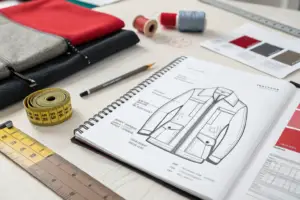
A complete tech pack acts as a single source of truth for everyone involved in the production process. It includes flat sketches, a bill of materials (BOM), construction details, and the measurement spec sheet. For instance, last year, a startup brand from Texas sent us a basic sketch for a pair of denim jeans. They did not have a full tech pack. We assigned a product developer to help them create one, detailing the specific type of ring-spun denim fabric, the stitch per inch (SPI) for the seams, and the exact shade for the dye. The first sample they received was perfect, and they moved into production without a single revision, saving them nearly a month of back-and-forth time.

Why is a Bill of Materials (BOM) crucial?
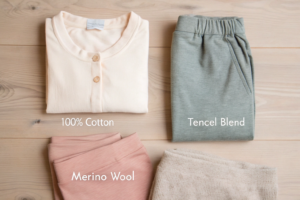
The Bill of Materials (BOM) is the ingredient list for your garment. It leaves no room for ambiguity regarding the materials we need to source. A precise BOM ensures that the final product looks, feels, and performs as you expect. It covers everything from the main fabric and interlinings to the buttons, zippers, and even the type of thread. If your BOM simply states "polyester fabric," you could get anything from a cheap, non-breathable material to a high-quality, moisture-wicking one. A detailed BOM specifies the exact composition, weight, and supplier if necessary, guaranteeing consistency across your entire order.
How do construction details prevent errors?
Construction details provide the "how-to" for assembling the garment. They specify the stitch types, seam finishes, and placement of every component. This section answers questions like: What stitch type should be used for the hem? How should the collar be attached? Are the seams finished with an overlock stitch or bound with tape? For example, we once worked with an activewear brand that was struggling with seam durability on their leggings. By updating their tech pack to specify a flatlock stitch for all major seams, we eliminated the problem of chafing and increased the product's lifespan significantly. This level of detail is what separates a poorly made garment from a high-quality one.
What is a Spec Sheet's Primary Function?
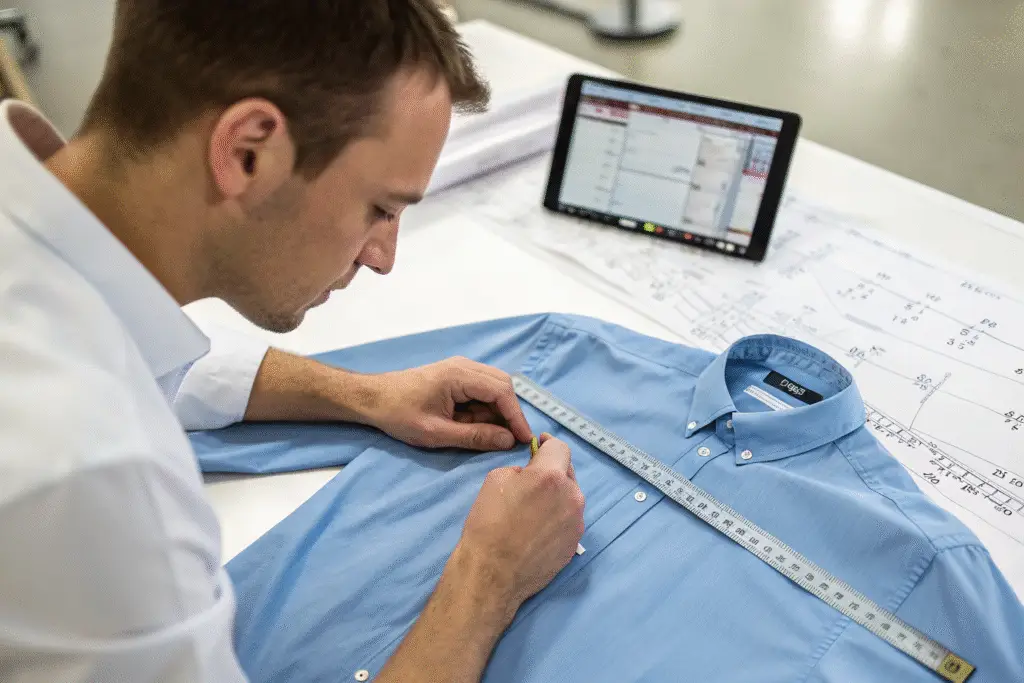
While the tech pack is the comprehensive guide, the spec sheet has one primary job: to define the precise measurements and size grading for the garment. It is a technical document, usually in a spreadsheet format, that lists every critical measurement point—like chest width, sleeve length, and back length—along with the acceptable tolerance (the allowed deviation, e.g., ±¼ inch). This is the document our quality control team uses to verify that every single piece we produce matches your size standards.
The spec sheet is the cornerstone of consistency, especially when producing in large quantities. A client from New York once complained about size inconsistencies in a shipment of woven shirts from another supplier. When they started working with us, we insisted on a locked spec sheet before production began. We used this sheet to check every batch, and as a result, their customer return rate due to sizing issues dropped by over 60%. This directly protected their brand's reputation for reliability.
How are tolerances determined in a spec sheet?
Tolerances are not arbitrary; they are calculated based on the fabric's properties and the intended use of the garment. Stretch fabrics, like knits used in activewear, naturally have wider tolerances (e.g., ±½ inch) than rigid wovens like denim (e.g., ±¼ inch). We determine these tolerances through experience and industry standards to ensure the garment fits comfortably while maintaining its design integrity. Setting the correct tolerance is a balance; too tight, and most garments will fail QC for minor reasons, too loose, and the sizing becomes inconsistent.
Why is a graded spec sheet essential for production?
A graded spec sheet is what allows you to produce the same garment across multiple sizes. It starts with the base size (usually Medium) and then systematically increases or decreases each measurement to create a full size range (XS to XL). This grading is done using precise rules to ensure the fit and proportions are maintained in every size. Without a properly graded spec sheet, a Large might just be a wider Medium, leading to poor fit in the arms and body length. We use specialized software to create these graded rules, ensuring that your size chart is accurate and reliable for your customers.
Tech Pack vs. Spec Sheet: Key Differences
Understanding the distinction between these documents is crucial for efficient production. The tech pack is the all-encompassing "what and how," while the spec sheet is the specific "how big." Confusing the two is like giving a builder only the room dimensions without telling them what materials to use or how to assemble the walls.
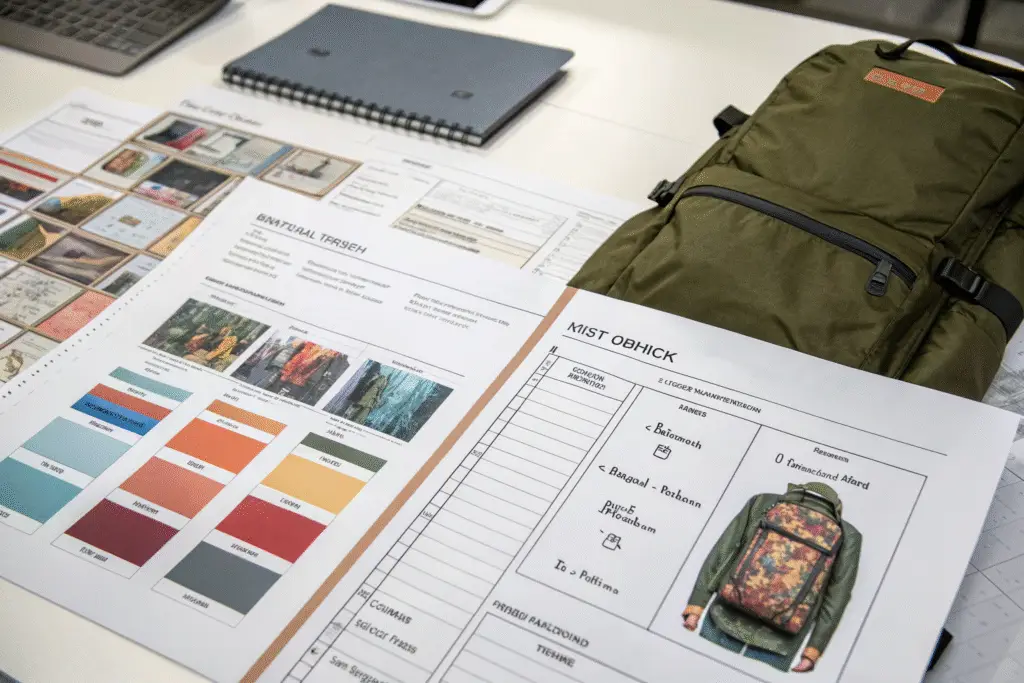
The most significant difference is scope. A tech pack is a living document that evolves from the design stage through sampling. It includes artistic elements like color palettes and inspiration images. A spec sheet is a static, data-driven document focused solely on measurements once the design is finalized. It is a component within the tech pack, not a replacement for it. We had a European distributor who used to only send spec sheets. They were constantly disappointed with the fabric choices and trims we had to guess on. Once we guided them to provide full tech packs, the sampling process became twice as fast, and their satisfaction with the final product skyrocketed.
| Feature | Tech Pack | Spec Sheet |
|---|---|---|
| Primary Purpose | Comprehensive production blueprint | Define measurements & tolerances |
| Contents | Sketches, BOM, construction notes, spec sheet | Table of measurements, grades, tolerances |
| Users | Designers, product developers, factory managers | Pattern makers, quality control inspectors |
| Stage Used | Design, development, sampling, production | Pattern making, production, quality control |
What happens if you only provide a spec sheet?
If you only provide a spec sheet to your manufacturer, you are forcing them to make countless decisions on your behalf. They will choose the fabric weight, the stitch types, the interlinings, and the trims based on their best guess or what is cheapest for them. The result is a garment that might be the right size but is wrong in every other way. It may lack the desired drape, have inferior durability, or use a zipper that doesn't match your brand's quality. The spec sheet ensures the garment fits the body, but the tech pack ensures the garment fits the brand.
Can a spec sheet exist without a tech pack?
Yes, a spec sheet can exist as a standalone document, but this is typically only useful in very specific situations. For example, if you are re-ordering a garment that is already in production and no changes whatsoever are being made, you might send only the spec sheet to remind the factory of the agreed-upon measurements. However, for any new development, a spec sheet without the context of a tech pack is a high-risk strategy that often leads to costly errors and misunderstandings.
How to Create an Effective Tech Pack and Spec Sheet
Creating these documents may seem daunting, but it is an investment that pays for itself multiple times over by preventing costly mistakes. An effective tech pack is detailed, visual, and unambiguous. It uses clear callouts on sketches and avoids vague language. The spec sheet must be professionally formatted, with clearly defined measurement points and agreed-upon tolerances.
We strongly recommend using digital tools. Software like Adobe Illustrator is industry-standard for creating flat sketches, while spreadsheet programs like Microsoft Excel or Google Sheets are perfect for the BOM and spec sheet. Some brands use integrated Product Lifecycle Management (PLM) systems to manage everything in one place. The goal is to create a document so clear that anyone on our production team, regardless of language skills, can understand it perfectly.

What are common mistakes to avoid?
The most common mistake is a lack of detail. Stating "standard stitch" is meaningless. Instead, specify "Lockstitch 301, 12 stitches per inch." Another critical error is not updating the tech pack after a sample is approved. If you make a change during sampling, that change must be recorded in the tech pack. This updated version becomes the master for production. Finally, inconsistent terminology can cause major issues. Ensure that the name for a part, like "placket," is the same in the sketch, the BOM, and the construction notes.
Who is responsible for creating these documents?
Ultimately, the brand is responsible for providing or approving the final tech pack and spec sheet. However, many brands, especially smaller ones, lack the technical expertise. This is where a manufacturing partner like us adds immense value. Our product development team can take your designs and ideas and translate them into a professional, factory-ready tech pack. We see this as a collaborative effort—you bring the vision, and we bring the technical know-how to make it a reproducible reality.
Conclusion
Understanding the clear and distinct roles of a tech pack and a spec sheet is fundamental to a smooth and successful clothing production journey. The tech pack is your comprehensive strategic plan, covering design, materials, and construction. The spec sheet is your tactical tool for ensuring consistent sizing and fit. Using both correctly bridges the gap between your creative vision and the manufactured product, eliminating guesswork, reducing errors, and protecting your profit margins.
By investing time in creating precise and detailed documentation, you empower your manufacturing partner to deliver exactly what you envision. This partnership, built on clear communication, is the key to bringing high-quality apparel to market efficiently. If you are ready to streamline your production process with a partner who understands the critical importance of accurate tech packs and spec sheets, we are here to help. Contact our Business Director, Elaine, today at elaine@fumaoclothing.com to discuss how we can support your next clothing order.