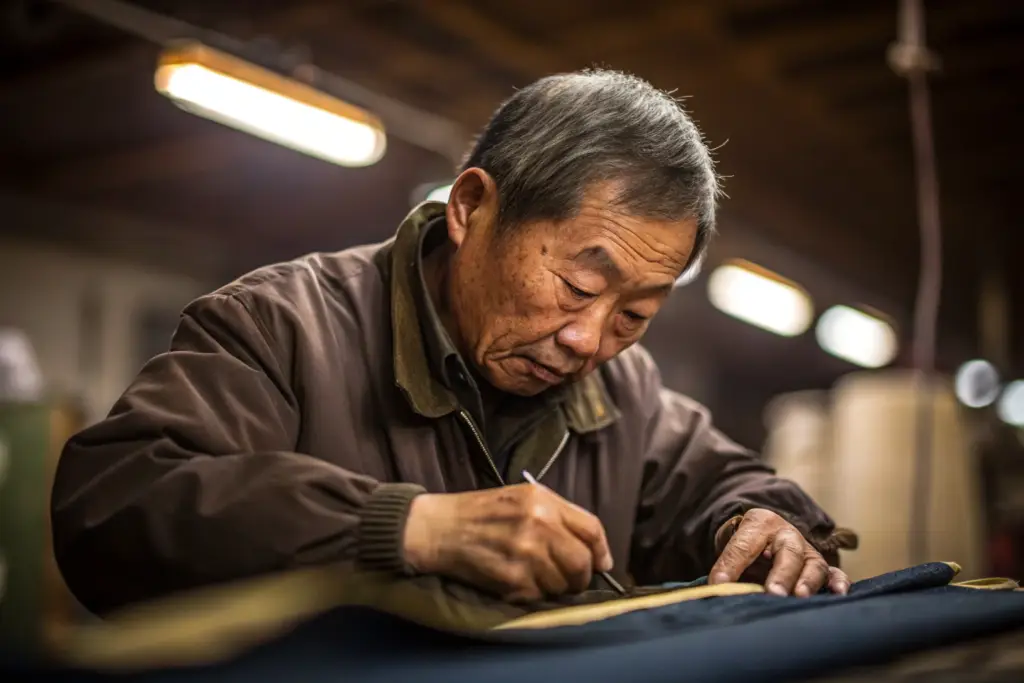
I have employed hundreds of sewers in my career. Most are good people, doing a job. They come in, they sew their assigned pieces, they go home. And that is fine. It is how the industry works. But a few times in my life, I have had the privilege of working with a true garment craftsperson. I remember one woman, Chen, who worked on our sample line for over 20 years before she retired. She could look at a sketch and tell you exactly how it should be constructed. She could take a difficult fabric, like a slippery charmeuse, and make it behave. When a complex design came in, the younger sewers would bring it to Chen. They would ask, "How do I do this?" She would show them, patiently, with her hands. She didn't just sew. She created. She solved problems. She taught. That is the difference.
The difference between a sewer and a garment craftsperson is the difference between an operator and an artist. A sewer follows instructions. They join pieces of fabric together according to a pattern and a spec sheet. They are essential. But a garment craftsperson understands the "why." They understand fabric behavior, tension, and construction theory. They can troubleshoot a problem on a complex garment. They can suggest a better way to sew a seam. They bring years of experience and deep knowledge to every piece they touch. They elevate a garment from "made" to "crafted."
My name is [Your Name], and I own Shanghai Fumao. I have spent my life around both sewers and craftspeople. I have seen how a team of skilled operators can produce good, consistent work. And I have seen how a single master craftsperson can save a complex order from failure. Let me explain the specific qualities that set these individuals apart and why they are vital for premium manufacturing.
What Specific Skills Define A Garment Craftsperson?
A sewer is trained to operate a machine and perform specific operations: sew a side seam, set a collar, hem a bottom. They are experts in their one task. A craftsperson has a much broader and deeper skill set. They understand the entire construction process, from pattern to finished garment. They have knowledge that is built over decades, not weeks.
How does a craftsperson understand fabric behavior?
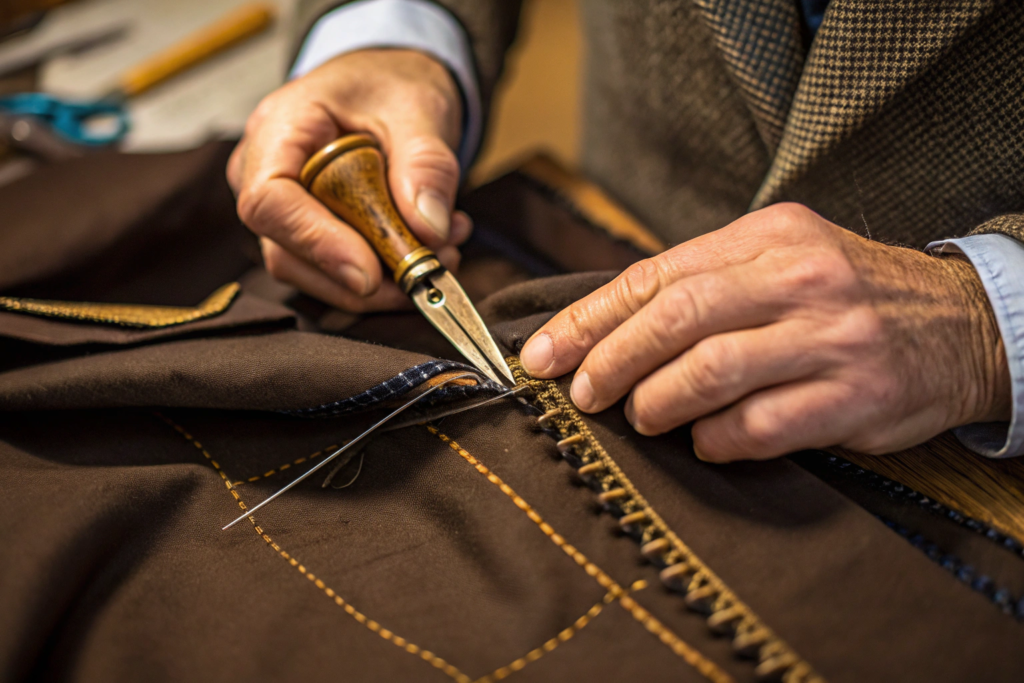
This is the first and most important difference. A sewer sees fabric as material to be joined. A craftsperson sees fabric as a living thing with its own personality. They know that silk charmeuse will shift and pucker if not handled correctly. They know that thick denim requires a different needle and a slower sewing speed. They know that a knit fabric needs to be stretched slightly as it is sewn to prevent the seams from popping later. This knowledge is not in a manual. It is in their hands and their eyes. A few years ago, we had a complex order for a client in Boston using a very fine, delicate wool. Our regular sewers struggled with it. The fabric kept puckering. We brought in one of our senior craftspeople, a man named Li. He looked at the machine, adjusted the tension, changed the presser foot, and slowed the speed. Within minutes, the seams were perfect. He didn't just sew; he understood the dialogue between the machine, the thread, and the fabric. This deep understanding of textile science is what sets craftspeople apart.
What is "troubleshooting" in garment construction?
When a sewer encounters a problem, they stop and call a supervisor. That is correct. When a craftsperson encounters a problem, they analyze it. They ask: Why is this seam puckering? Is the tension too high? Is the needle dull? Is the fabric feeding unevenly? They have a mental library of solutions. They can fix the problem themselves, or they can guide others to fix it. This ability to troubleshoot in real-time is invaluable. For a rush order from a California activewear brand, a machine started making a strange stitch. A sewer would have stopped the line. Our craftsperson on that line listened to the sound, adjusted the hook timing, and had the machine running perfectly in five minutes. The line barely paused. This kind of expertise comes from years of experience and a deep curiosity about how things work. It is a form of applied engineering in the garment industry.
How Does A Craftsperson's Experience Impact Sample Development?
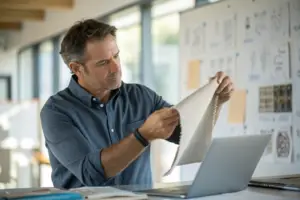
Sample development is where the difference between a sewer and a craftsperson is most obvious. A sample made by a sewer will follow the tech pack exactly. A sample made by a craftsperson will follow the intent of the design. They will see things the designer missed and suggest improvements. They are partners in creation, not just executors.
How do they contribute to design feasibility?
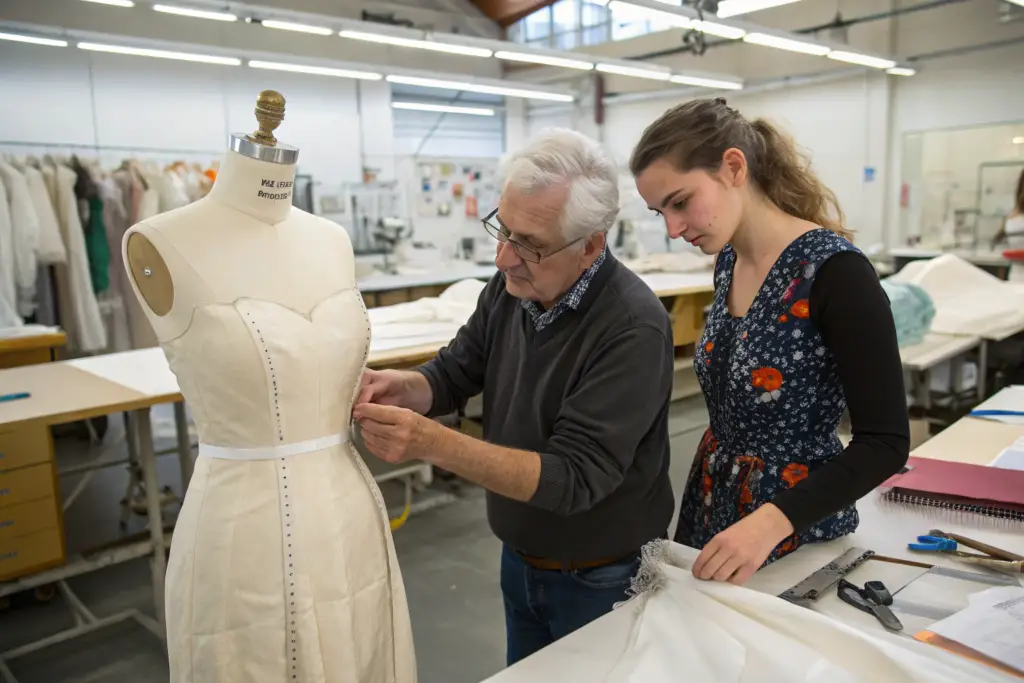
A designer might sketch a beautiful silhouette that is impossible to sew, or that would be extremely expensive to produce. A sewer will just try to sew it and fail, or succeed at great cost. A craftsperson will look at the sketch and say, "This curve here will be very difficult to sew smoothly in this fabric. If we change the angle slightly, we can achieve the same look and it will sew perfectly." Or they might say, "If you want this pocket, we need to add a reinforcement here, or it will rip." This feedback, given during the sampling stage, saves time, money, and disappointment. For a client in New York who designs avant-garde women's wear, our senior craftsperson has helped refine dozens of her designs, making them production-ready without losing their creative edge. This collaboration is a form of design for manufacturing, a concept well-explained by resources like the Design Management Institute.
What is the role of hand-finishing in luxury garments?
Many people think all garment work is done by machine. But true luxury often involves hand-finishing. Hand-stitched buttonholes, hand-sewn hems on silk dresses, hand-attached trims. These details require a level of skill that no machine can replicate. A sewer is rarely trained in these techniques. A garment craftsperson often is. They have the patience and the skill to do this delicate work. For a client in Chicago who makes high-end men's suits, we have a small team of craftspeople who do all the hand-finishing on the jackets. The lapels have a soft, rolled edge that can only be achieved by hand. The buttonholes are hand-stitched and beautiful. These details are what justify a premium price. This is the art of couture techniques, which you can explore through institutions like the Fashion Institute of Technology.
How Does A Craftsperson Contribute To Training And Quality Culture?
A skilled craftsperson is a living library of knowledge. They hold techniques and solutions that cannot be found in any book. In a factory, they are invaluable as trainers and mentors. They pass their knowledge down to the next generation, ensuring that the quality culture survives.
How do they mentor younger sewers?
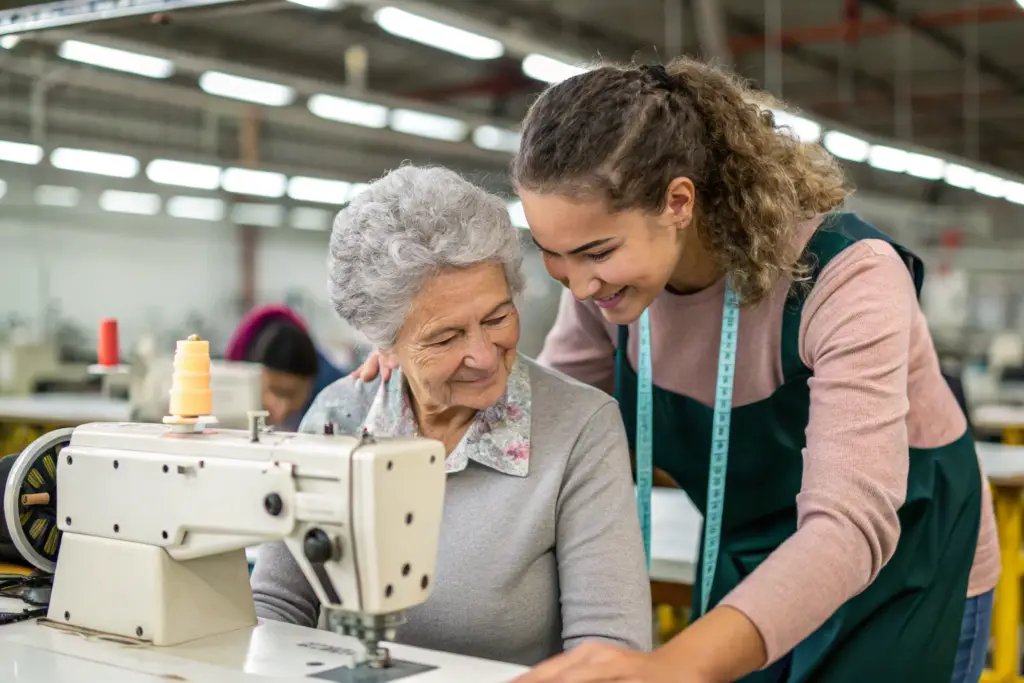
When a new sewer joins our factory, they learn the basics from a trainer. But they learn the real skills from the craftspeople. We pair new hires with our most experienced team members. They watch, they ask questions, they learn the little tricks that make a big difference. How to handle a slippery fabric. How to tie a knot that won't come undone. How to press a seam perfectly. This mentorship is informal, but it is essential. A few years ago, a young sewer was struggling with setting sleeves on a tailored jacket. Our senior craftsperson, Mei, spent an hour with her, showing her how to ease the fabric and match the notches. The young sewer's quality improved immediately. This is how we sustain our quality at Shanghai Fumao. This is a classic example of apprenticeship in manufacturing, a model supported by organizations like the Department of Labor in the US.
Why is their intuition valuable in quality control?
A craftsperson can often spot a potential problem before it becomes a defect. They have an intuition, built on thousands of hours of experience. They might see a seam that looks fine to a regular inspector, but something about the tension feels wrong. They will flag it. They might feel a piece of fabric and know that it will shrink more than expected, and send it for testing. This intuition is a form of tacit knowledge, which is incredibly difficult to codify but incredibly valuable. For a client in Seattle who makes high-end outdoor gear, this intuition has caught potential failures in seam taping and fabric coatings multiple times, saving them from costly recalls.
How Do You Recognize A Factory Invested In Craftsmanship?
Not every factory invests in craftsmanship. It is expensive. Craftspeople take longer to train. They are paid more. They don't produce as many pieces per hour as a high-speed sewer. But a factory that wants to make premium products understands that this investment is essential. You can see it in the work they produce and in the people they employ.
What questions should you ask about a factory's workforce?
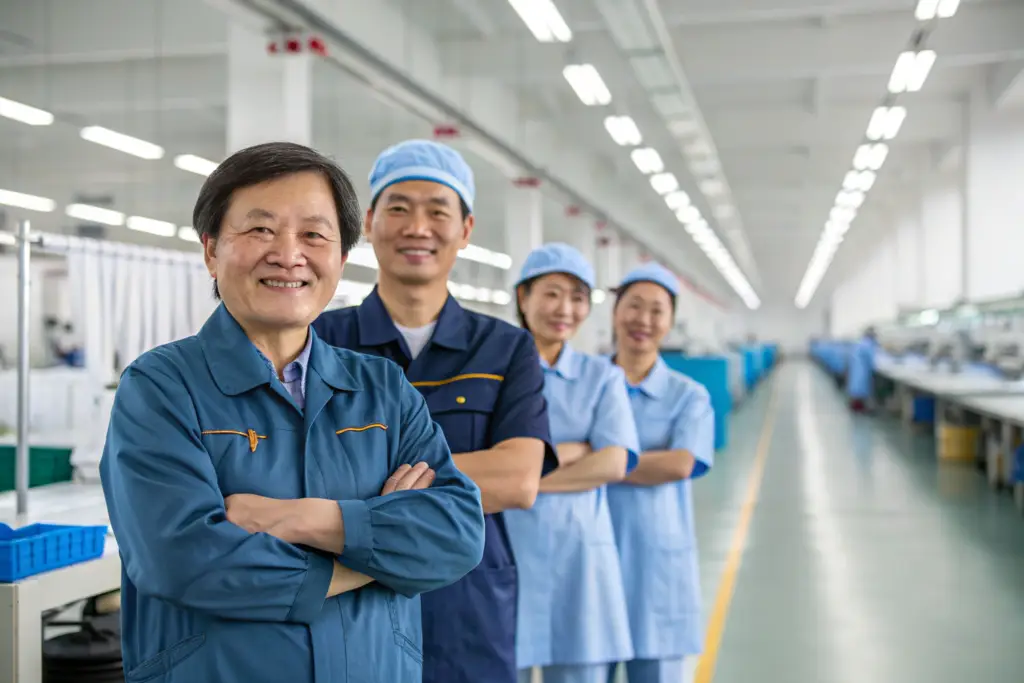
Ask about their experienced workers. "How many of your sewers have been with you for more than 10 years?" "Do you have a formal apprenticeship or mentorship program?" "Who handles your complex samples?" The answers will tell you a lot. A factory with a high turnover of young workers is a factory of sewers. A factory with a core of long-term, experienced employees is a factory with craftspeople. When a potential client asks me these questions, I am proud to tell them that several of our team members have been with us for over 15 years, and that our lead sample maker has 30 years of experience. This stability is a sign of a healthy quality culture. You can learn about the importance of workforce stability from resources like the Society for Human Resource Management.
Can a machine replace a garment craftsperson?
This is the question of our age. Automation is advancing fast. There are machines that can sew a straight seam faster than any human. There are robots that can cut fabric. But can a machine look at a complex design and figure out the best way to construct it? Can a machine feel the tension of a thread and know it's slightly off? Can a machine teach a young sewer a trick they learned 30 years ago? No. Machines can assist craftspeople, but they cannot replace them. The human eye, the human hand, and the human brain, trained over decades, are still the most valuable tools in premium garment manufacturing. For a deep dive into the future of work in apparel, the International Labour Organization publishes excellent reports on the impact of automation.
Conclusion
The difference between a sewer and a garment craftsperson is the difference between production and creation. A sewer executes a task. A craftsperson embodies a skill. One follows a map. The other knows the territory. Both are needed in a factory. But for premium, complex, and high-quality garments, the craftsperson is irreplaceable. They are the ones who solve problems, who train the next generation, who add the hand-finished details that make a garment special. They are the soul of a quality factory.
At Shanghai Fumao, we are proud of our sewers, and we are honored by our craftspeople. We have invested in finding, training, and retaining these masters of their art. They are the reason we can handle complex designs that other factories refuse. They are the reason our samples are accurate and our production is consistent. They are the reason a luxury brand from New York has trusted us with their most delicate collections for over a decade. Our senior craftsperson, who has been with us for over 20 years, personally oversees the sampling for every new client, ensuring that their vision is understood and achievable.
If you are looking for a factory where your garments will be made by people who truly understand and care about their work, let's talk. Let us introduce you to the team that will bring your designs to life. Please contact our Business Director, Elaine, at strong>elaine@fumaoclothing.com</strong to discuss how our craftspeople can serve your brand.