As a garment factory owner, I talk to many American apparel brands every week. One of the most common questions I get is about the cost of professional tech pack services. Brands want to know if it's a necessary expense and how it impacts their overall budget. Understanding this cost is the first step to a smooth and profitable production run.
A professional tech pack service provides detailed manufacturing instructions for your clothing line, and its cost is an investment that prevents costly errors in production. The price varies based on the garment's complexity, the level of detail required, and the service provider. For US brands, this service is crucial for clear communication with overseas manufacturers, ensuring you get exactly what you pay for.
Many brands see a tech pack as just an extra cost. But I have seen how a good tech pack saves money. Let's break down what you are really paying for and how it affects your final product cost.
What is typically included in a tech pack service?
A tech pack is the blueprint for your garment. It tells the factory exactly how to make your product. Without a complete tech pack, you are relying on guesswork, which leads to mistakes and delays. A comprehensive tech pack service translates your creative vision into a precise technical language that our production team can execute flawlessly.
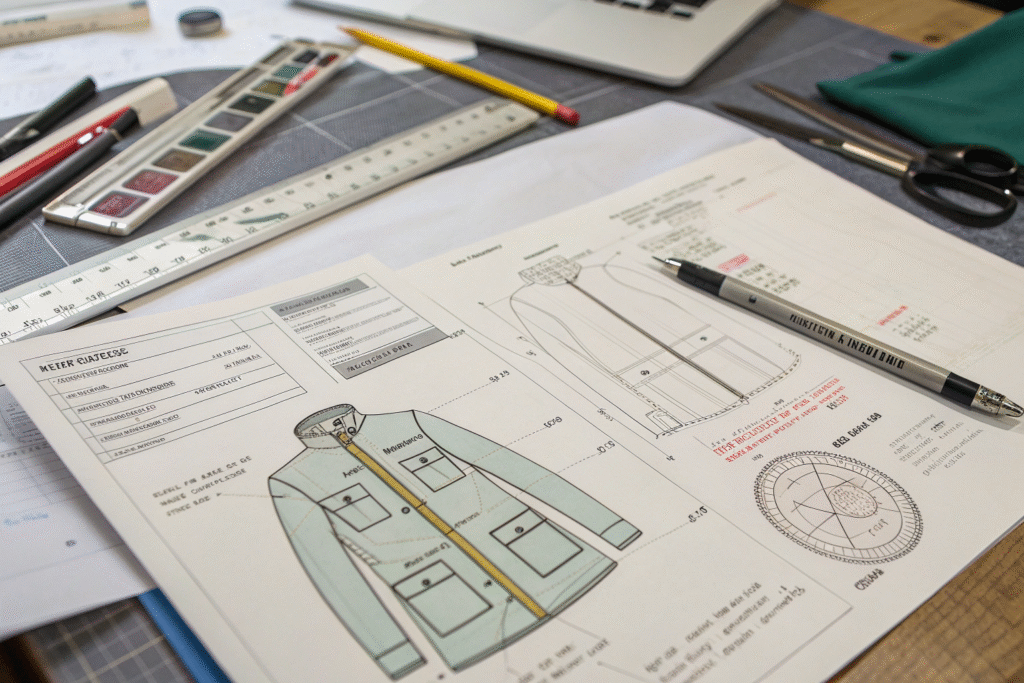
At its core, a professional tech pack service includes all the technical specifications needed to accurately manufacture a apparel product. This includes detailed flat sketches, materials list, construction details, and measurement specs. It is the single source of truth for your order.

What are the essential components of a tech pack?
A basic tech pack has several key parts. First, it includes technical flats. These are detailed drawings of the garment from the front and back. They show the construction, seams, and details like pockets and zippers. Second, it has a detailed bill of materials (BOM). This list covers every component, from the main fabric and threads to interlinings and zippers. For each material, we specify the type, supplier, and quantity. We often help our partners source these materials reliably.
Another critical component is the construction page. This describes how the garment is put together. It specifies stitch types, seam finishes, and special instructions. For example, last year, a client from Chicago wanted a specific type of flatlock stitch on their hoodies for a premium look. By detailing this in the tech pack, we ensured every unit was consistent. Finally, the measurement spec sheet is vital. It provides graded measurements for every size in your range. This ensures a perfect fit across all sizes. We use industry-standard tolerance guidelines to maintain quality.
How does a detailed spec sheet save money?
A detailed spec sheet directly prevents costly errors. It eliminates ambiguity in sizing and construction. When our factory receives a clear spec sheet, the sampling process is much faster. We often achieve a approved sample in just one or two rounds. This saves on both sample shipping costs and the time value of your product launch.
For instance, we worked with a startup activewear brand from Texas. They initially provided a basic design sketch without a full tech pack. The first samples had major fit issues because the stretch and recovery of the fabric weren't properly specified. We helped them develop a complete tech pack that included precise fabric performance specifications. The next sample was perfect, and they avoided a potential loss of over $15,000 in faulty production. A precise spec sheet is your first line of defense against production mistakes.
What factors influence the cost of a tech pack?
The cost of a tech pack is not a one-size-fits-all number. Several factors change the price. A simple t-shirt tech pack will cost less than a tech pack for a technical winter jacket with multiple layers and waterproof seals. Understanding these factors helps you budget correctly and see where your money is going.
The primary factors that influence tech pack cost are the garment's complexity, the number of components, and the need for specialized technical drawings. More complex garments simply require more work to document properly.
Why does garment complexity affect the price?
Complex garments have more parts and more construction steps. A basic woven shirt is straightforward. But a tailored blazer with a fully lined interior, functional buttonholes, and a specific drape is complex. Each extra element—a pocket, a cuff, a unique seam—adds time to the technical drawing and specification writing.
Consider a dress with intricate pleating versus a simple shift dress. The pleated dress requires detailed instructions on the pleat direction, depth, and securing method. This takes a technical designer more time to draft and document. The same goes for activewear with printed patterns that need to be precisely aligned to the garment's panels. Each added complexity increases the service cost because it increases the labor and expertise required.
How do customization levels change the cost?
The level of customization in your design directly impacts the tech pack price. A standard polo shirt with a custom logo is one thing. A fully custom performance jacket with a new pattern, proprietary insulation, and never-before-seen features is another. The latter requires extensive research and development, which is reflected in the tech pack service.
We had a client who wanted to create a new type of convertible trouser for the travel market. The design involved hidden zippers and a unique folding mechanism. Our technical team spent over 40 hours just on the R&D and tech pack creation to ensure the factory could produce it. This included creating separate specs for the converted garment. High customization means more problem-solving, which is a core part of the tech pack's value and cost.
What are the different pricing models for tech packs?
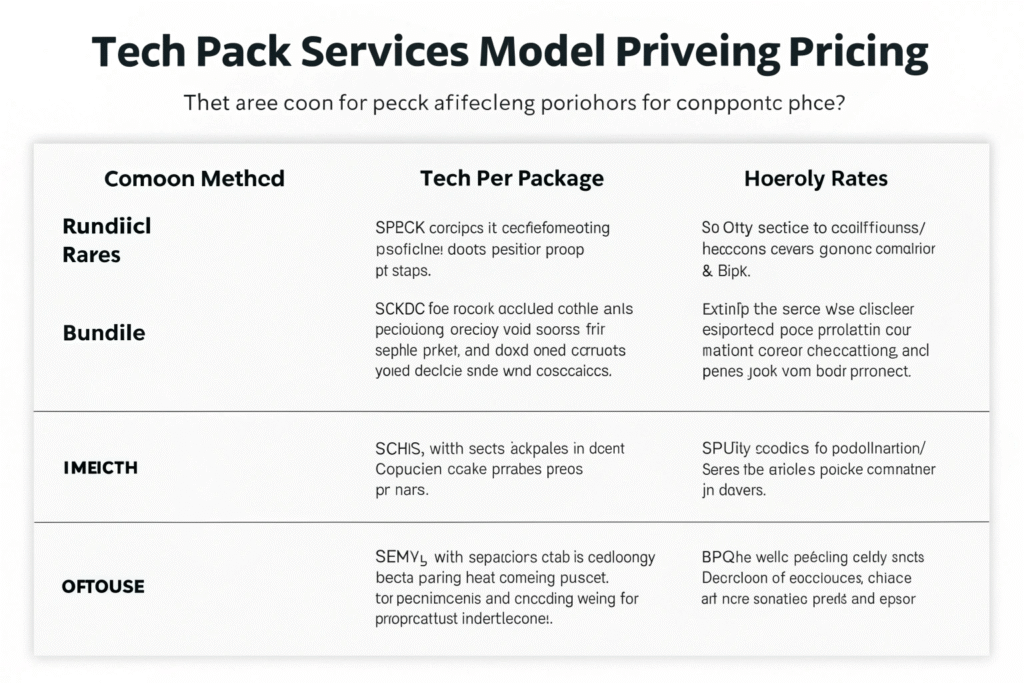
Tech pack services are typically priced in a few standard ways. Knowing these models helps you compare quotes from different providers. The most common models are flat fee per tech pack, bundled package with development, and hourly rates for modifications. Each model has its pros and cons depending on your project's scale and certainty.
The most common pricing models are a flat fee per garment style or a bundled package that includes the entire product development process. Some providers also charge hourly for revisions outside the agreed scope.
Is a flat fee per tech pack better than a bundle?
A flat fee is straightforward. You pay a set price for each completed tech pack. This is predictable and good for brands with a clear, finalized design. You know the exact cost upfront. A bundled package, however, often includes the tech pack as part of a larger service, like fabric sourcing, proto sample creation, and fit corrections.
For many of our new brand partners, the bundle is more cost-effective. Last quarter, we worked with a denim brand that chose our full-package development. The bundle included the tech pack. We went through three rounds of fit samples to perfect their signature jeans. Because the tech pack was part of the bundle, they didn't pay extra for the significant revisions needed after each fit session. This approach aligns the cost with the outcome, not just the output. It's crucial to understand the scope of work in any quoted price.
What are the pros and cons of hourly rates?
Hourly rates are common for small edits or consultations. The pro is that you only pay for the time used. This can be good for very small projects. The con is that costs can spiral if the project scope is not tightly controlled. For a full tech pack, an hourly rate is less common because it lacks budget certainty.
Most professional providers, including us, prefer to quote a project fee. This protects both parties. You know your maximum cost, and we can dedicate the right amount of time without watching the clock. It fosters a better partnership. We always outline what is included in the fixed price and what would constitute an additional hourly charge.
How does a tech pack service benefit my bottom line?
Viewing a tech pack as a pure cost is a mistake. It is an investment that provides a strong return. A good tech pack reduces sampling costs, prevents miscommunication, ensures quality, and gets your products to market faster. It is one of the most effective tools for protecting your profit margin when manufacturing overseas.
Investing in a professional tech pack service benefits your bottom line by drastically reducing errors, speeding up time-to-market, and ensuring consistent quality across your production run. It turns subjective ideas into objective instructions.

Can a tech pack reduce my sampling costs?
Absolutely. The number one cost saving from a tech pack is in the sampling phase. Without a clear tech pack, a factory has to interpret your vision. This leads to multiple, incorrect samples. Each sample round costs money and time. With a precise tech pack, the factory has clear instructions, leading to a right-first-time sample more often.
We see this consistently. Brands that provide a full tech pack achieve a production-ready sample in 1-2 rounds. Brands without one often need 3-4 rounds or more. Each round can cost hundreds of dollars in shipping and sample fees alone. The tech pack investment pays for itself after the first or second saved sample round.
How does it ensure quality control and protect my brand?
A tech pack is your quality control bible. It gives your quality inspectors a concrete checklist to use during production audits. They can measure the garments against the spec sheet and check the construction against the tech flats. This objective standard prevents "it looks okay" subjective judgments that lead to inconsistent quality.
A client from New York once received a shipment where the fabric weight was 10% lighter than ordered. Because the tech pack explicitly stated the approved fabric GSM (grams per square meter), they had a solid basis to reject the shipment. The tech pack protected them from a $50,000 loss on sub-standard goods. It is your legal and quality backbone in the supply chain.
Conclusion
The cost of a professional tech pack service is not an expense to minimize, but an investment to maximize. It is the foundation upon which a successful, profitable, and high-quality clothing production run is built. From defining the exact materials to providing precise measurements, a tech pack eliminates the guesswork that costs brands time and money. It is your most important tool for clear communication with your manufacturing partner, especially when they are overseas.
We have seen how brands that invest in proper tech packs launch smoother, face fewer surprises, and build stronger, more reliable businesses. The initial cost pales in comparison to the savings from avoiding a single production error or missed selling season. If you are looking to bring your apparel visions to market with precision and confidence, let's talk. We can help you develop the perfect tech packs for your collection. For a direct conversation on how we can support your next order, please contact our Business Director, Elaine, at elaine@fumaoclothing.com.