After twenty years in the apparel manufacturing business, I've seen countless brands, from ambitious startups to established labels, approach us with their product ideas. Time and again, I notice one critical misunderstanding that creates more problems than any other. It's a misconception that costs them time, money, and a great deal of frustration. They believe that a tech pack is just a formality—a simple document to give to the factory before production begins.
The biggest misconception about tech packs is that they are static, one-time documents used only for quoting and production. In reality, a tech pack is a dynamic, living blueprint that evolves throughout the entire product development cycle. It is the central hub for communication, problem-solving, and decision-making between a brand and its manufacturer, from the first sketch to the final quality inspection of the bulk order. Treating it as a mere formality is the primary reason for delayed timelines, budget overruns, and disappointing final products.
Let's dismantle this myth and explore what a tech pack truly is and why its evolving nature is its most powerful feature.
Is a Tech Pack Just a One-Time Document for the Factory?
This is the most common and costly error. Brands often spend days perfecting a tech pack, send it to us for a quote, and then consider their job done. They file it away, never to be updated. Last year, a client sent us a beautiful tech pack for a line of performance shorts. After we made the first prototype, they decided to change the main fabric for better moisture-wicking. However, they never updated the tech pack. The production order was placed based on the old document, resulting in a massive batch of shorts made from the wrong material.
A tech pack is not a "set-and-forget" document. It is a living record that should be updated with every single decision and sample revision. When you approve a new button, the tech pack's Bill of Materials must be updated. When you adjust the sleeve length based on a fit sample, the measurement spec sheet must be revised. This updated version then becomes the new official standard for the next stage, ensuring everyone is always working from the latest, most accurate information.
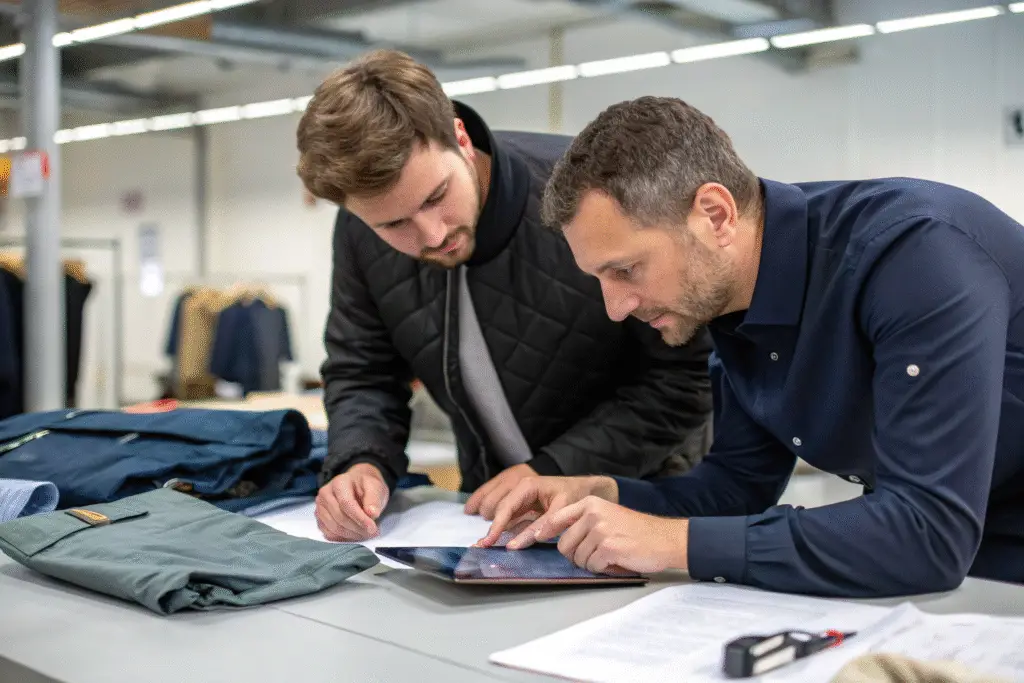
What happens if you don't update the tech pack after sampling?
Failure to update leads to a communication breakdown. The factory's pattern makers, cutters, and sewers work from the original instructions, not from the approved sample. Any changes discussed over email or in comments get lost. The result is a bulk order that doesn't match the approved prototype. This is not the factory's fault; it's a failure of process. The tech pack is the only reliable system to capture and communicate all changes.
How does a living tech pack save time and money?
A dynamic tech pack prevents expensive mistakes during mass production. Every correction noted and incorporated during the sampling phase eliminates a potential defect in thousands of units. It transforms subjective feedback like "make the collar a bit higher" into an objective, measurable instruction like "Collar Height revised to 1.5 inches." This precision is what makes efficient manufacturing possible and protects your profit margins.
Is a Basic Sketch and Size Chart Enough?
Many new brands believe that a simple drawing and a list of measurements constitute a tech pack. They think detailed construction details are "overkill" or something the factory will "figure out." We had a client who provided a sketch of a complex jacket with multiple panels and insisted the factory could replicate it from a photo. The first sample was a disaster because the factory had to guess the seam allowances, stitch types, and interlining placements.
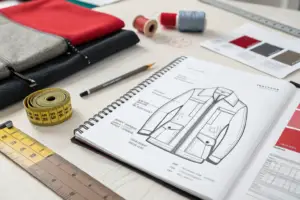
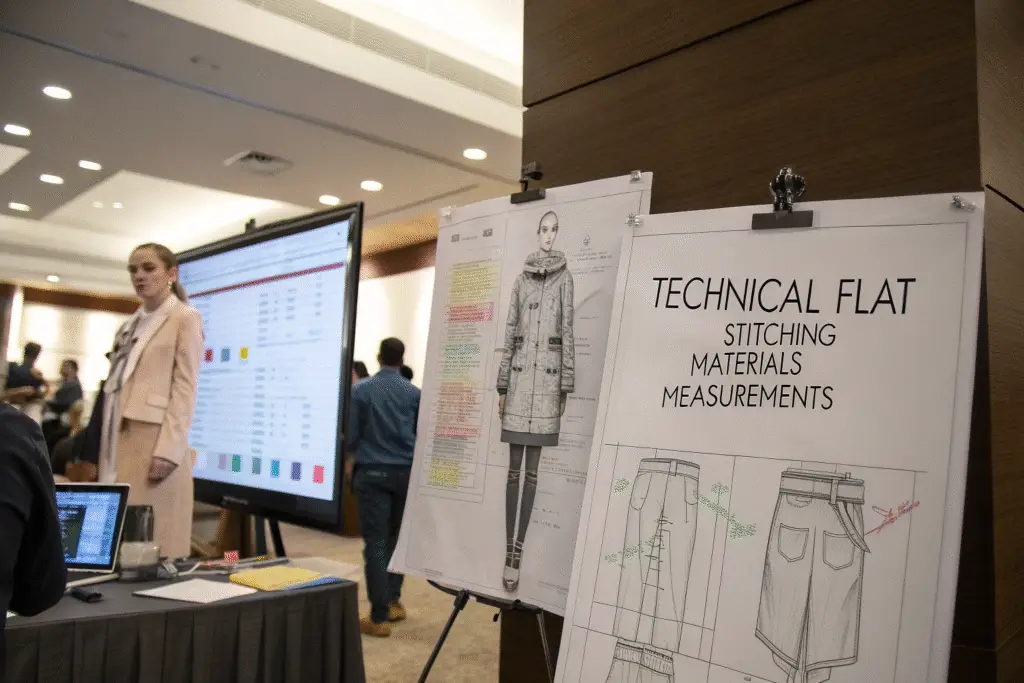
A basic sketch communicates the "what," but a tech pack explains the "how." It is a comprehensive instruction manual. Think of building a house: you wouldn't give the builder just a photograph of a house you like and a list of room dimensions. You need architectural blueprints that specify the foundation, plumbing, and electrical wiring. Similarly, a complete tech pack covers:
- Technical Flats: Detailed, scale drawings from all angles.
- Bill of Materials (BOM): A precise list of every component.
- Construction Details: Stitch types, seam finishes, and assembly order.
- Measurement Spec Sheet: Tolerances for every critical dimension.
- Artwork & Print Details: Exact placement and color codes.
Why are construction details non-negotiable?
Construction details define the quality, durability, and cost of your garment. Specifying a "flatlock seam" versus an "overlock seam" for activewear is the difference between a comfortable garment and one that chafes. Detailing the type of interlining for a collar determines whether it stands up properly after washing. These details are not for the factory to figure out; they are for the brand to define its quality standard.
How does a detailed BOM prevent production delays?
A vague BOM leads to sourcing delays. Simply listing "metal zipper" is insufficient. Does it need to be a YKK brand zipper? What is the specific color code? What is the puller style? Without these details, the factory must constantly stop to ask for clarification, or worse, make a guess that turns out to be wrong. A detailed BOM with supplier codes and reference images ensures smooth and timely material procurement.
Do Tech Packs Stifle Creativity and Flexibility?
Some creative directors and designers fear that a tech pack will lock them into a design too early, killing the creative spirit. They see it as a rigid set of rules. I've found the opposite to be true. A well-made tech pack doesn't stifle creativity; it enables it by providing a structured framework within which to experiment. It ensures that a brilliant creative idea is not lost in translation during the complex process of turning it into a physical product.
Consider the tech pack as the foundation of your design. You can't build a unique and stable house without a strong foundation. The tech pack provides that stability. It allows you to be precise about your creativity. Want an unconventional silhouette? The tech pack's measurement specs will define it exactly. Using a new, innovative fabric? The tech pack's BOM and testing protocols will ensure it's sourced and handled correctly. It captures the nuances of your design so they can be reliably reproduced.

How can a tech pack facilitate creative changes?
A dynamic tech pack makes creative changes more manageable, not less. When a designer wants to explore a different sleeve style, they can create a new version of the tech pack with revised flats and specs. This allows for accurate cost comparisons and clear communication with the factory about the change. It transforms a vague "what if" into a concrete, actionable option with defined implications for cost, timeline, and production.
Does flexibility mean a lack of specifications?
Absolutely not. True flexibility in manufacturing comes from clarity, not ambiguity. The flexibility is in the process of updating the living tech pack, not in having a poorly defined one. A brand remains flexible by using the tech pack as a tool to formally implement and track changes, ensuring that every iteration of the design is perfectly documented for whoever works on it next, whether it's a new sampling technician or a different production factory.
Conclusion
The biggest misconception—viewing the tech pack as a static, one-time document—undermines the entire production process. Embracing its true nature as a dynamic, living blueprint is the single most effective step a brand can take to gain control over quality, cost, and timelines. It is not paperwork; it is the process itself. It is the tangible record of the partnership between your creative vision and our manufacturing expertise.
Stop treating your tech pack as a mere formality and start leveraging it as the powerful management tool it is. At Fumao Clothing, we build our client partnerships on this foundation of clear, evolving communication. If you're ready to transform your product development process and bring your designs to life with precision, let's connect. Reach out to our Business Director Elaine to begin a truly collaborative partnership: elaine@fumaoclothing.com.