As a garment factory owner, I've seen countless projects succeed and fail. The difference often comes down to one document. Many brands come to us with a great idea but no clear plan. They face delays, cost overruns, and products that don't match their vision. This is a common and avoidable problem in the fashion industry.
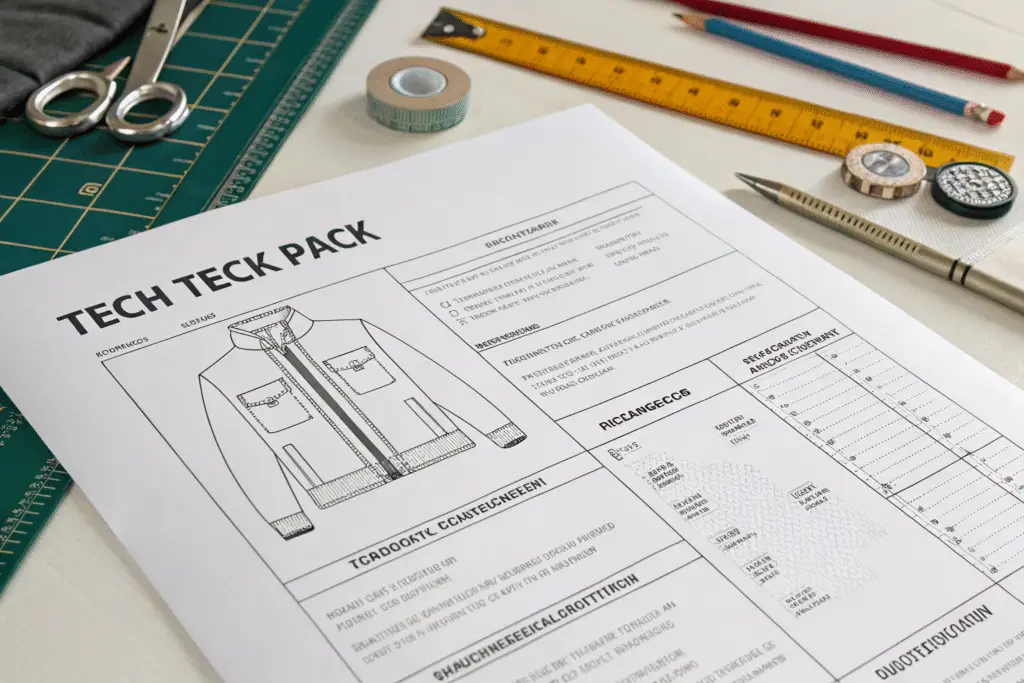
A garment tech pack is the master blueprint for your clothing item. It is a comprehensive document containing all the technical specifications, materials, and instructions needed to turn your design concept into a physical product. You need one because it eliminates guesswork for your manufacturer, ensures quality control, and prevents costly errors in production. Without a tech pack, you are essentially asking your manufacturer to read your mind, which leads to misunderstandings, multiple sample revisions, and missed deadlines.
Let's explore why this single document is so critical for a smooth manufacturing process, especially when you are sourcing from a overseas supplier like us in China.
What exactly is included in a garment tech pack?
A tech pack is more than just a sketch. It is the complete instruction manual for your product. Think of it as the recipe for your garment. If you give a chef a vague idea for a dish, the results will be inconsistent. But with a detailed recipe, any skilled chef can recreate the dish perfectly, every single time.

Why are flat sketches so important?
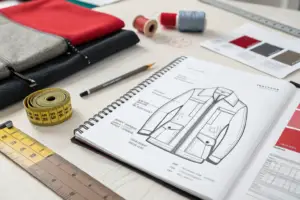
Flat sketches are the foundation. Unlike a fashion illustration that shows style and flair, a flat sketch shows every seam, stitch, and detail in a two-dimensional, technical format. It provides a clear, unbiased view of the garment's construction. Last year, a startup brand sent us a beautiful 3D render of a hoodie but no flat sketch. We had to interpret the design, which led to a sample with misplaced pockets. This cost them two weeks and a sample fee. A proper flat sketch would have prevented this. For brands looking to improve their technical drawings, the Fashion Institute of Technology offers excellent resources on technical design fundamentals.
What information does a spec sheet provide?
The spec sheet, or specification sheet, is all about numbers. It contains the precise measurements for every part of the garment in every size. We use these measurements to create the patterns. The American Society for Testing and Materials (ASTM) provides standardized body measurements that many in the industry reference. I recall a client who provided their own size chart that was inconsistent with standard grading rules. The resulting samples fit poorly on fit models. We had to work together to revise the spec sheet, which stabilized their sizing and reduced customer returns by 25%.
| Common Spec Sheet Measurements | Purpose |
|---|---|
| Chest Width | Determines garment fit across the torso |
| Body Length | Ensures correct overall garment length |
| Sleeve Length | Critical for arm fit and comfort |
| Hem Opening | Affects the silhouette and style |
How does a tech pack save time and money?
A complete tech pack is an investment that pays for itself many times over. It streamlines communication and prevents expensive errors. Without one, you are likely to go through multiple, costly sample rounds, each one adding weeks to your timeline.
The tech pack acts as a single source of truth. It aligns everyone—from the brand owner to our pattern makers and sewers—on the exact details. This clarity is priceless. We worked with an activewear brand that initially provided a basic concept sheet. The first sample was wrong, and the second sample was also wrong. After three rounds and thousands of dollars wasted, they finally invested in a proper tech pack. The next sample was perfect. They admitted that creating the tech pack upfront would have saved them over $5,000 in sampling costs alone.
How does it reduce sampling cycles?
Each sample revision adds 2-3 weeks to your production schedule. A detailed tech pack minimizes back-and-forth clarification. It gives our team all the answers before we even start. We aim for a "first sample right" approach, which is only possible with a clear tech pack. This efficiency is crucial for hitting your selling season. A delayed shipment doesn't just mean a late delivery; it means missed sales and discounted prices.
The costs go beyond sampling. Imagine we produce 5,000 units based on an unclear instruction. If the garments are flawed due to this ambiguity, you face a massive financial loss. You might have to sell them at a heavy discount or, worse, discard them. Furthermore, constant communication to clarify a vague tech pack consumes dozens of hours for both your team and ours. This inefficiency is a hidden cost that eats into your profit margin.
Why is a tech pack crucial for quality control?
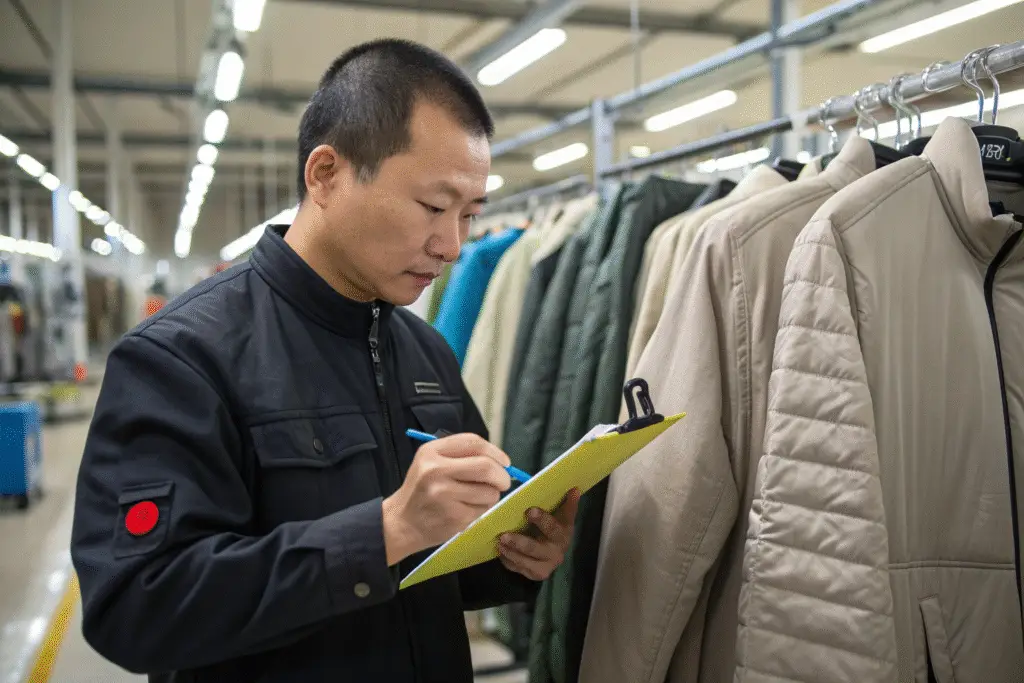
Quality control starts long before we inspect the first finished garment. It starts with the instructions in the tech pack. The tech pack sets the quality standards that our QC team will follow during production and final inspection.
It provides the objective criteria for checking every detail. For instance, if the tech pack specifies a SPI (stitches per inch) of 12 for topstitching, our QC team uses a ruler to verify it. If it specifies a certain type of interlining for the collar, we check that the correct material was used. This removes subjectivity. A client once complained that the "handfeel" of their cotton twill trousers was not right. We checked their tech pack, which only said "100% cotton twill." There are dozens of variations of cotton twill. We now guide all our partners to include fabric weight and a approved physical fabric swatch in their tech pack to lock in this critical quality element.
How does it standardize production?
Consistency is key in mass production. The tech pack ensures that the 1st unit and the 10,000th unit are identical. It standardizes the construction methods, trims, and tolerances across the entire production run. This is especially important for brands seeking compliance with international standards, which often require detailed documentation of materials and processes—all of which should be recorded in the tech pack.
What role does it play in inspections?
During inline and final inspections, the tech pack is the benchmark. Our QC team doesn't just look for obvious defects; they verify that the garment was built according to the spec sheet and construction details provided. They check stitch types, seam allowances, and placement of labels. Without this document, inspection becomes a matter of opinion, which is a risky way to manage quality.
How to create an effective garment tech pack?
You don't need to be a technical expert to start, but you do need a structured approach. An effective tech pack is clear, concise, and leaves no room for interpretation. It communicates your vision in a language that manufacturers understand.
Many brands use tools like Adobe Illustrator for sketches and Excel or specialized PLM software for the data. The tool is less important than the content. Start with a detailed flat sketch and build from there. We once received a tech pack from a denim brand that was so well-organized, with photos of wash references and specific thread colors called out, that the first sample was approved without a single comment. This project was delivered two weeks ahead of schedule.

What are the common mistakes to avoid?
The most common mistake is missing information. Leaving a field blank is an invitation for the factory to make an assumption. Another critical error is inconsistency. For example, the sketch shows a rib knit cuff, but the Bill of Materials (BOM) lists a woven cuff material. Always double-check that all sections of the tech pack align. Using vague terms like "high-quality zipper" is also a problem. Instead, specify "YKK #5 vislon zipper in navy blue."
Can I use a template?
Absolutely. Starting with a tech pack template is a great idea. It provides a checklist of all the essential components you need to include. You can find many basic templates online, or your manufacturer might provide one. The key is to customize the template for your specific garment. A simple t-shirt tech pack will be different from a technical outerwear jacket tech pack. The more complex the item, the more detailed your tech pack needs to be.
Conclusion
A garment tech pack is not just a piece of paperwork; it is the most important tool for ensuring your design vision becomes a reality efficiently and cost-effectively. It bridges the gap between your creative idea and the technical manufacturing process. It saves you time, protects your budget, and guarantees the quality of your final products. Investing the effort into creating a detailed tech pack upfront is the hallmark of a professional and savvy brand.
If you are looking for a manufacturing partner who values clarity and precision and can guide you in perfecting your tech pack, we are here to help. Let's discuss how we can bring your apparel visions to life. Please contact our Business Director Elaine to start production on your next clothing order at elaine@fumaoclothing.com.