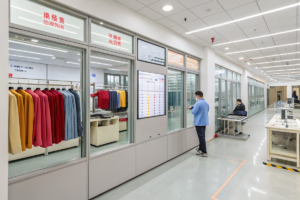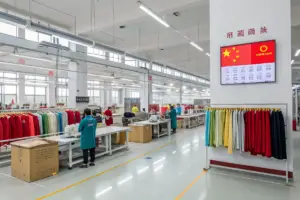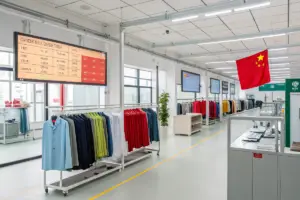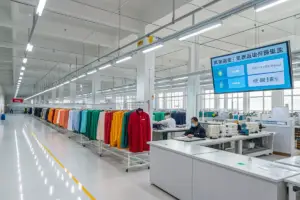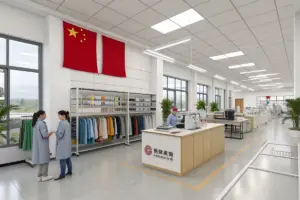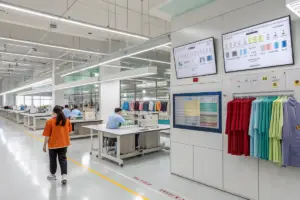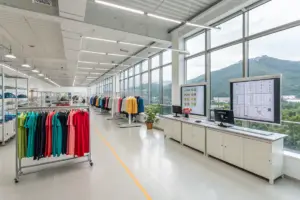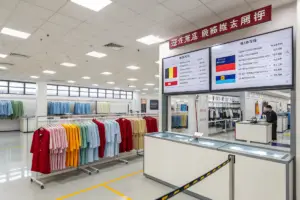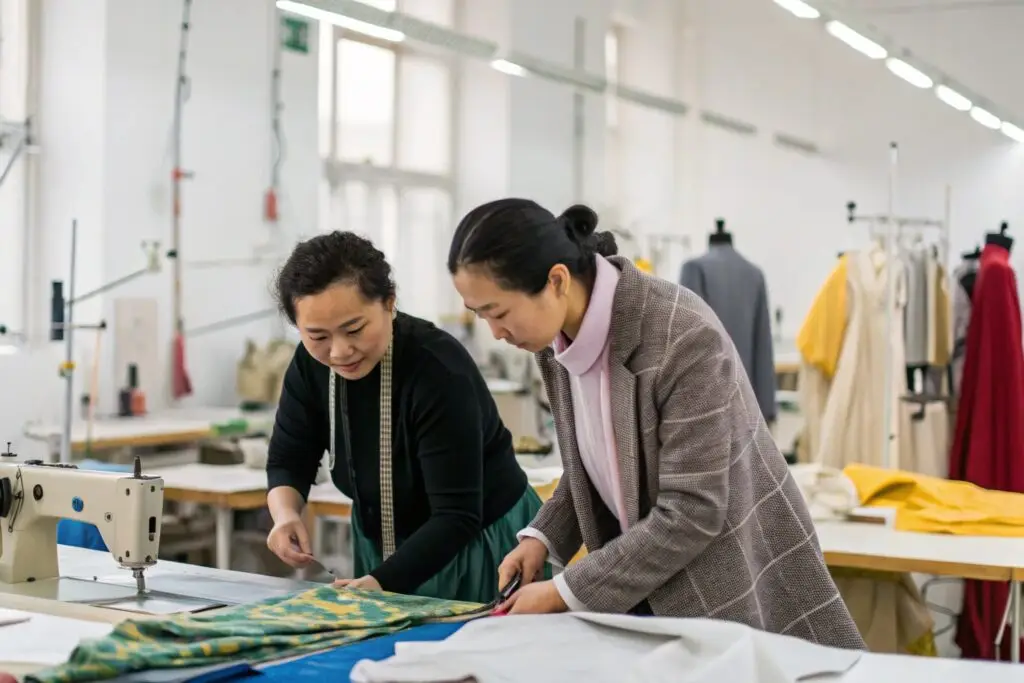
Most people think custom clothing factories are magic boxes—send a design, get clothes. Reality is way more complex and fascinating.
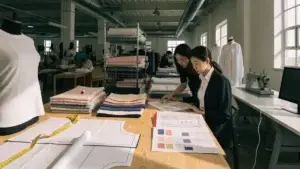
Behind the scenes in a custom apparel factory, a detailed system turns ideas into real clothes through stages like design, sampling, production, and quality control.
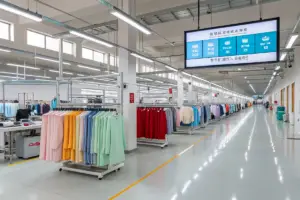
When I first walked into a real apparel factory, I was shocked. Hundreds of moving parts. Tiny details I had never thought about. It gave me a new respect for what we do every day.
What is the process of apparel manufacturing?
Making clothing looks easy from the outside. But behind each piece is a system of planning, crafting, checking, and delivering.
The process of apparel manufacturing involves stages like design development, pattern making, fabric sourcing, sample production, bulk production, quality checks, and final shipment.
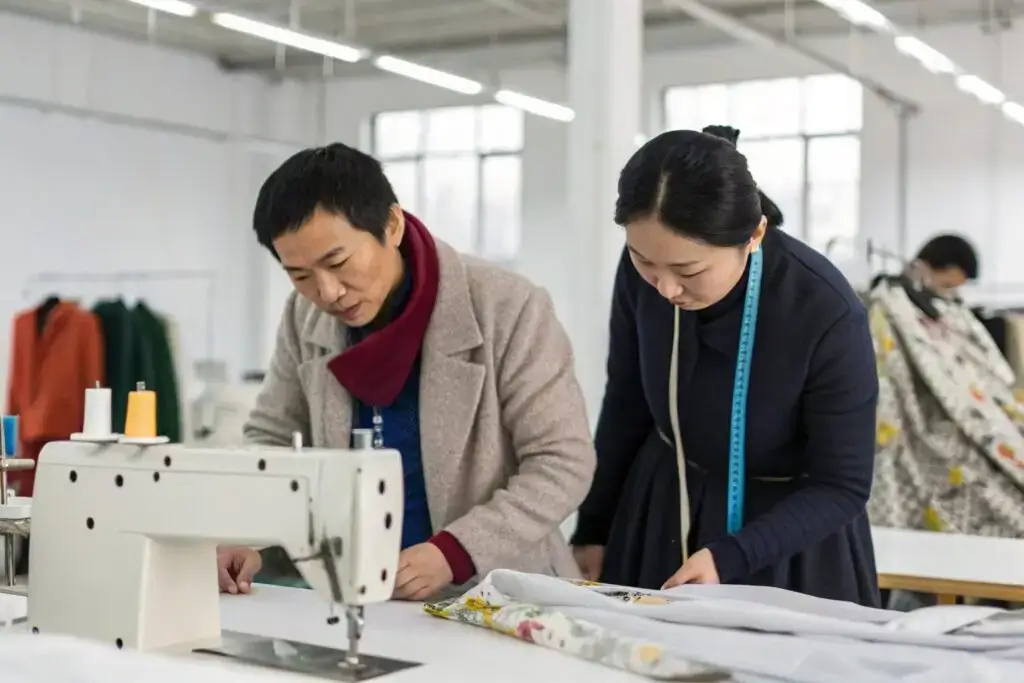
Why does the apparel manufacturing process require so many careful steps before even one garment is made?
One mistake early on can ruin thousands of finished pieces. When I first managed a project, I rushed design approval1. It led to wrong fabric choices and massive losses.
Our process now:
| Stage | Key Action |
|---|---|
| Design | Tech packs, CAD drawings |
| Pattern Making | Size grading, cutting maps |
| Fabric Sourcing | Testing fabric strength and color fastness |
| Sampling | Trial garments for fit and finish approval |
Only after passing each checkpoint do we greenlight bulk production. Skipping steps might save days, but it risks months of headaches.
How do design teams and production teams work together to avoid costly mistakes in apparel factories?
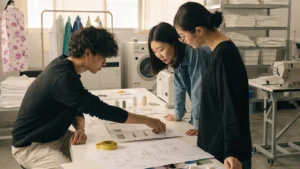
Great designs mean nothing without practical execution. That’s why our designers and production managers meet weekly.
They review:
- Material behavior under sewing stress
- Printing durability after washing
- Real wearability across different body types
This teamwork turns creative ideas into wearable, sellable clothes.
What is the workflow of the apparel industry?
The fashion industry may look glamorous, but under the surface, it is an intense flow of supply chain coordination, production deadlines, and quality management.
The apparel industry workflow moves from trend research to design, material buying, garment making, shipping, and retail selling.

How does early trend research2 set the direction for the entire apparel production workflow?
Most successful brands start 6–12 months ahead. They do not wait for trends—they predict them. Our workflow starts with analyzing:
- Runway shows
- Streetwear styles
- Social media buzz
- Customer feedback
This research feeds into design development, material selection, and even factory line setup months before clothes hit stores.
Skipping trend research risks making clothes nobody wants.
Why is tight supply chain management3 critical for maintaining smooth apparel production workflows4?
Fashion cycles move fast. A three-week shipping delay can kill an entire season’s profits.
That’s why we:
- Work with trusted fabric mills
- Keep buffer stocks for fast-moving items
- Use DDP shipping to skip customs delays
Our sourcing team checks supplier reliability monthly to avoid last-minute surprises.
Smooth input = Smooth output.
How does custom clothing work?
Custom clothing is not just about putting a logo on a shirt. It is about adjusting every detail to match the brand’s identity and the customer’s expectations.
Custom clothing works through a detailed process of client consultations, tech pack creation, sample testing, production adjustments, and final bulk orders.
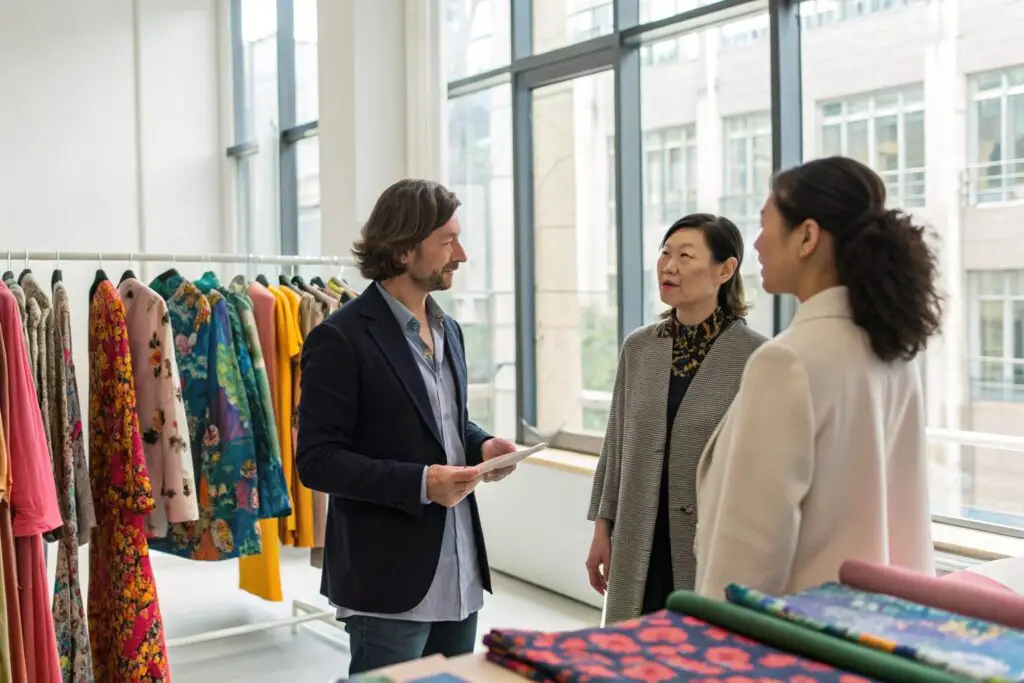
What key stages transform a simple idea into a finished custom clothing product5?
Every custom order follows a path. At first, I thought it was simple. Then I learned about all the layers involved.
Here’s our typical roadmap:
| Stage | Action |
|---|---|
| Consultation | Define goals, budget, timelines |
| Tech Pack | Create detailed spec sheets |
| Sampling | Produce and revise initial samples |
| Approval & Bulk | Final sign-off and mass production |
Even minor changes, like thread color or pocket placement, go through approval cycles. Precision at every stage protects brand identity.
Why are tech pack6s essential tools in making sure custom apparel matches brand visions perfectly?
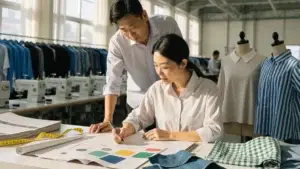
A tech pack is like a blueprint. Without it, factories guess. And guesses ruin brands.
Our tech packs include:
- Fabric type and GSM (grams per square meter)
- Color codes (Pantone standards)
- Print or embroidery placements
- Measurement charts by size
Clients review and sign off on every detail before production starts. No assumptions. No surprises.
What are the 8 stages of garment construction?
Building a garment is like constructing a house. Each stage supports the next. Skip one, and the whole structure weakens.
The 8 stages of garment construction are pattern drafting, fabric cutting, assembling parts, sewing main panels, adding features, finishing seams, quality checking, and final pressing/packing.
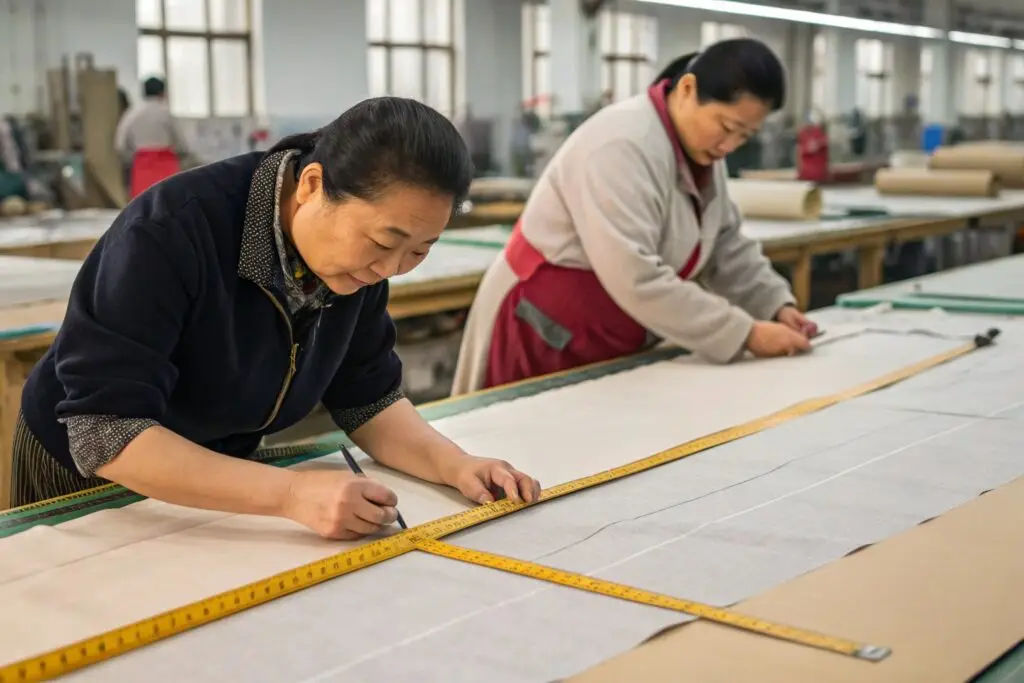
How does each garment construction stage build on the last to ensure strong, wearable clothing?
Missing steps or rushing can create major flaws. I’ve seen jackets fall apart because of weak seam finishing7.
Here’s the correct flow:
| Stage | Purpose |
|---|---|
| Pattern Drafting | Foundation shapes for cutting |
| Fabric Cutting | Precision for good fits |
| Assembling | Aligns parts (sleeves, collars) |
| Main Sewing | Forms garment structure |
| Adding Features | Zippers, buttons, labels |
| Seam Finishing | Protects against fraying |
| Quality Checking | Catches defects early |
| Pressing & Packing | Prepares for shipment |
Each stage relies on the last. Sloppy cutting makes perfect sewing impossible. Weak seams destroy even beautiful designs.
Why do small mistakes in early garment construction stages cause bigger problems later during mass production?
Tiny mistakes grow over time. One centimeter off in cutting leads to crooked panels, twisted seams, or shirts that do not fit right.
That’s why:
- We double-check cutting accuracy.
- We run small pre-production batches.
- We do first-article inspections before scaling up.
Catching mistakes early saves time, money, and brand reputation.
Conclusion
What happens behind the scenes in a custom apparel factory is a dance of creativity, precision, teamwork, and care. Every stitch tells a story—and it all starts long before the first piece of fabric is cut.
-
Learning about design approval can help prevent costly mistakes and ensure that the final product meets market demands and quality standards. ↩
-
Understanding trend research is crucial for brands to stay ahead in the competitive fashion industry. Explore this link to learn more. ↩
-
Effective supply chain management is vital for timely production and profitability in fashion. Discover insights on this topic here. ↩
-
Exploring best practices in apparel production workflows can enhance efficiency and success in the fashion industry. Check this resource for valuable information. ↩
-
Discover the stages of transforming a simple idea into a custom clothing product, ensuring quality and brand identity throughout the process. ↩
-
Understanding tech packs is crucial for ensuring your custom apparel aligns with your brand vision. Explore this link to learn more! ↩
-
Understanding seam finishing is crucial for ensuring durability in clothing. Explore this link to learn more about its importance. ↩