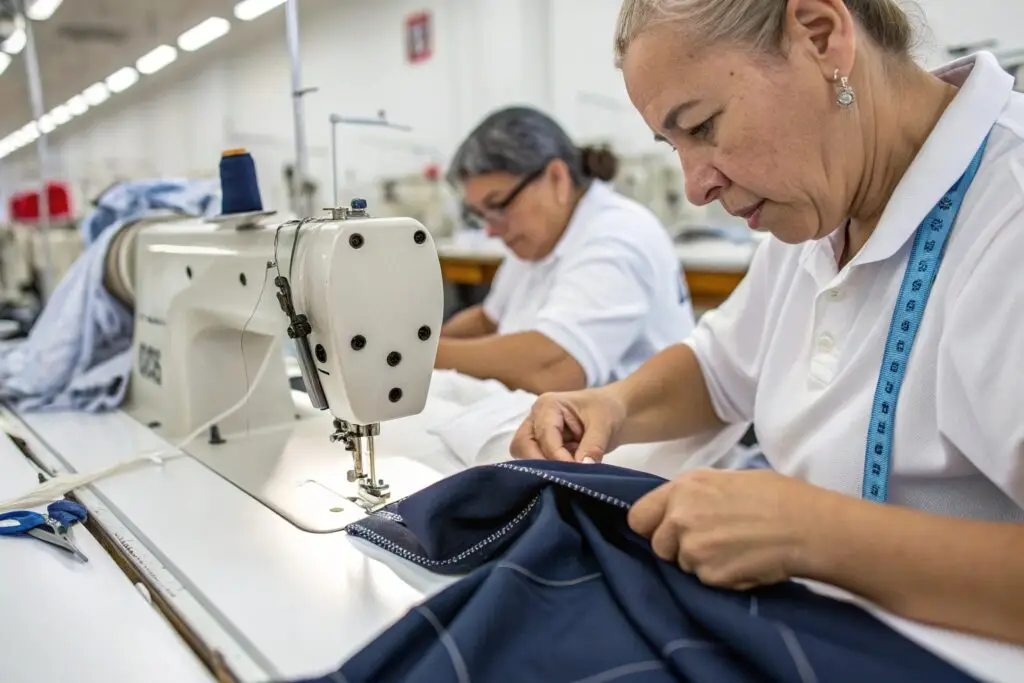
Fast turnover and high-usage clothing demand one thing above all: garments that don’t fall apart after a few washes.
To handle frequent cleaning, garments must be built with durable seams, reinforced stress points, stable fabrics, and smart finishes that resist stains and shrinkage.
As a clothing manufacturer, I’ve helped many American buyers upgrade their garments just by changing how they’re constructed—not the price. Let’s break down what truly makes garments cleaning-proof.
What clothing material is easiest to clean?
If you’ve ever spent hours removing oil stains or restoring shape, you know some fabrics fight back harder than others.
Synthetic fibers like polyester and nylon are easiest to clean. They repel moisture, resist staining, and dry fast with minimal wrinkling.
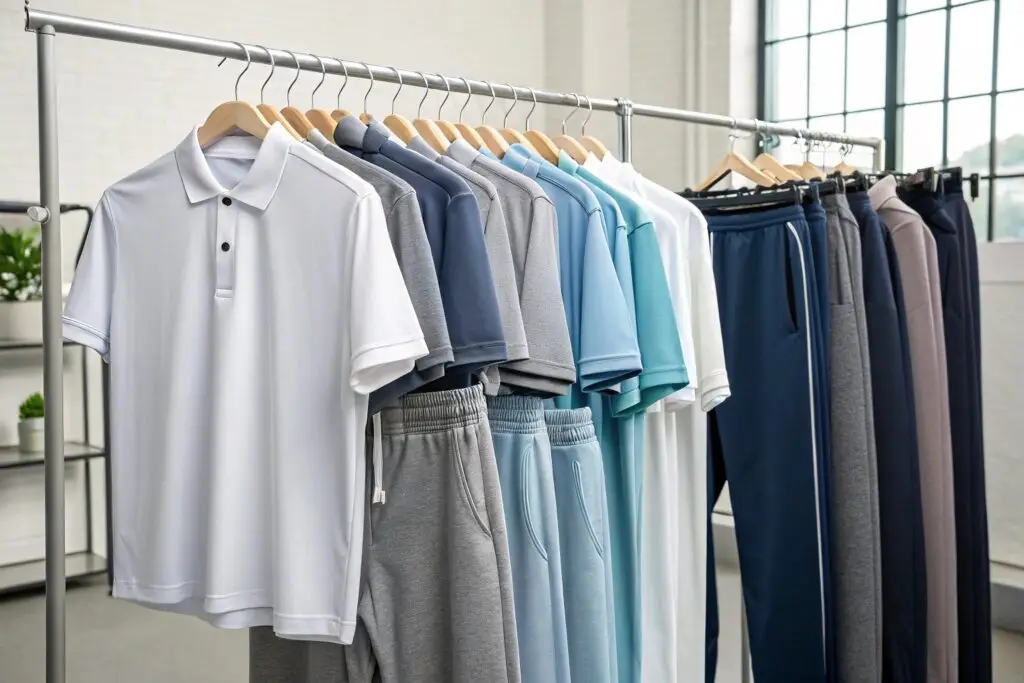
Why does polyester outperform cotton when it comes to cleaning speed1 and stain resistance2?
Cotton is soft, but it’s like a sponge. It absorbs oil, sweat, and dirt quickly—and holds onto it. That means it needs more detergent, longer soaks, and higher water temperatures to get clean. Polyester, on the other hand, has low absorbency. Dirt tends to stay on the surface.
Here’s a breakdown from one of our lab tests:
| Fabric Type | Stain Absorption | Clean Time | Drying Time | Wrinkle Resistance |
|---|---|---|---|---|
| 100% Cotton | High | Slow | Slow | Low |
| Polyester | Low | Fast | Very Fast | High |
| Nylon | Low | Fast | Fast | Medium |
| Rayon | Medium | Medium | Medium | Low |
We’ve built uniforms for hospital staff that needed to be disinfected daily. With cotton, they had to use bleach. With polyester, they just needed hot water and standard detergent.
How does blended fabric offer a middle ground between cleanability and comfort?
Some buyers want polyester’s durability but hate its plastic feel. That’s where blends help. We’ve developed 60/40 and 70/30 polyester-cotton combinations3 that offer both:
- Easy stain release
- Soft hand feel
- Better airflow
- Less fading
One American restaurant chain switched to our 65/35 blend for staff uniforms. Their laundry bill dropped 30% in six months because stains came out easier, and the garments dried faster.
What setting to wash dirty work clothes?
Normal wash settings don’t cut it for grease, chemicals, or heavy sweat. You need more power—but not at the fabric’s expense.
Dirty work clothes require warm to hot water (40–60°C), heavy-duty detergent, and long cycles—but only if the fabric construction supports it.
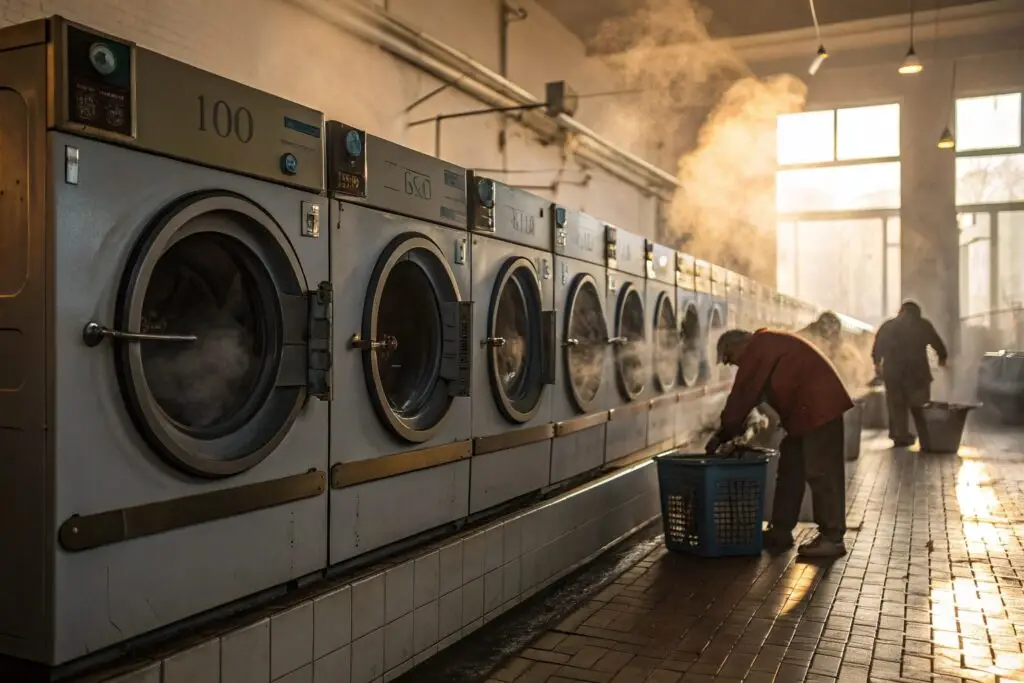
Why do improper wash settings4 shorten garment life more than the dirt itself?
It’s not the stain that kills your clothes—it’s how you try to remove it. I’ve seen buyers throw uniforms into boiling washes thinking it guarantees cleanliness. Instead, their poly-cotton shirts came out shrunken and faded.
Washing too hot degrades elastane. Harsh bleach ruins print. Soft fabrics lose their shape under long agitation.
Here’s what I recommend based on garment type:
| Garment Type | Recommended Temp | Cycle Type | Detergent |
|---|---|---|---|
| Polyester Uniform | 40–60°C | Normal | Heavy-duty |
| Cotton Aprons | 60°C | Heavy | Degreasing |
| Stretchy Leggings | 30–40°C | Gentle | Mild enzyme |
| Chef Coats | 60°C | Normal | Bleach-safe |
How should garment construction be adapted to withstand stronger wash settings?
You can’t throw a fashion tee into a hot commercial wash. But with reinforced construction5, even lightweight clothes can survive.
Here’s what we change at Fumao for washable workwear:
- Use triple-needle stitching on shoulders and armholes
- Add bartacks at stress points
- Pre-shrink fabric before sewing
- Apply stain-release coatings
- Select buttons that resist 100°C water
One industrial laundry client told me their previous vendor’s clothes unraveled after 20 washes. We rebuilt the garments using poly-core threads6 and heat-bonded seams. Their replacement rate dropped by 40%.
What garments need dry cleaning?
Not all clothes are washer-safe. High-value and structured garments often rely on dry cleaning to retain form.
Garments that contain wool, silk, interfacing, or delicate embellishments should be dry cleaned to prevent shrinking, warping, and fading.
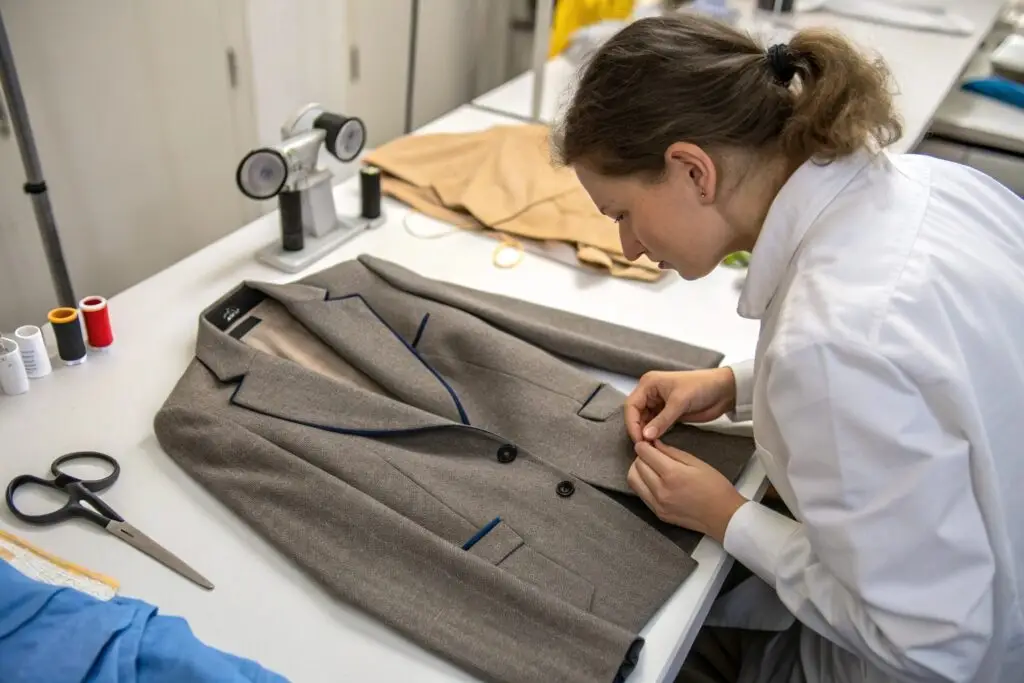
Why do structured garments like suits and coats need dry cleaning6 instead of water washing?
Water changes fabric shape. Especially in layered garments like suits, where fusing and padding hold everything in place. Once wet, the internal parts shrink or warp. That’s why dry cleaning—which uses chemical solvents without water—preserves the structure.
I once helped a brand that made custom uniforms. Their client machine-washed all the suits. After five cycles, the shoulder pads buckled. We redesigned with dry-clean tags and trained their end-users.
These garments typically need dry cleaning:
- Tailored suits
- Wool coats
- Embroidered dresses
- Beaded garments
- Leather-trimmed pieces
How can rental and hospitality buyers manage dry-clean-only garments at scale?
It’s costly to dry clean every day. So the best approach is prevention. First, we apply nano-coatings7 to resist spills. Second, we build detachable liners or washable inner layers. Third, we design uniforms to look premium—but use dry-clean mimic fabrics like high-twist poly.
One hotel group wanted velvet-textured uniforms. Dry cleaning was too expensive. We used suede-finish polyester instead. No dry cleaning needed, but they looked just as high-end.
What clothes should I wear when cleaning?
Whether scrubbing floors or handling chemicals, your clothes should protect you—not absorb the mess.
Choose garments made from polyester or coated cotton, with long sleeves, closed cuffs, and no loose parts that could snag or soak in fluid.
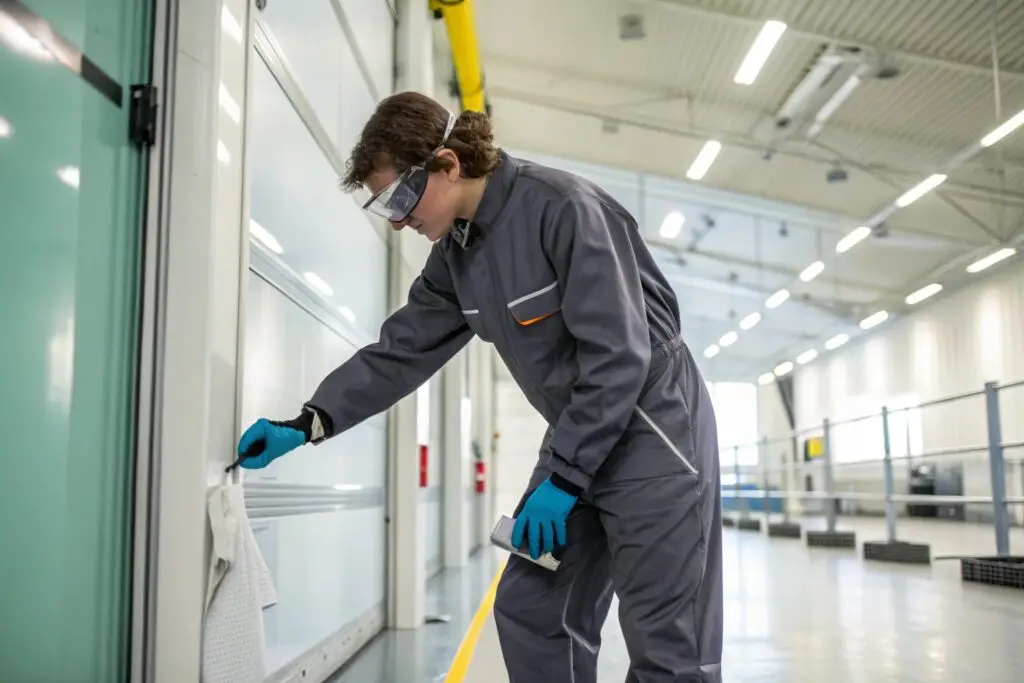
Why is fabric density and garment fit more important than price when choosing cleaning clothes?
I once supplied a janitorial group who bought basic tees for their team. After one month, the shirts were stained and stretched out. They assumed low cost was the problem. But the issue was construction—thin, loose, and poorly knit.
We switched them to denser 220gsm polyester tops, tapered at the wrist and waist. They repelled water better, fit snugly, and didn’t sag. Stains stayed surface-level. Workers looked sharper, too.
These are must-haves for cleaning wear:
- High neckline
- Cuffed sleeves
- Tight-knit fabric
- Longer back hem (bending protection)
| Feature | Benefit |
|---|---|
| Long Sleeves | Protects arms from splash |
| High-Density Fabric8 | Resists stains and tears |
| No Drawstrings | Reduces snag risk |
| Moisture-Wicking9 | Keeps wearer dry |
How can buyers source cleaning garments that balance protection, cost, and comfort?
Most cleaning happens indoors, in warm environments. Heavy PPE isn’t ideal. So we suggest lightweight synthetics with breathable mesh zones—strategically placed underarms, sides, and back.
And instead of buying 5 uniforms per worker, we suggest 3 made from highly washable fabrics. One of our U.S. clients cut their uniform count by 40% just by switching to poly-nylon blends that last longer.
Look for:
- Stretch panels for movement10
- Reinforced elbows
- Soil-release finishes
- Colors that don’t show stains easily
Conclusion
Strong garment construction isn’t optional when clothes face daily cleaning. At Fumao, we build every stitch for the wash—and beyond.
-
Learning about cleaning speed differences can help you make informed choices for your laundry needs and fabric selections. ↩
-
Understanding stain resistance can help you choose the right fabric for your needs, ensuring durability and ease of cleaning. ↩
-
Exploring the benefits of these blends can guide you in selecting comfortable yet durable clothing options. ↩
-
Understanding the impact of wash settings can help you preserve your clothes and save money in the long run. ↩
-
Explore how reinforced construction techniques can enhance the longevity of your garments, especially in commercial settings. ↩
-
Explore the advantages of dry cleaning, especially for delicate fabrics, to understand why it's essential for garment care. ↩ ↩
-
Discover how nano-coatings can protect garments from spills and reduce the need for frequent dry cleaning. ↩
-
Explore how high-density fabric enhances durability and stain resistance in cleaning uniforms, ensuring longevity and a professional appearance. ↩
-
Learn about the advantages of moisture-wicking fabrics in keeping cleaning staff dry and comfortable during long shifts. ↩
-
Discover how stretch panels enhance mobility and comfort, making cleaning tasks easier and more efficient for workers. ↩